
Fine line ghost-face pieces are everywhere on inspiration boards, and the trend gap is wide between what looks crisp in a mirror and what stays crisp after a few summers of sun. Small ghost face tattoos work best when the line weight and spacing are planned for years, not just for the photo you take afterward. Below are compact, edgy takes that account for aging, placement, and how to show them off.
1. Fine Line Ghost Face on Inner Forearm
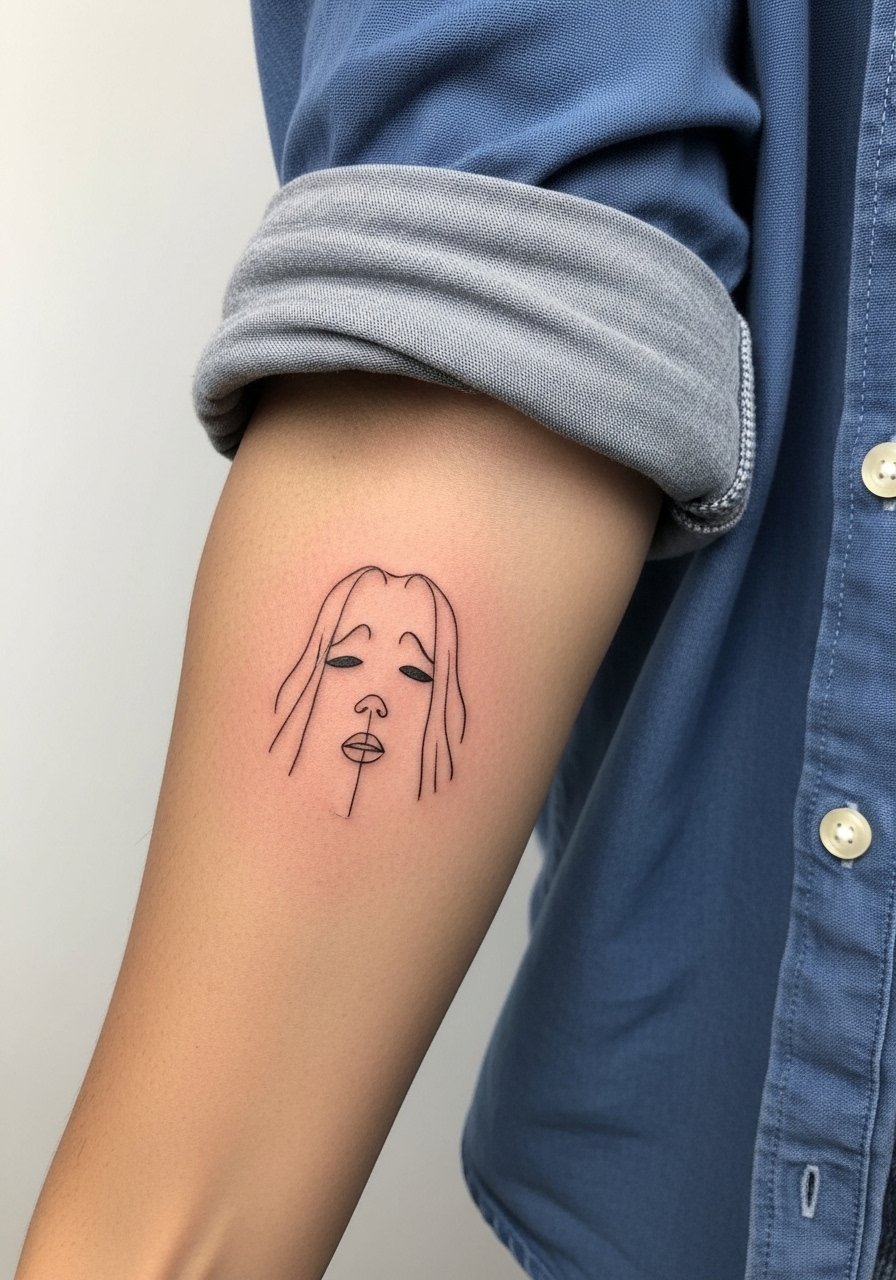
I recommend this when you want a delicate, detailed face that still reads at arm's length. Tell your artist you want slightly heavier outer linework and airy interior lines so the negative space holds up at year two and beyond. The inner forearm is forgiving for touch-ups, but fair warning, wrists and hands nearby increase friction during everyday activity. For the session, wear a loose button-down shirt you can pull aside. Expect a three-quarter hour session and light to moderate pain as the area heals.
2. Micro-Realism Mini Ghost Face on the Ankle
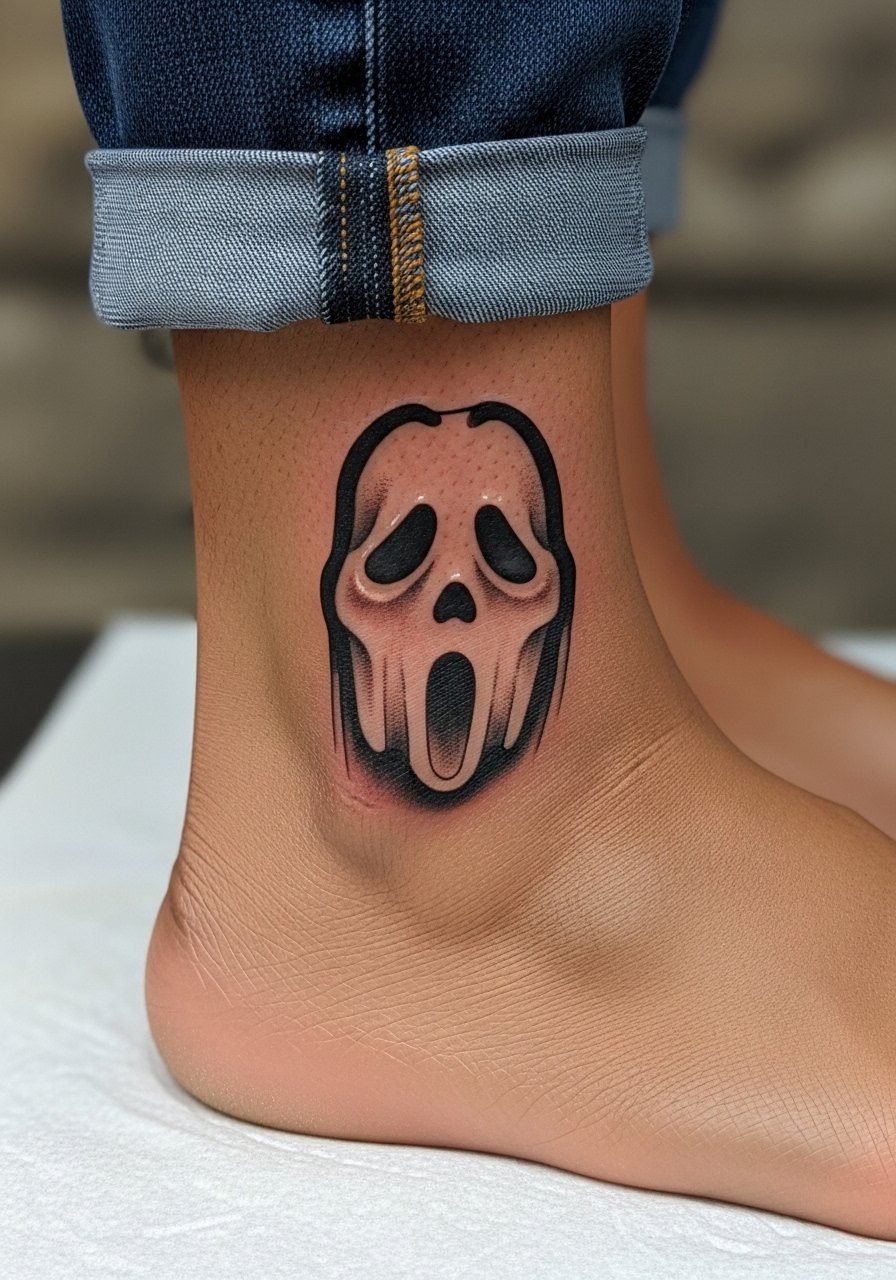
This tiny realistic mask looks cinematic tucked above the ankle bone, and the small size tests needle control. Ask for a compact stencil that keeps the darkest spots small and dense rather than trying to render every tiny shade. The ankle sees shoe friction during the first week so session wear matters. Bring a pair of loose canvas slip-on shoes you can remove without rubbing the area. The session feels bright and focused because the artist needs to work at a tight scale, and touch-ups at year two are normal if you wear socks often.
3. Blackwork Mini Ghost Face on the Side of the Neck
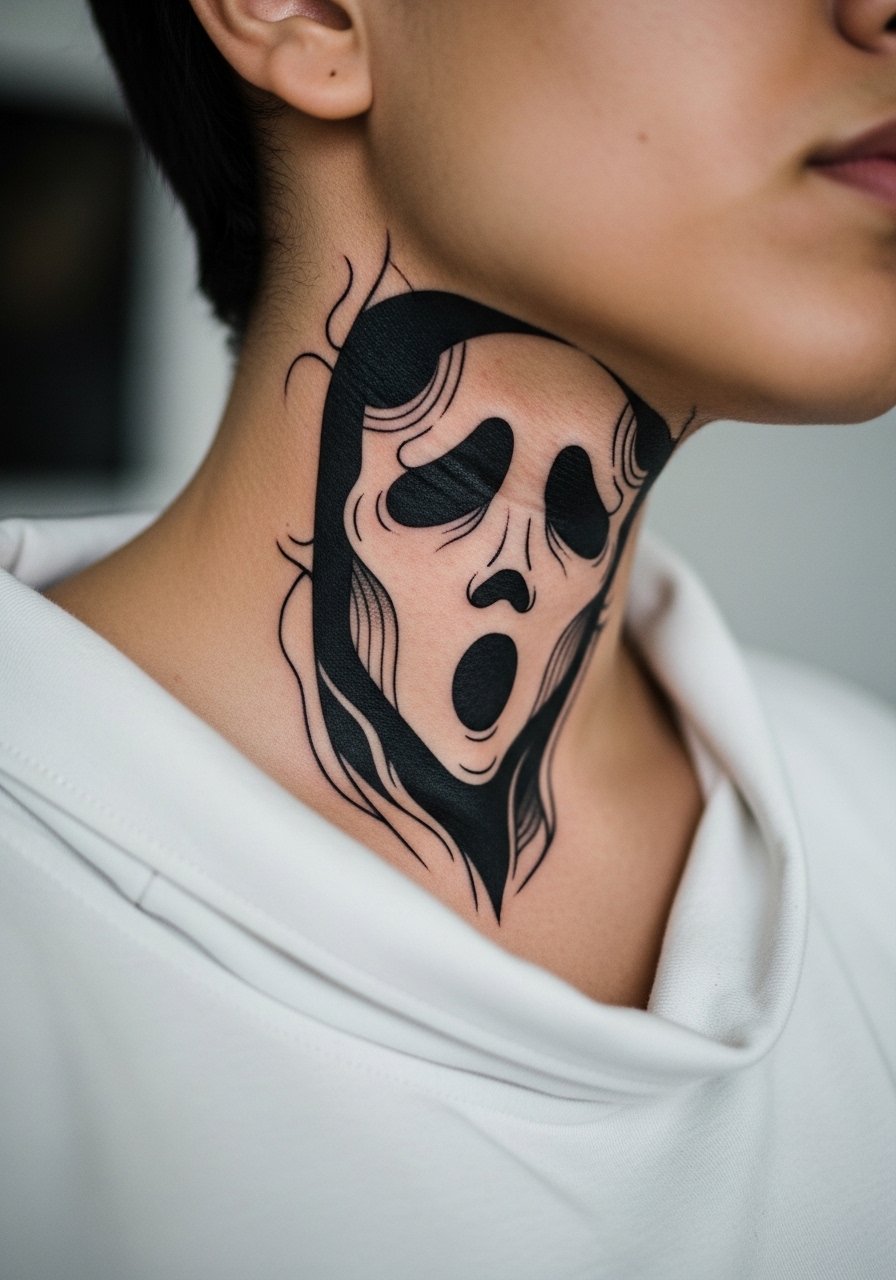
Neck placement elevates the attitude but it is more visible to employers and strangers. One camp accepts visible neck work as self-expression. The other camp warns it can affect hiring in conservative fields. Name both realities aloud when you book. Ask for simplified black elements rather than tiny lashes that can blur. For the session, wear a wide-neck tee that lets the artist access the area. Expect higher sensitivity during the tattoo and a two-hour window depending on line density.
4. Minimal Ghost Face Behind the Ear, Hairline Flush
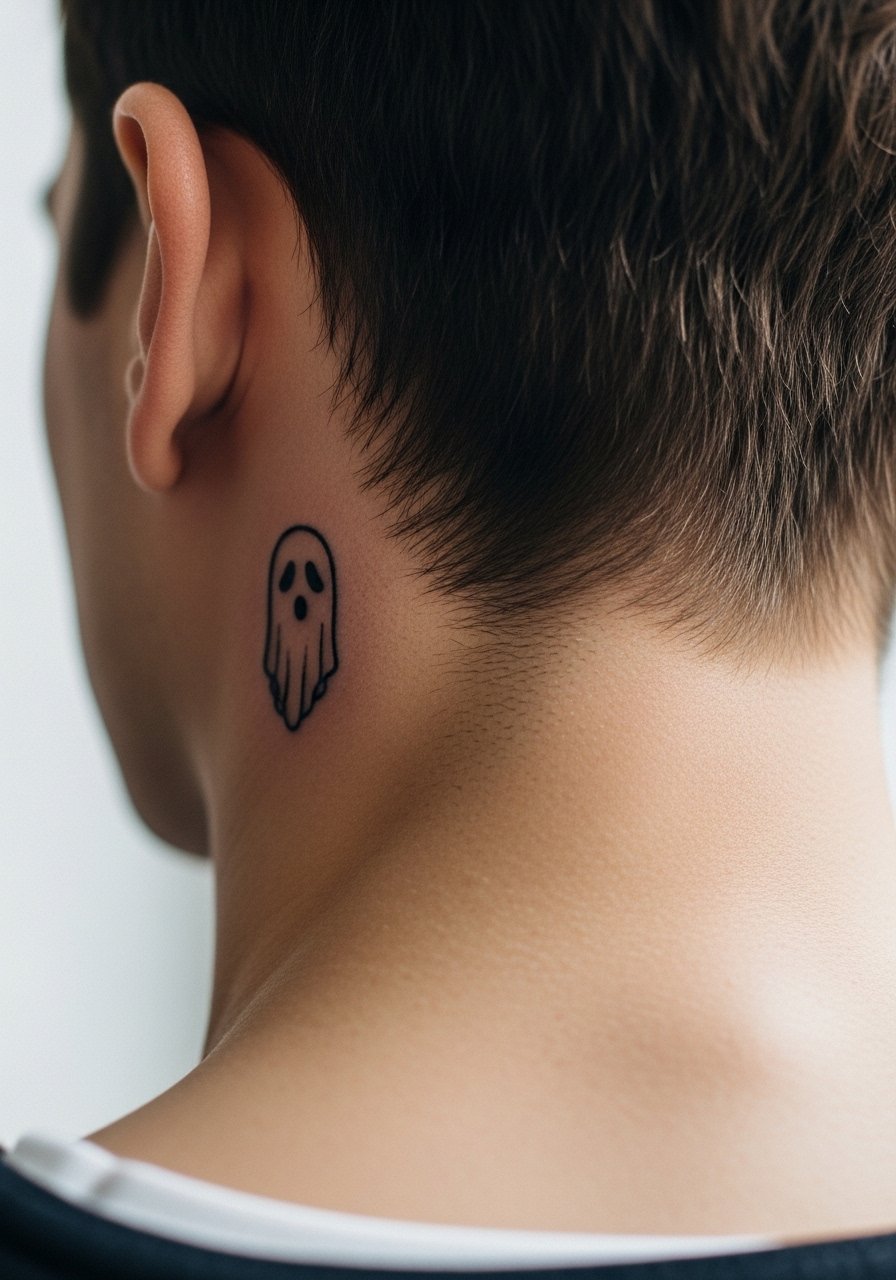
Behind-the-ear placements demand restraint. The area moves a lot and has thin skin. Tell your artist to keep the piece tiny and high under the hairline so it reads when your hair is pinned up. The session is short but sharp. This placement is intimate and heals with more scabbing because of hair oils. For the appointment, pin your hair up or bring a wide hair clip so the artist has a clean field. Expect a touch-up around year two if you expose it to sun often.
5. Tiny Ghost Face Finger Accent
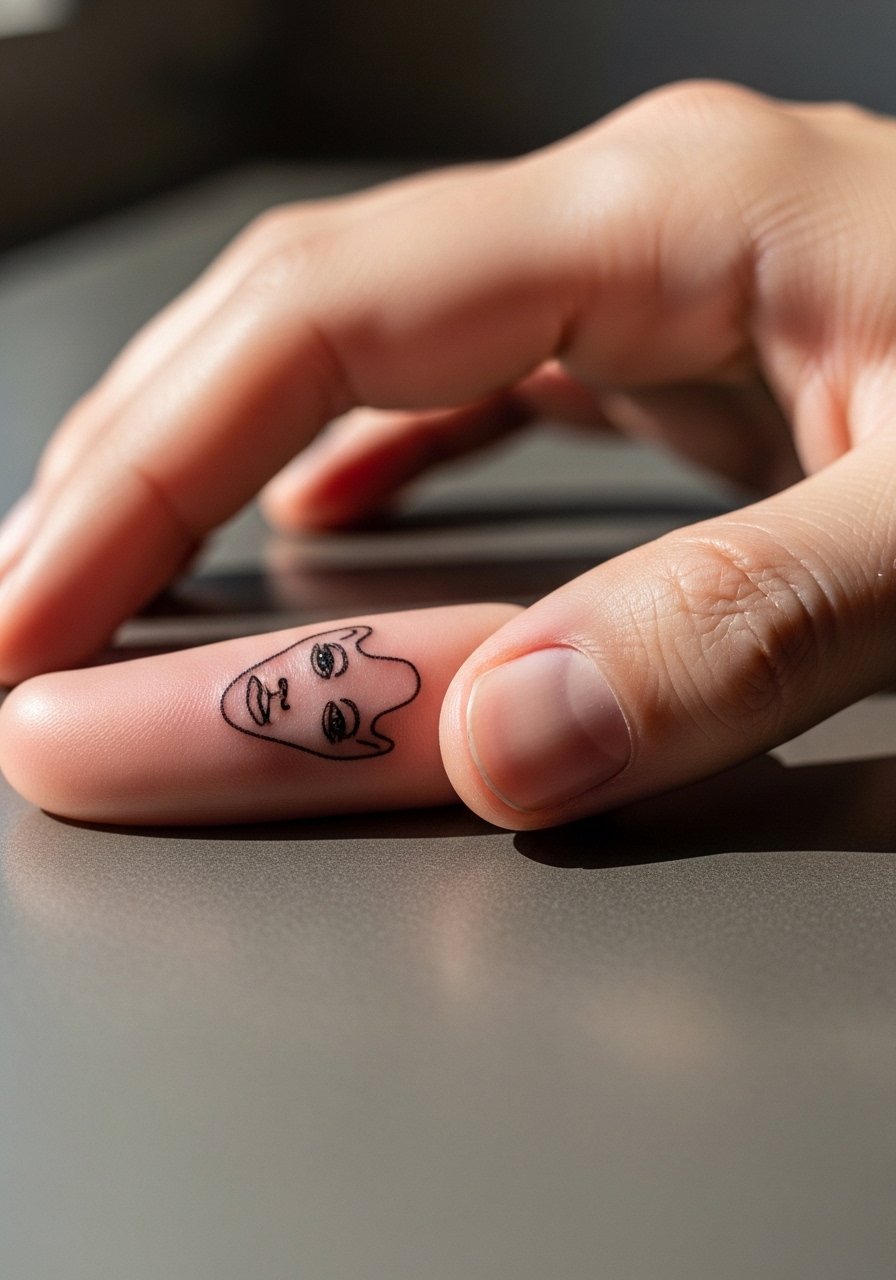
Finger tattoos are trend-forward but high-maintenance. Avoid dense shading that will pancake into the skin. Ask for single-needle, spaced linework and be ready for touch-ups at year one or sooner. One common mistake is asking for tiny interior shading; it tends to blur. For the session, skip rings and wear a thin chain bracelet after healing to keep attention on the finger without crowding. Pain is sharp but brief. Remember that hand or finger work often needs re-inking because of frequent washing and sun exposure.
6. Ghost Face on the Collarbone with Tiny Script Accent
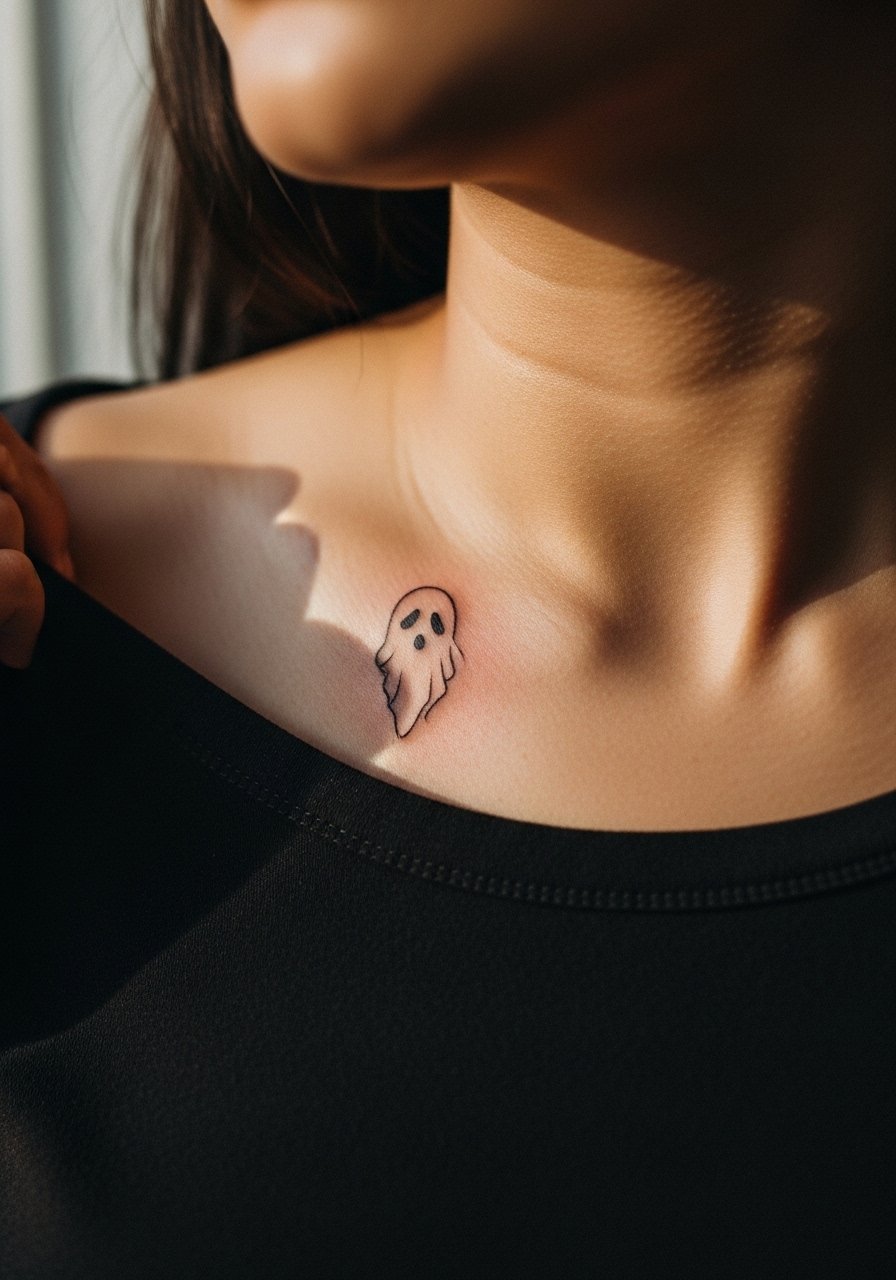
Collarbone pieces photograph beautifully and layer with jewelry. Tell the artist you want the face slightly offset from the bone so it sits flat rather than over the ridge. The biggest mistake is placing detailed work directly on the sharp bone where ink can skip. For showing it off, pair the piece with a thin chain pendant necklace that sits above the script. Expect a one to two hour session and moderate pain near the bone. Over time, the lines here hold well if spaced properly.
Studio Day Picks
The wrist, finger, and collarbone ideas above need small but specific prep so your session and the first week go smoother.
-
Stencil transfer paper kit. Lets you preview exact placement for tight face details on fingers and collarbones before the needle hits skin.
-
Topical numbing cream. Applied as directions say it can ease sharp spots like the finger and collarbone, useful if you are nervous about the pain.
-
Thin protective film roll. Helpful for finger and wrist pieces that rub against clothing during the first several days.
-
Fragrance-free body wash. Cleanses delicate ink zones like the collarbone or behind the ear without adding irritation.
-
Aquaphor healing ointment. A thin initial layer keeps tiny linework moist while the scabs form and fall away.
7. Dot Work Ghost Face on the Upper Arm
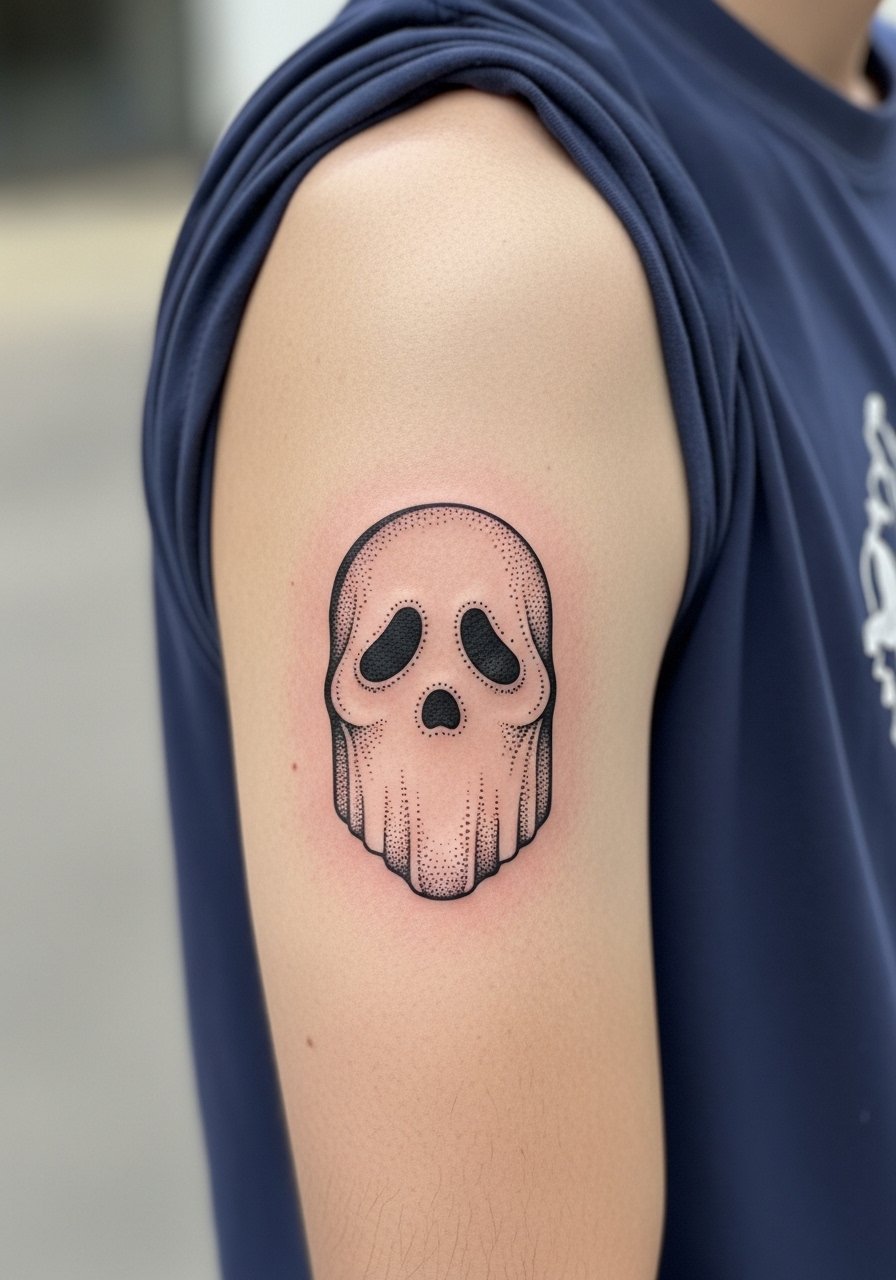
Stipple shading gives a soft, textured feel without heavy black blocks. Ask for stipple densities mapped on the stencil so dark areas do not crowd the negative space. The upper arm is lower pain and easy to cover for work. A common mistake is overfilling with dots, which merges into gray patches after a few years. For sessions, wear a loose short-sleeve tee so the artist can access the area without tugging at fabric. Expect an hour-long session and touch-ups at year three if you want to keep the stippling crisp.
8. Sketch-Style Ghost Face on the Inner Wrist
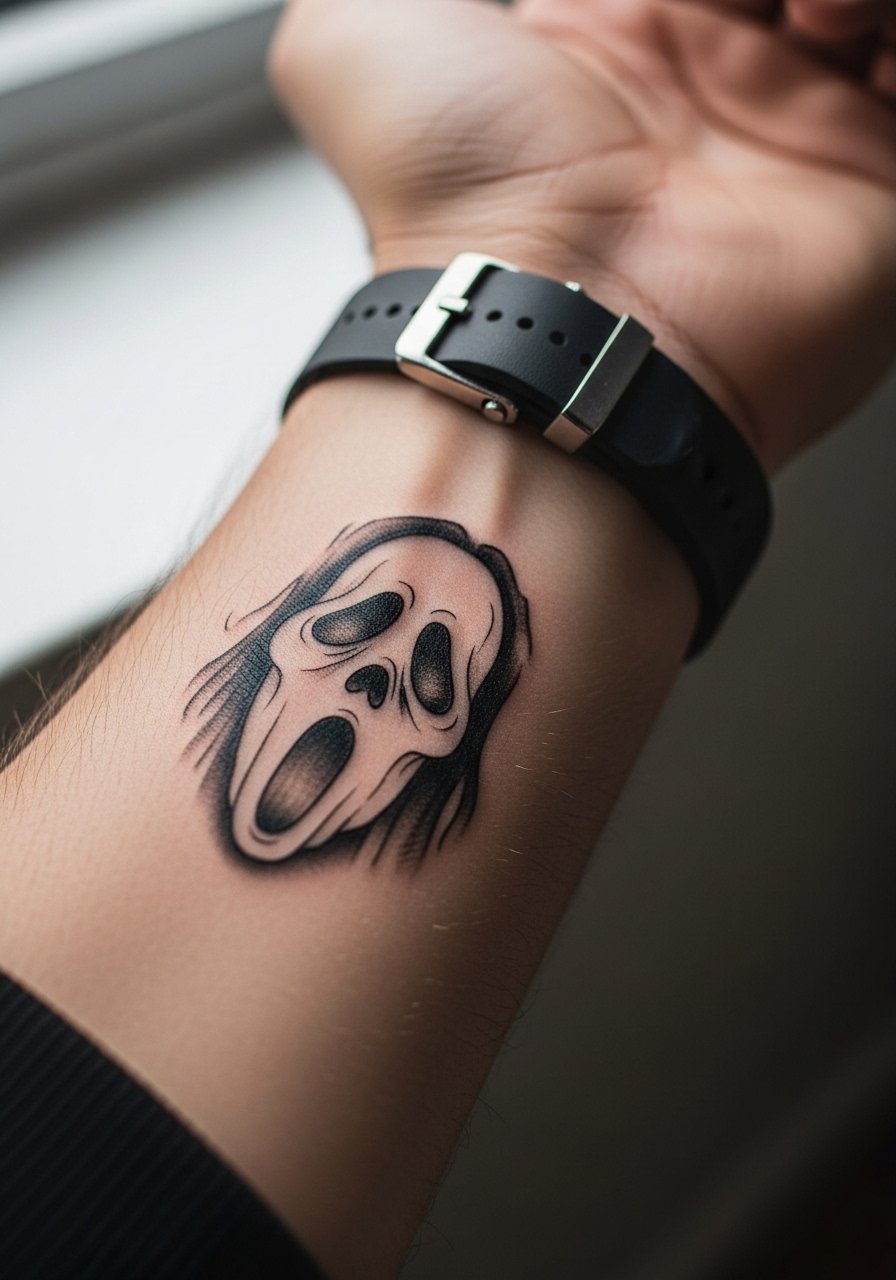
Sketch-style pieces read like a pen drawing and age differently than solid outlines. Request slightly bolder anchor lines around the face and looser interior strokes that can soften without losing form. The inner wrist is high-friction and gets sun exposure, so thin lines blur faster. Wear a minimalist watch after healing to frame the piece without rubbing it. The session is short and tolerable. Plan for a touch-up at year two if you wear the wrist bare often.
9. Tiny Neo-Traditional Ghost Face on the Shoulder Cap
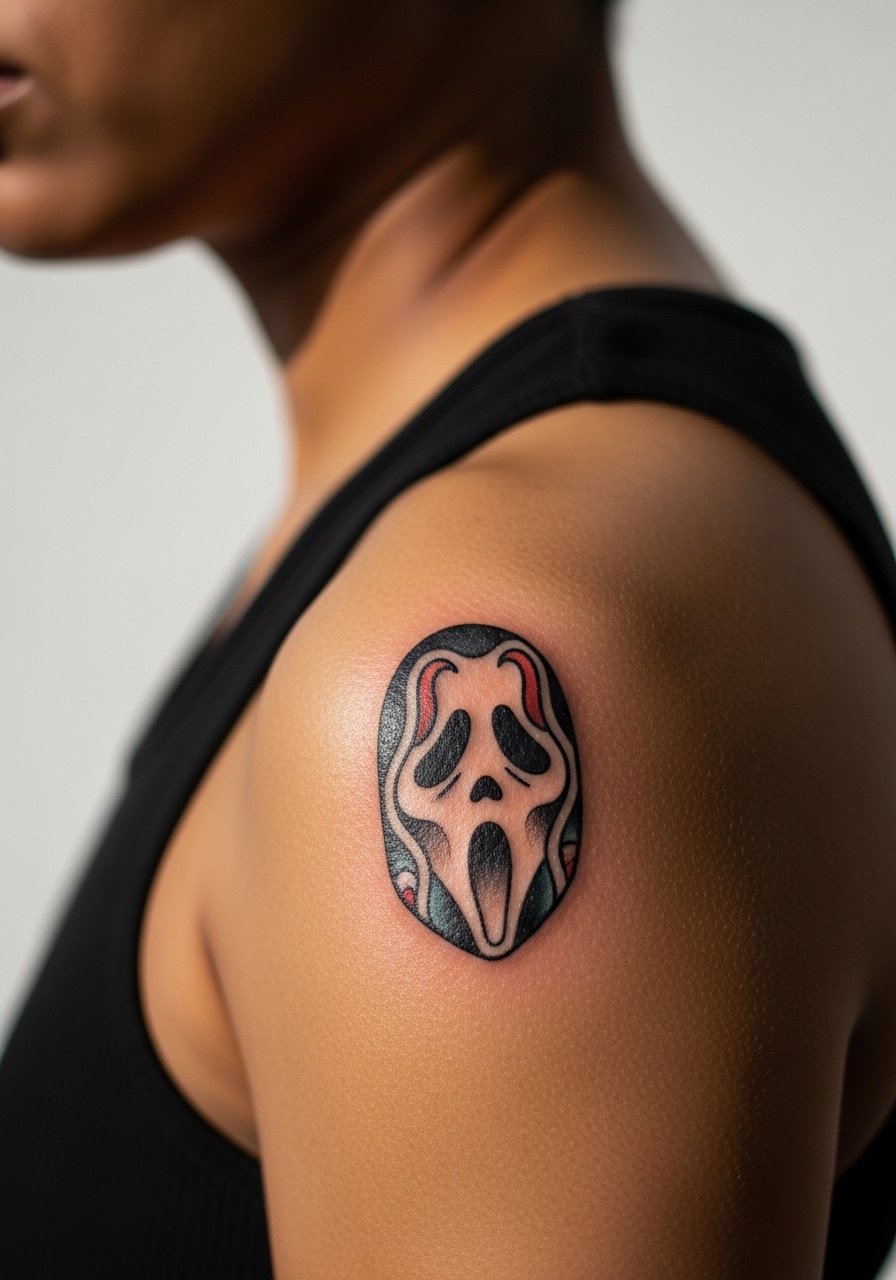
Neo-traditional lets you add saturated pops, like a small red highlight or a muted green background, while keeping a compact silhouette. Ask for saturated blocks that are small and spaced so the piece does not age into a blob. For session wear, a tank top gives the artist clean access. The shoulder tolerates color well and the area moves less, so saturation holds. Expect a relaxed one to one-and-a-half hour session and good longevity with sunscreen use.
10. Tiny Watercolor Ghost Face on the Side Rib
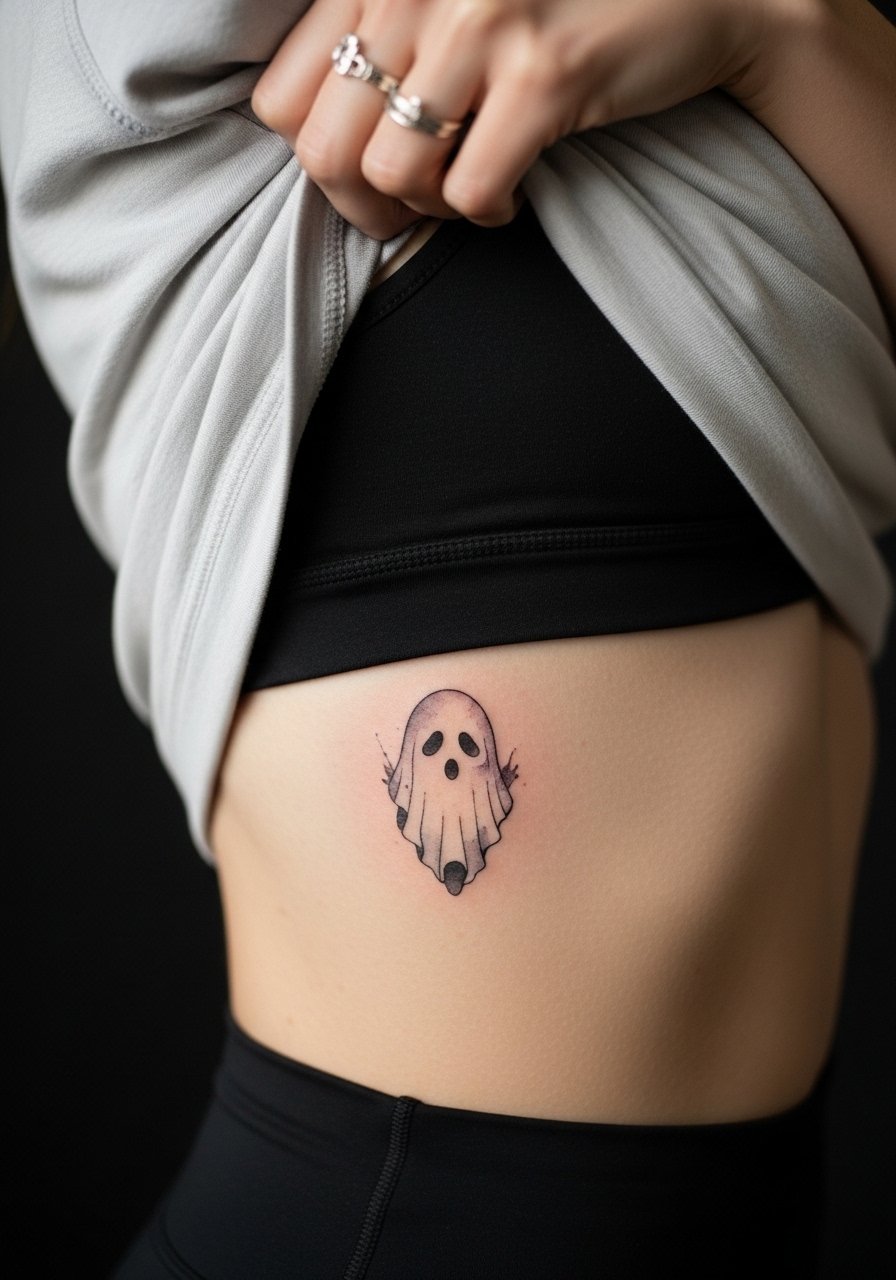
Watercolor effects are risky on ribs because the skin stretches and lines can blur. Artists split into two camps. One camp says watercolor here is expressive and can look amazing for a few years. The other camp argues that motion and stretching make the colors migrate and fade unevenly. If you choose ribs, ask for the watercolor to be used as accent washes around stable black anchors. For the session, wear a cropped athletic top you can lift slightly so the artist works on a clean, tight field. Expect a longer session and a realistic touch-up plan.
11. Minimal Ghost Face on the Back of the Neck
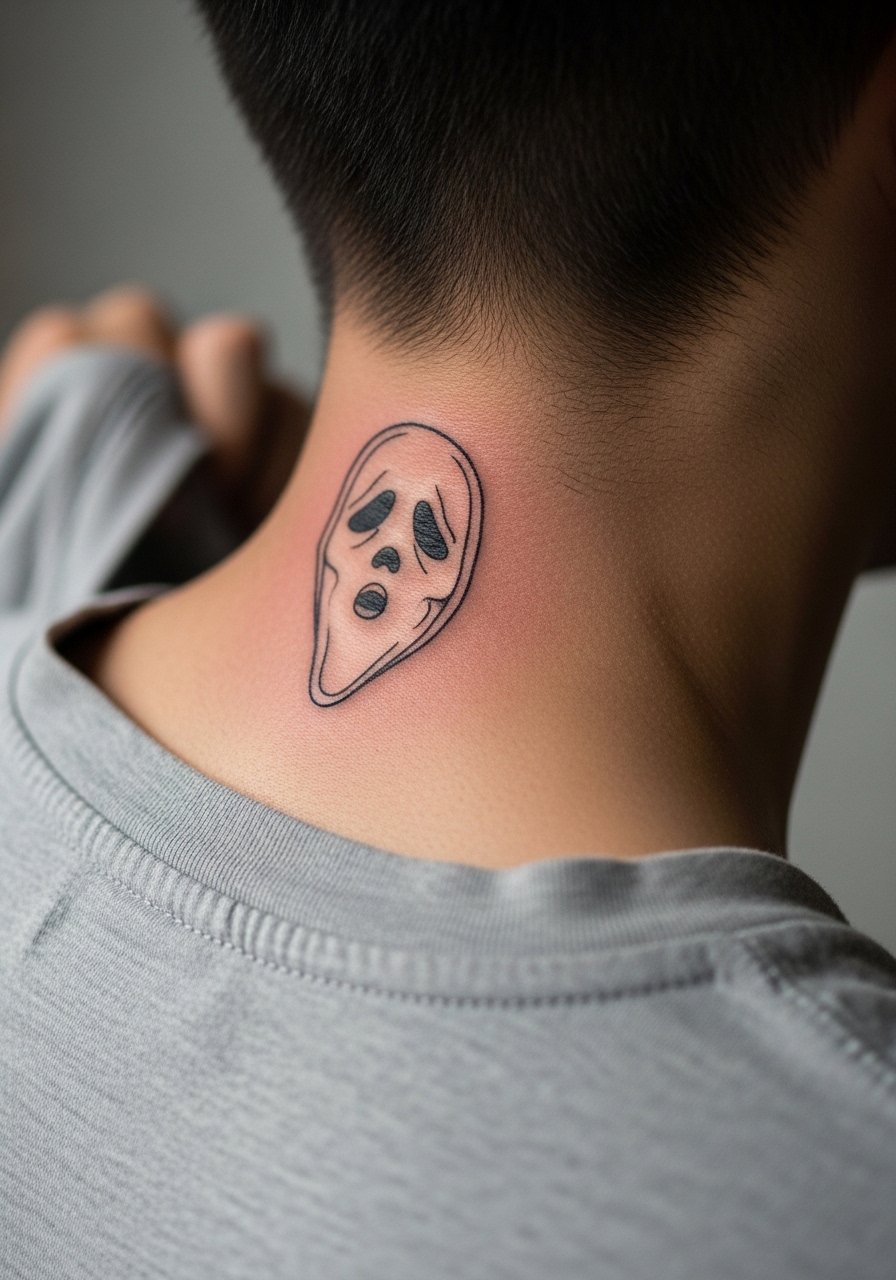
Back of the neck is visible with certain hairstyles and discreet with others. Keep the design vertical and narrow so it sits in the natural column of the spine. People often ask for dense tiny shading here and then regret the way it blurs after a few years. Ask for single-needle contouring and a slightly stronger outline. The session is brief but sensitive. Consider the career visibility of a neck piece before booking. A simple post-session scarf or wide-collar shirt reduces initial irritation.
12. Micro Ghost Face on the Calf with Geometric Frame
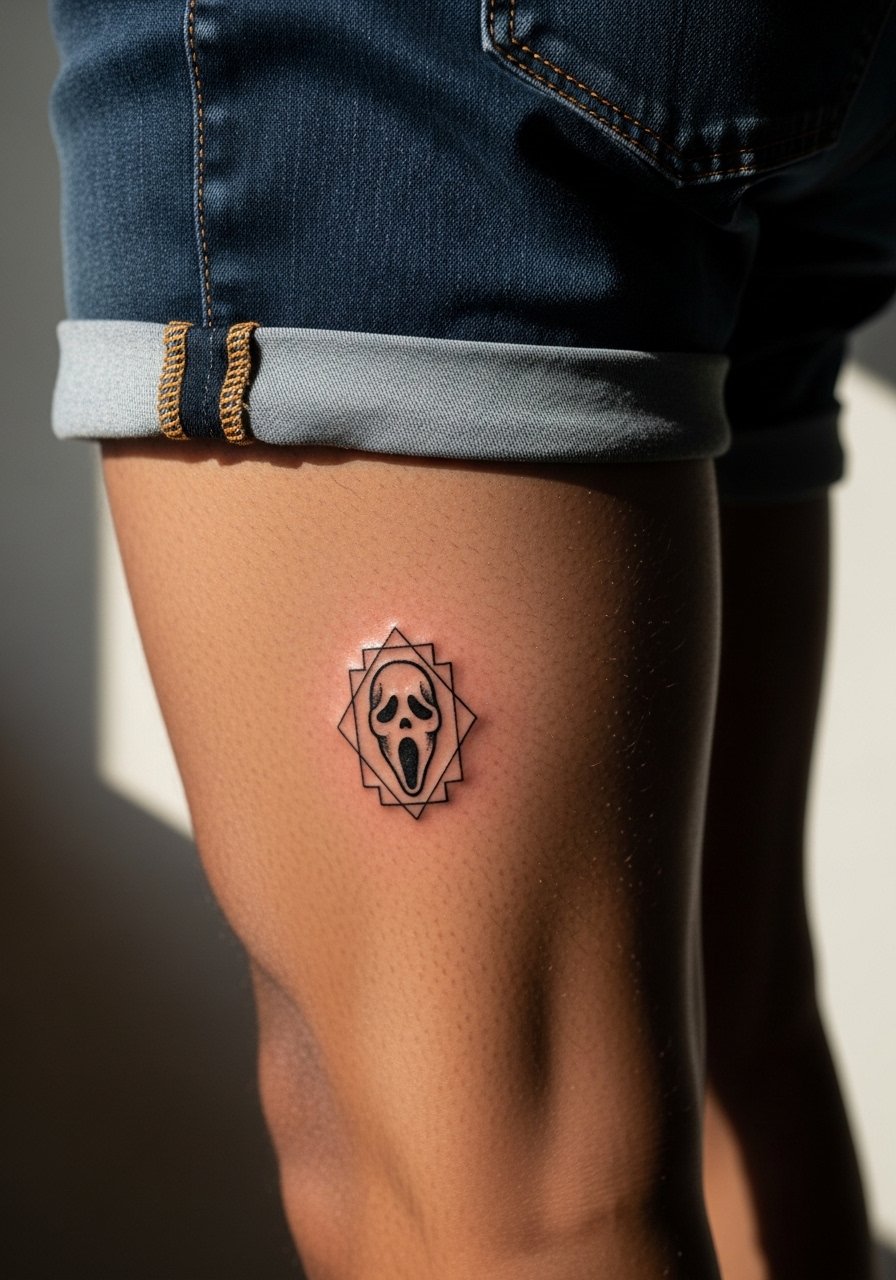
Calf placements let you combine micro-realism with crisp geometric framing. Tell the artist you want the frame slightly larger than the face to allow breathing room. A common mistake is packing the geometry too tightly which ages into merged lines. For the session, wear loose drawstring linen shorts you can shift without pressure. Pain is moderate and the area scars cleanly when inked at the right depth. Expect good longevity and less need for touch-ups than hand or wrist work.
13. Tiny Ghost Face on the Side of the Finger Near the Knuckle
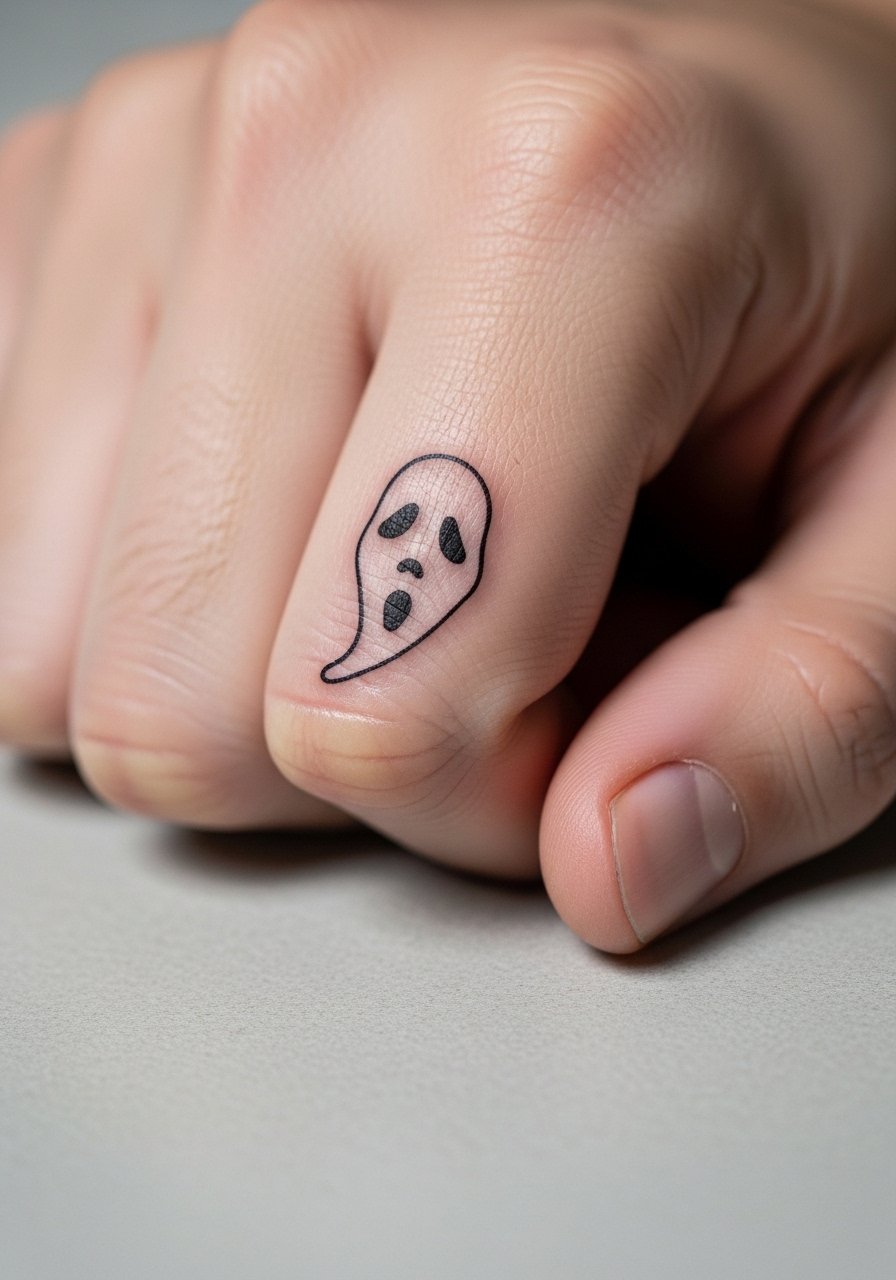
Knuckle-adjacent pieces are edgy but high-risk for fading. The skin there regenerates quickly and sees constant motion. Avoid filled black areas. Ask for outline-first work and plan a one-year touch-up. The session is fast and the pain is intense for just a few minutes. If you work in an industry where visible hands matter, weigh that when booking. Aftercare should focus on minimizing friction while the scabs form and fall off.
14. Tiny Ghost Face on the Throat Center
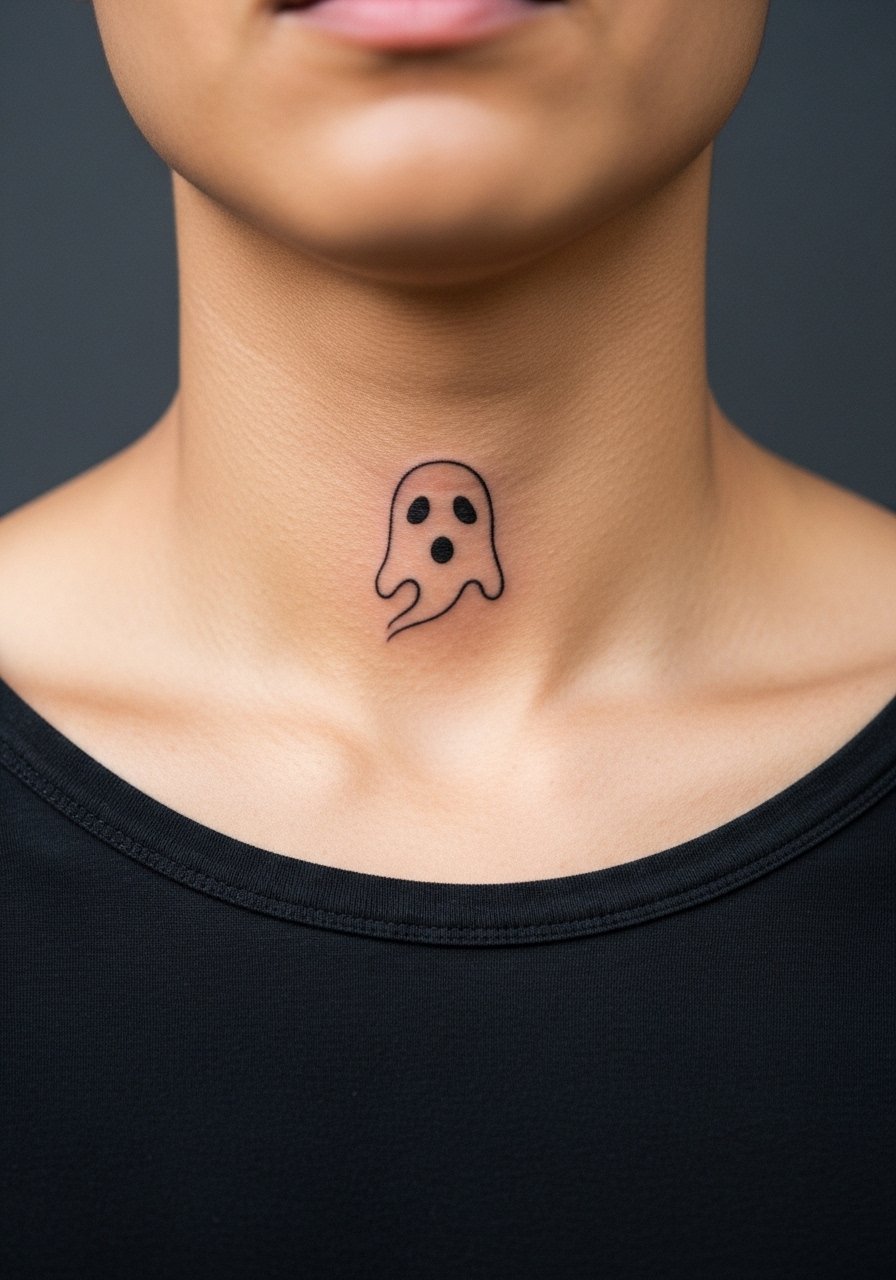
Central throat pieces are bold and very visible. The skin is thin so ask for a simplified silhouette rather than intricate interior shading. One mistake is requesting tiny script near the image which competes and blurs. For the session, wear a wide-neck shirt for access. Expect a sensitive session and a two-hour window depending on linework. Visibility here is permanent and will shape how you dress and present.
15. Tiny Ghost Face Above the Elbow on the Tricep
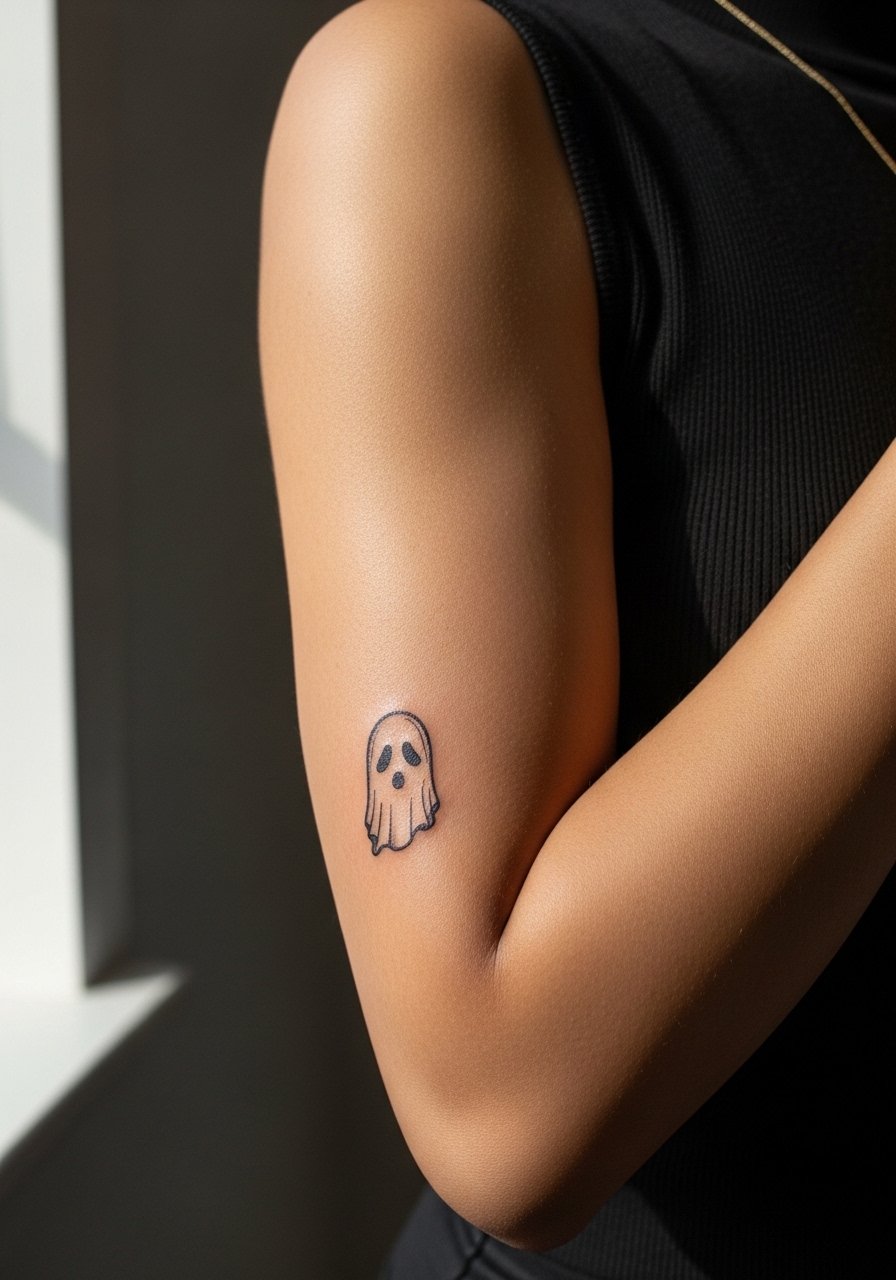
Above-elbow placements move with flex and can distort when the arm bends. Ask for slightly spaced lines and avoid tight interior crosshatching. The tricep holds ink well and is a lower-pain zone. For the appointment, wear a sleeveless top so the artist can work freely. The session is comfortable and the piece ages predictably, with touch-ups usually not needed unless you expose it to heavy sun.
16. Micro-Realism Ghost Face on the Inner Bicep
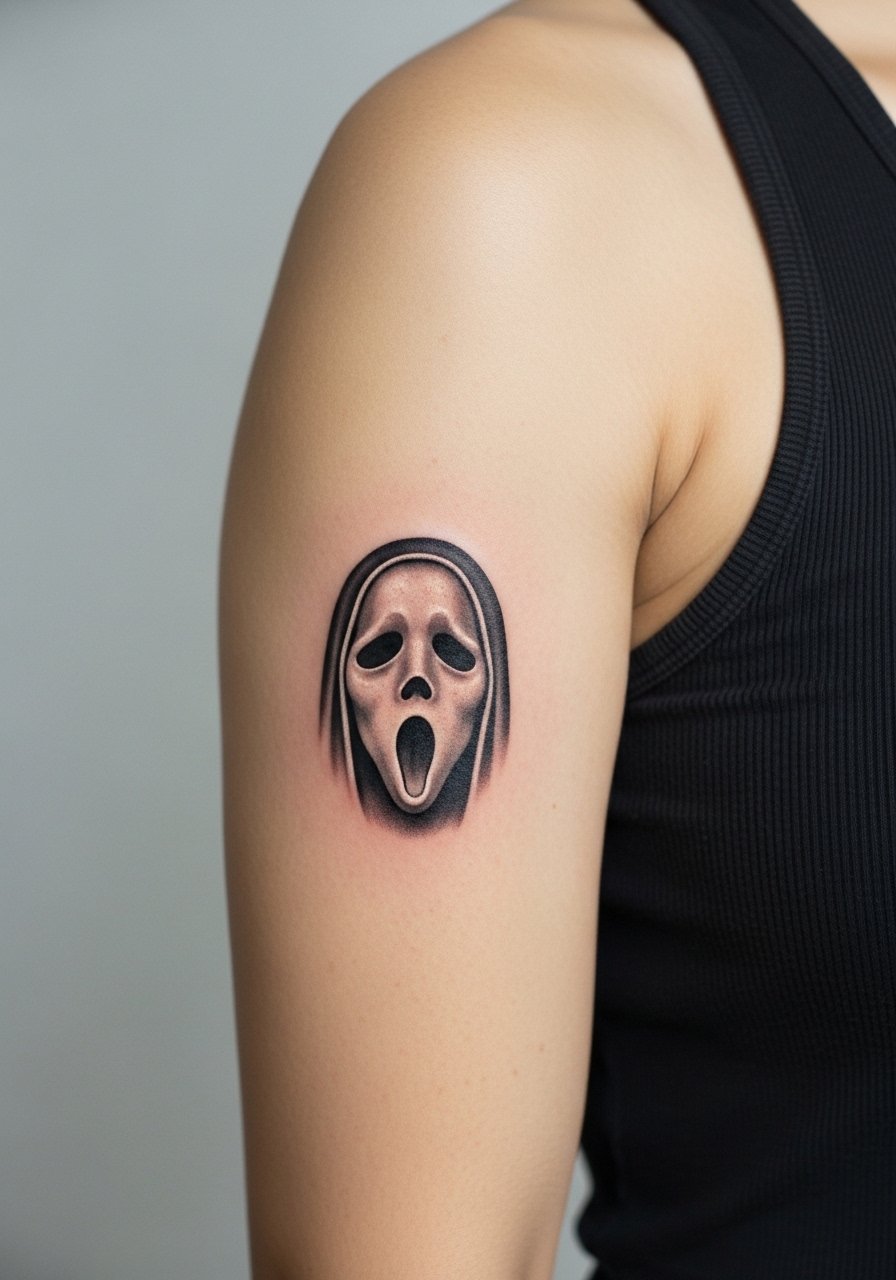
Inner bicep work can hold detail, but the skin is softer and scabbing can be thicker. Ask for modest contrast so the face keeps its hollows without excessive dotting that might compress. The session can be snug because you need to keep your arm still. Bring a racerback tank so the artist can access the area without tugging. Expect moderate pain and a potential touch-up at year three depending on activity levels.
17. Ghost Face on the Side of the Foot
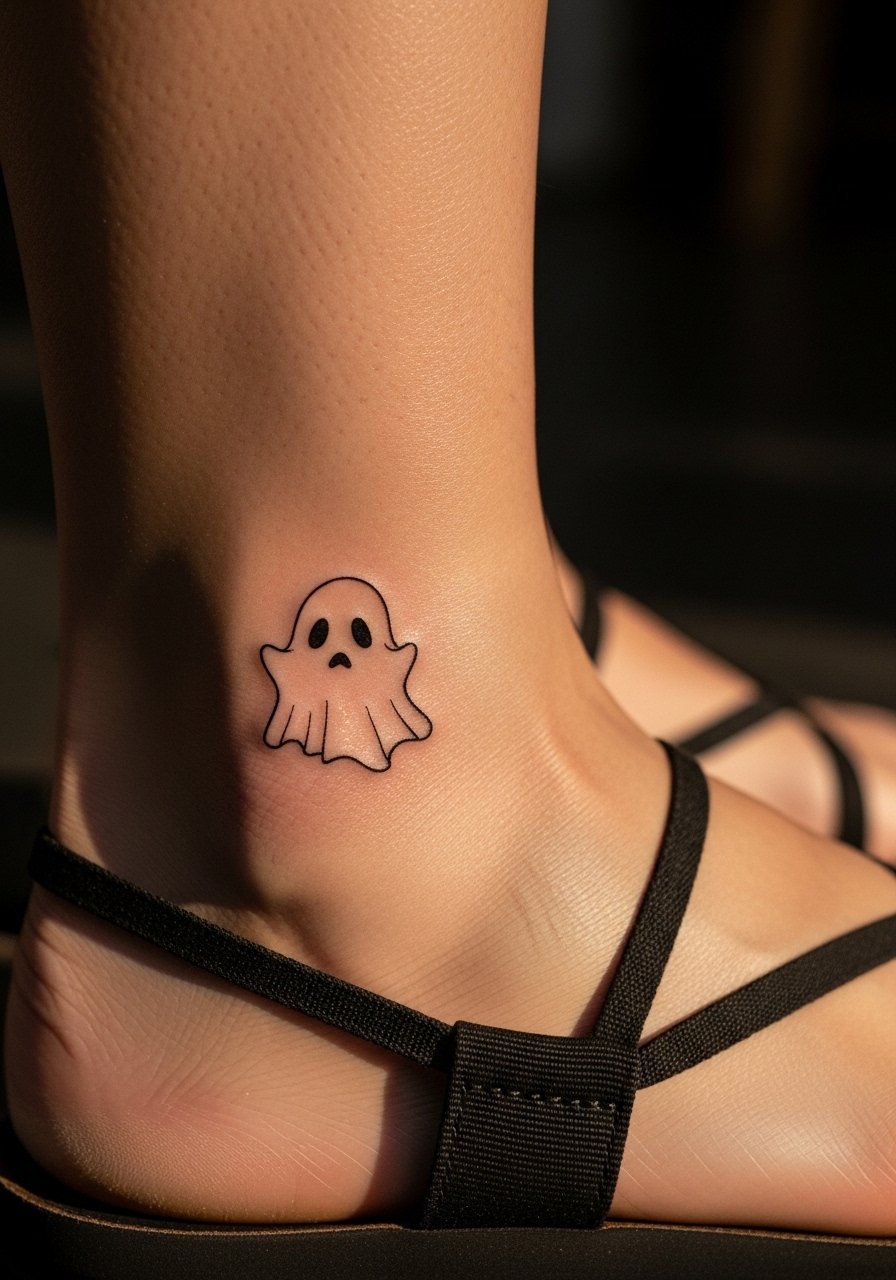
Foot tattoos are painful and sit in a high-friction zone with shoes. Many people regret dense shading here because it breaks down fast. Go for simple outlines and plan on more frequent touch-ups if you wear closed shoes often. The session usually runs under an hour but is uncomfortable. For the appointment, bring sandals that do not press on the fresh ink. Keep showers short during the first week to reduce soaking.
18. Tiny Ghost Face on the Sternum, Peeking Above a Bandeau
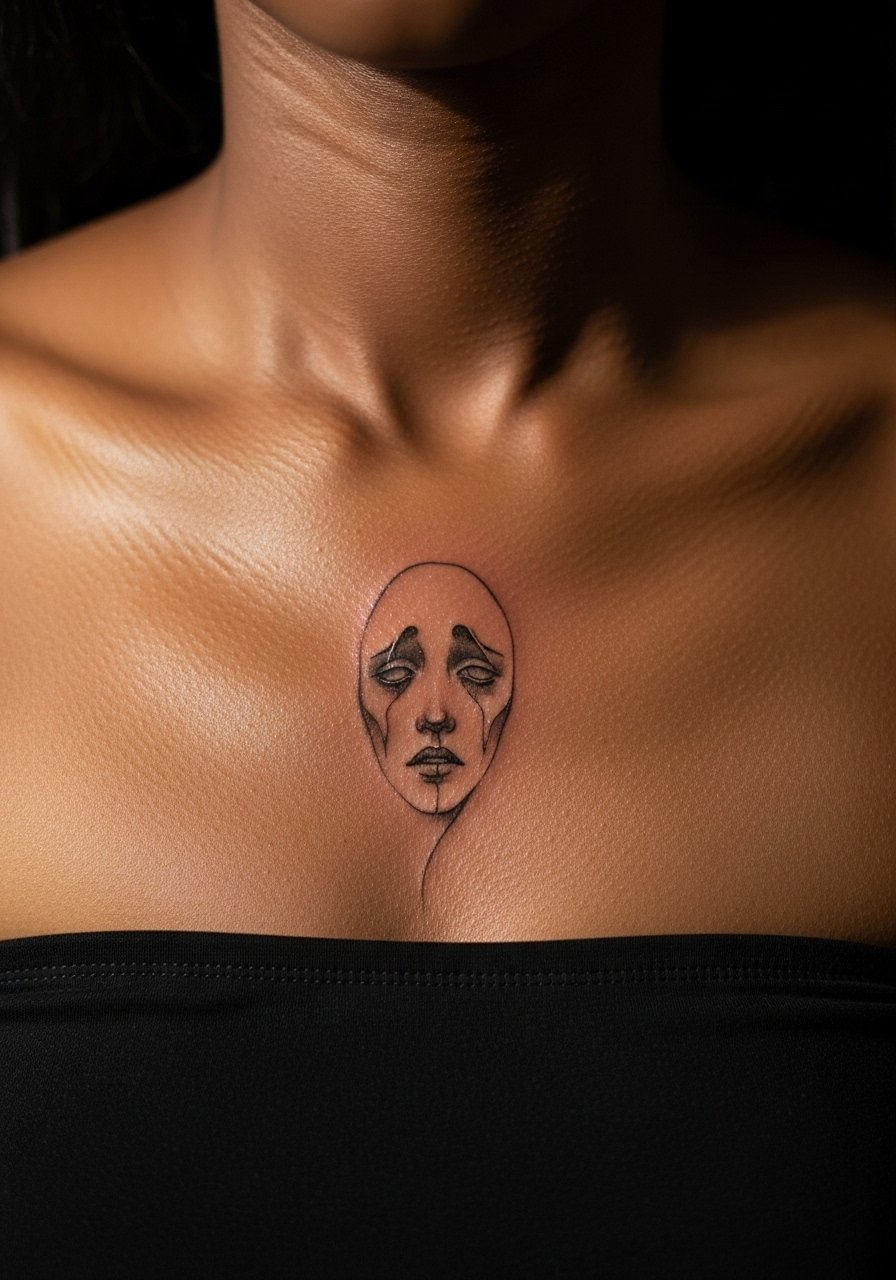
Sternum placements require an artist experienced with curved surfaces. Some artists hesitate due to stretch and breathing motion. If you choose this spot, ask for a centered composition with firm outer lines and light interior detail. For the session, wear a fitted bandeau top so the artist can work without fabric interference. Expect a longer session and pronounced soreness that eases over the week.
19. Tiny Ghost Face as a Nape-of-Spine Accent
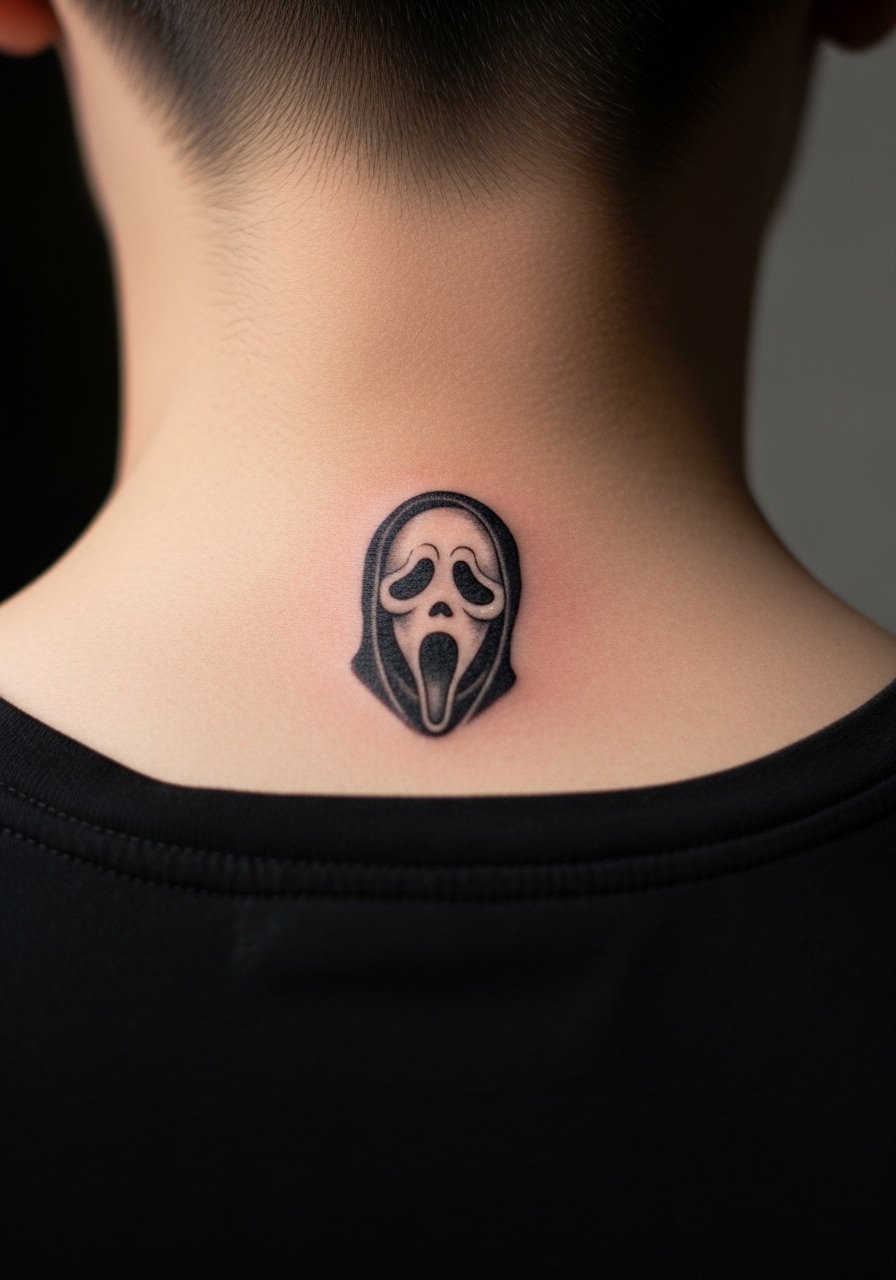
A nape accent reads subtly with certain hairstyles. Keep scale small and vertical so clothing collars can cover it when needed. A common mistake is adding too much negative detail that disappears when hair grows out. Ask for a simple silhouette with slight contouring. The session is quick but sensitive. Consider hairstyle choices and whether you want daily coverage options.
20. Ghost Face on the Lower Back, Framed by a Small Floral Wreath
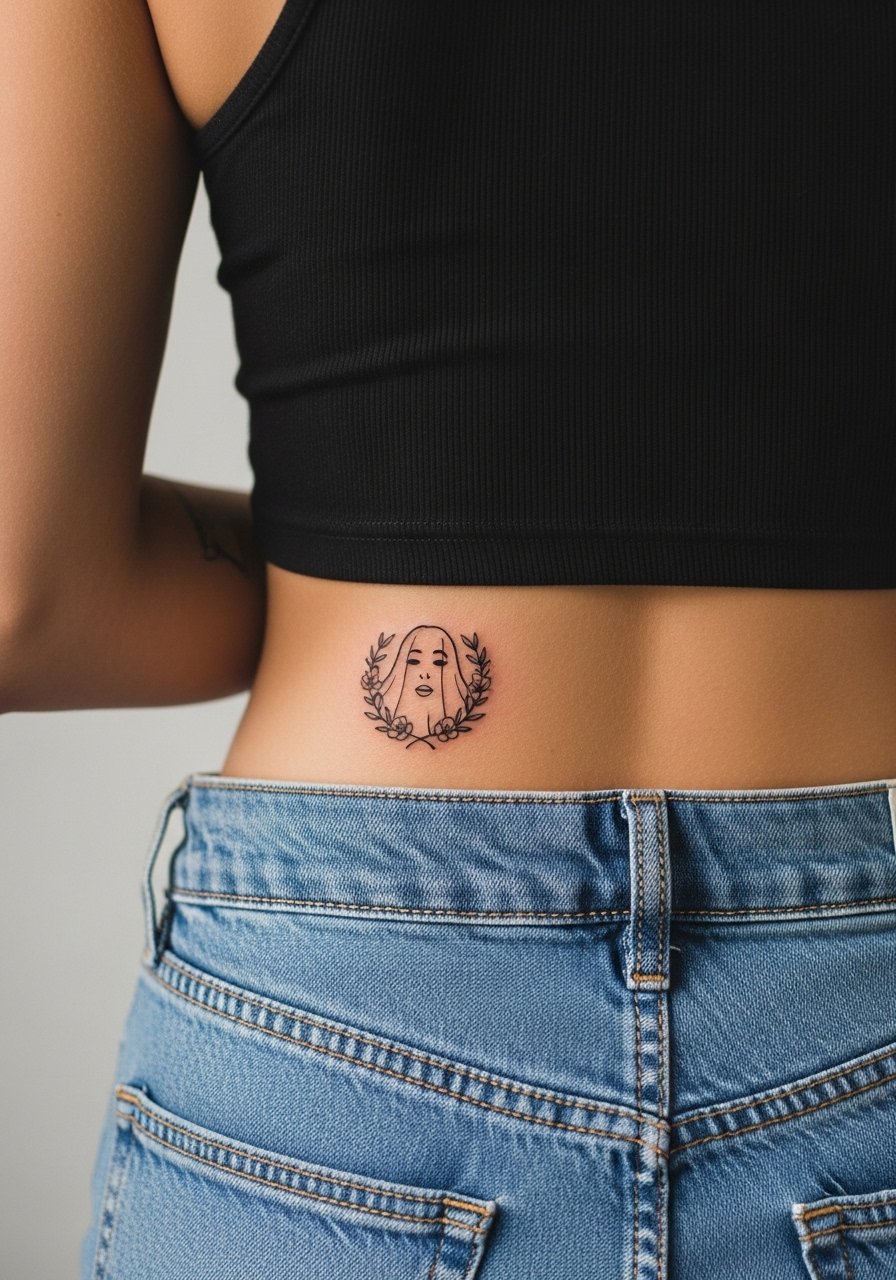
Lower back placements let you pair a slightly larger face with decorative elements. Make sure the wreath does not crowd the face. The biggest mistake is over-detailing the wreath at this scale which ages into low-contrast areas. For the session, wear a tank top with high-waisted jeans you can shift to reveal just the tattoo zone. Pain is manageable and the area usually holds ink well if you avoid excessive sun.
21. Small Ghost Face on the Hip with a Crescent Moon
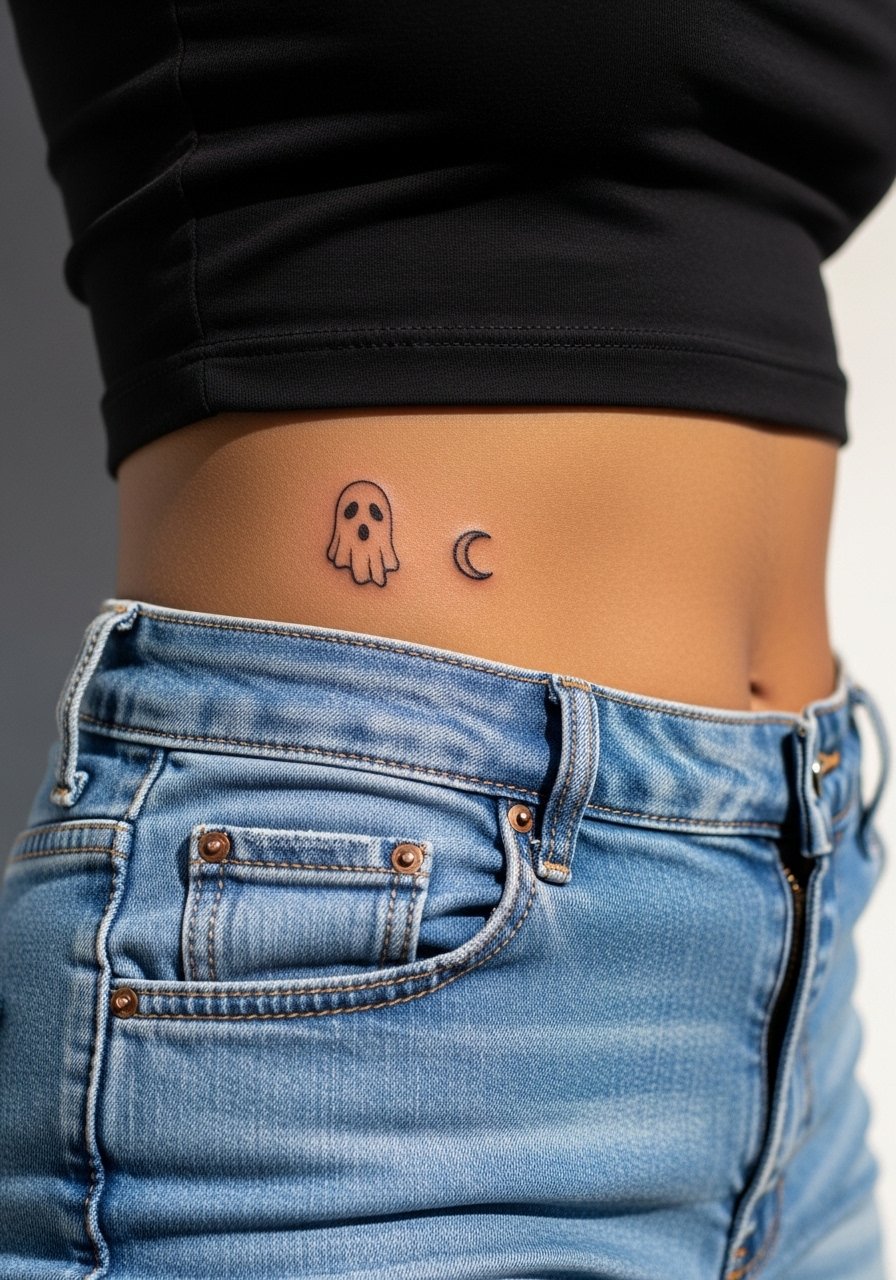
Hip pieces are private and frame well with swimwear. The skin here moves with clothing and body changes, so keep the face compact and the moon simple. Ask for a slightly increased outer line thickness so the shape holds through weight fluctuations. For the session, wear high-waisted denim that you can shift without tugging. Expect a medium session and good longevity if you protect the area from sun.
22. Ghost Face on the Toe Near the Nail Bed
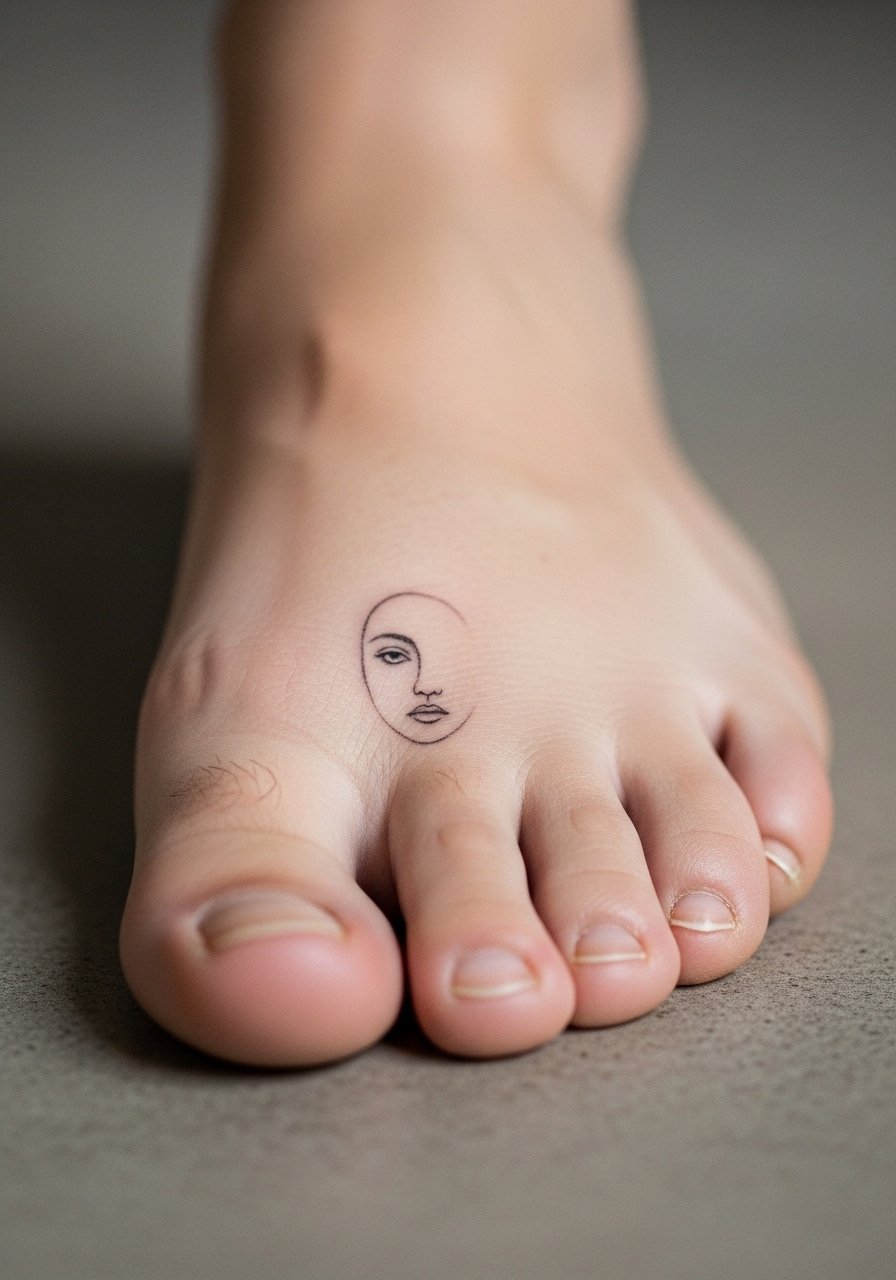
Toe tattoos are tiny and prone to fast fading because of constant friction and moisture. Keep the design ultra-simplified and stick to fine outline work. Many people underestimate how often the toes contact surfaces. The session is quick and sharp. For after the appointment, wear open-toed shoes for the first week to limit pressure on the site. Plan on a touch-up at year one if you frequently wear closed shoes.
23. Ghost Face Peeking from the Hairline on the Temple
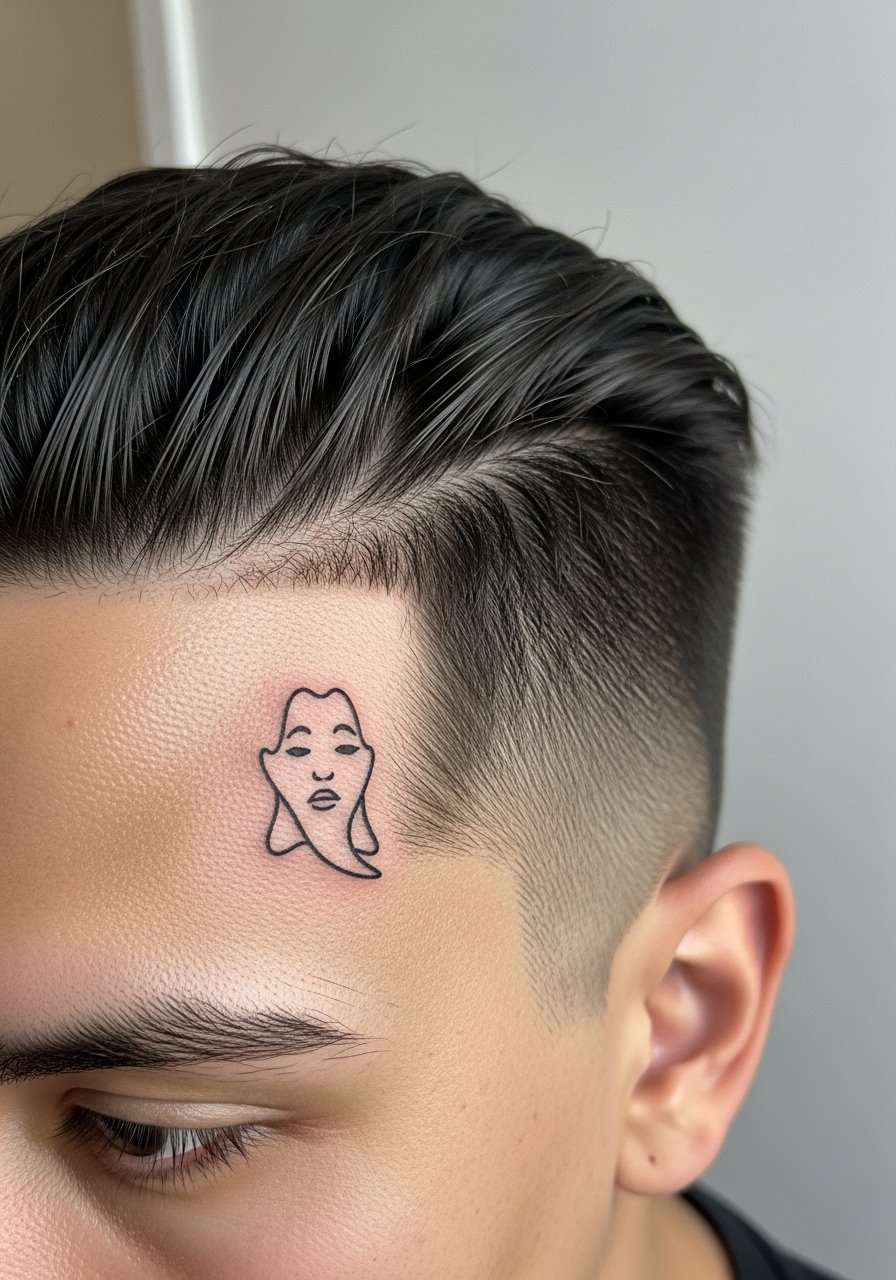
Temple placement is bold and visible with short hair or pinned styles. The skin is thin so ask for a minimalist outline rather than heavy fill. The biggest mistake is wanting lots of interior detail that loses clarity as time passes. Session sensitivity is high and requires steady stillness. For the appointment, pin your hair up with a wide hair clip so the artist can work cleanly. Expect a small touch-up window depending on sun exposure.
24. Tiny Ghost Face on the Inner Thigh, Visible with Swimwear
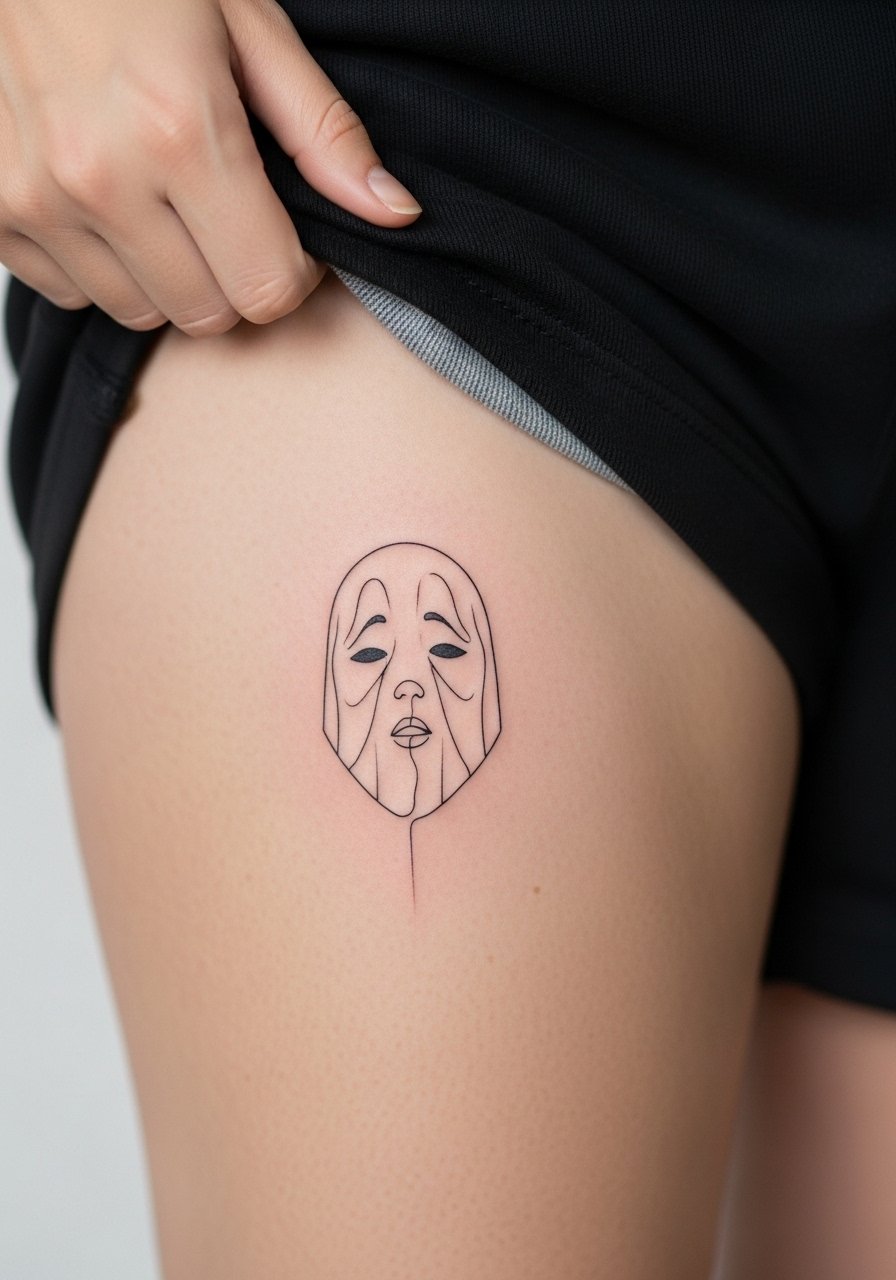
Inner thigh tattoos are intimate and heal well if you avoid tight clothing while scabs form. The error I see most is asking for dense shading which can appear muddy when the skin rubs against fabric. Ask for airy interior lines and a slightly bolder outline. For the session, wear loose shorts you can shift without pressure. Pain is moderate and the area often needs fewer touch-ups than hands or feet.
25. Tiny Ghost Face on the Upper Chest Near the Clavicle
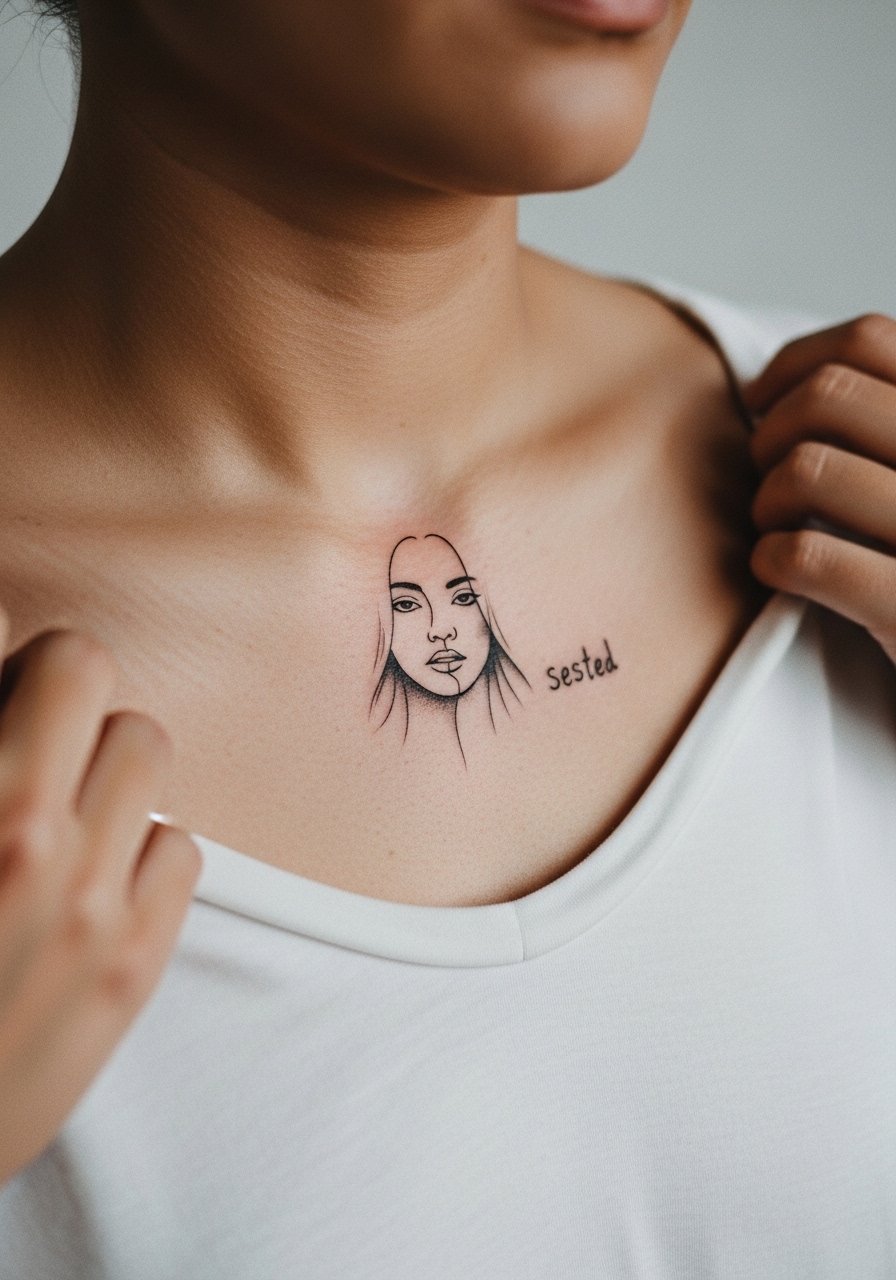
Upper chest pieces photograph well with neckline styling. Keep the image offset from the bone so the ink does not skip. A mistake is over-detailing in the hollow near the clavicle; simplified interior work lasts longer. For the session, wear a wide-neck shirt so the artist can access the area without tugging. Expect moderate pain and reliable longevity with sunscreen.
26. Tiny Ghost Face Near the Hairline Above the Ear
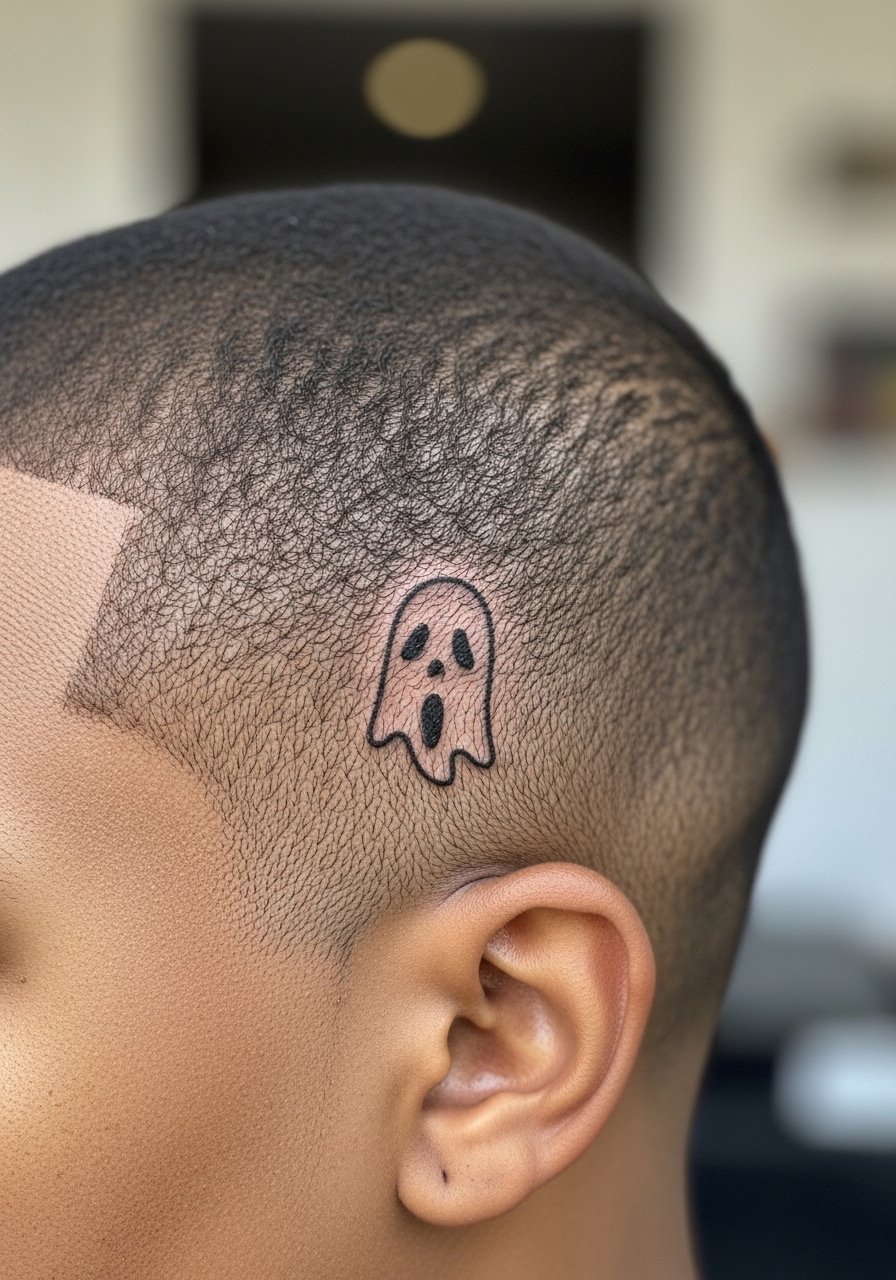
This placement reads as a subtle accent and pairs well with layered hair styling. Tell the artist to place the face under the hairline so it peeks out when your hair is up. A common mistake is making the piece too detailed for the small canvas. For the session, bring a wide hair clip to keep hair away. Pain is low and touch-ups are usually optional depending on sun and shampoo frequency.
27. Tiny Ghost Face as an Inner Wrist Wrap That Connects to a Bracelet
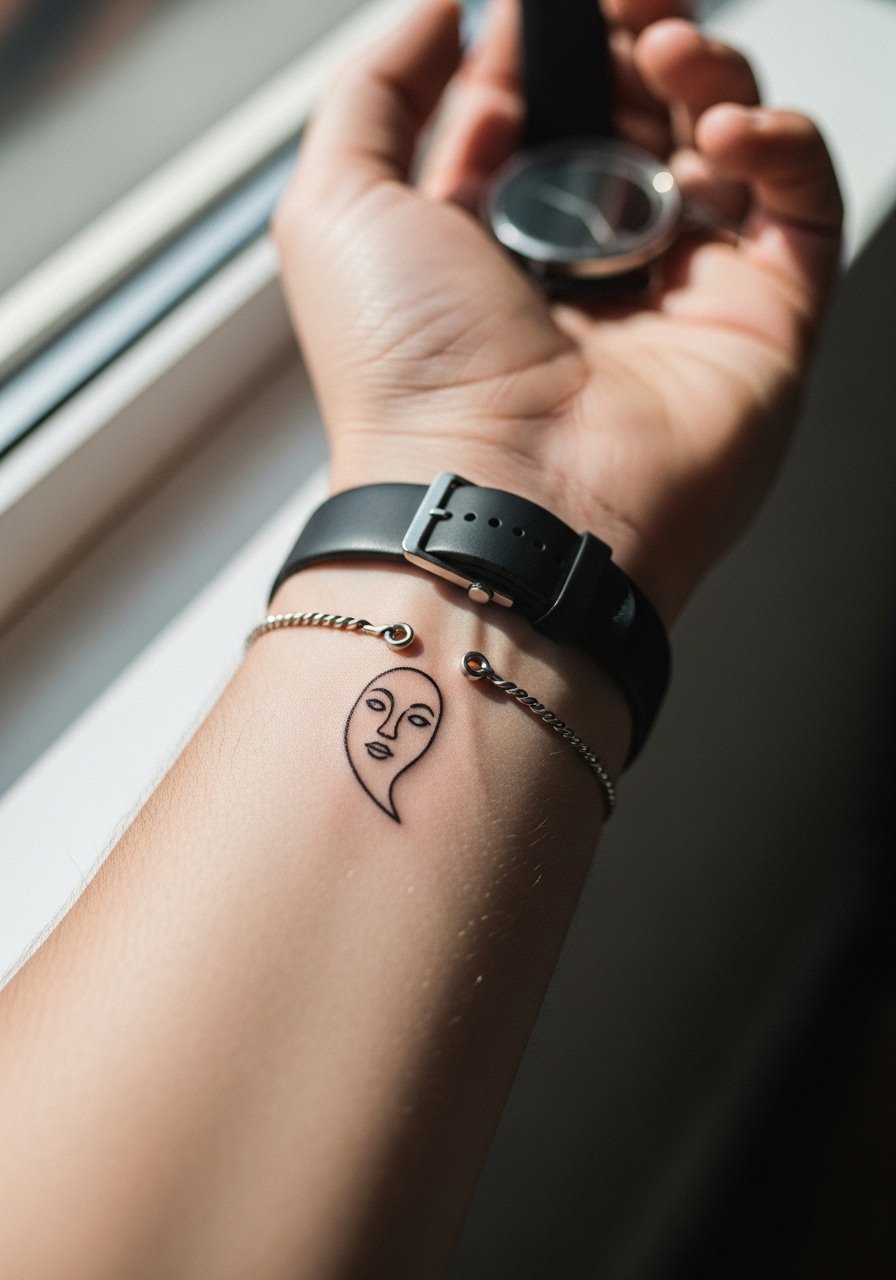
Inner wrist wrap designs should respect movement and wash frequency. Ask for the bracelet lines to sit slightly apart from the face so both elements age without merging. The biggest mistake is trying to cram script or micro-shading into the wrap. For the appointment, remove jewelry and bring a minimalist watch to frame the healed piece without rubbing it. Expect a short session and likely touch-ups at year two.
Frequently Asked Questions
Q: Will a small ghost face tattoo on my finger or hand need touch-ups more often than one on my forearm?
A: Yes, hand and finger pieces see more washing and sun, so they tend to need touch-ups sooner than forearm work. The skin regenerates faster on the hands and the constant friction wears down fine line contrast. Plan for possible touch-ups at year one or two if those areas are exposed daily.
Q: Is fine line or stipple better for a tiny ghost face on the ribcage?
A: Stipple or slightly bolder lines hold up better on the ribcage because the skin stretches when you breathe. Fine single-needle work can look exquisite initially but may blur faster with constant motion. If you like both looks, ask the artist to anchor the design with firmer outlines and use stippling for interior shades.
Q: Are neck and throat placements likely to affect job prospects?
A: They can in some industries. One group accepts visible neck and throat tattoos as normal self-expression. The other group cautions that conservative workplaces may react negatively. Think about your career plans and whether you prefer a placement that is easy to cover with clothing.
Q: How should I dress to my appointment for an inner thigh or sternum ghost face?
A: For inner thigh or sternum work, wear loose, easily adjustable clothing like a cropped tank or drawstring shorts so the artist can access the area without tugging. Comfortable, loose layers reduce pressure on the site right after the session and help you relax during longer appointments.
Q: Do watercolor ghost face tattoos on the ribs fade faster than blackwork versions?
A: In my experience, watercolor approaches on ribs can diffuse and lose pop more quickly than compact blackwork. The skin movement and breathing can make soft washes migrate. If you love watercolor, ask for color used as accent around strong black anchors so the overall composition keeps its shape over time.