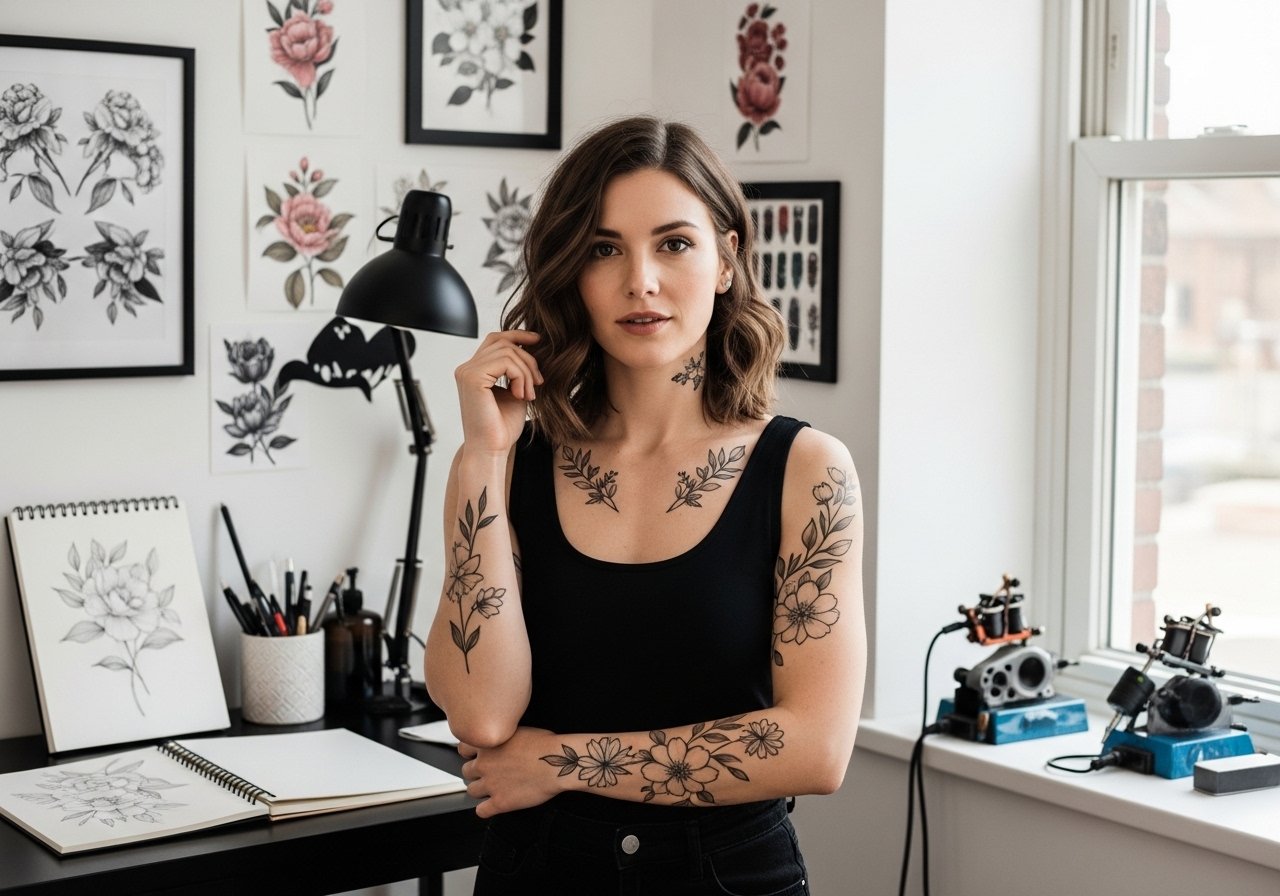
Fine line dragons look delicate on a saved board and different on real skin. I have watched clients choose a tiny Haku-style curve because it felt like jewelry, then ask for a bolder touch-up two years later. If you want soft dragon tattoo ideas that hold up, think placement, needle spacing, and how your wardrobe will show the piece. Start with the wrist-friendly options below.
1. Fine-Line Haku Dragon on the Inner Wrist
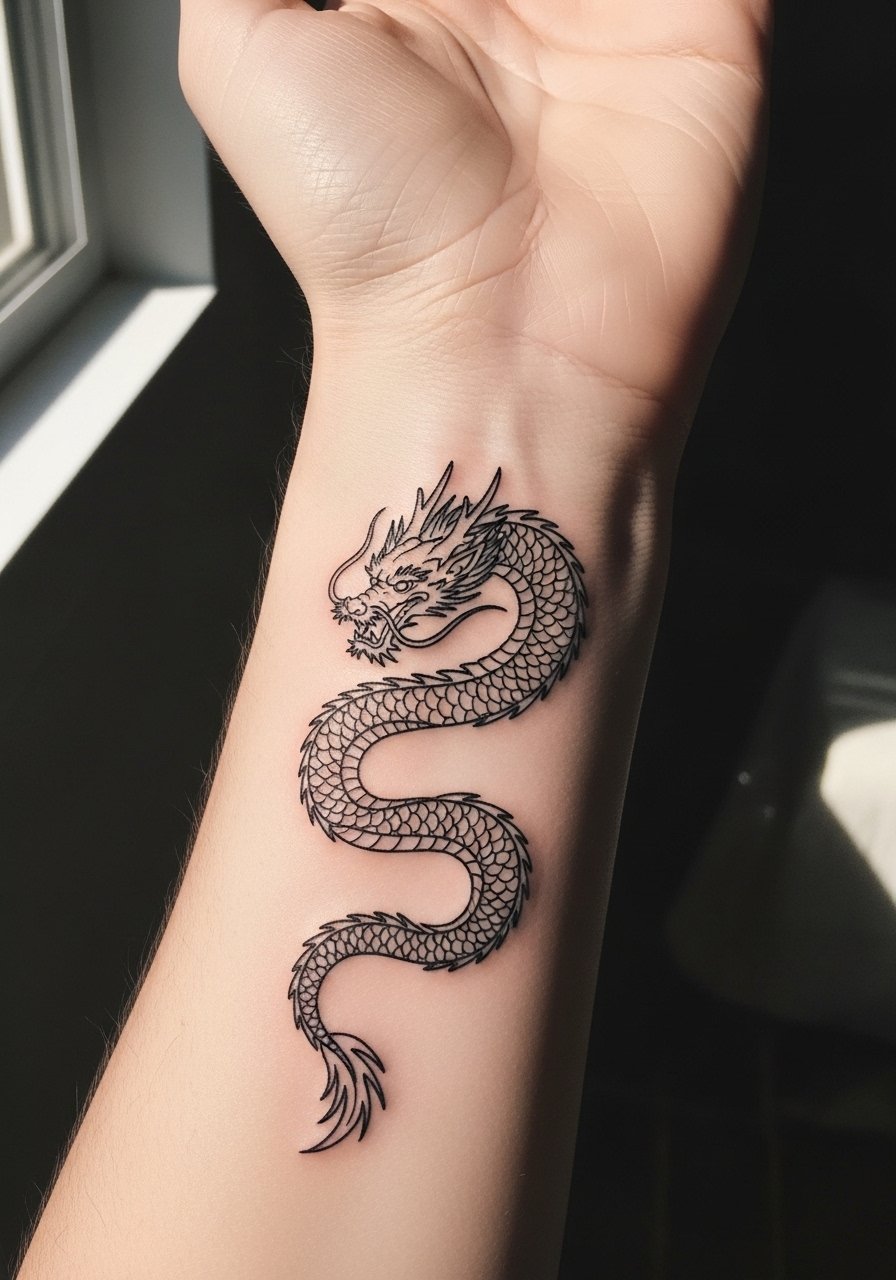
I open many consultations with this one because the inner wrist reads like jewelry and it feels discreet. Expect a short session time and a moderate sting because the area is thin skinned. Tell your artist you want a single continuous line with slightly heavier anchor points at curves so the silhouette stays readable as it heals. A common mistake is asking for micro-detail in a one-inch piece, which blurs by year two. For the session wear a sleeveless blouse you can roll up easily. Pair the healed piece with a dainty bracelet stack on the opposite wrist so the tattoo feels intentionally like jewelry.
2. Floral Dragon with Peonies on the Inner Forearm
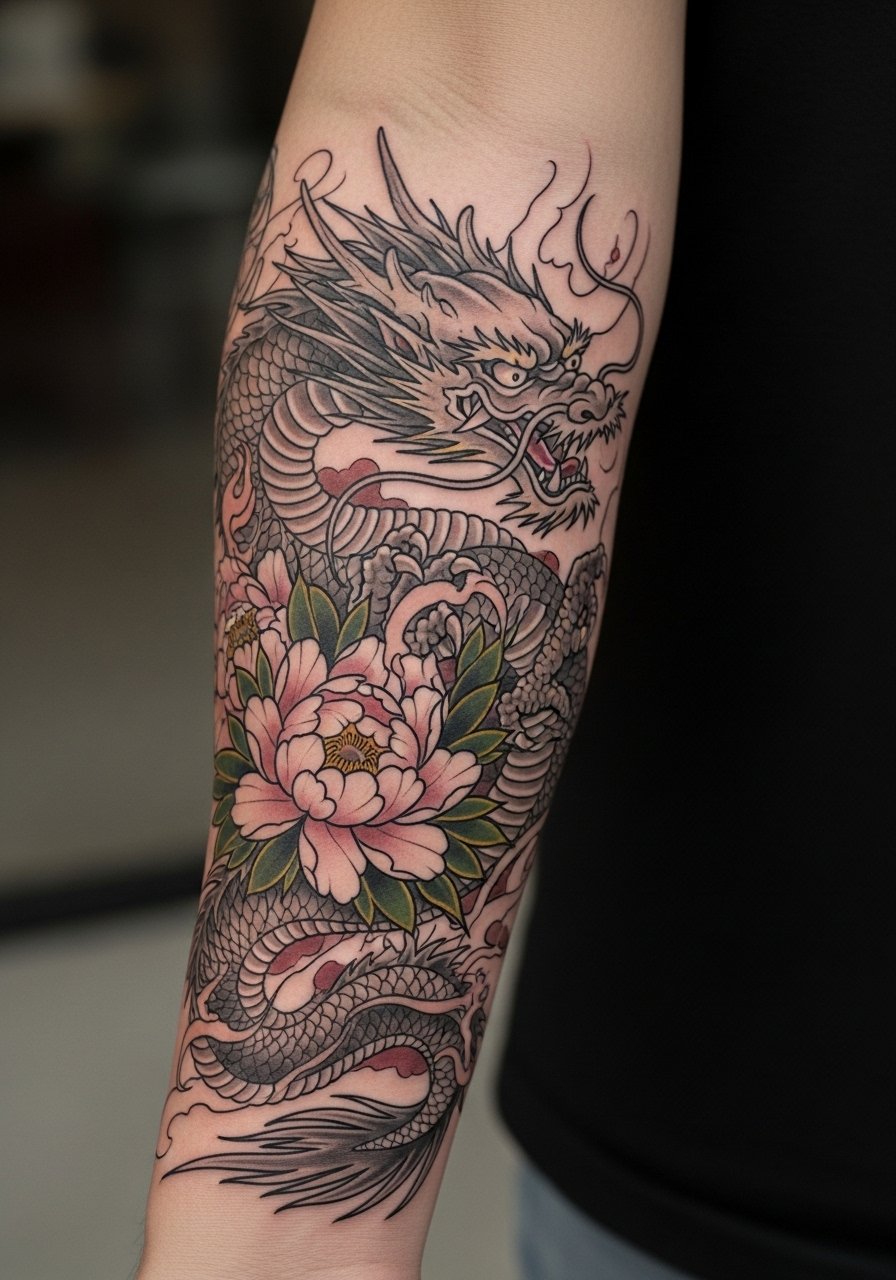
I've seen inner-forearm floral dragons age well when artists leave breathing room between flowers and scales. This placement tolerates delicate shading and color accents, and it is visible enough to show off without being loud. In consultation, specify that peonies should sit adjacent to the dragon rather than layered over tight linework. The typical mistake is packing too much stipple shading into a small band, which turns muddy after two years. Pain is moderate. For the session, wear a linen button down you can roll to the elbow, and for outfits, rolled cuffs in cream let the piece read like a sleeve accent.
3. Minimalist Single-Line Dragon on the Ankle
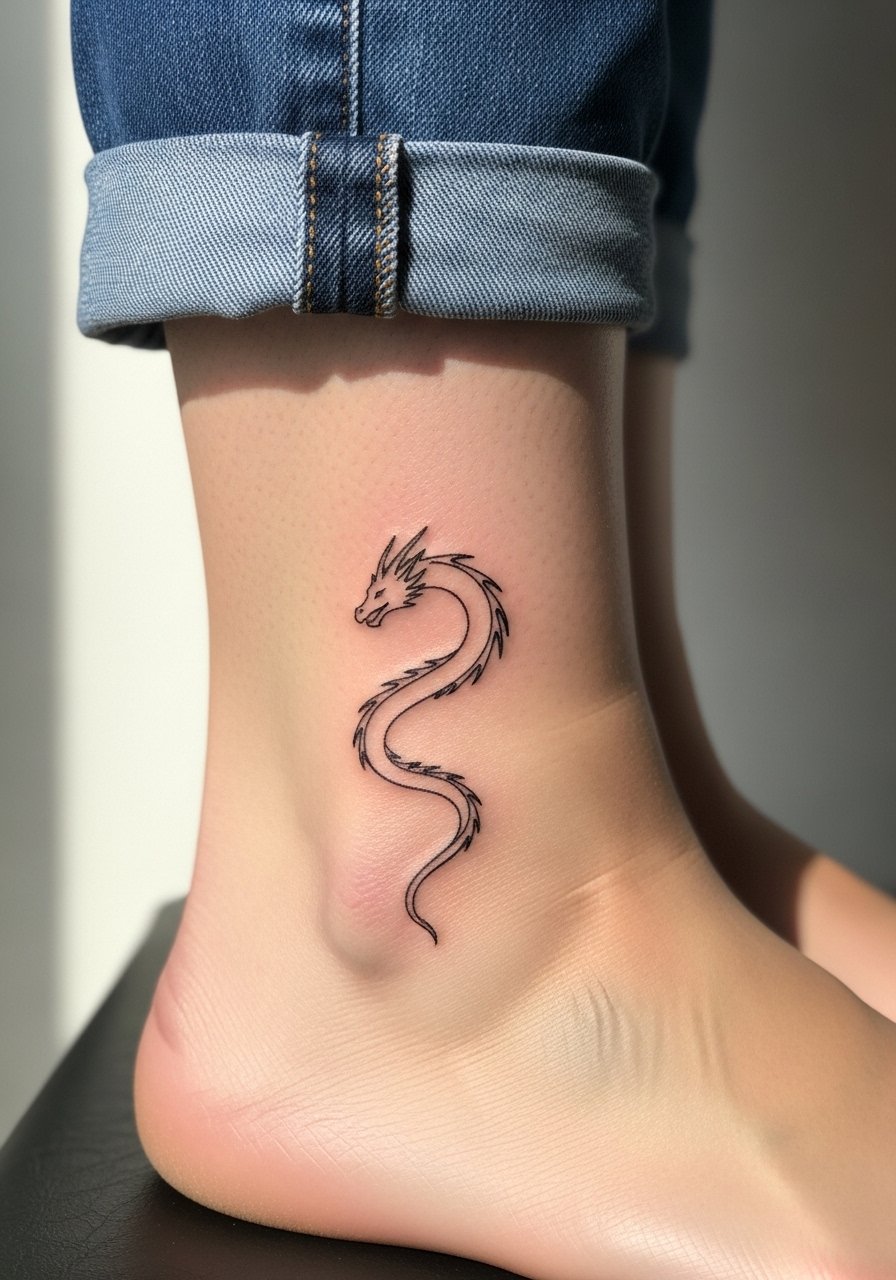
Ankle dragons feel like permanent anklets. Expect a quick appointment and a sharp sting near bone. Ask your artist for slightly increased line weight at turning points so the shape keeps its jewel-like clarity after healing. A common issue is making the curve too tight around the ankle, which distorts when you stand or flex. For the session, shorts are best so the artist can position the leg freely. Show-off pairing suggestions include strappy sandal flats or cropped ankle pants to keep the tattoo visible without crowding the eye.
4. Spine-Line Swimming Dragon That Follows Your Curve
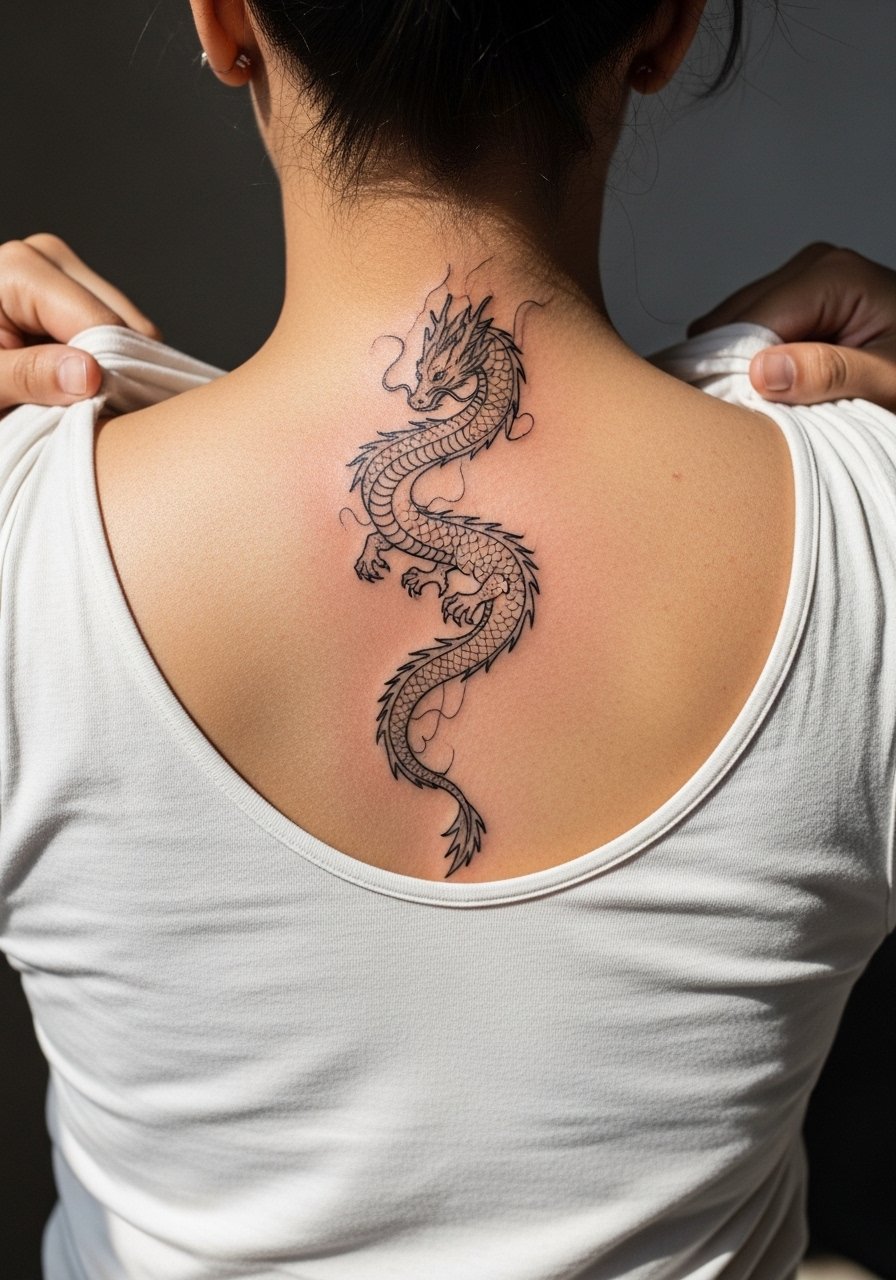
Fair warning, full-spine pieces take time and commitment. The linework needs consistent depth along a long distance so the dragon reads as a continuous motion even after skin shifts. Artists split on fine line here. One camp says the stretch of the torso makes thin lines blur within two years. The other camp argues that with appropriate spacing and slightly bolder anchors, it settles fine. Ask your artist which approach they use and for examples of healed spines. Expect multiple sessions with moderate to high pain at the lower ribs. For reveal outfits, a backless maxi or halter top complements the vertical flow.
5. Water Dragon with Wave Motifs on the Thigh
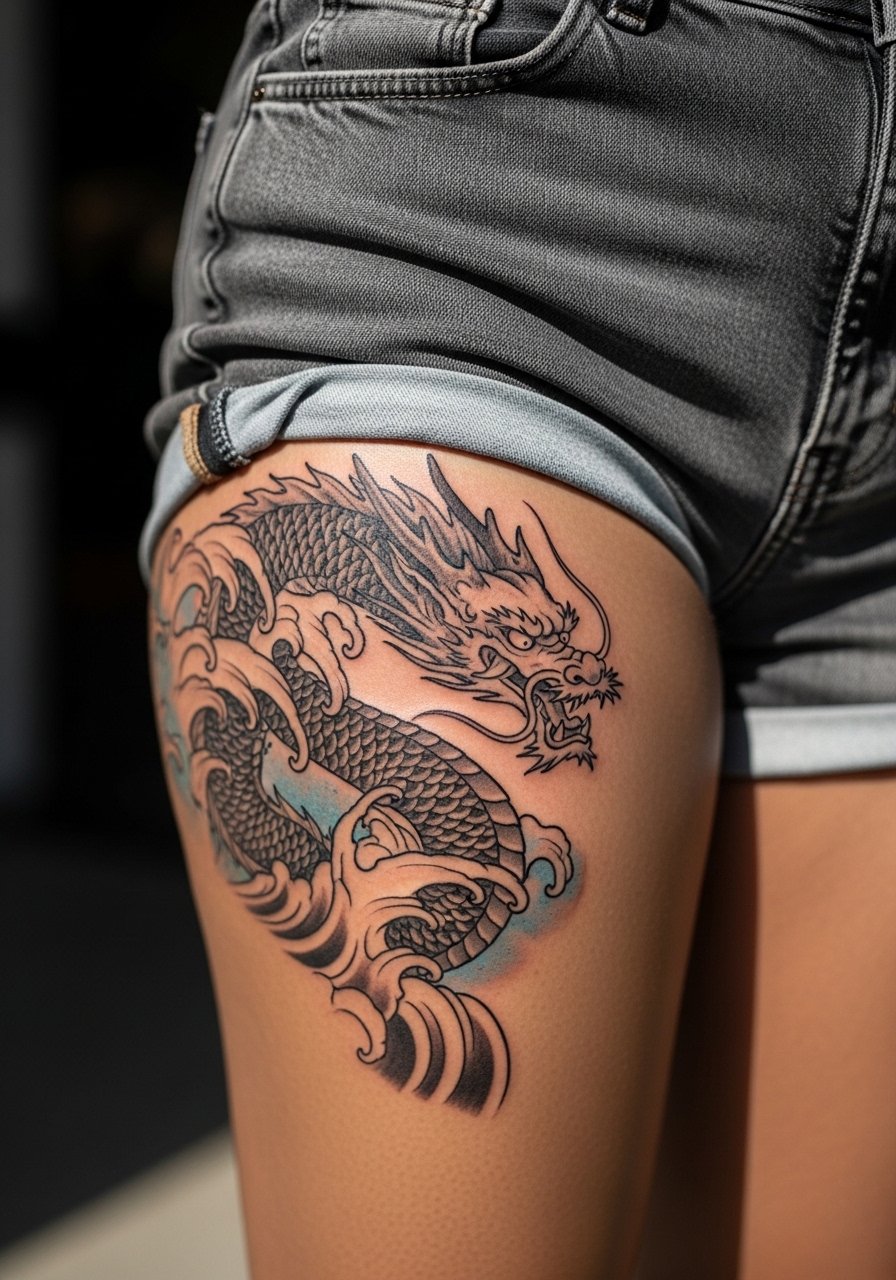
Thigh pieces tolerate saturation and movement, which is why water dragons look fluid there. Sessions run longer than small wrist pieces and the pain is variable depending on inner versus outer thigh. Tell your artist you want the waves to follow muscle lines so the composition moves with walking and sitting. A common mistake is placing too much heavy black near the groin edge where friction causes faster fading. For session wear, pick loose shorts or a skirt so the artist can shift fabric without pressure. For nights out, a high slit skirt or denim short shorts shows off the curve.
6. Celestial Smoke Dragon with Stars on the Shoulder Blade
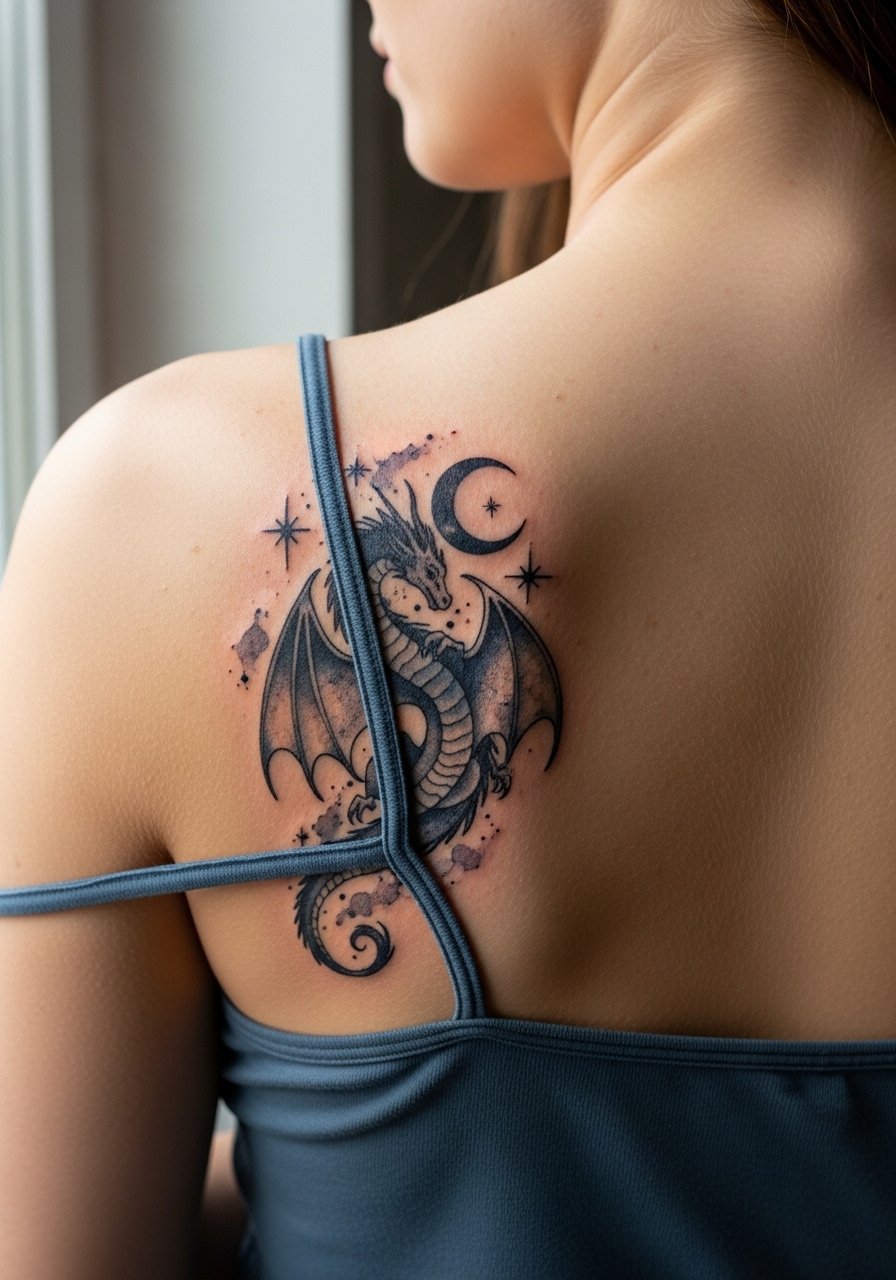
Shoulder-blade placements are forgiving for watercolor washes and starry elements because movement there is low. Most sessions are a single sitting for a small to medium composition. Ask for softer transitions between pigment fields so the cloud-like smoke reads as atmosphere rather than patchy color down the line. A common error is over-saturating pigment at the edges, which creates hard borders when the intention was dream-like blending. For the session, wear a strappy cami top so you can tie hair up and give the artist clean access. Pair with halter tops for evenings to echo the cosmic palette.
Studio Day Picks
The wrist, ankle, and inner-forearm pieces above have different friction and washing needs than thigh or back work, so a few targeted items smooth the session and first week.
-
Stencil transfer paper kit. Lets you preview placement on skin and test curves before needles touch the surface, which helps with small wrist and collarbone work.
-
Topical numbing cream. Use cautiously and discuss with your artist, but a light application can reduce the sting for tight-area sessions like ribs or inner thigh.
-
Thin protective film roll. Keeps areas like fingers, ankles, and wrists protected from friction during the first 48 hours.
-
Fragrance-free body wash. Gentle cleansing matters for fine-line work on forearms and wrists so inks settle without irritation.
-
Aquaphor healing ointment. A thin layer in the first days helps lock in moisture for delicate linework without suffocating the skin.
7. Small Dragon and Flower Combo on the Ribcage
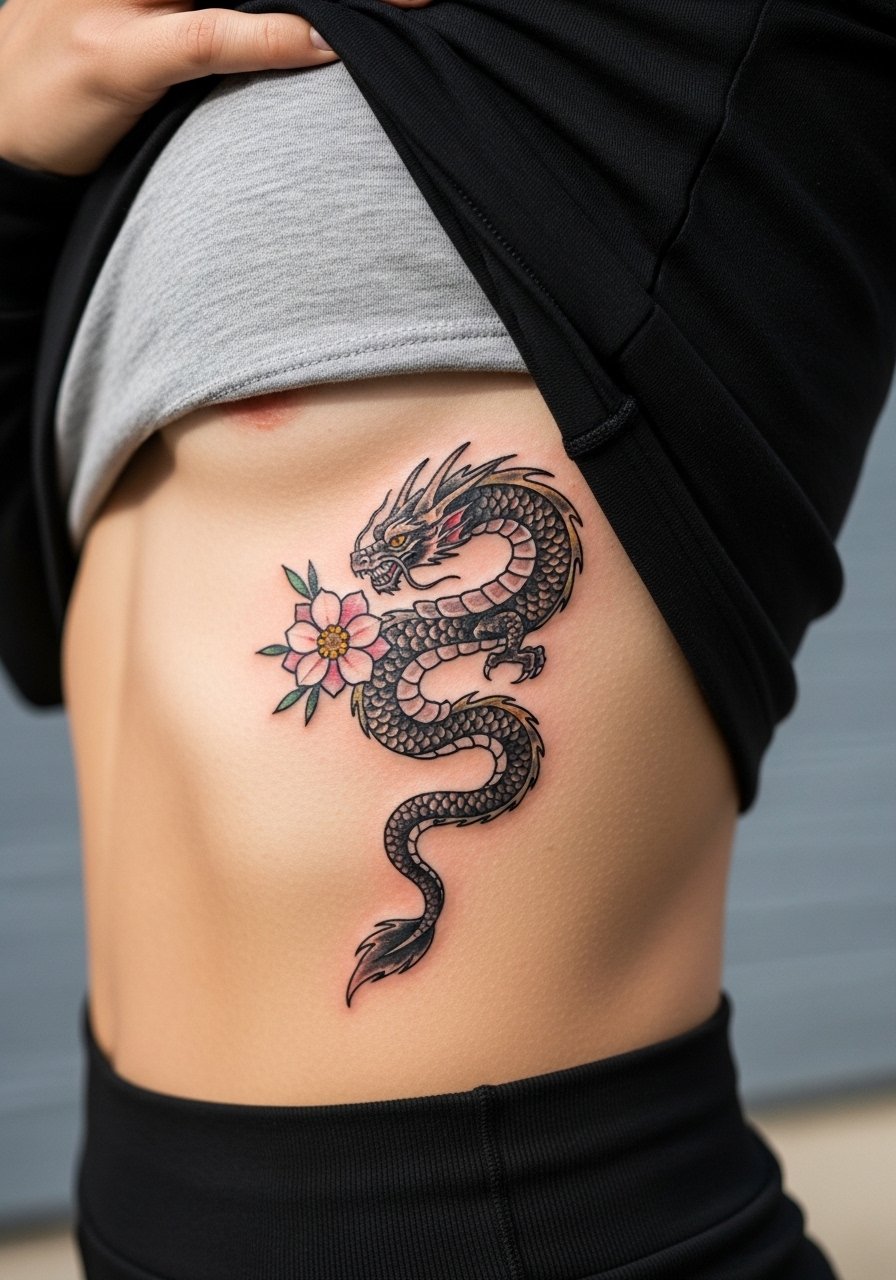
Fair warning, the ribcage rates high on pain charts, often a seven or eight out of ten. The result can be worth it because the area lets curving compositions breathe. In consultation, say you want the dragon and flower to sit side by side rather than layered, which prevents detail loss during healing. Artists disagree on fine-line ribs. One camp warns thin lines blur with breathing and weight change. The other says proper depth and spacing keeps the image crisp. If you choose ribs, expect at least one touch-up for thin details within a few years. For the session, wear a cropped athletic top that lifts easily.
8. Serpentine Minimalist Dragon Along the Collarbone
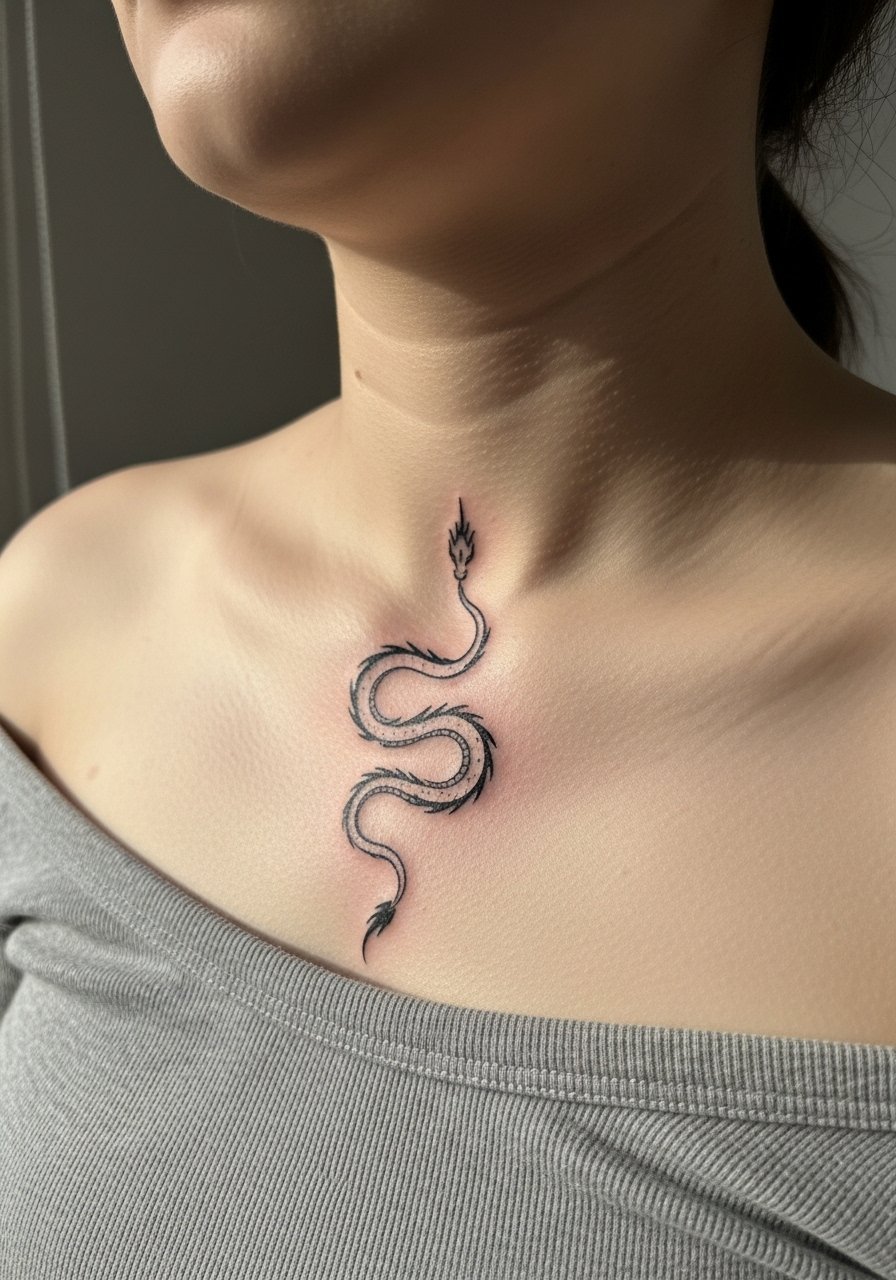
Collarbone linework reads like a signature piece and can turn heads when paired with the right neckline. The area is bony and sensitive, but the design is small enough for a single session. Tell your artist to space curves to accommodate shoulder movement so the dragon does not warp when you stretch. A common mistake is compressing detail into a skinny band, which ages into a blurry line. For the session, use a strapless bra comfortable and an off shoulder top so you can expose the area without cold drafts. This placement pairs well with V-neck sweaters when you want a subtler reveal.
9. Porcelain-Style Dragon with Floral Pattern on the Forearm
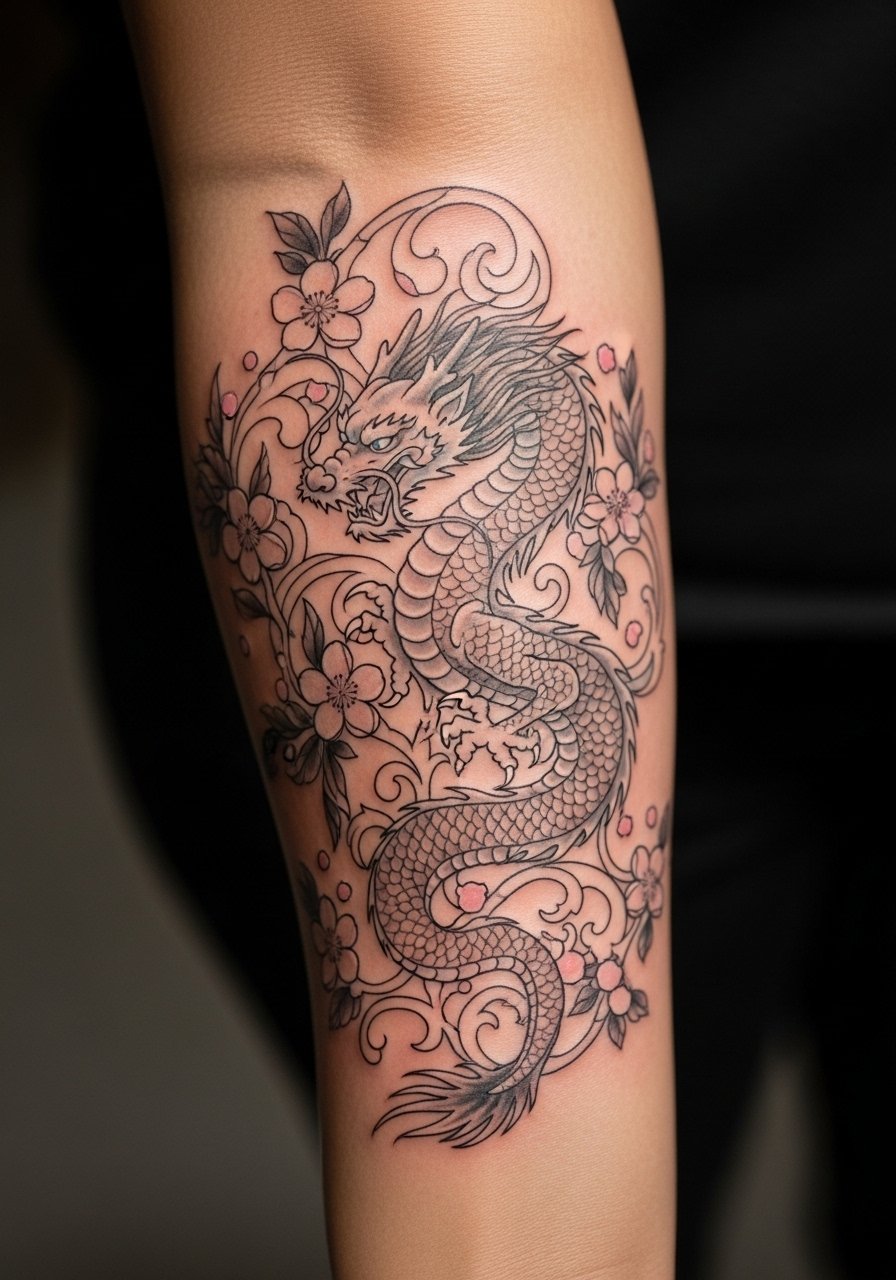
Porcelain-style pieces rely on contrast and negative space to mimic ceramic patterns. I recommend the forearm because it holds detail without excessive stretching. In consultation, ask for slightly heavier outlines around the primary motifs so they remain readable once the skin settles. A common mistake is asking for too many micro-patterns in a small area, which leads to muddiness as the ink migrates. Forearm work is moderate pain and usually one or two sessions. For showing it off, rolled sleeves and light linen let the pattern breathe.
10. Geometric Dragon Outline on the Outer Thigh
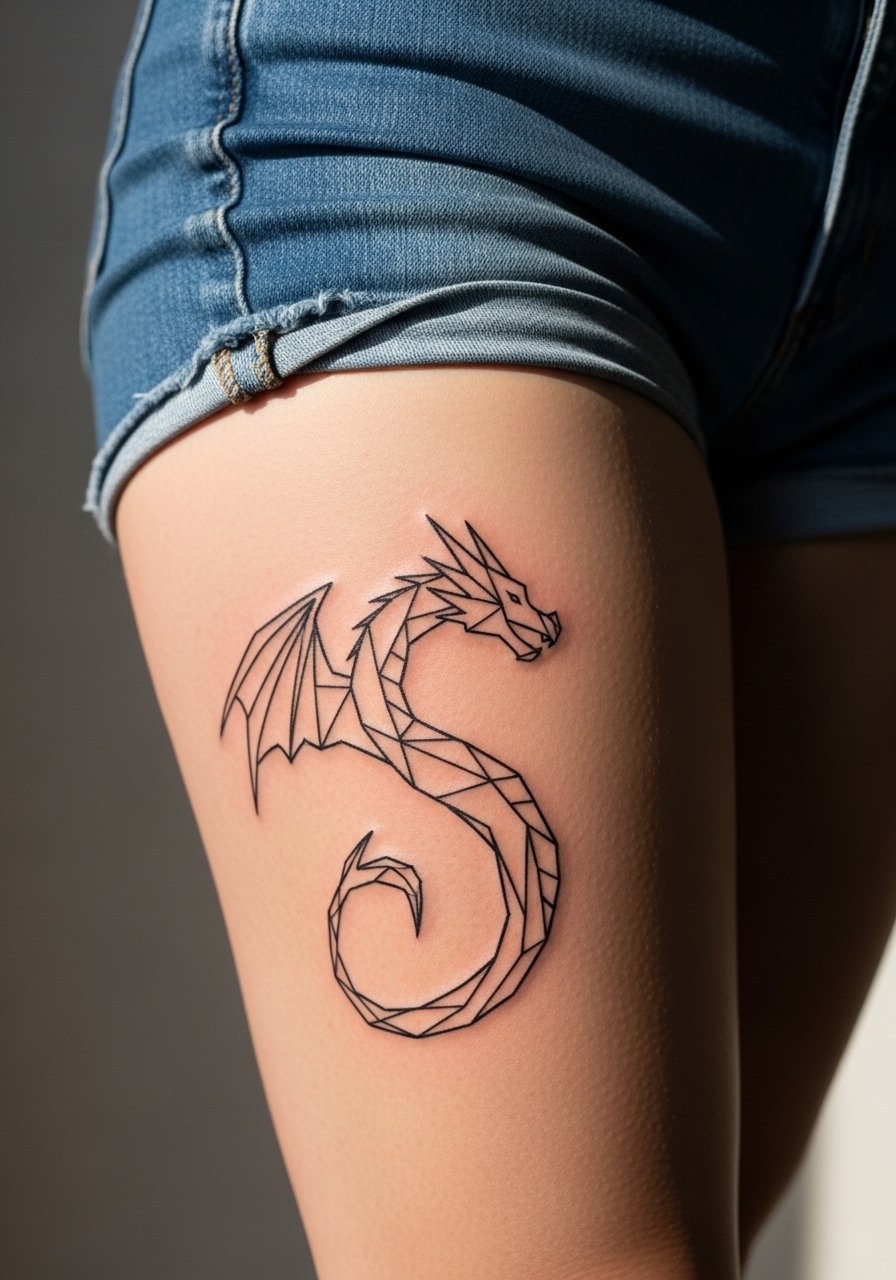
Geometric approaches need spacing to avoid optical merging over time. The outer thigh is a forgiving canvas for crisp black outlines and negative-space shapes. When you book, bring references with the scale you want and ask for clear spacing between parallel lines. The usual mistake is shrinking geometric elements to fit into a small area, which causes lines to merge within a few years. Sessions are comfortable overall and allow for single-session completion. For show-off outfits, a denim short shorts look great and make movement reveal sections of the design.
11. Dragon with Cherry Blossoms on the Upper Arm
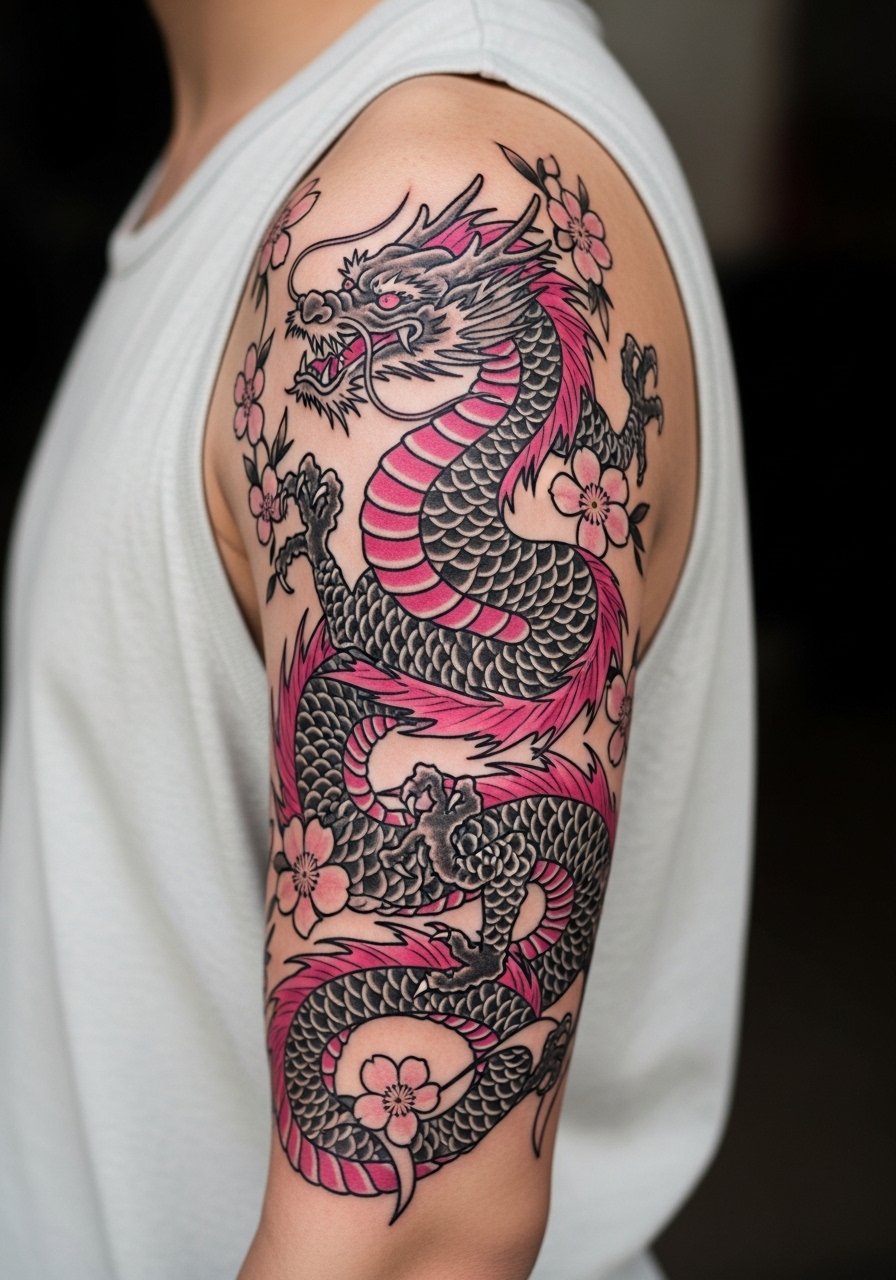
Upper-arm pieces are classic for longevity because the skin there is stable and less exposed to friction. If you want the cherry blossoms to feel soft, request light pink washes with open negative space around petals. A common mistake is overfilling petals with tiny dots, which can darken into blobs. This style suits two sessions for color layering. For the appointment, a sleeveless tank makes access easy. For outfits, rolled-up linen shirts and tank tops frame the piece without competing.
12. Tiny Delicate Dragon on the Side of the Wrist
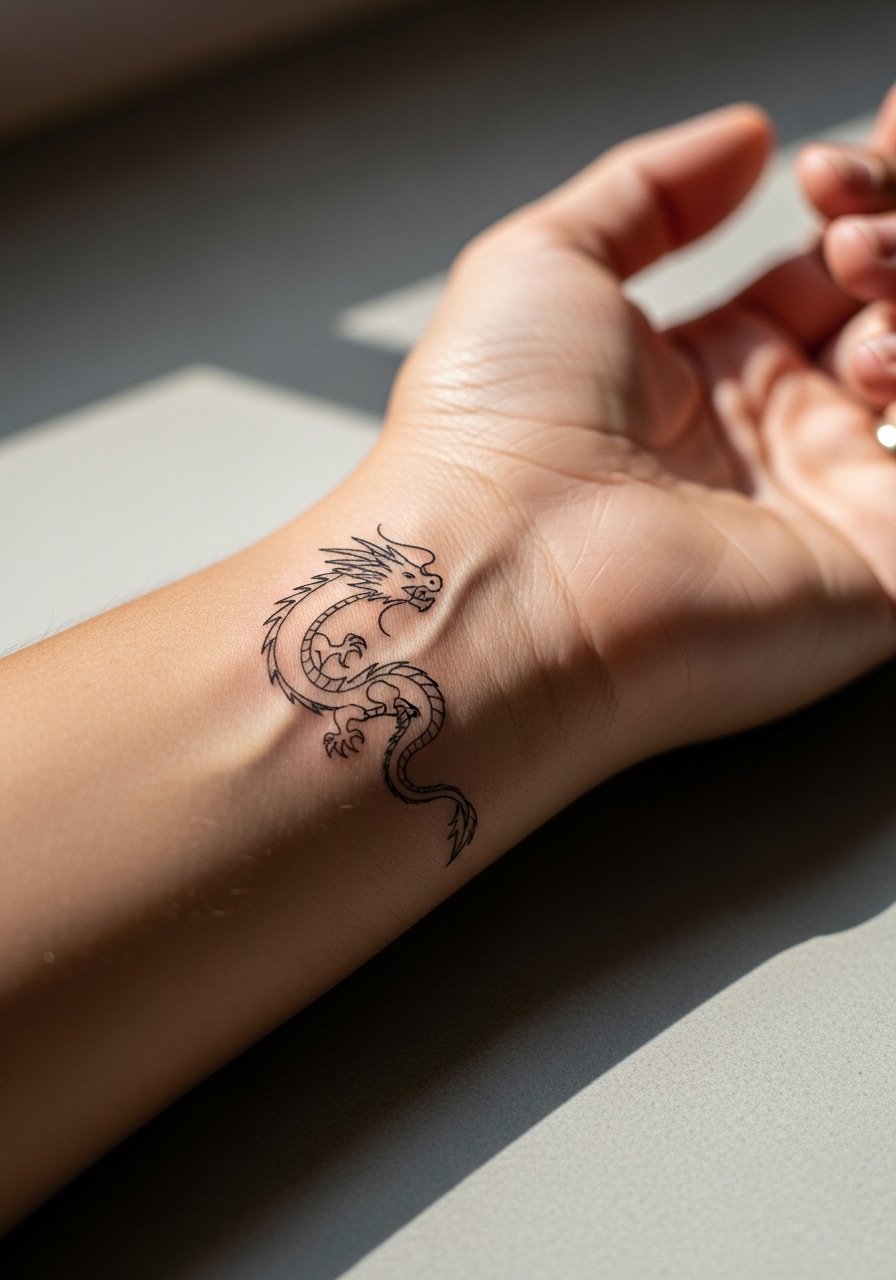
Tiny wrist tattoos are the go-to first dragon if you want discreet fierceness. They are quick, but their small scale means they depend on crisp, confident needle placement. Tell your artist you prefer modest negative space around the body so the silhouette remains legible after healing. A common mistake is stacking letters or extra marks too close to the dragon. Pain is manageable but the skin is thin. For session wear, short sleeves or a sleeveless blouse work best. Keep your expectations realistic about touch-up needs at year three for the finest details.
13. Tiny Dragon Behind the Ear, Below the Hairline
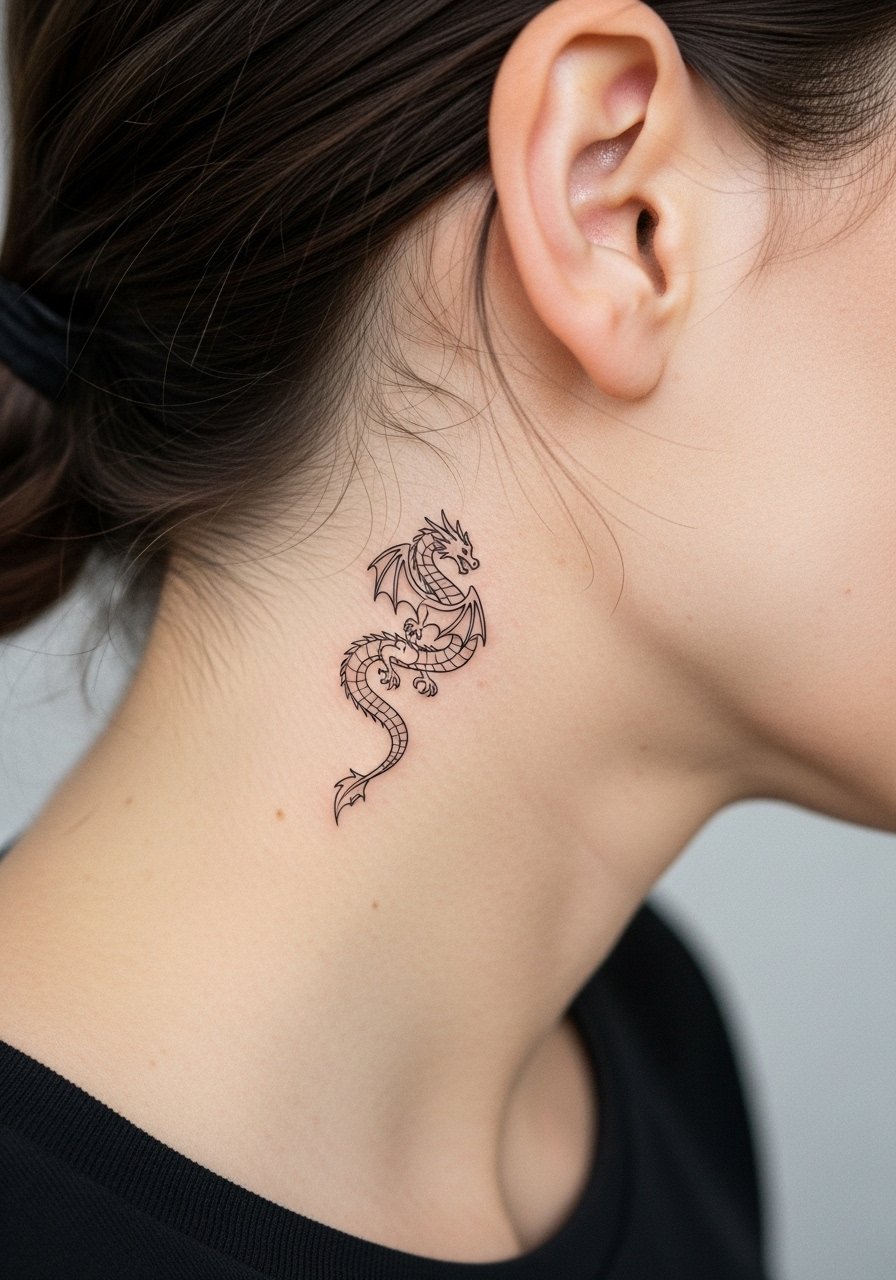
Behind-the-ear placements are intimate and discreet, but they require precise framing to avoid looking crowded. The pain is low to moderate and sessions are short. In consultation, specify that the design sits just below the hairline rather than on the cartilage. The biggest mistake is demanding micro-detail that the small surface cannot hold. Also think about hair styling because it will partially conceal the piece. For session wear, tie your hair up and bring a wide-neck shirt so the artist can adjust access without full exposure.
14. Finger-Wrap Dragon That Reads Like a Ring
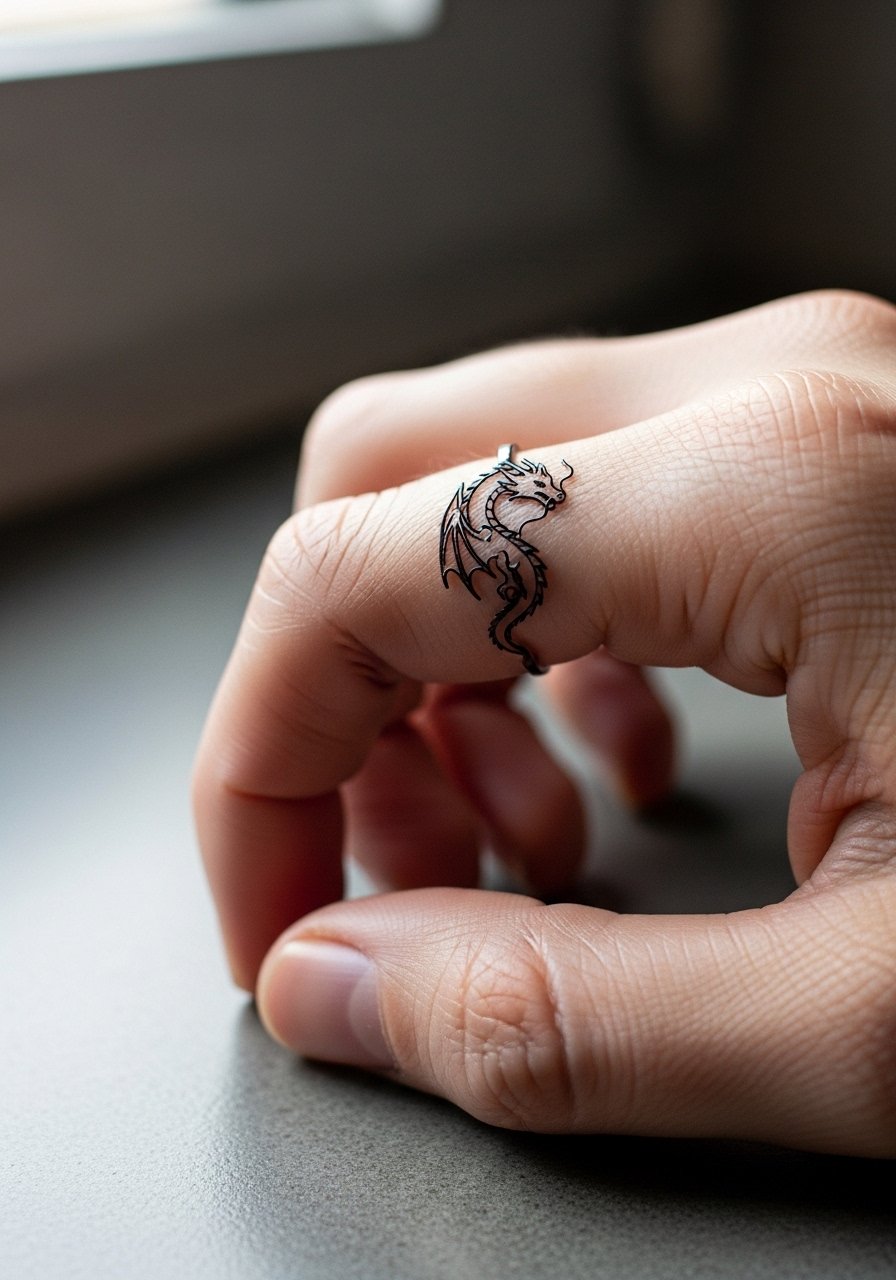
Finger tattoos carry a high chance of early fading because hands wash often and skin regenerates quickly there. Expect touch-ups sooner than for forearm pieces. Ask your artist for slightly bolder line weight where the band meets, which helps preserve the ring shape. The common mistake is packing in too much micro-pattern around the knuckle. If you work in a hand-heavy job, consider the permanence trade-off. For showing it off, thin stackable rings on other fingers complement the motif without crowding it.
15. Scale-Pattern Half Sleeve in Stipple and Whip Shading
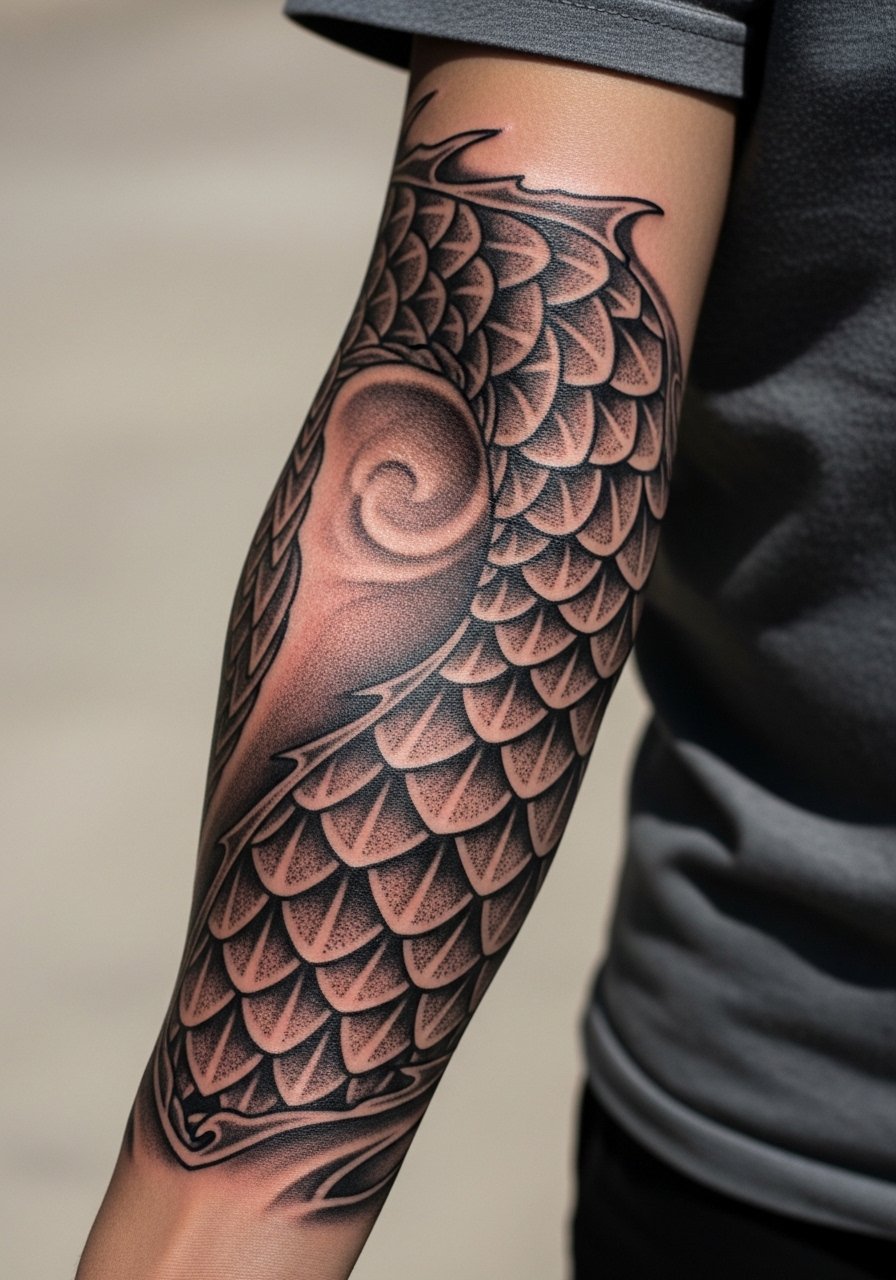
Scale-pattern sleeves work when artists use stipple and whip shading to create texture without heavy saturation. Expect a multi-session project and a moderate pain level that varies by spot. Ask for scale sizes to graduate with your forearm width so the pattern reads natural from wrist to elbow. A common mistake is uniform scale size, which flattens movement. Schedule touch-ups around year three to refresh stipple contrast. For session wear, a short-sleeve top is ideal so the artist can work comfortably.
16. Moonlit Dragon on the Shoulder Cap with Star Accents
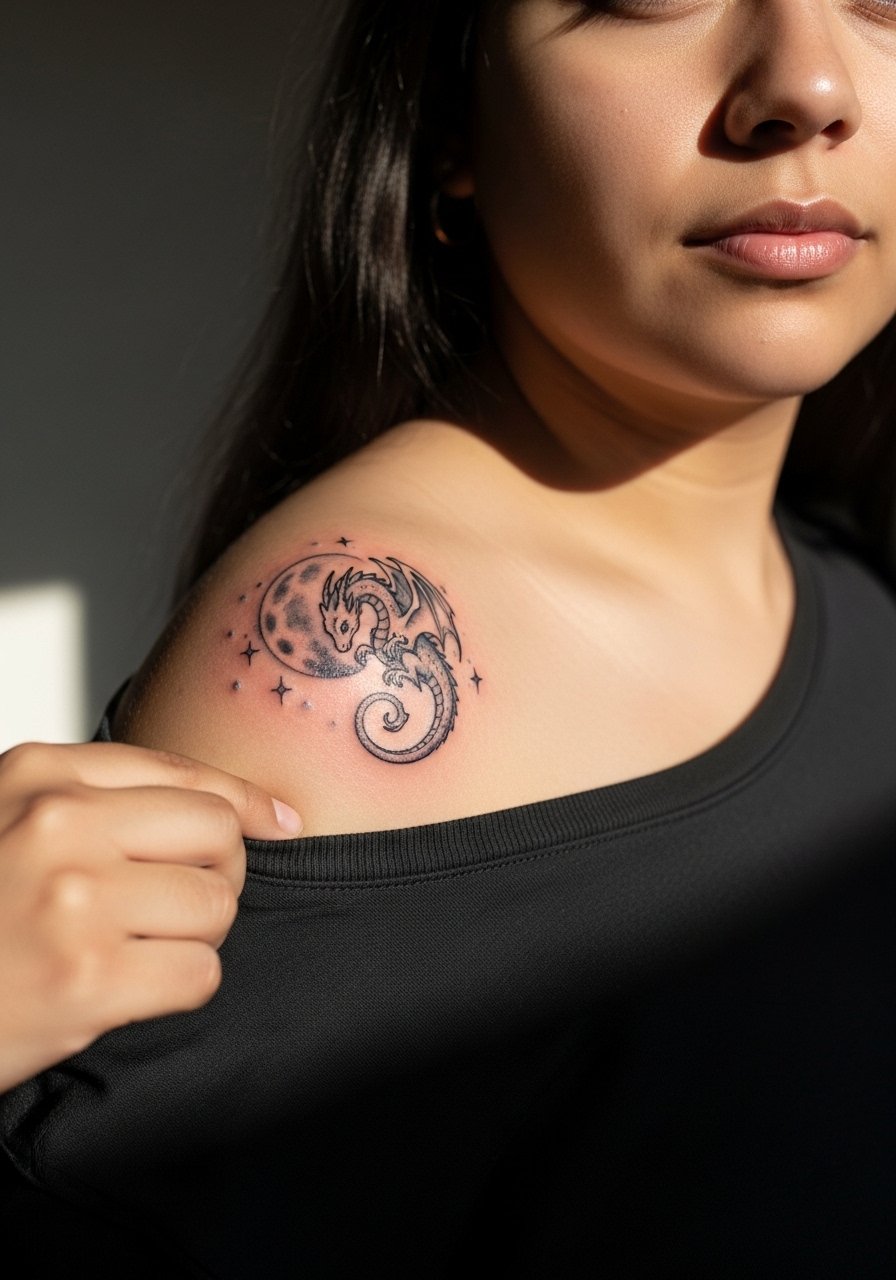
Shoulder-cap placements are subtle and low-friction, which helps color transitions hold longer. The session is typically short and the pain is mild. In consults I advise clients to request spaced stars so the negative space reads instead of filling in. A mistake to avoid is requesting dense dot clusters that mimic stars but merge during healing. For the session, a wide-neck shirt you can shift is handy. For outfits, strappy tops keep the shoulder cap visible when you want a quiet reveal.
17. Dragon with Tail Wrap on the Hip and Upper Thigh
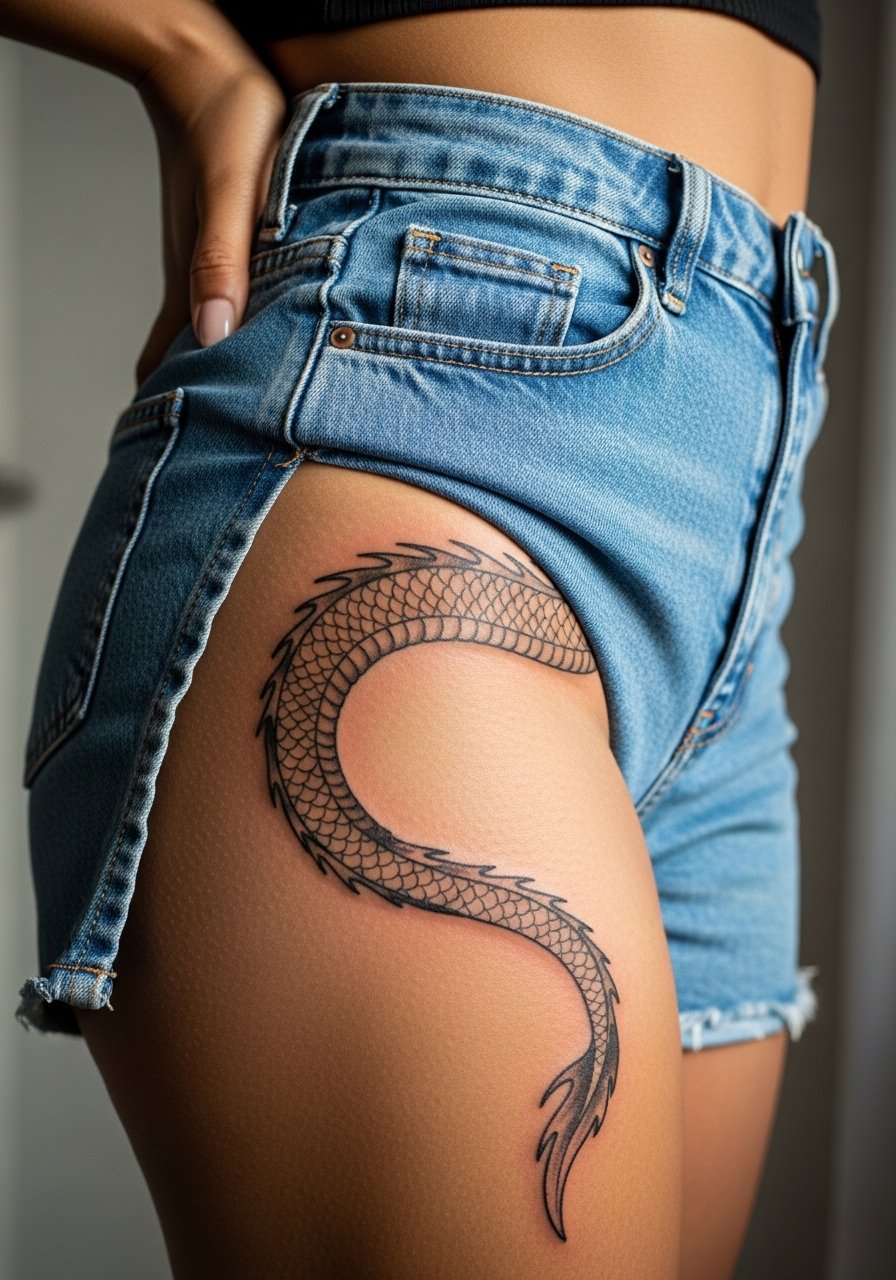
Hip-to-thigh wraps combine motion with a private reveal, and the skin there tolerates shading well. Pain varies depending on proximity to the bone and the session length can be moderate. Tell your artist you want the tail to curve with your hip line so the piece reads dynamic when you walk. The common mistake is pushing heavy saturation near seams or waistbands, which accelerates friction fading. For the session, high-cut shorts or a swimsuit bottom make access straightforward and keep fabric off the tattooed zone.
Frequently Asked Questions
Q: Will a fine-line Haku dragon on my wrist blur faster than the same design on my forearm?
A: From what I've seen, fine-line work on the wrist tends to show softening sooner because the skin is thinner and faces more washing and friction. The forearm is a more stable canvas so the same line weight will hold longer there. Ask your artist to increase anchor points at curve transitions if you choose the wrist to prolong clarity.
Q: Do water-style or watercolor dragons need special aftercare compared with blackwork pieces?
A: They do need careful sun protection because light washes fade faster. The basic protocol is gentle cleansing and keeping sun off the area once healed. Use broad-spectrum sunscreen after the healing window to protect color. For the session, pick lightweight clothing like a strappy cami top to avoid direct rubbing while dye settles.
Q: Should I expect touch-ups for spine-line dragons more than thigh dragons?
A: It depends on technique and movement. Long vertical pieces on the spine can need touch-ups because breathing and posture change the skin across a large area. Thigh pieces usually hold color longer due to lower friction. Talk about a realistic touch-up timeline with your artist before booking.
Q: Are hand and finger dragons okay if I work in a conservative job?
A: Hand and finger tattoos remain visible and some industries still view them unfavorably. If your career path might demand discretion, consider placements that are easy to cover. If you proceed, plan for more frequent refreshes because hands fade faster.
Q: How do I pick a local artist who understands soft dragon styles without naming artists?
A: Search hashtags like #SoftDragonTattoo and #FineLineDragon on Instagram and check portfolios on the Tattoodo app. For bookings, use local queries such as "[city] fine line dragon studio" and review healed photos rather than fresh shots to judge longevity. Trust your artist is useful guidance, but also ask to see healed examples and discuss their spacing approach before committing.