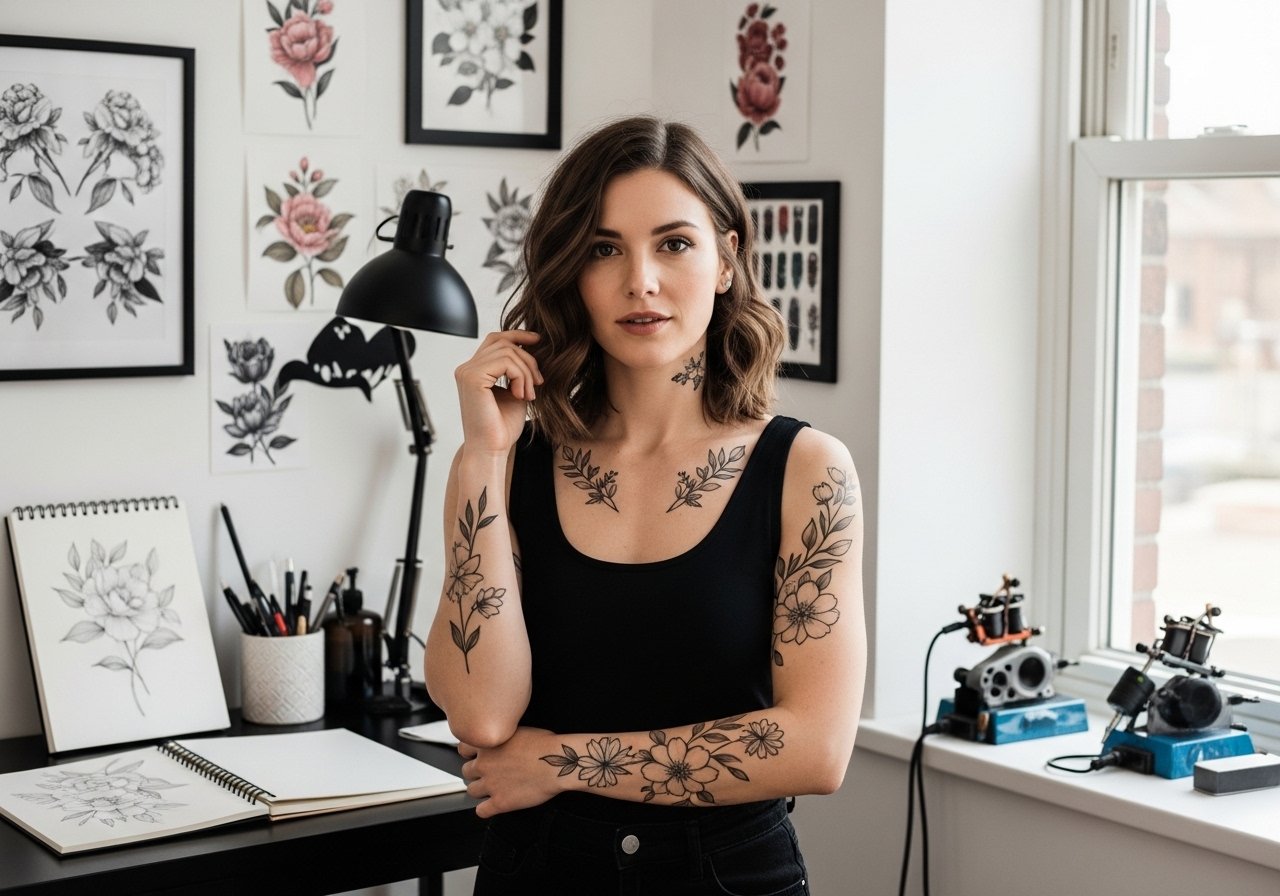
Fine line sweet peas fill feeds right now, and the gap between fresh photos and real life is wider than it looks. I've seen tiny ankle vines that blurred faster than owners expected, and forearm bouquets that still read crisp after two years. Booking waits, touch-up timelines, and sun exposure matter more than the trend when you pick a placement. Start with a design that suits your daily life and skin, then read the first idea.
1. Single Needle Sweet Pea Vine on the Ankle
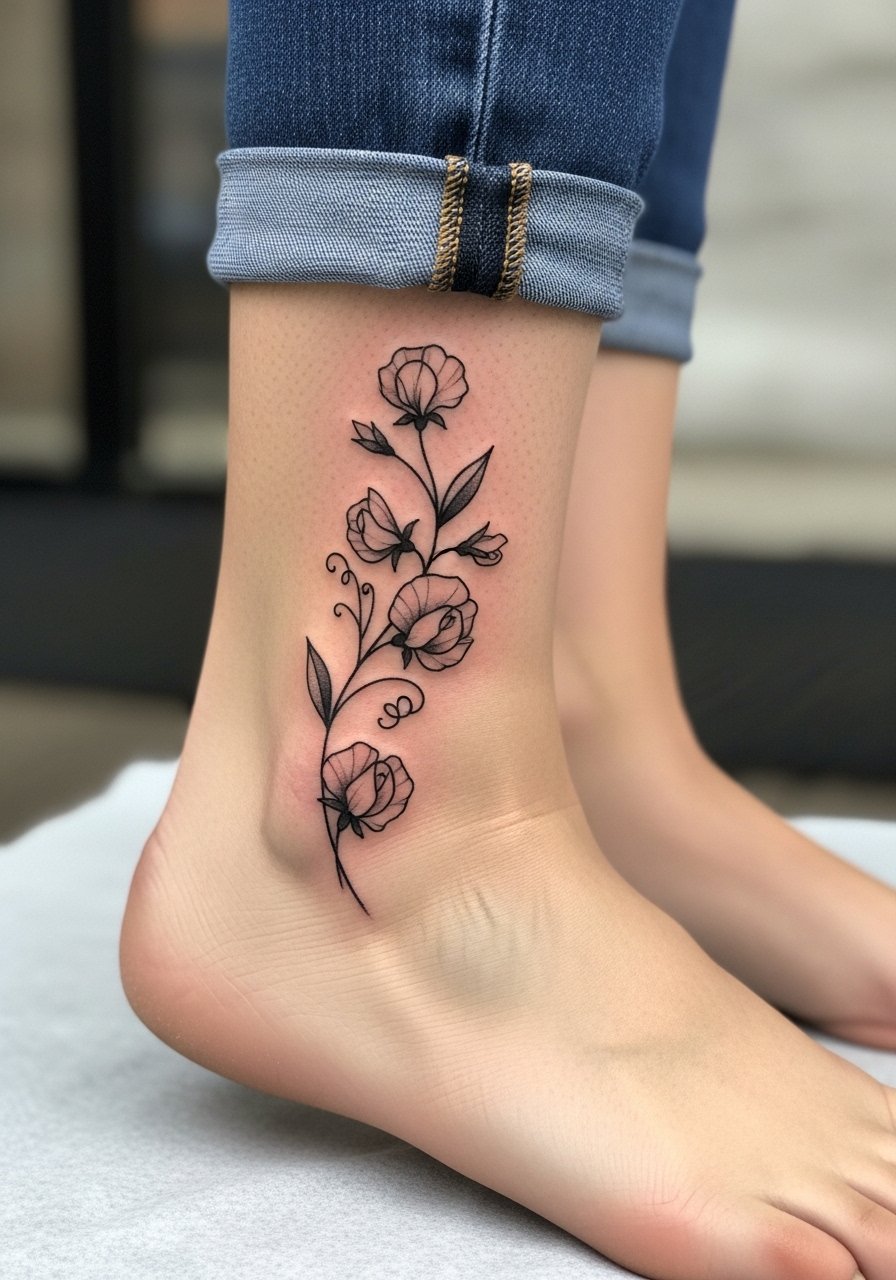
An ankle wrap reads intimate and wearable, and I recommend single needle when you want a continuous climbing vine that follows bone structure. Fair warning, single-needle fine line is part of the fine line fade debate. One camp loves how subtle the work ages. The other camp says it can blur by year two if spaced too tight. Tell your artist you want slightly heavier lineweight at the base of petals and to avoid hairline loops that tend to feather. Session feel is low to medium, and plan for a possible touch-up at 6 to 12 months. For showing it off, cuffed straight-leg jeans work best. Try raw denim straight leg jeans with espadrilles.
2. Realistic Sweet Pea Bouquet on the Forearm
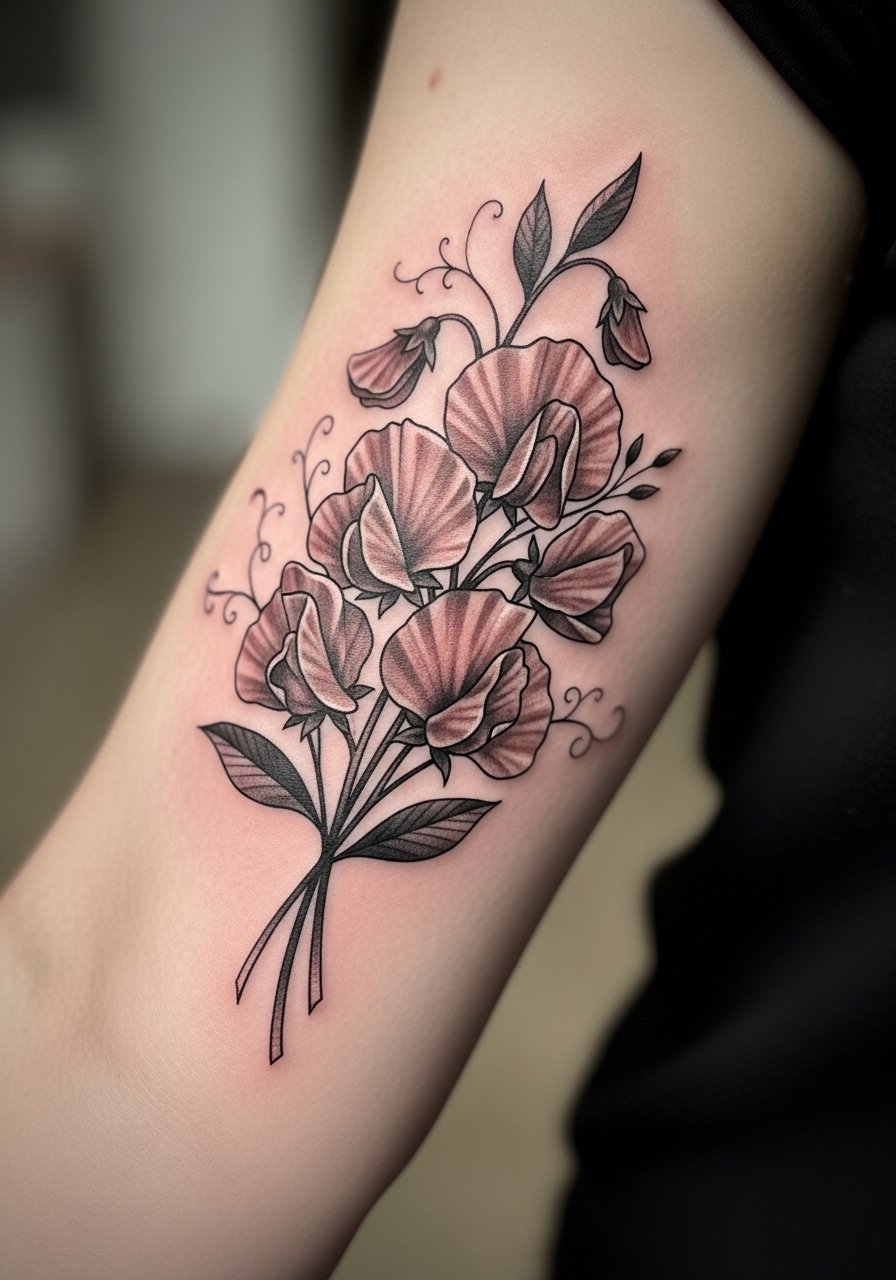
I see forearm bouquets kept for memory pieces because they photograph well and sit where you can check details. Ask for micro-realism references that show petal edge contrast and for color samples shot in daylight. A common mistake is oversaturating tiny petals so they merge after a year. Insist on spacing between small blooms and plan for two sessions if multiple stems are needed. Expect medium pain and manageable healing. For outfits, rolled chambray or a crisp white tee frames the outer forearm. Consider a chambray shirt rolled sleeves for showing the piece.
3. Linework Sweet Pea Cluster on the Ribs
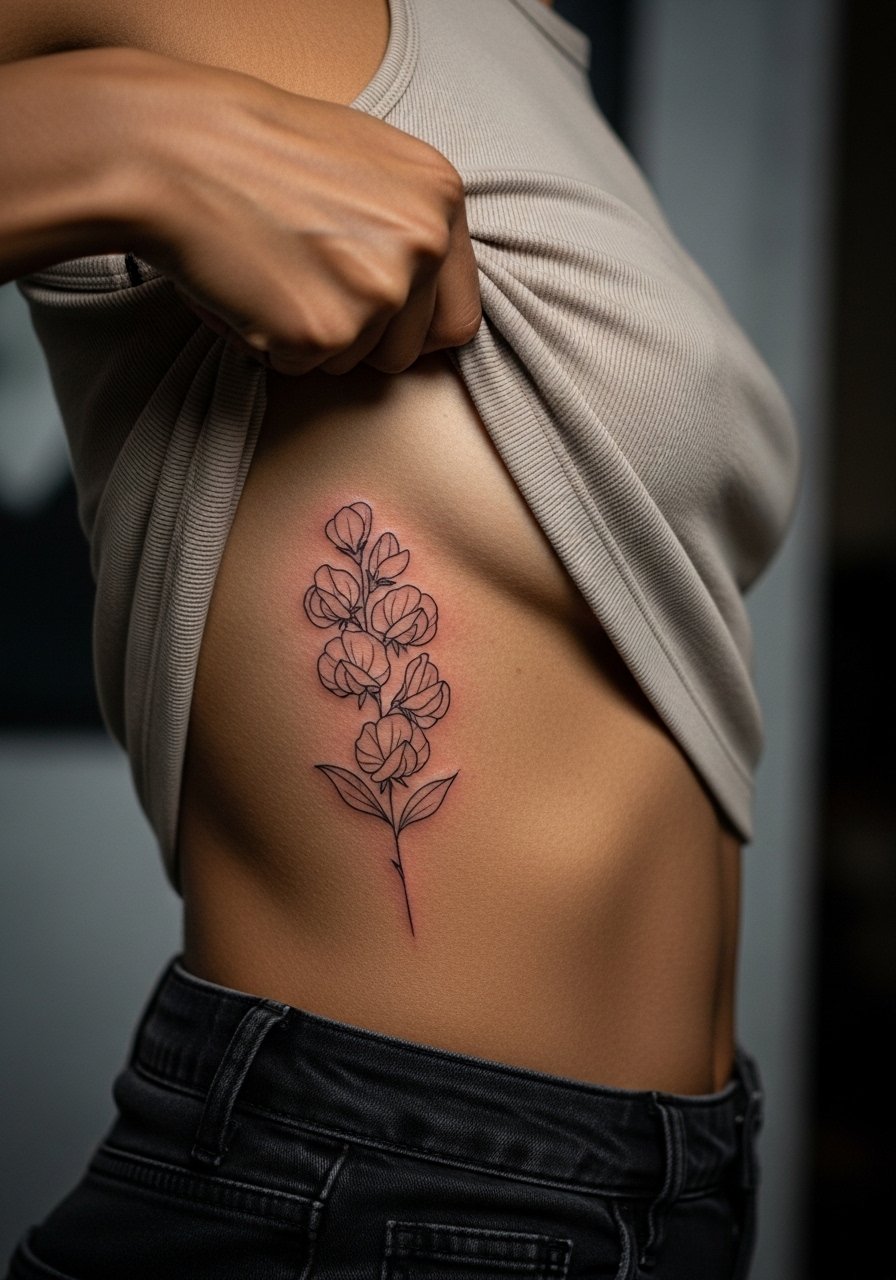
Fair warning, the ribs score high on most pain charts. People choose this placement for privacy and for a design that sits under clothing. Artists split on fine line on ribs. Some say skin stretch and movement blur ultra-thin lines quickly. Others say with correct needle depth and spacing it holds up. In the consult, ask your artist which approach they use and how much spacing they recommend between stems. The usual mistake is asking for single-needle detail without factoring skin elasticity. For summer beach weeks, pair with a side slit crop top when you want to show the piece.
4. Neo-Traditional Sweet Pea with Insects on the Shoulder
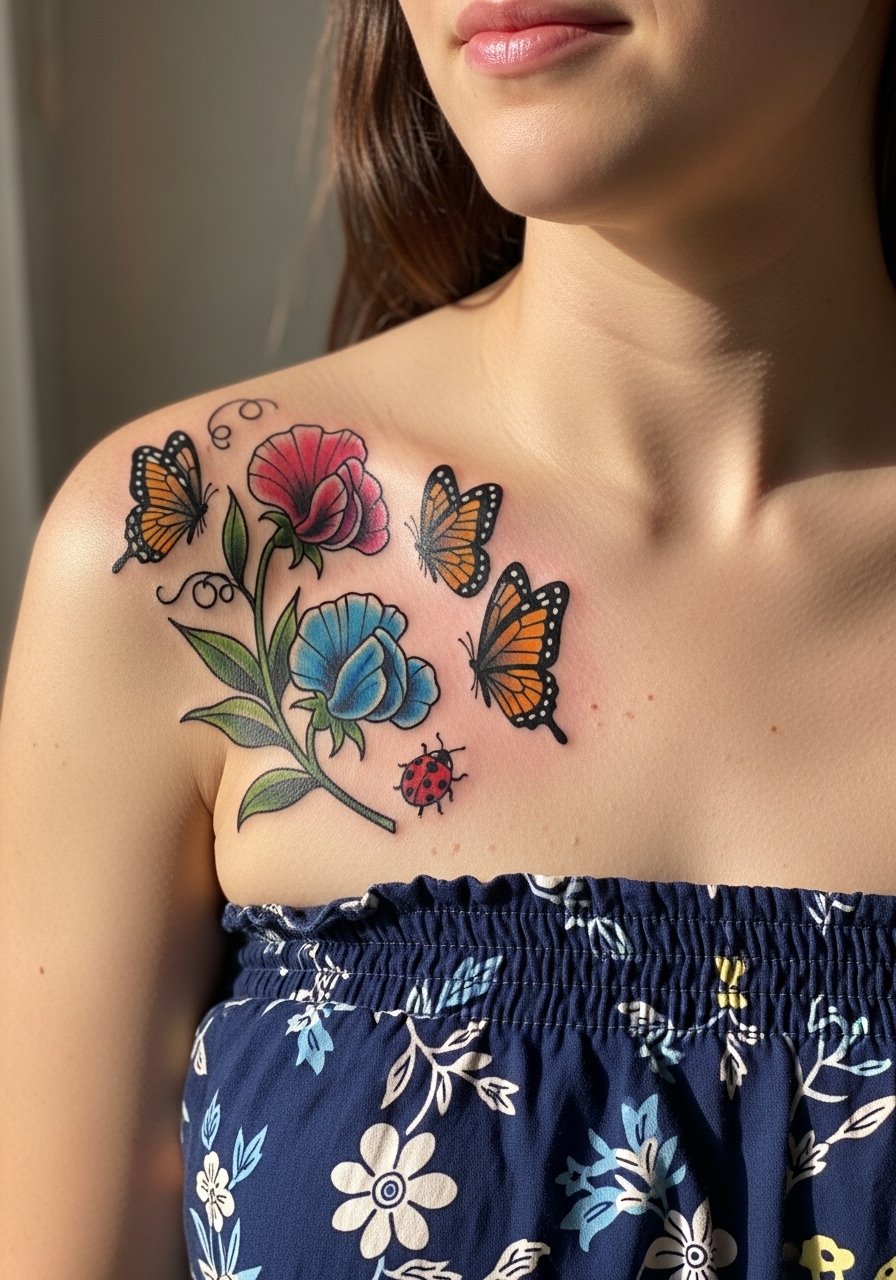
There is a playful energy to adding insects like ladybugs or butterflies to neo-traditional blooms. Tell your artist you want bold outlines around the insect wings so the composition stays readable from a distance. Shoulder work tolerates color saturation well and the skin is forgiving, so this design ages better than thin watercolor in the same spot. Session wear is simple. Pull on a strapless sundress or a loose button-down you can slide off the shoulder for access. Expect two to four sessions depending on size.
5. Small Single Sweet Pea Bloom on the Wrist
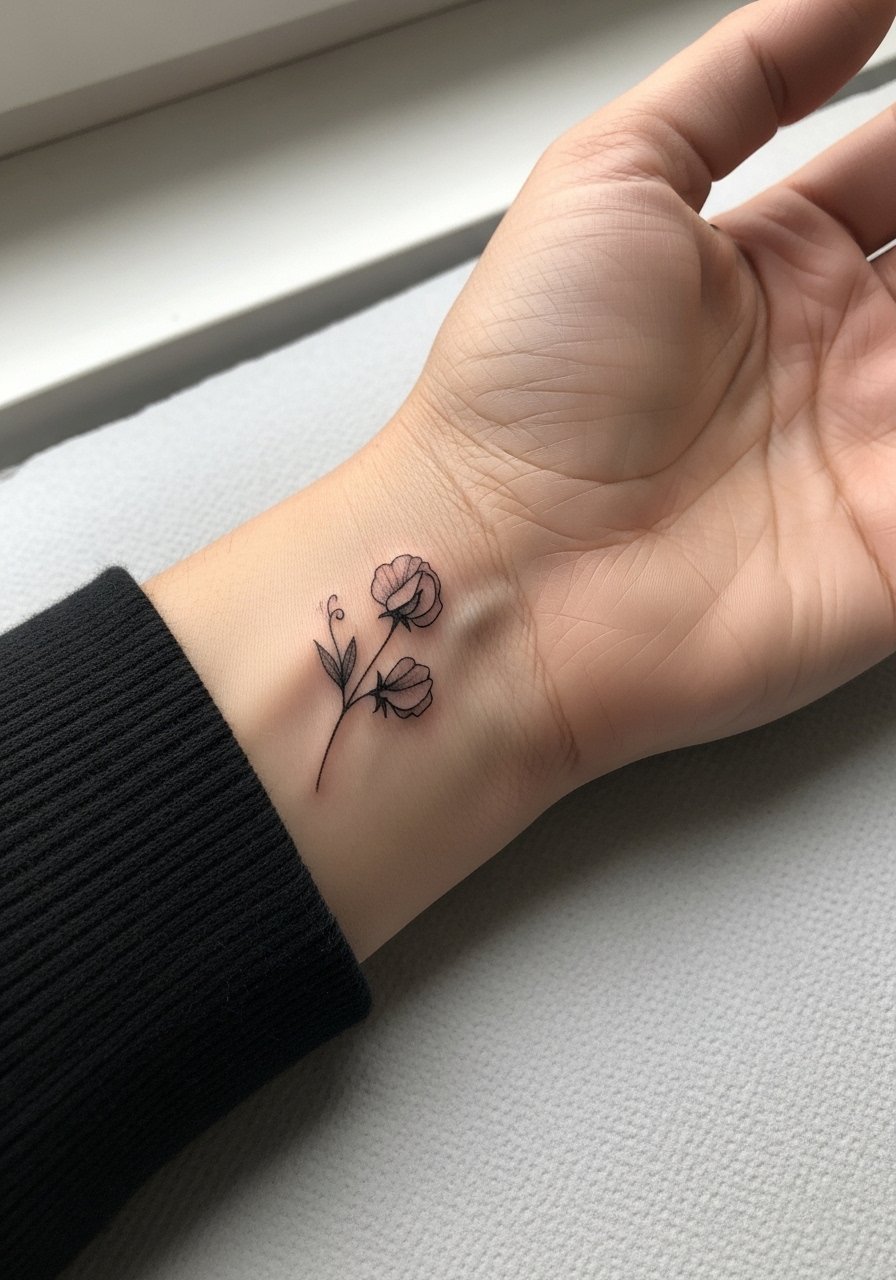
Wrist pieces are a favorite for first-timers because they are visible and small. The inner wrist is sensitive, so plan for a quick sting and short session. Many people regret super-fine single-needle wrist lines because daily washing and friction speed fading. Ask your artist for a slightly bolder outline or a soft color wash to help longevity. For session day wear, remove jewelry and bring a sleeveless top. To show the tattoo without crowding it, add a thin gold bangle stack on the opposite wrist.
6. Watercolor Sweet Pea Stems on the Upper Arm
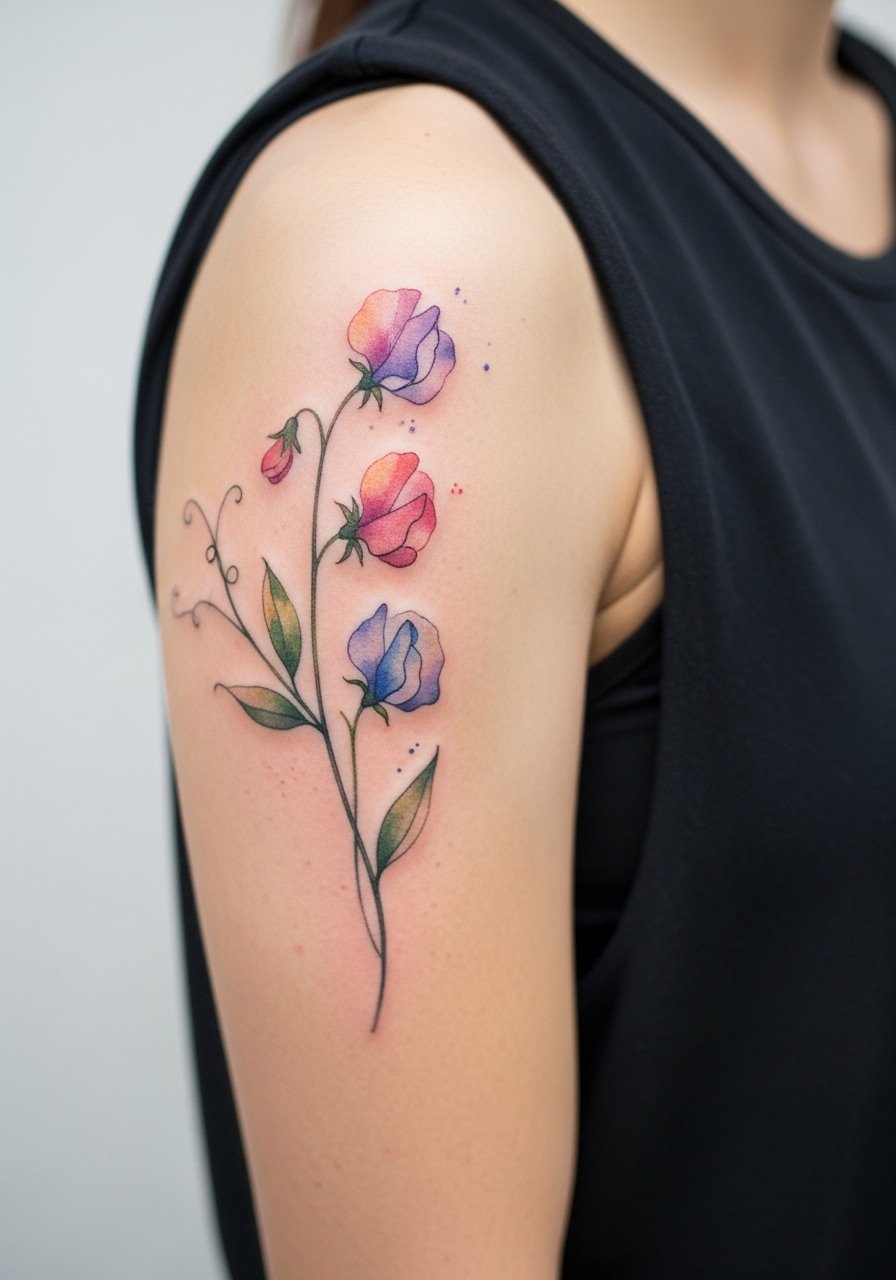
Watercolor effects on the upper arm let color bleed outward with soft edges. The debate here is color retention versus vibrancy. Watercolor looks gorgeous fresh, and with careful pigment placement it can keep its tone for years, but expect some softening. Tell your artist you want deliberate areas of saturation rather than full petal saturation to avoid muddy healing. Wear a sleeveless muscle tank on session day so the artist has full access. Healing is straightforward and touch-ups can be booked after six months if colors cool down.
Studio Day Picks
The wrist and ankle pieces above heal differently from larger color work, so pack a few items that make the session and first week easier.
-
Frida Kahlo balm. A thinner balm that avoids the heavy layer Aquaphor leaves, useful for humid weather and for small wrist lines that need breathable moisture.
-
Green Sheep aftercare lotion. Lightweight and non-greasy, good for lower leg and thigh areas that can dry in winter.
-
Tattoo Goo clear variant. Less shiny than traditional options, handy for visible wrist or collarbone pieces without obvious gloss.
-
Coda Signature balm. An indie balm many collectors use to help color retention in botanicals during the first months.
-
Aquaphor healing ointment. A thin layer for the initial days can protect fine line work in high-friction zones like the ankle and wrist.
7. Black and Gray Sweet Pea on the Collarbone
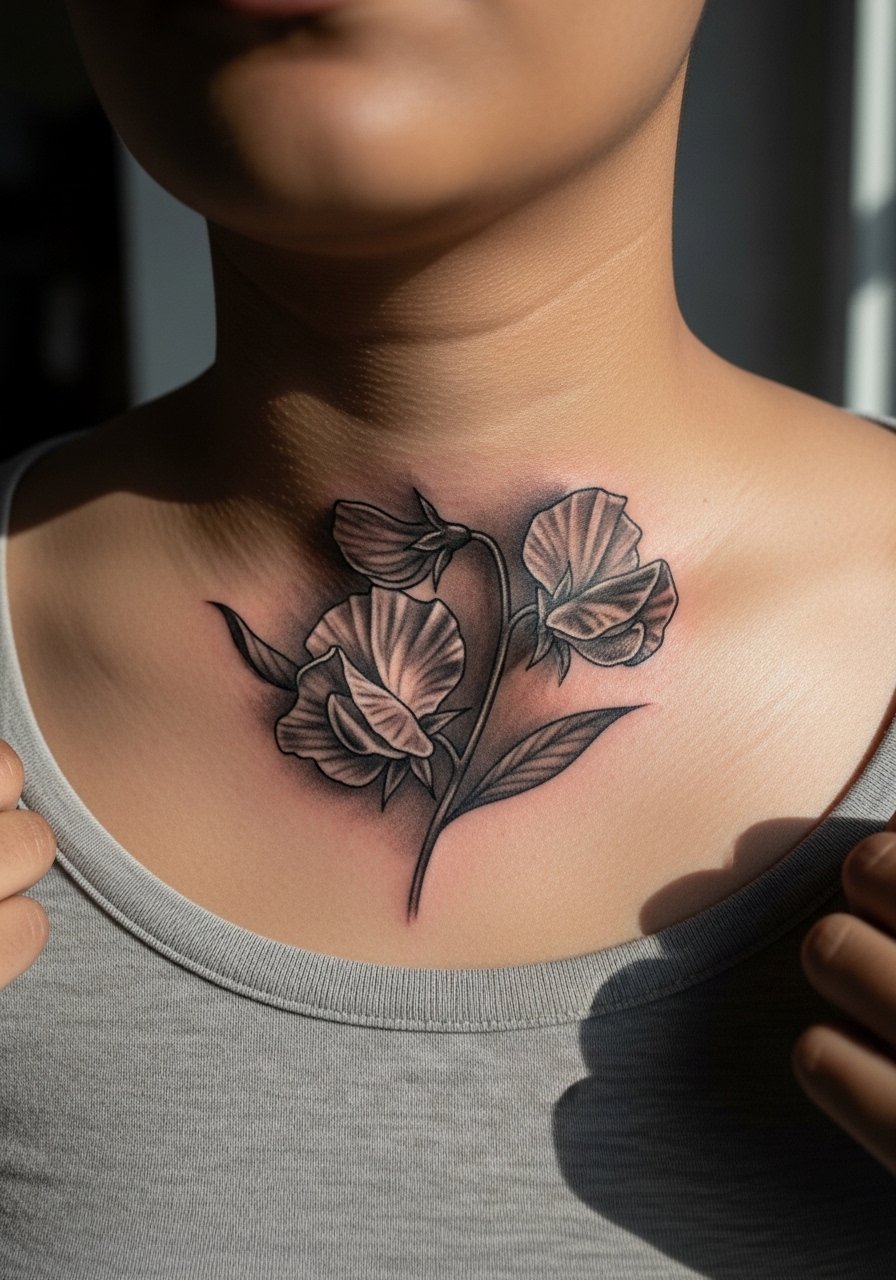
Collarbones show tattoos elegantly but hold movement from clothing straps. Black and gray keeps aging predictable, and it often outlasts saturated color on the same spot. Ask the artist for subtle stipple shading to keep petals defined without heavy saturation. A common mistake is asking for too much tiny detail near the bone where blowout risk rises. For showing the piece, off-shoulder blouses in linen pair well. Try an off shoulder linen blouse when you want to display the work.
8. Fine Line Sweet Pea with Companion Flowers on the Thigh
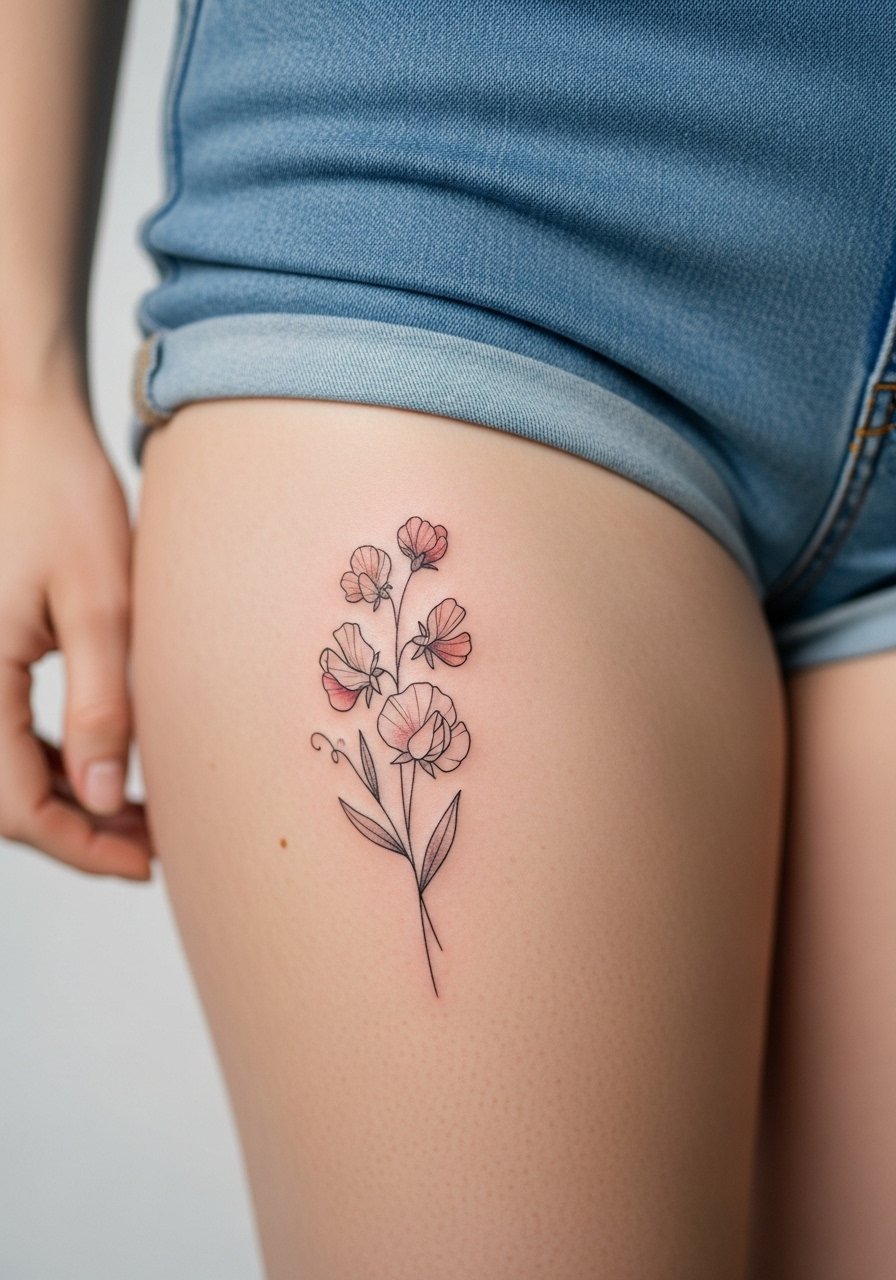
Thighs give room to scale a botanical into a statement without cramming details. For patchwork compatibility, tell your artist the chain of stems should read well both up close and from a distance. A common error is making companion blooms the same scale as the main sweet pea, which flattens the design. Thigh skin tolerates touch-ups and stretching from weight changes is a factor to discuss. For summer show-off looks, high-cut shorts or a thigh-slit skirt pair perfectly. Consider high cut athletic shorts when you want to reveal the work.
9. Ornamental Sweet Pea Mandala on the Upper Back
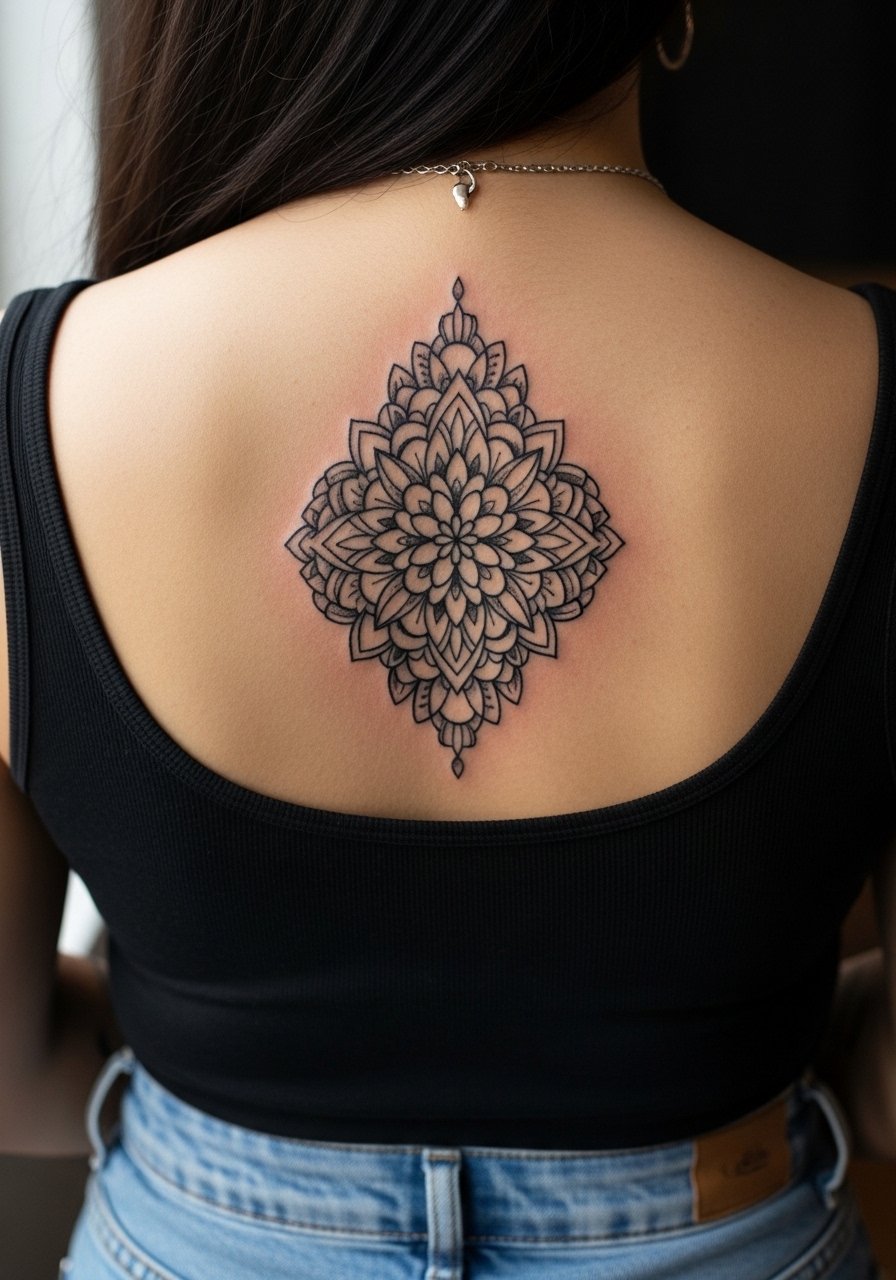
A mandala approach blends floral forms into geometry and it reads strong in black ink. This is a large piece and it needs breathing room in the pattern. Tell the artist you want heavier negative space near dense centers to avoid future merging in the thick areas. Expect multiple sessions and plan for a 3 to 5 session timeline. If the pattern draws from spiritual motifs, mention origin respect and ask for a subtle variation rather than a direct replication. For session wear, a loose button-down you can slide aside works well.
10. Micro Sweet Pea Outline on the Inner Arm
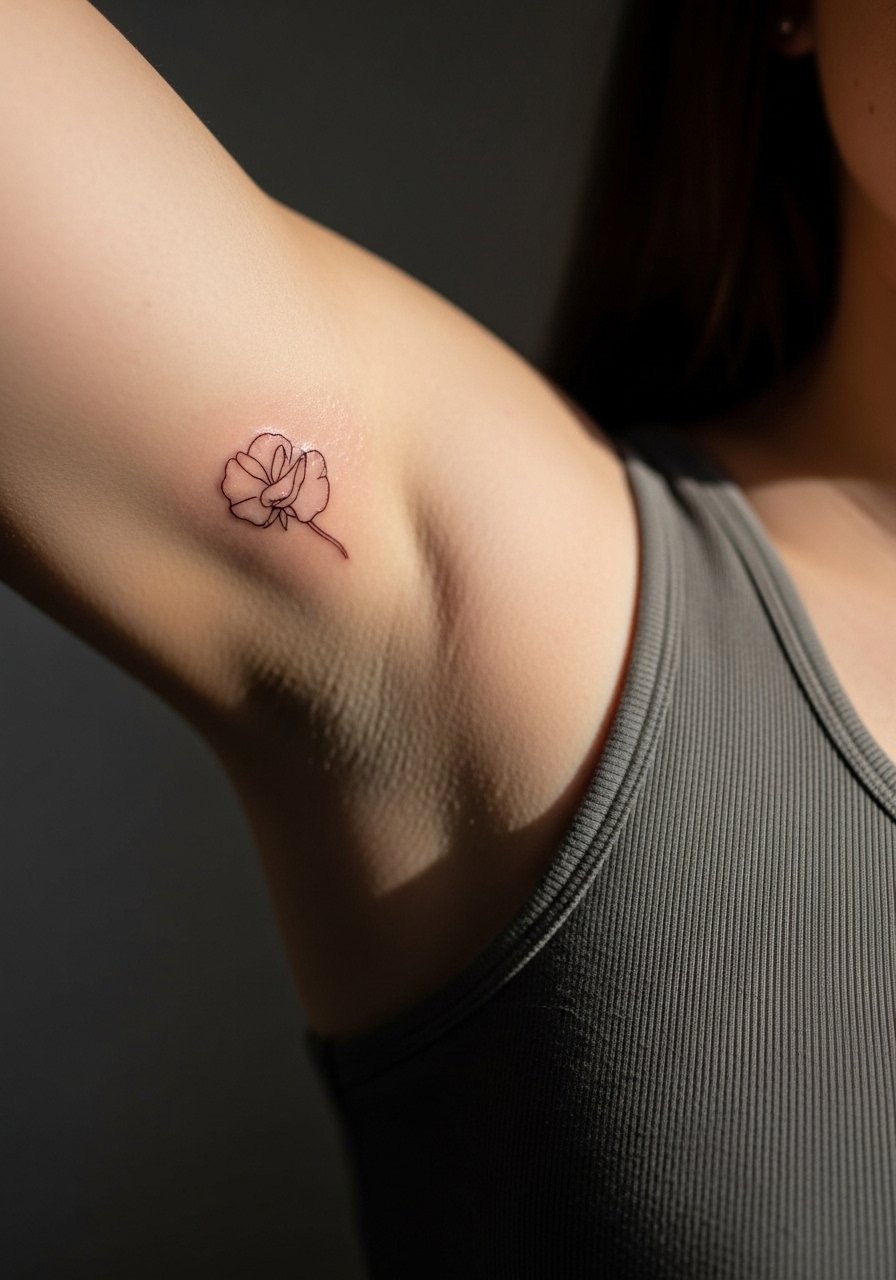
The inner bicep is a popular collector spot because micro pieces fit between larger pieces. Pain is moderate and healing is mostly friction-free if you wear loose sleeves. A frequent mistake is going too small for the inner bicep and expecting the same crisp look after a year. Ask for slightly amplified petal edges and to avoid near-parallel lines that can merge. Touch-ups at six months are common for single-needle inner bicep work.
11. Vibrant Neo-Realism Sweet Pea on the Calf
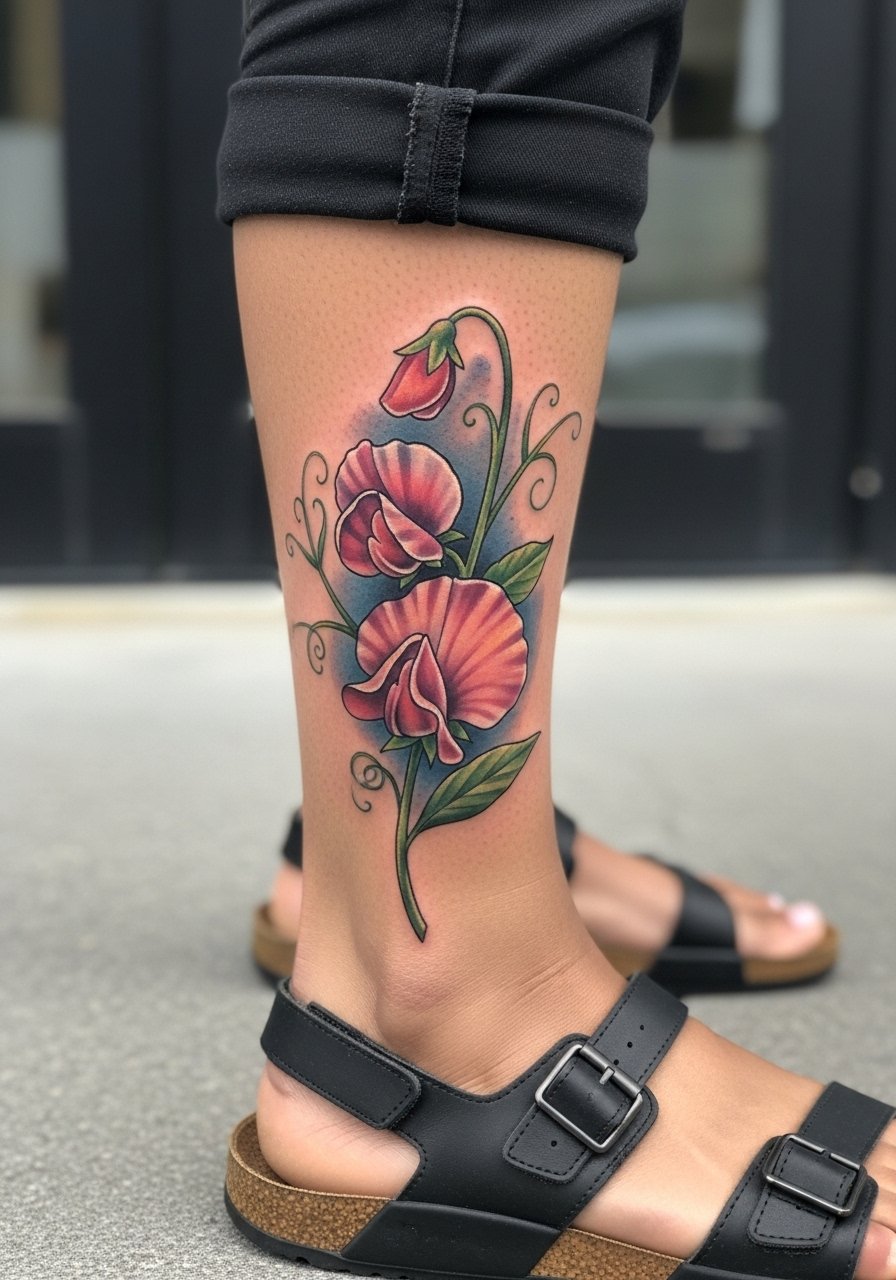
Calf placements show off color and allow larger blooms without distortion. Neo-realism demands graduated saturation and edge separation so petals maintain form as they age. Darker skin tones can still carry bright color when artists use contrast and thicker outlines in key areas. Ask for color tests on similar skin tone mockups or for healed photos from the artist. For sessions, wear loose shorts and sandals. Try espadrille flats women to style the look when you want the leg visible.
12. Minimalist Sweet Pea Stem on the Side Neck
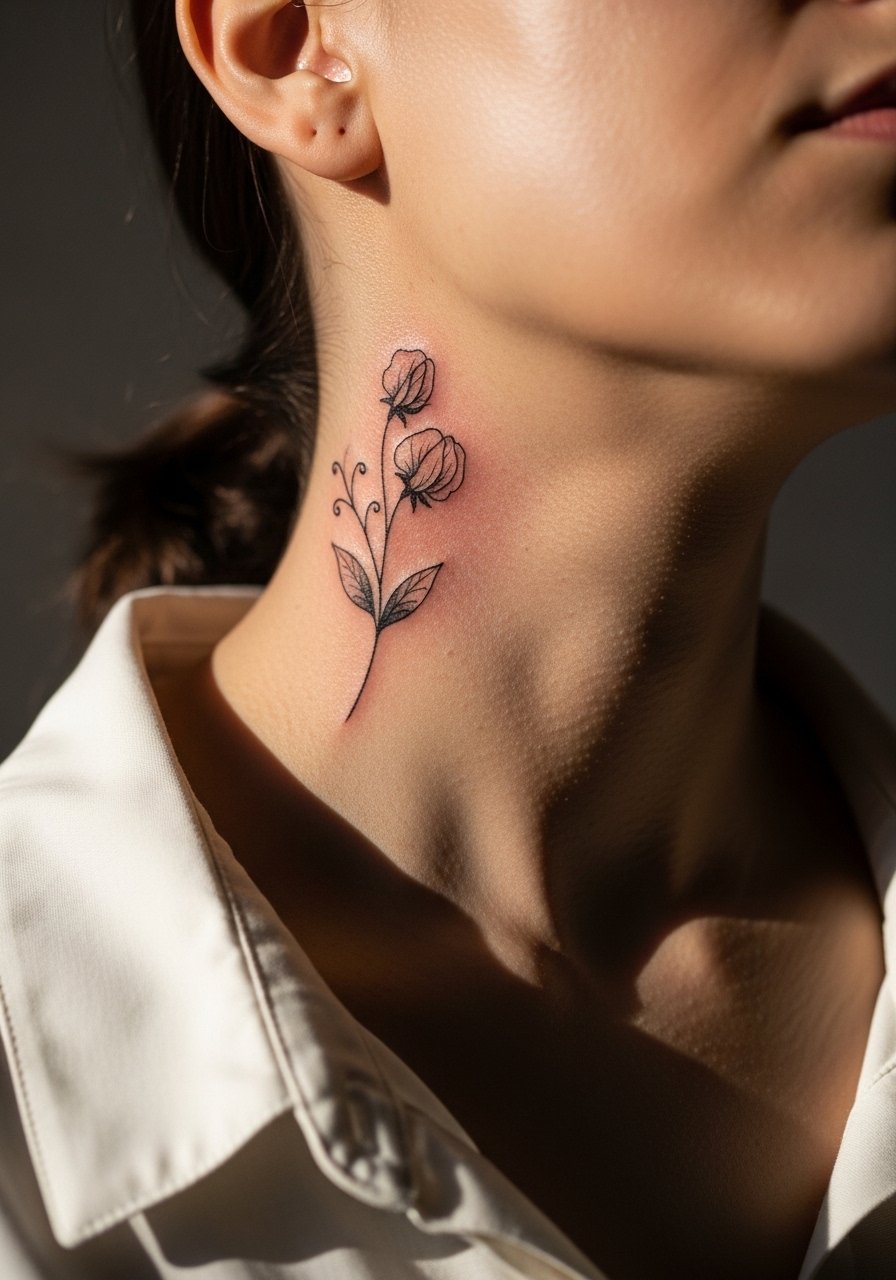
Neck work is edgy and visible, so think about career implications before committing. The side neck tolerates short stems well but blowout risk on very thin lines is real. Ask your artist how they handle needle depth on neck skin and whether they suggest slightly bolder line weight for longevity. Session feel is sharp because the area is sensitive. Wear a wide-neck shirt you can shift for access. For showing it off, a thin chain pendant necklace can sit just above the stem.
13. Finger Sweet Pea Vines Across Knuckles
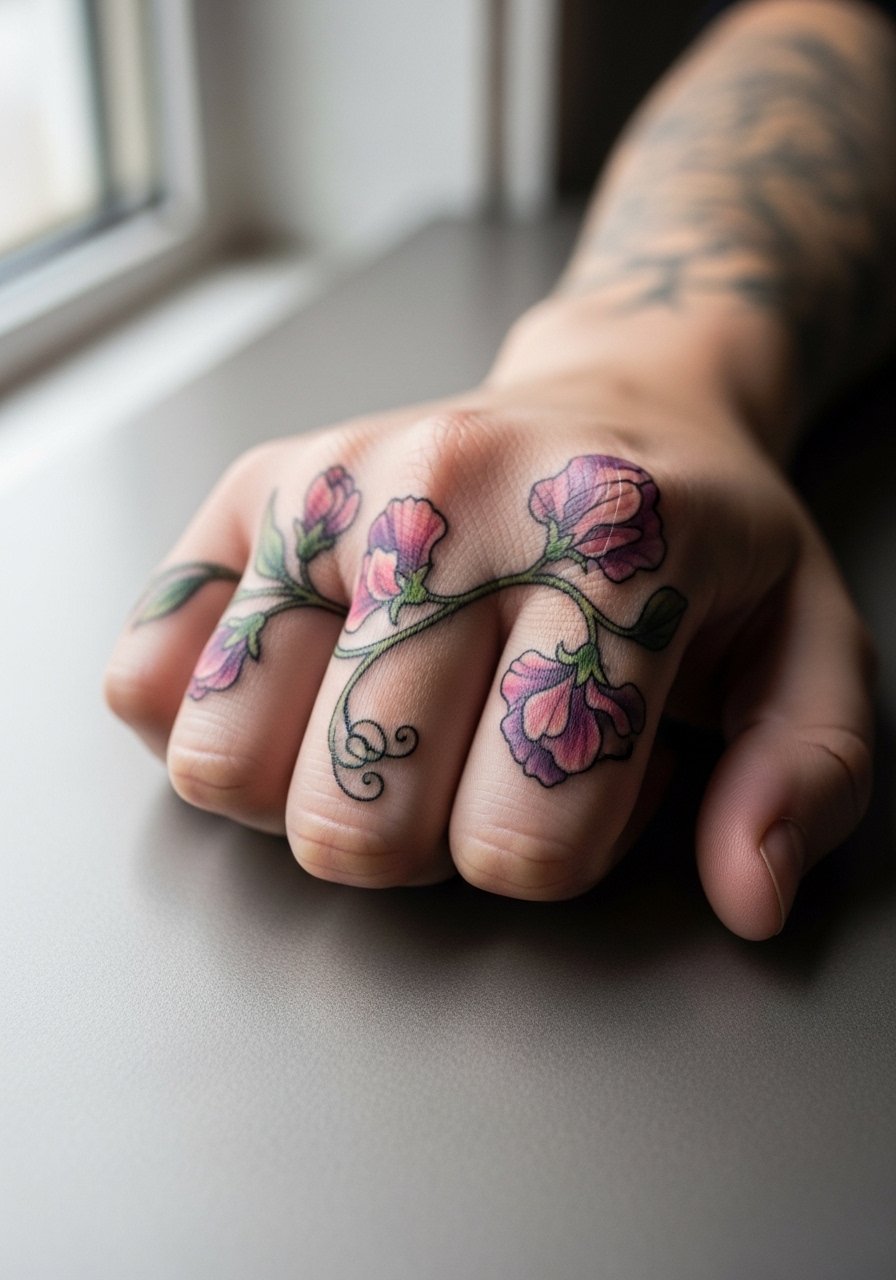
Finger and knuckle tattoos wear differently because of constant use and washing. Expect faster fading and possible rotation in appearance. If you want a continuous vine, ask for slightly bolder anchors at knuckle joints and avoid tiny stippling that will break down quickly. Many collectors plan touch-ups yearly for finger work. Session pain is high for knuckles and the healer often needs careful protection from friction during early weeks.
14. Sweet Pea and Ladybug Micro Combo on the Wrist
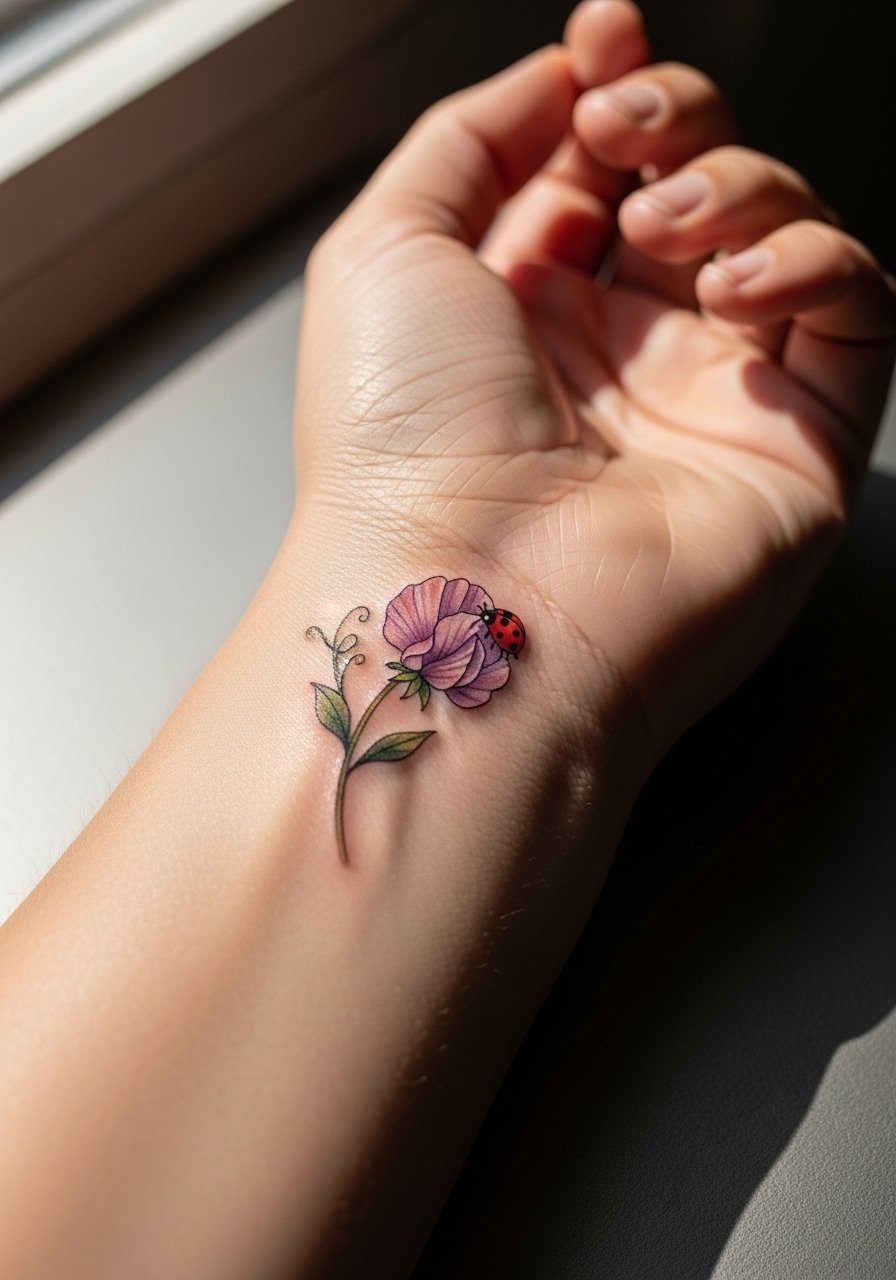
Pairing a tiny insect adds symbolism and visual punctuation to small wrist pieces. Ask for a clear separation between the ladybug and petals so color does not merge in healing. A mistake is crowding both elements so closely that they read as one blot. The wrist is a friction zone, so plan for short touch-ups. For showing the piece without covering it, try a dainty bracelet set on the opposite wrist.
15. Healed vs Fresh Collarbone Color Comparison Concept
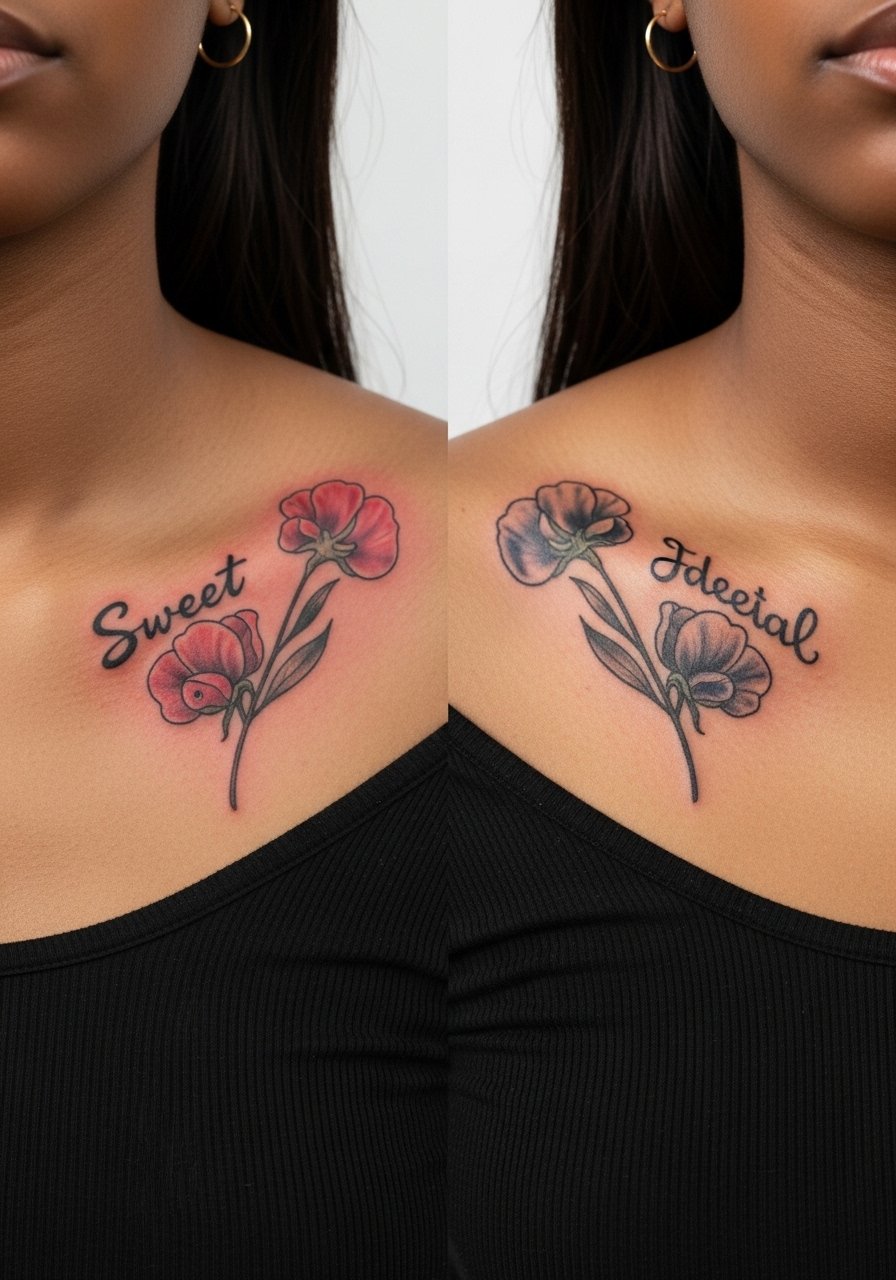
Designs on the collarbone show a pronounced difference between fresh, glossy ink and the settled healed result. Plan with your artist for slightly more contrast in the initial session if you want the healed piece to appear close to the fresh photo. A common regret is choosing neon tones that bleach quickly when exposed to sun. Ask for color blends that age to the palette you like, and discuss a realistic touch-up timeline. For session access, wear a wide-neck shirt you can shift to expose only the collarbone area.
16. Thigh Vines Scaled for Patchwork Sleeves
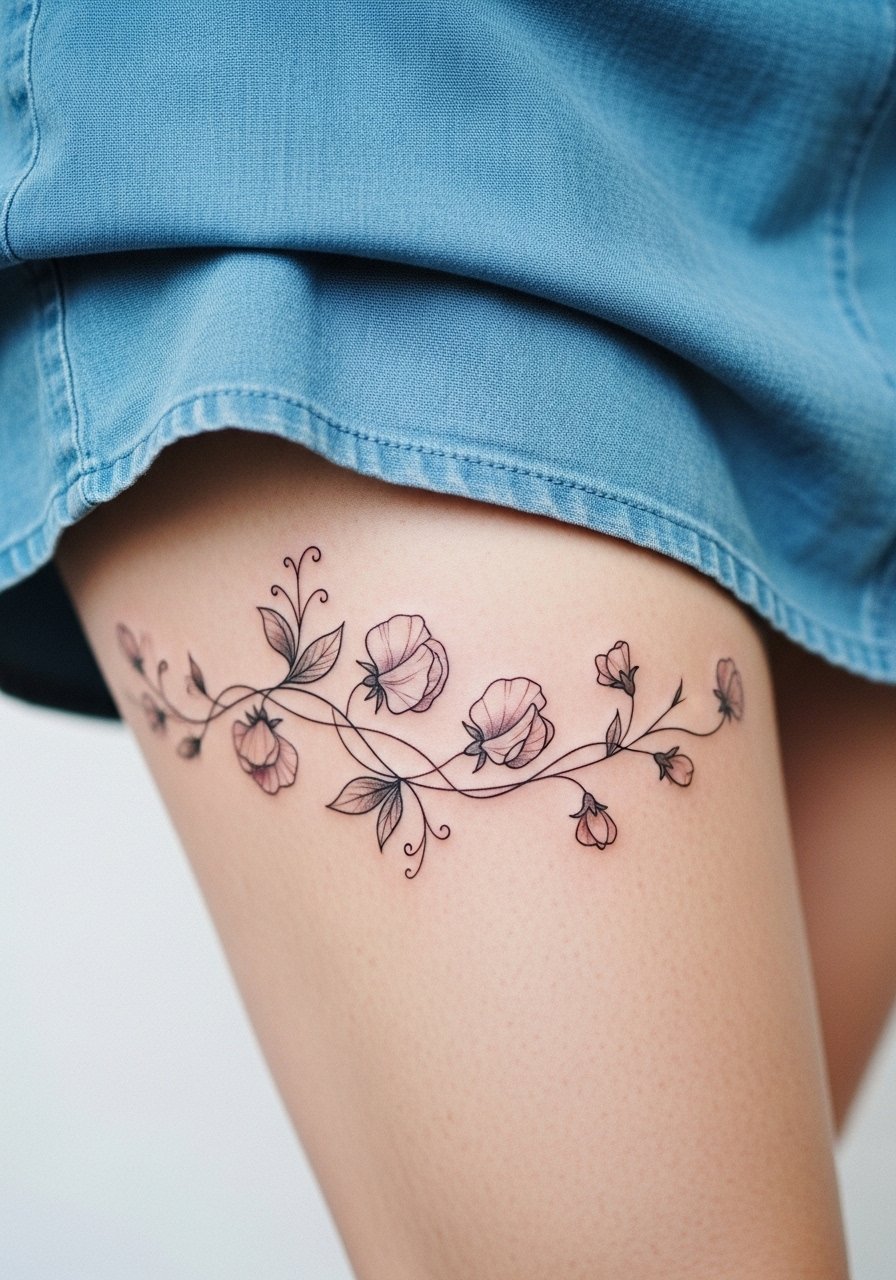
When scaling sweet peas for a sleeve or patchwork plan, the thigh is useful as a test area for spacing and flow. Tell your artist you want negative spaces left intentionally so future pieces can connect without crowding. The usual mistake is treating the thigh like a small canvas and squeezing too many elements. Thigh skin allows larger detail and touch-ups are straightforward. For showing the work, a thigh slit skirt highlights the composition.
17. Ornamental Halo Sweet Pea Around a Small Scar
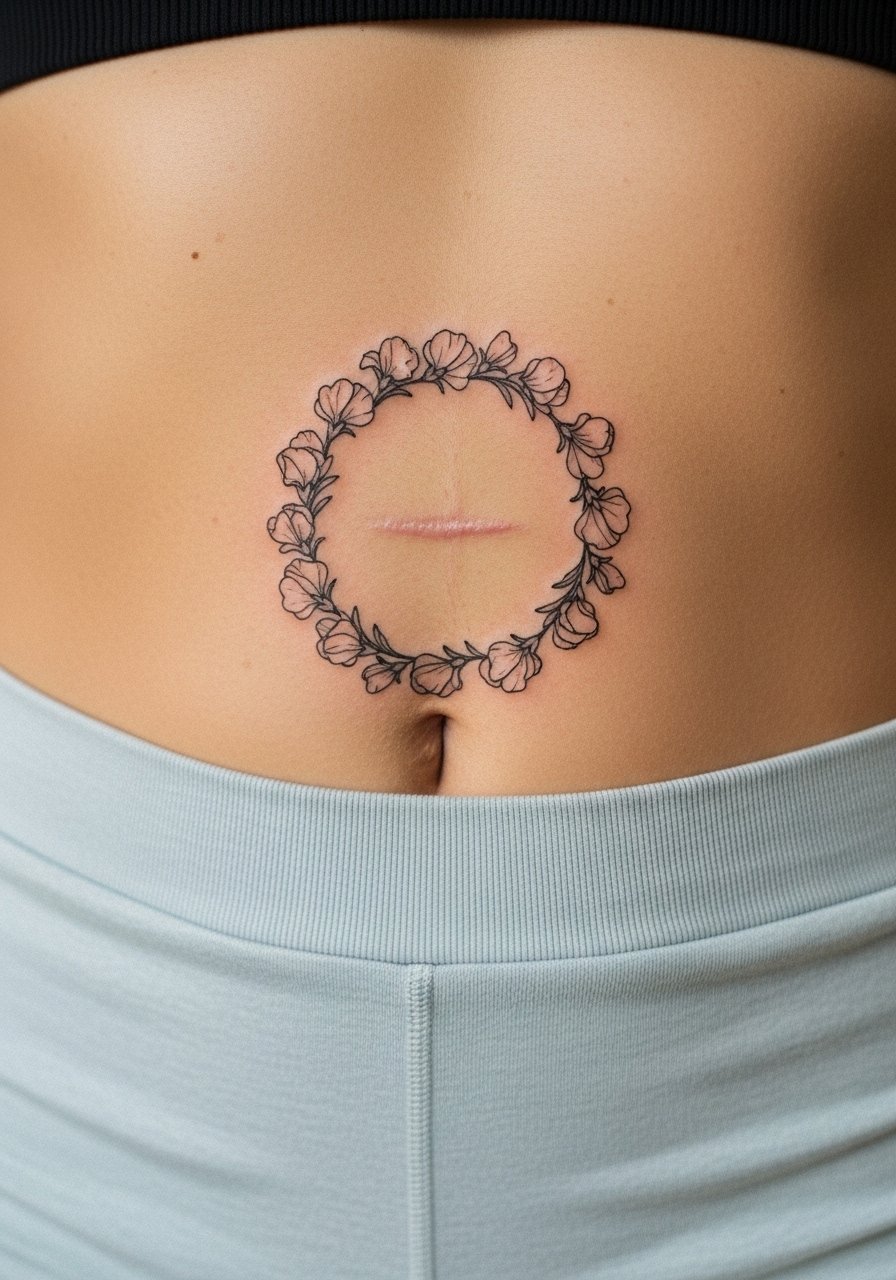
Using sweet peas to frame a scar can be an elegant choice but it needs careful planning. Scar tissue accepts ink differently, so tell your artist where the scar sits and ask to test a small area first. A common misstep is expecting scar tissue to hold color like normal skin. Sessions over scars may take longer and require touch-ups. For modesty during the session, wear high-waisted bottoms and a cropped tee you can shift.
18. Spine-Line Sweet Pea Cascade
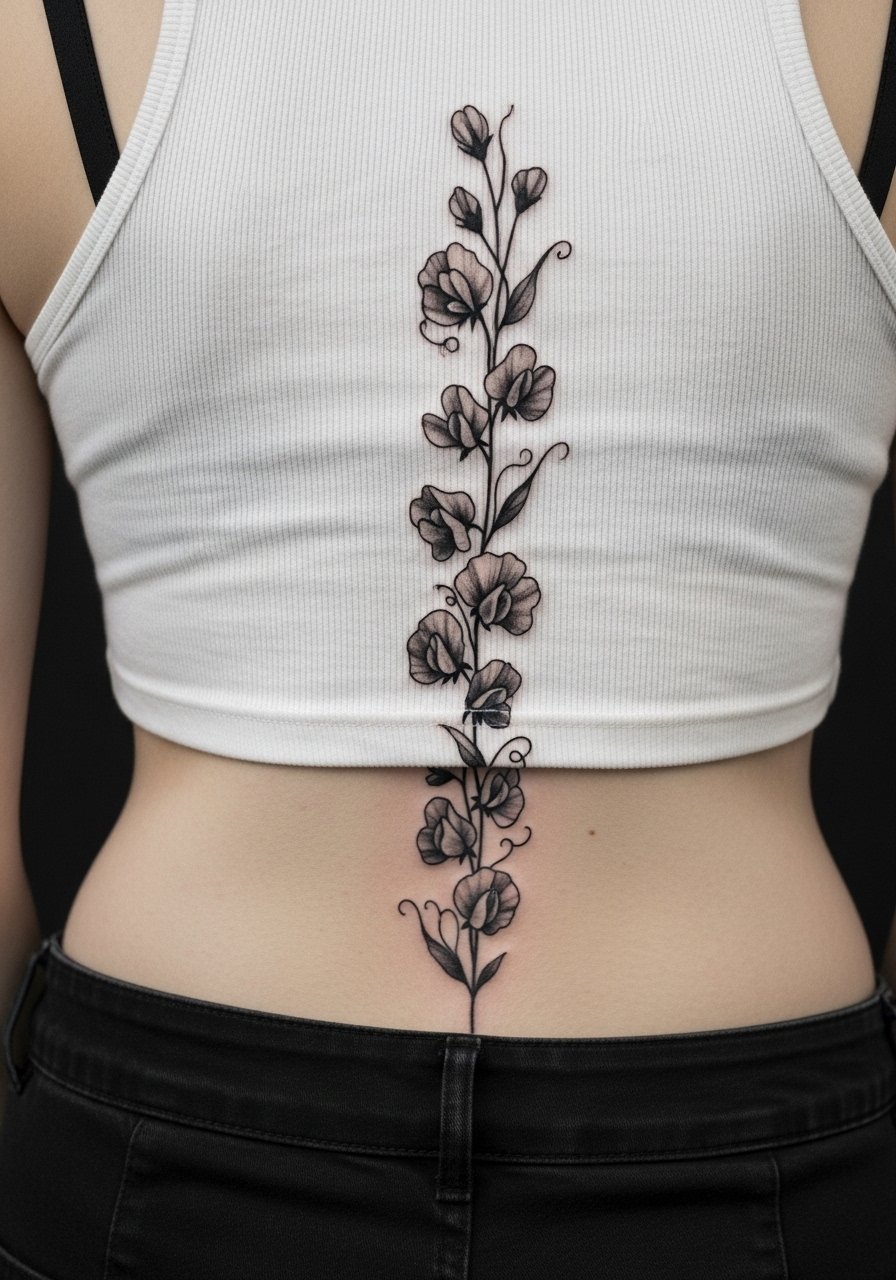
Spine work reads dramatic when centered, but it is a high-pain area and needs symmetry. During consultation, ask how the artist will center the design over the vertebrae and whether they recommend breaks in the pattern to avoid dense line clusters. The mistake is creating long runs of identical stems that make the eye lose the focal blooms. Expect multiple short sessions and plan session wear that gives the artist clear access.
19. Watercolor Collarbone Band with Fading Plan
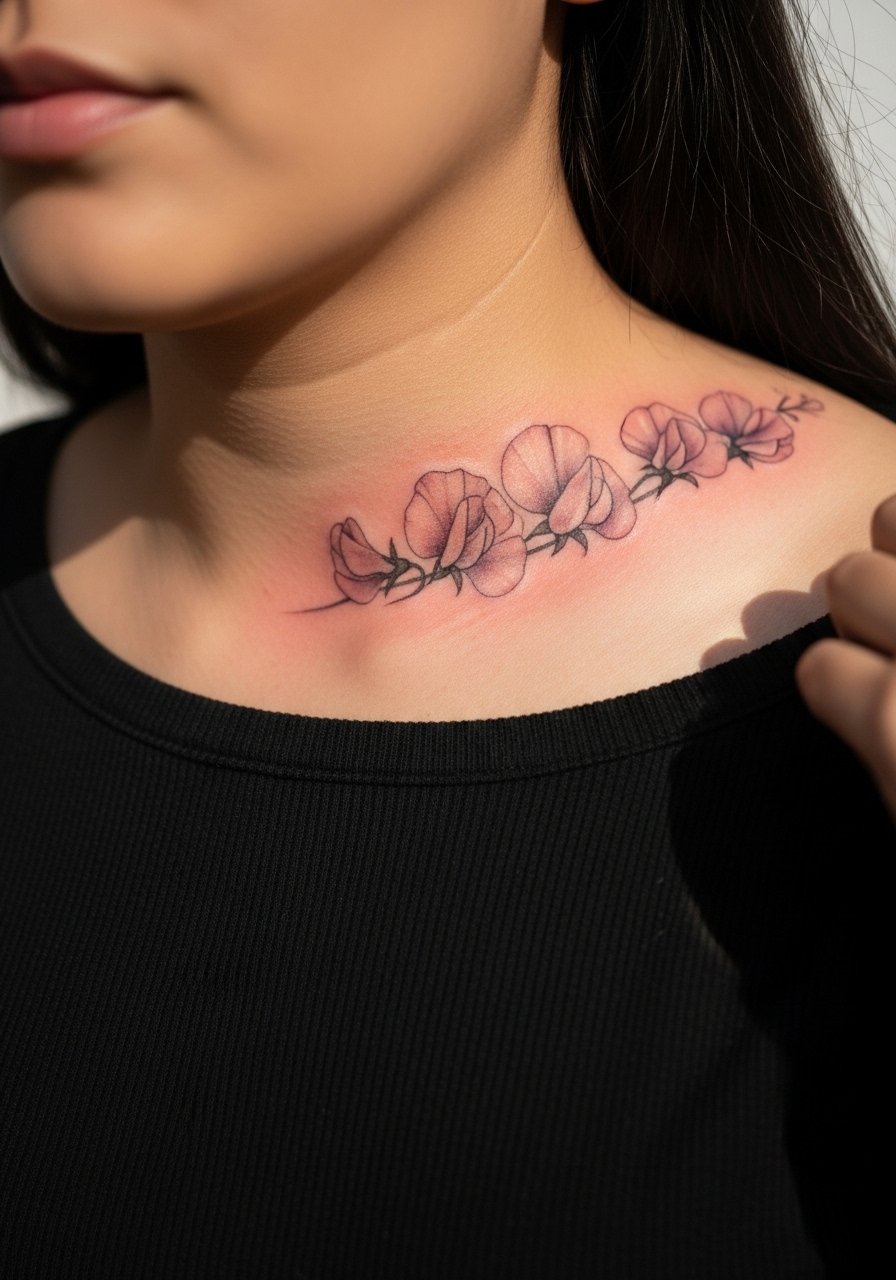
Watercolor bands look airy but they need a fading strategy. Ask for a muted outer wash with more saturation focused on petal bases so the healed result keeps dimension. Some artists recommend avoiding tiny watercolor dots near the collarbone because they can migrate. For showing the band, a strapless sundress or off-shoulder top frames it well. The collarbone sees clothing rub, so expect a touch-up after a year for vibrants.
20. Tiny Sweet Pea Behind the Ear
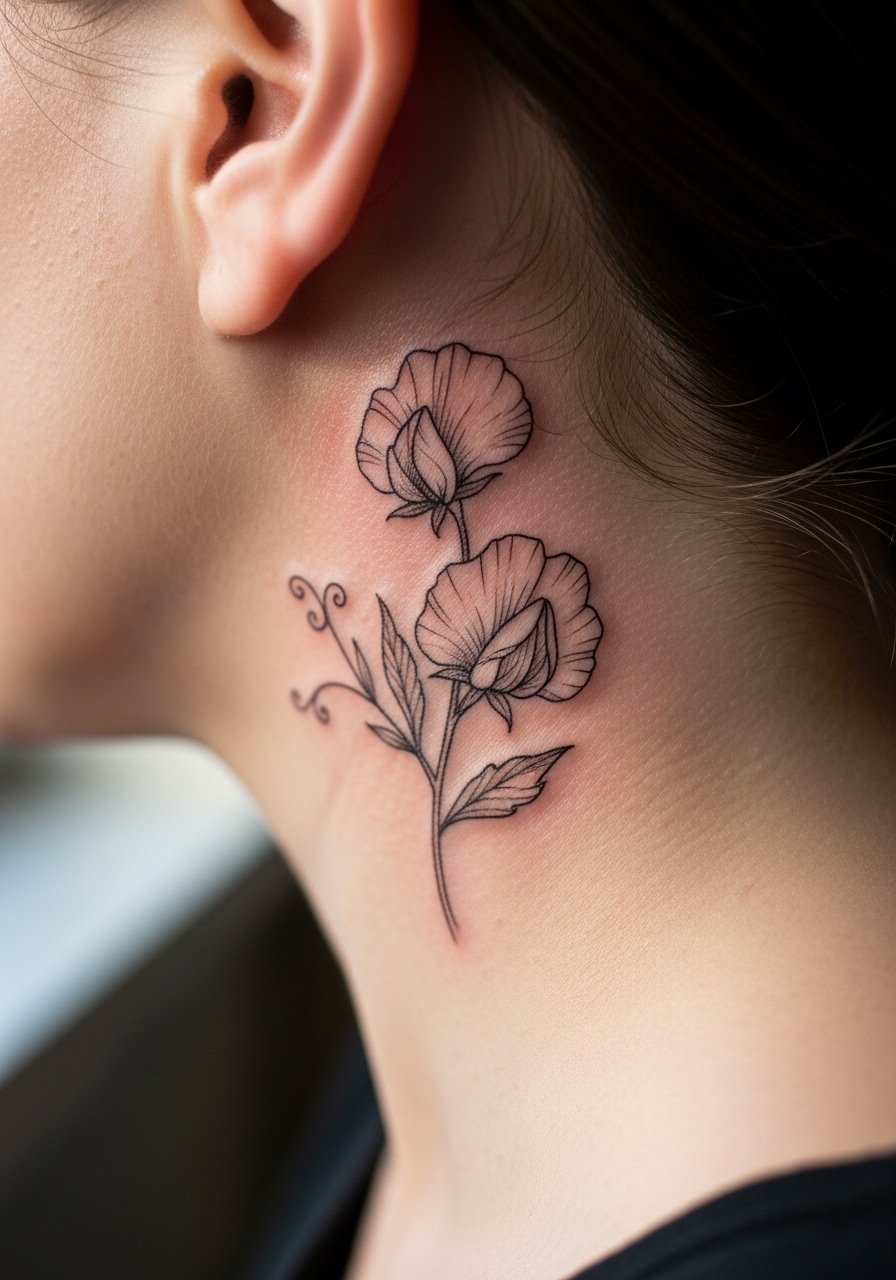
Tiny placements behind the ear are discreet and playful. The image prompt uses the skin below the hairline to ensure proper framing. A procedural note for consideration is that behind-the-ear pieces need steady hands and specific needle control, so find an artist experienced in small neck placements. Pain is brief and healing is usually quick. This spot reads as a whispering accent rather than a statement.
21. Sweet Pea Sleeve Accent Between Existing Pieces
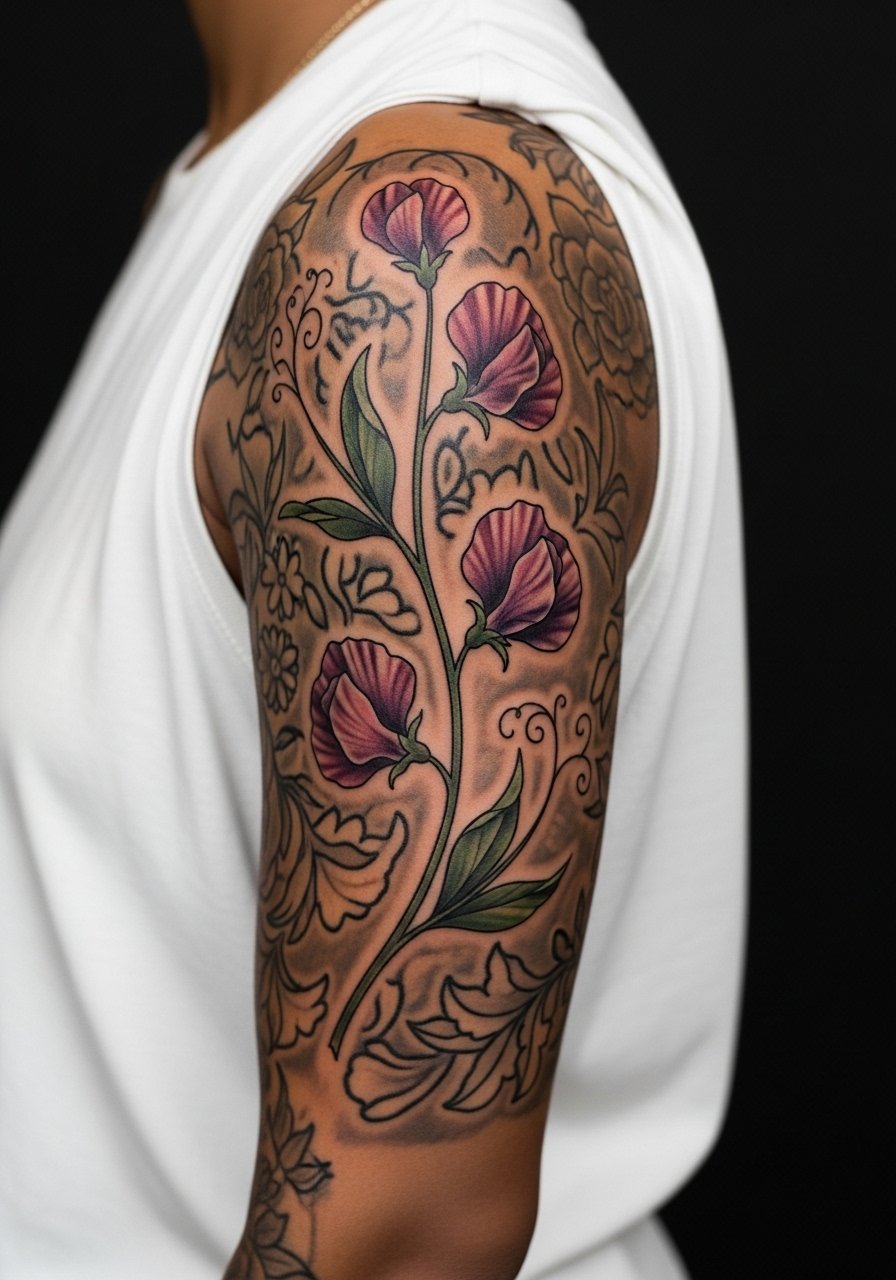
Adding sweet peas as infill in a sleeve demands attention to scale and saturation to avoid clashing. When you consult, bring photos of your existing sleeve that show healed tones so the artist can match saturation and contrast. A common error is matching to fresh ink instead of healed tones. Expect the session to be a touch-up style visit rather than a full new piece. Wear a loose tank so the artist can adjust access.
22. Hip Sweet Pea Accent for Hidden Placement
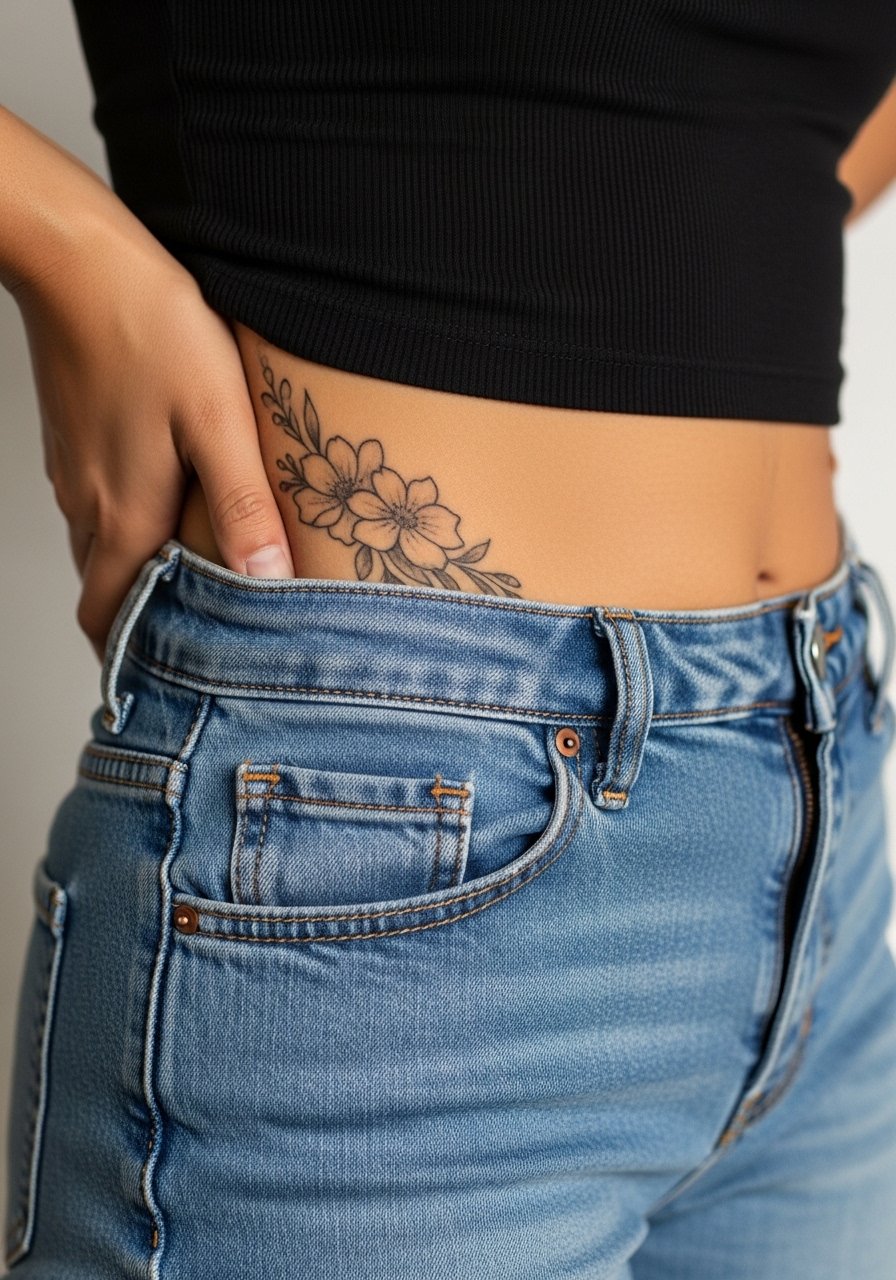
Hip tattoos are private and age well since they are protected from sun. The main consideration is how the piece sits with waistlines and clothing. Ask your artist to map the stems with your favorite underwear or bikini line in mind so the tattoo peeks where you want it. Session wear should include loose bottoms you can shift easily. For a summer reveal, high-waisted denim works well.
23. Inner Thigh Sweet Pea Cluster
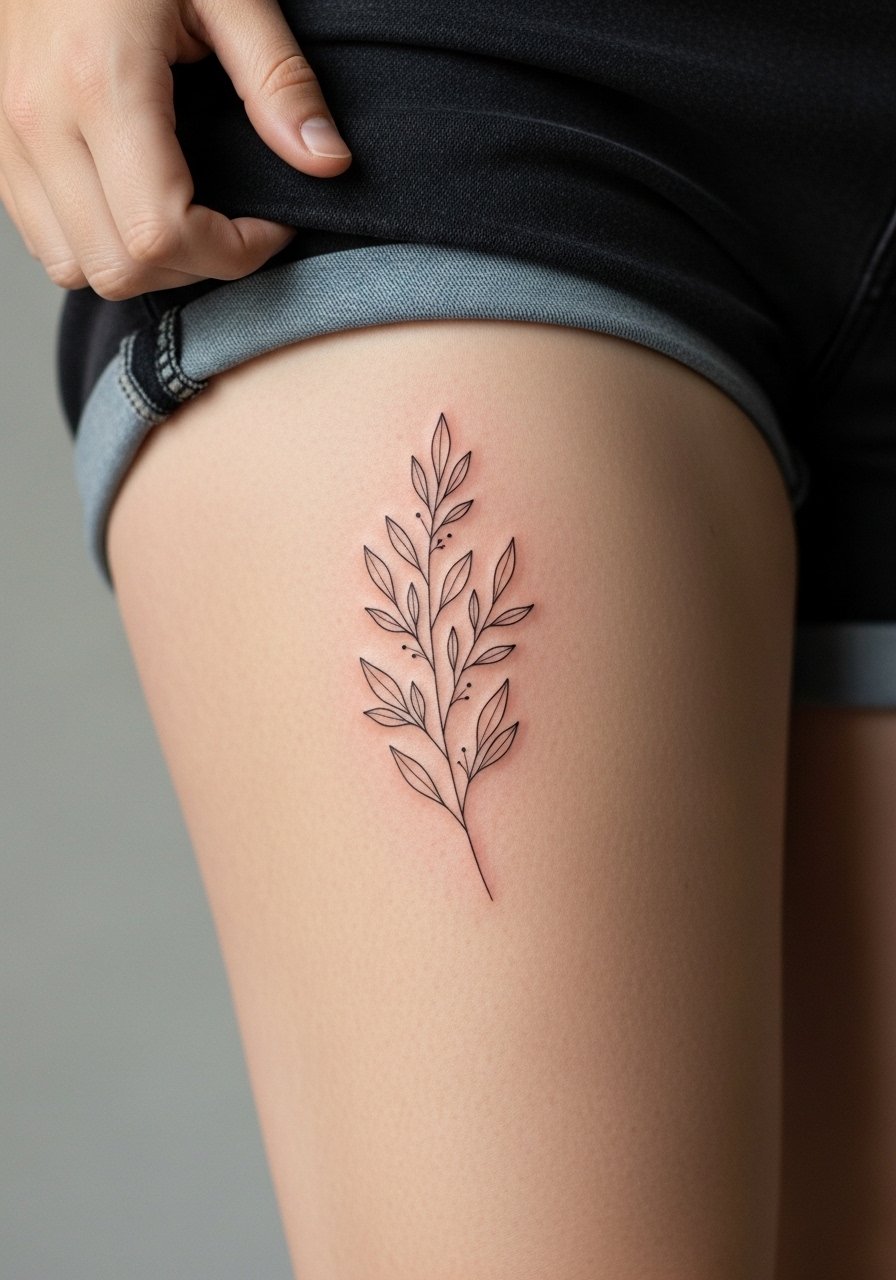
Inner thigh work is intimate and sensitive, with higher pain and longer healing windows. Scar tissue from friction and chafing is a real factor, so plan clothing to protect the area during early weeks. A frequent mistake is underestimating aftercare for inner thigh pieces. Discuss compression or athletic wear you might use during workouts post-session to avoid rubbing. For modesty, wear shorts you can shift slightly during the appointment.
24. Lower Back Sweet Pea Sprig
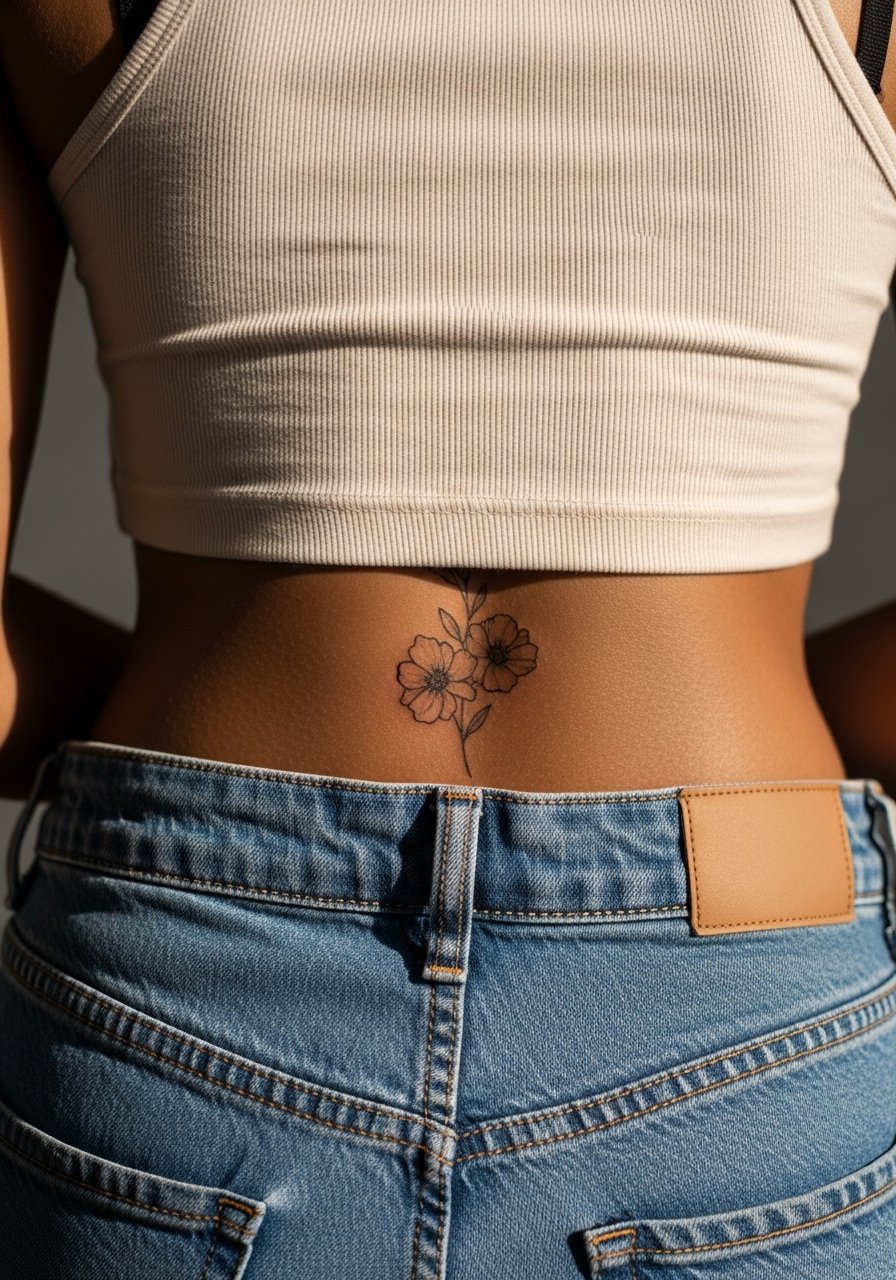
Lower back pieces sit in a spot that rarely stretches dramatically, but they can be hidden easily. The key is balance between central blooms and trailing stems that follow the waist curve. Ask the artist to mark the stencil while you stand in the clothes you plan to wear most, so placement lines up with waistbands. Sessions may require repositioning when you sit or lie down.
25. Sweet Pea Ankle Chain with Tiny Petals
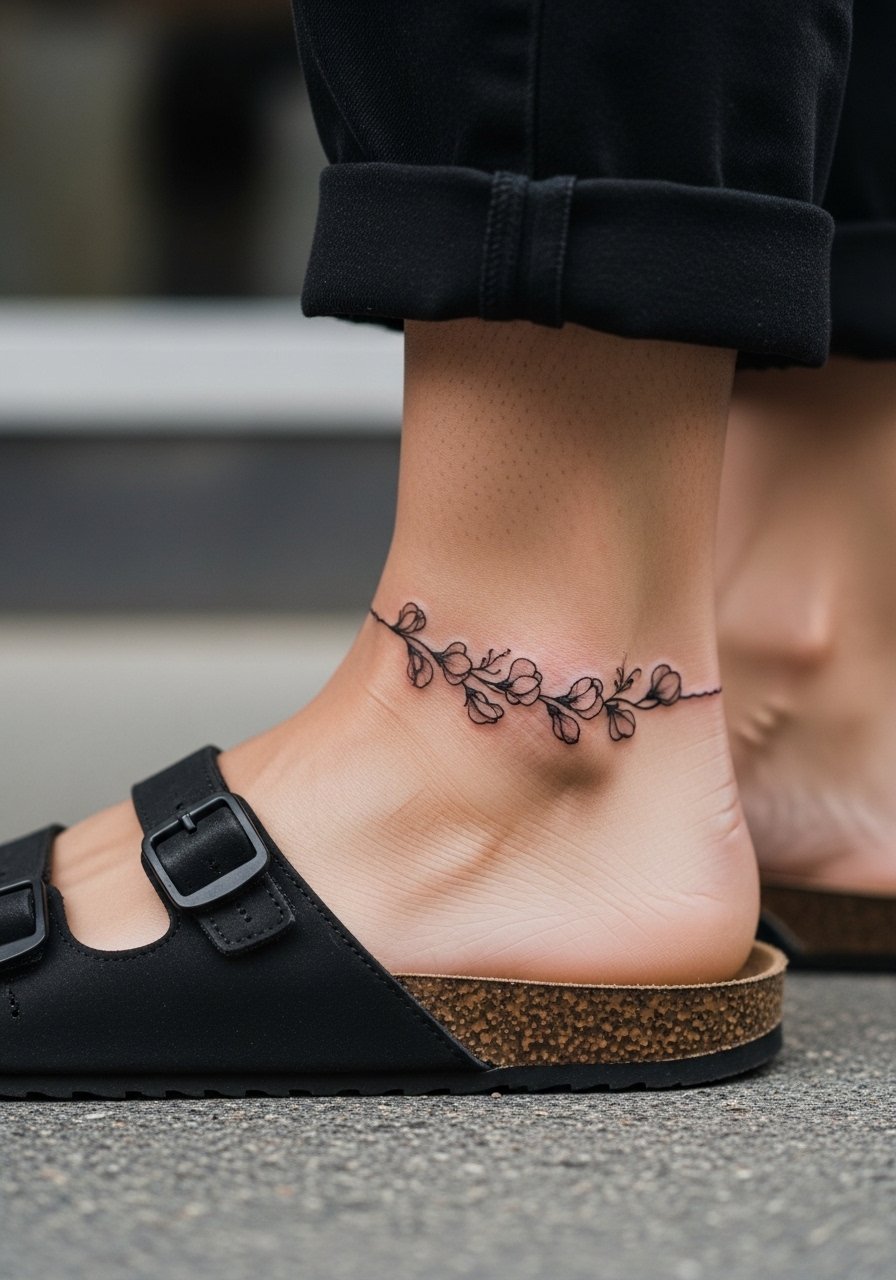
An ankle chain mimics jewelry and needs clean, continuous linework to read as a bracelet. The frequent error is uneven spacing that breaks the illusion. Ask for mirror checks of the stencil from multiple angles before the needle hits skin. This spot sees constant movement and shoe rubbing, so plan for light touch-ups and protectors while healing. For showing it off, pair with espadrille flats women.
26. Sweet Pea Thigh Band with Companion Birth Flowers
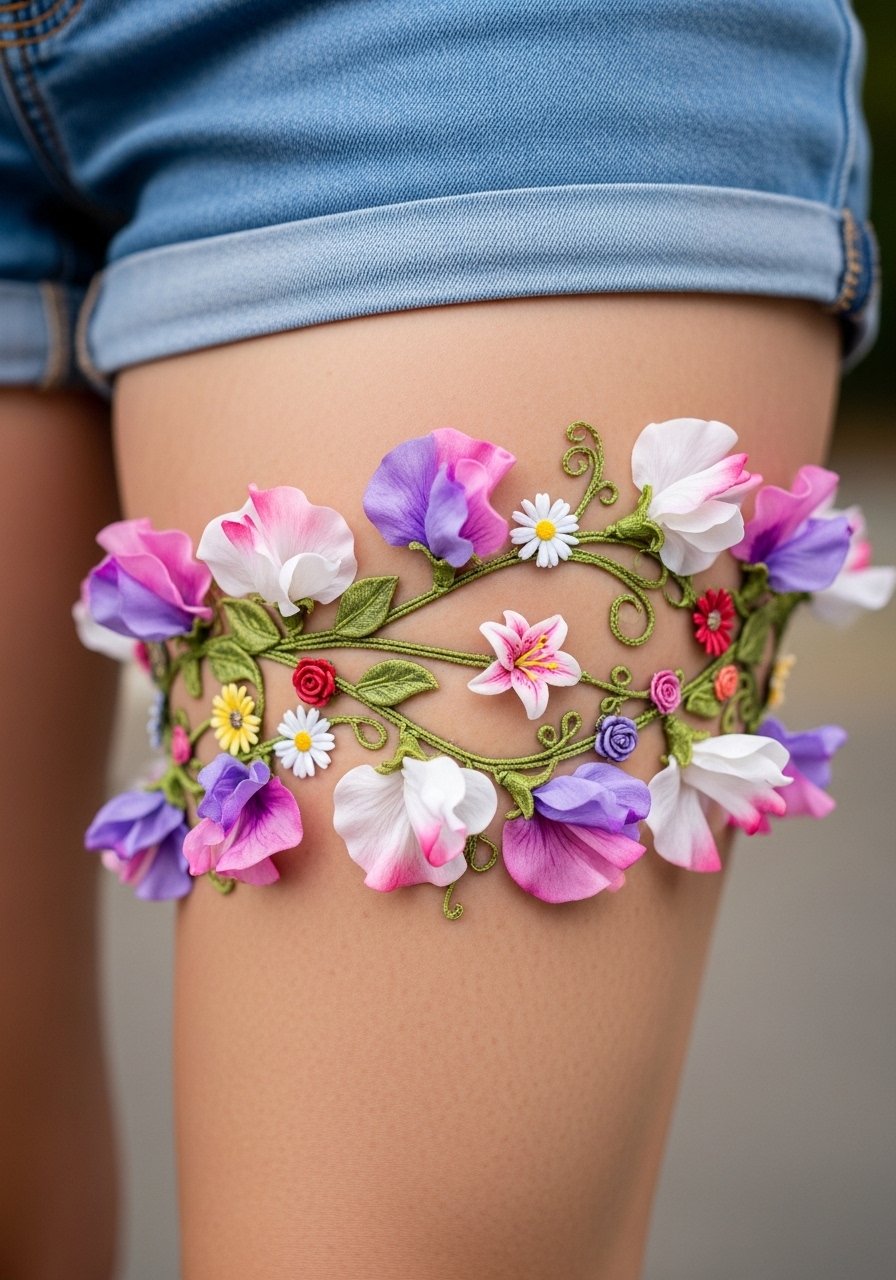
Combining birth flowers with a sweet pea band gives a personalized sleeve alternative without full-arm commitment. Tell your artist which flowers you want and ask how they will balance scale so the band reads coherent from a distance. A common mistake is overcrowding different floral styles in the same band. Sessions are moderate in pain and typically need a single extended appointment. For showing it off, choose high cut athletic shorts.
27. Minimal Sweet Pea Script Pairing on the Inner Wrist
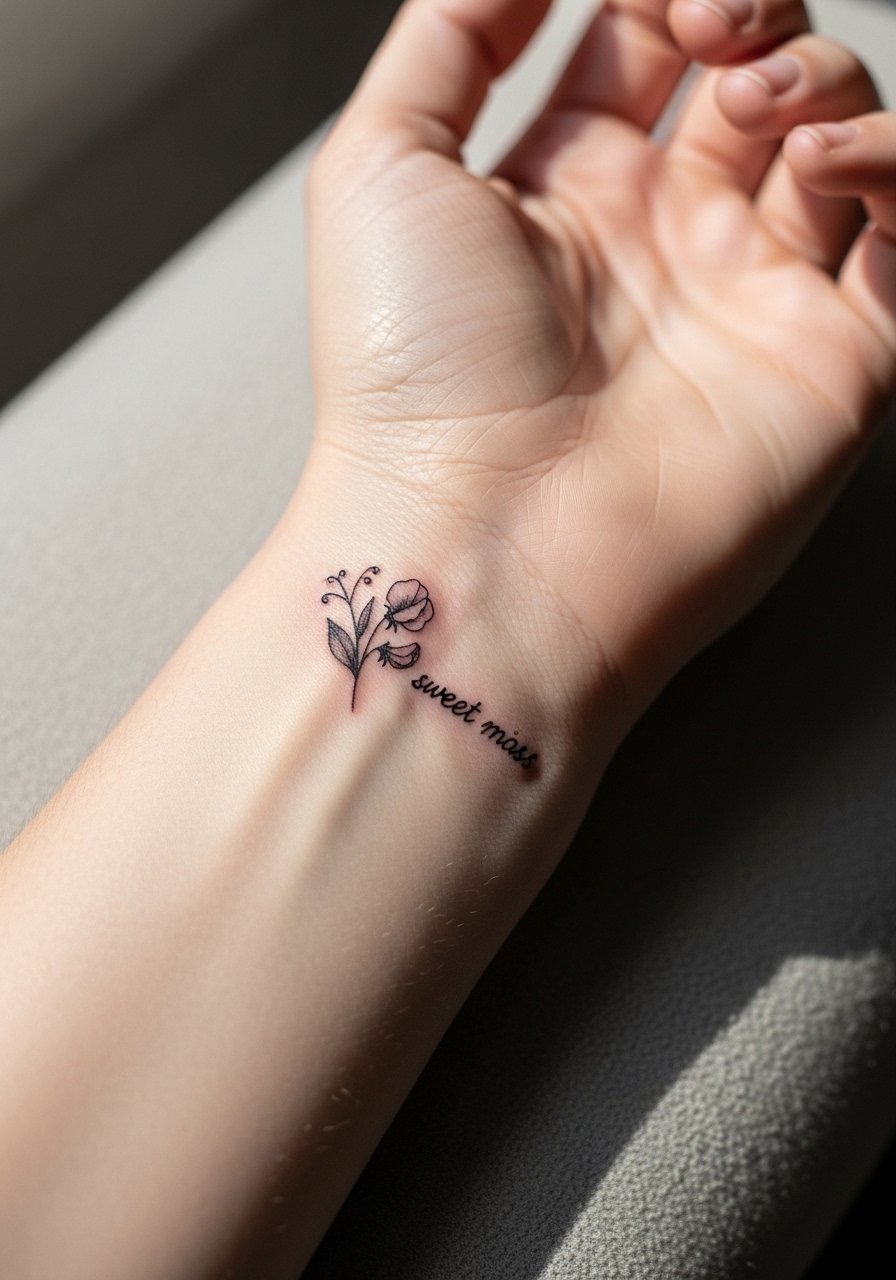
A sweet pea beside a short script works well when the lettering is kept to a single word or date. When text appears, specify exact wording to the artist so stencils match your intent. The inner wrist needs careful spacing between script and petals to avoid merge during healing. Plan for daily care that minimizes rubbing from watches and sleeves during the first two weeks.
Frequently Asked Questions
Q: Will fine line sweet pea tattoos fade faster than bolder work on areas like the wrist and ribs?
A: In my experience fine line tends to show softness sooner than saturated blackwork, especially on high-motion areas like wrists and ribs. One camp trusts subtle aging as part of the look. The other camp recommends slightly heavier lineweight to preserve clarity. Ask your artist what touch-up timeline they expect for the chosen placement.
Q: How can I find an artist for a custom sweet pea bouquet if guest spots keep getting canceled?
A: Use directory filters in apps and search hashtags for real-time guest spots. Try searching "#sweetpeatattoo" and check local "floral" or "botanical" filters in booking apps. Booking three options, including walk-in friendly shops, reduces the risk of long waits when a guest spot falls through.
Q: Do color sweet peas show differently on dark skin, and should I change the approach?
A: Yes. From what I have seen, color can read differently on darker tones. Many artists recommend stronger contrast, thicker anchors, or black-and-gray alternatives to keep petals defined in photos and in person. Bring healed examples on similar skin tones when you consult.
Q: If I want a tiny wrist sweet pea but worry about price jumps, how do I budget?
A: Small wrist pieces can vary widely by studio. For micro work consider walk-ins or ask for a consult to confirm session time. Some places price by minimum charge, others by hourly rates, so comparing three shops helps set realistic expectations without overpaying.
Q: Which placements need the most careful aftercare during summer activities like running or swimming?
A: Lower leg placements such as ankles and calves and inner-thigh work face extra sweat and friction during summer. Protect those areas with breathable coverings when running and avoid pools for the first two weeks. The right post-session prep and a short rest from heavy activity keeps the linework steady.