
Fine line third eye trends look flawless on a saved board. The reality is that what stays readable on skin for years is more about placement, line spacing, and how you plan to dress the area than the initial photo. I wrote this list so you can match minimalist third eye ideas to where you live in your wardrobe and what to ask at the consult. Start with a gentle option and read the aging notes before booking.
1. Fine Line Third Eye on Inner Forearm

I see this layout on people who want a clear but discreet symbol they can roll up and reveal. Ask your artist to space the lashes and iris with tiny breathing room so the dense bits do not merge as the skin ages. Expect moderate pain for the forearm and a one-session touch-up timeline around year two if you spend time in the sun. Common mistakes include asking for a slab-thin single-needle line across dense detail, which blurs faster than a slightly bolder, considered stroke. For showing it off, roll a sleeve and wear a rolled cuff chambray shirt so the forearm sits in neutral tones and the linework reads clean.
2. Geometric Eye of Providence on Outer Forearm
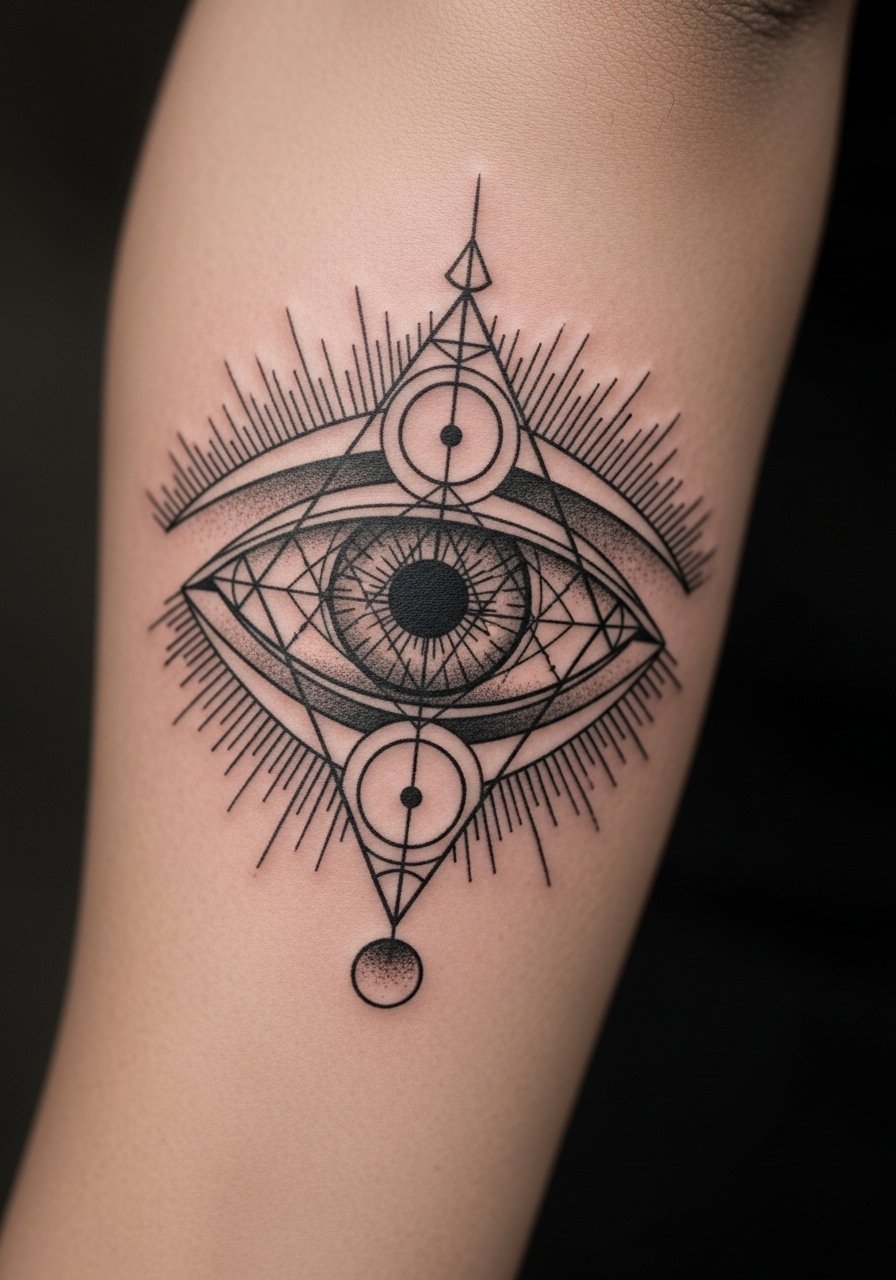
The triangle composition gives a clear architectural edge that holds up visually from a distance. During consultation, specify exact line weights and ask for mockups showing the triangle at 2.5 inches so the internal eye does not get lost. The outer forearm tolerates more movement than the wrist but still sits under sun exposure. A mistake I see often is requesting a tiny, highly detailed triangle with dense dot work that looks great fresh and muddles within a couple of years. Expect a two-session approach on more complex blackwork and ask to see healed photos of similar placements.
3. Mandala-Framed Third Eye on Shoulder

This placement lets the mandala breathe without being cramped. If you want symmetry rather than literal replication, tell the artist you prefer radial spacing and stipple shading rather than dense cross-hatching. The shoulder is forgiving with touch-ups; the biggest risk is packing too many concentric rings into a small diameter. For showing off the balance, an off shoulder linen top in earth tones frames the pattern and keeps attention on the shoulder rather than competing jewelry. Expect two sessions for intricate mandala framing and ask about how it will sit when you raise your arm.
4. Lotus-Integrated Third Eye on Collarbone
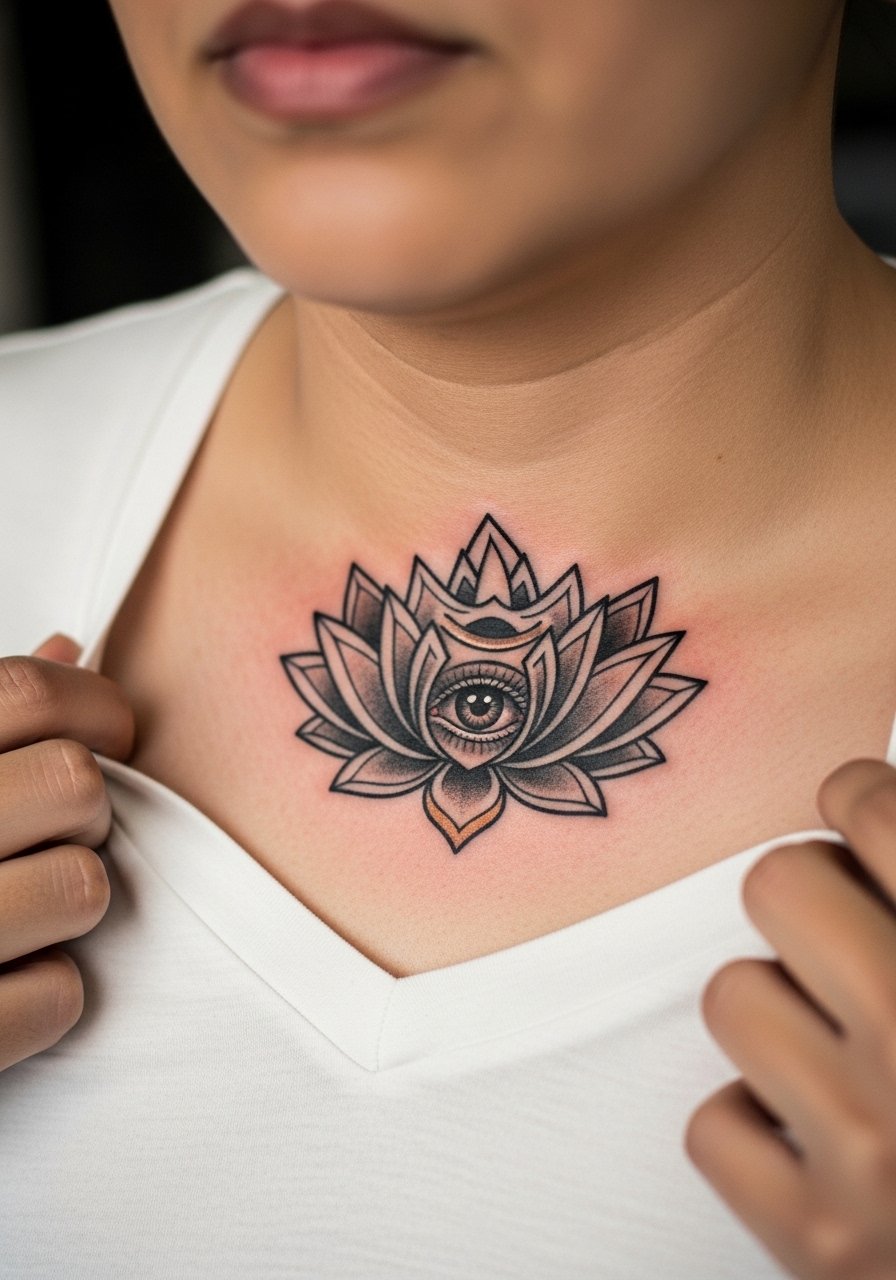
Collarbone pieces read delicate but can be dramatic when placed just above the bone. Tell your artist you want the lotus petals to sit horizontally so the design follows the collarbone line, not across it. The collarbone moves with breathing and clothing, so avoid ultra-fine interior lines packed tightly together. Wear a v neck silk blouse for evening reveal and a strapless or wide-neck top on the session day so the artist can access the area cleanly. Expect moderate pain near the bone and plan for a light touch-up if you sleep on one side repeatedly during healing.
5. 3D Realistic Third Eye on Calf
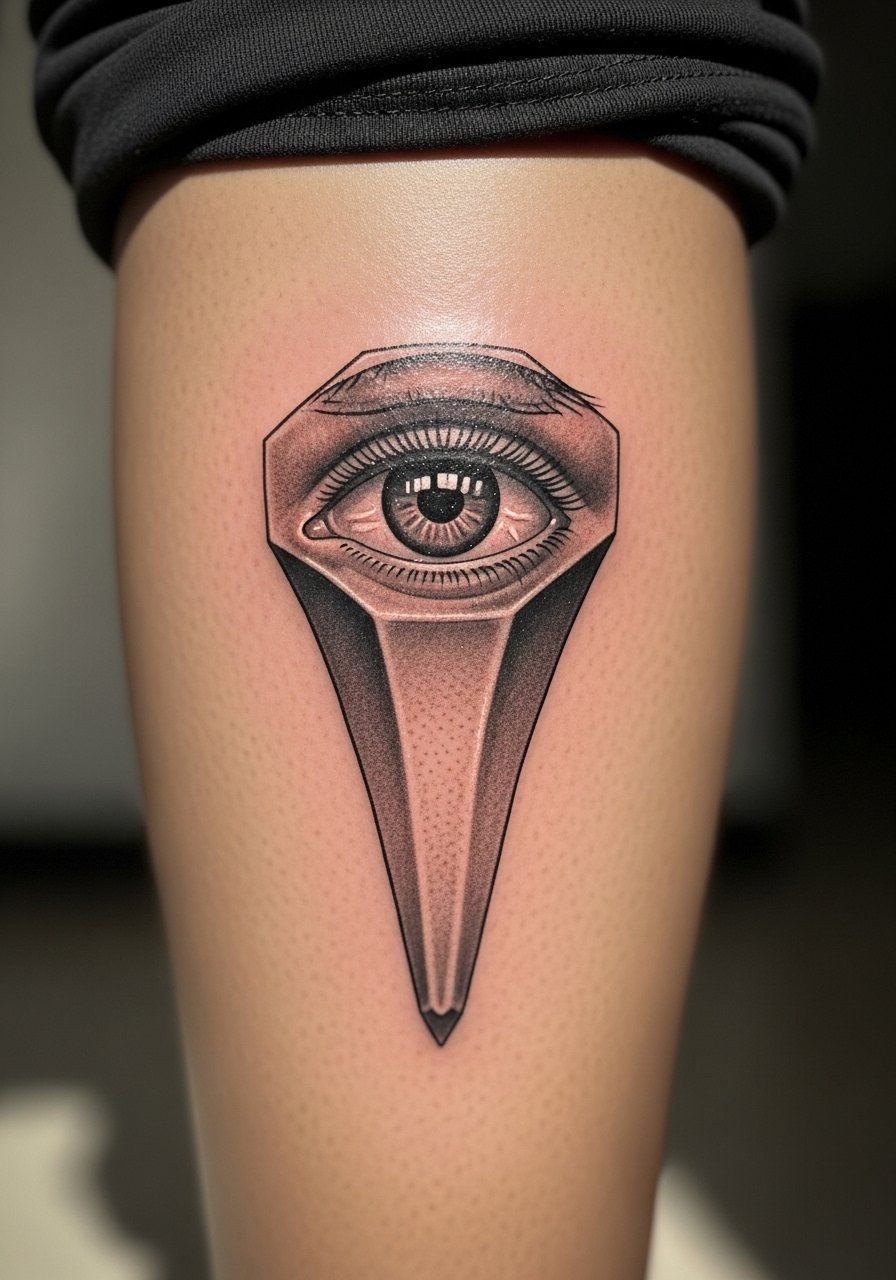
There is real satisfaction in a three-dimensional micro-realism eye that reads almost like a photograph from a few feet away. For a convincing effect, ask your artist to map out highlights and shadow planes on your calf while you stand so the shape reads correctly in motion. Calf sessions are long but tolerable and usually need multiple passes for deep grayscale saturation. A mistake is trying to shrink a 3D concept into a one-inch patch; give it room. For casual reveal, cropped joggers or rolled ankle pants make the piece pop, so bring a pair of cropped jogger pants for aftercare comfort during healing.
6. Minimalist Single-Line Third Eye on Wrist

This is a fast, low-fuss option that reads as an intentional accent rather than a statement. Artists are split on whether ultra-fine single-line work holds on the wrist. One camp says the constant washing and movement erode single-needle strokes quickly. The other camp argues that a slightly deeper single-needle pass combined with conservative spacing will settle well. Ask where your artist stands and whether they recommend a faintly bolder reference line for longevity. During the session wear a sleeveless tank top so the wrist and lower arm are accessible and you do not tug fabric over fresh ink. Expect the lightest discomfort and a touch-up window around 12 to 24 months if you use your hands a lot.
Studio Day Picks
The ideas above include wrists, forearms, collarbones, shoulders, and calves, so these essentials smooth the session and the first week of healing.
- Stencil transfer paper kit. Helps preview placement on skin before the needle hits, especially useful for the mandala and geometric layouts in ideas 1 through 6.
- Topical numbing cream. Applied per instructions it eases needle anxiety on the collarbone and calf without masking fine line feedback.
- Thin protective film roll. Keeps wrist and fingertip pieces cleaner during the first few days when friction from typing and washing is highest.
- Fragrance-free body wash. Gentle cleansing for areas like the shoulder and forearm while the scab phase passes.
- Aquaphor healing ointment. Thin layers support delicate fine line work without clogging shallow channels that small third eye designs depend on.
7. Black and Gray Shaded Third Eye in Triangle on Inner Bicep
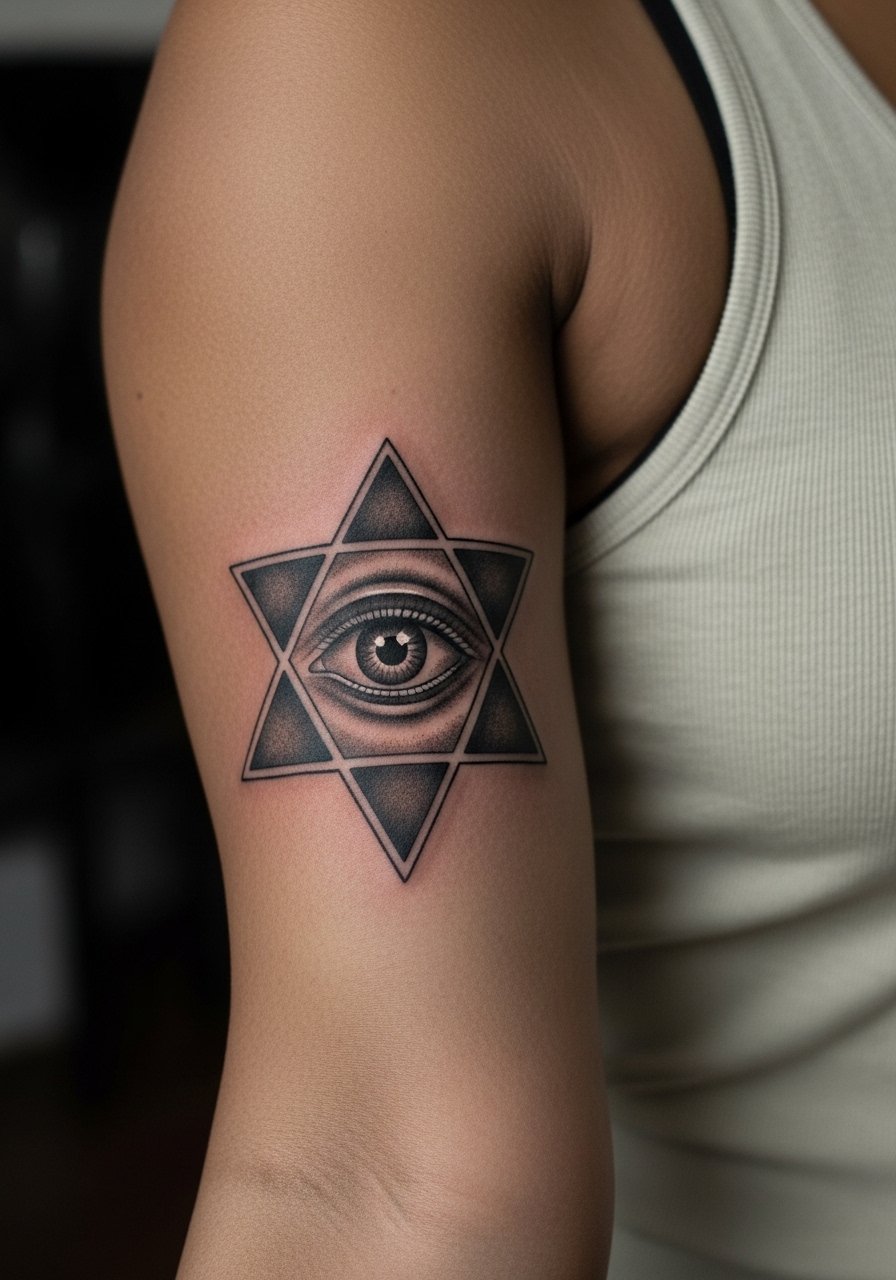
The inner bicep offers a private canvas with a smooth texture that absorbs shading well. Tell your artist to keep the triangle open at the corners so the shaded eye does not sit into a tight black box. The pain is higher on the inner arm because the skin is thinner and more tender. A frequent mistake is trying to cram dense dot shading into a narrow triangle, which flattens as it heals. Expect a one to two session workflow and consider that this area might need touch-ups if you gain or lose a significant amount of weight.
8. Colorful Psychedelic Third Eye on Outer Thigh
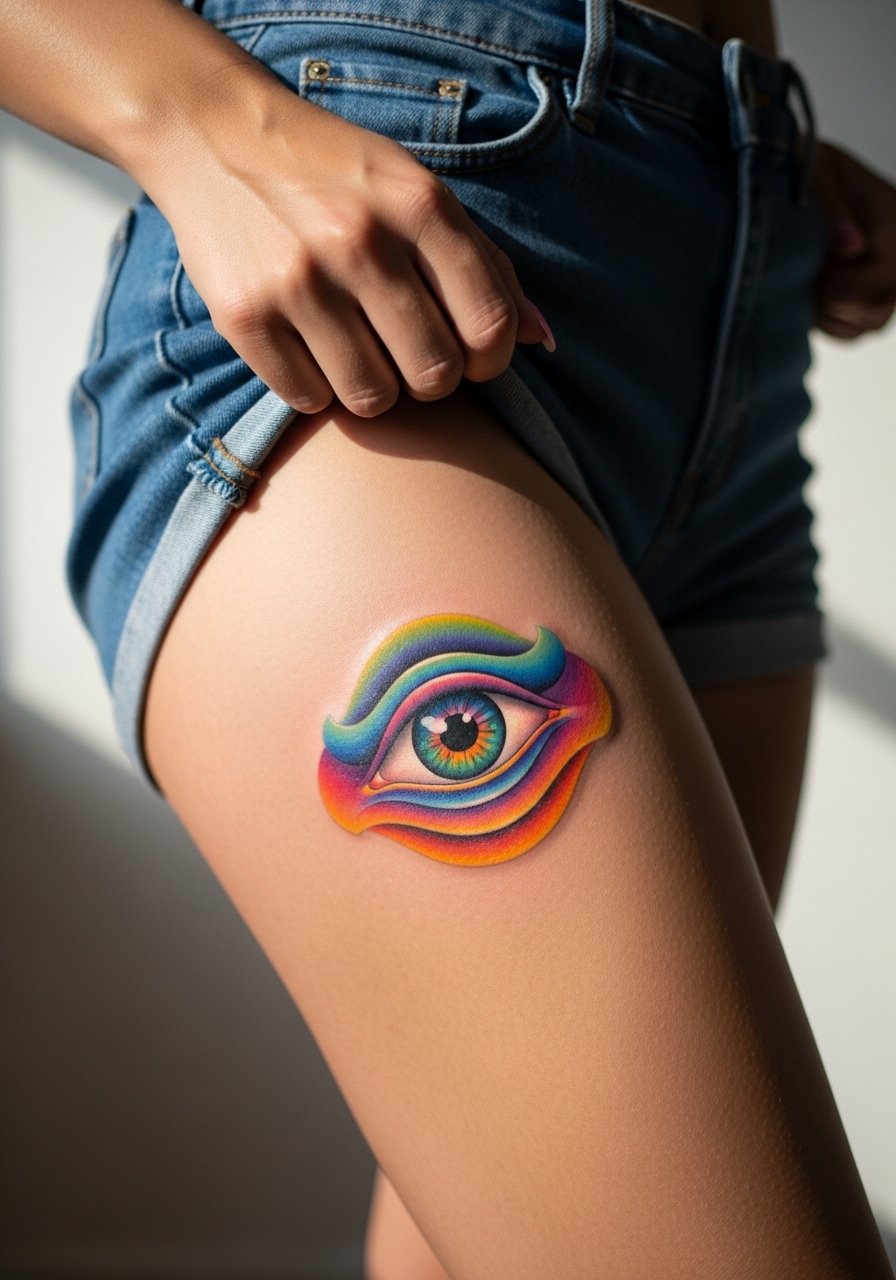
This placement lets color breathe without constant sun exposure, which helps saturation last longer. For a trippy palette ask for saturated midtones and clear boundary lines between colors so the gradients do not bleed together as they settle. Thigh sessions are long but comfortable when you bring layers to adjust temperature. For showing off the work go with high waisted shorts that reveal the outer thigh and complement the color block. Expect multi-session work and be ready for longer touch-up windows because color can need an extra pass to reach true depth.
9. Delicate Fine Line Third Eye Solo on Inner Wrist

First-timer friendly, the inner wrist reads like a quiet signature. The main risk is daily washing and sunlight, which speed fading. Ask the artist to use gentle single-needle strokes with tiny spacing and to avoid tiny interior crosses that age into fuzz. The session is quick but will sting more than the forearm because of the thin skin. Pair the piece with stackable thin cuffs on the opposite wrist for balance without crowding the ink. Plan for a touch-up at year one to refresh the most delicate lines.
10. Abstract Third Eye with Bordering Shapes for Forearm Sleeve
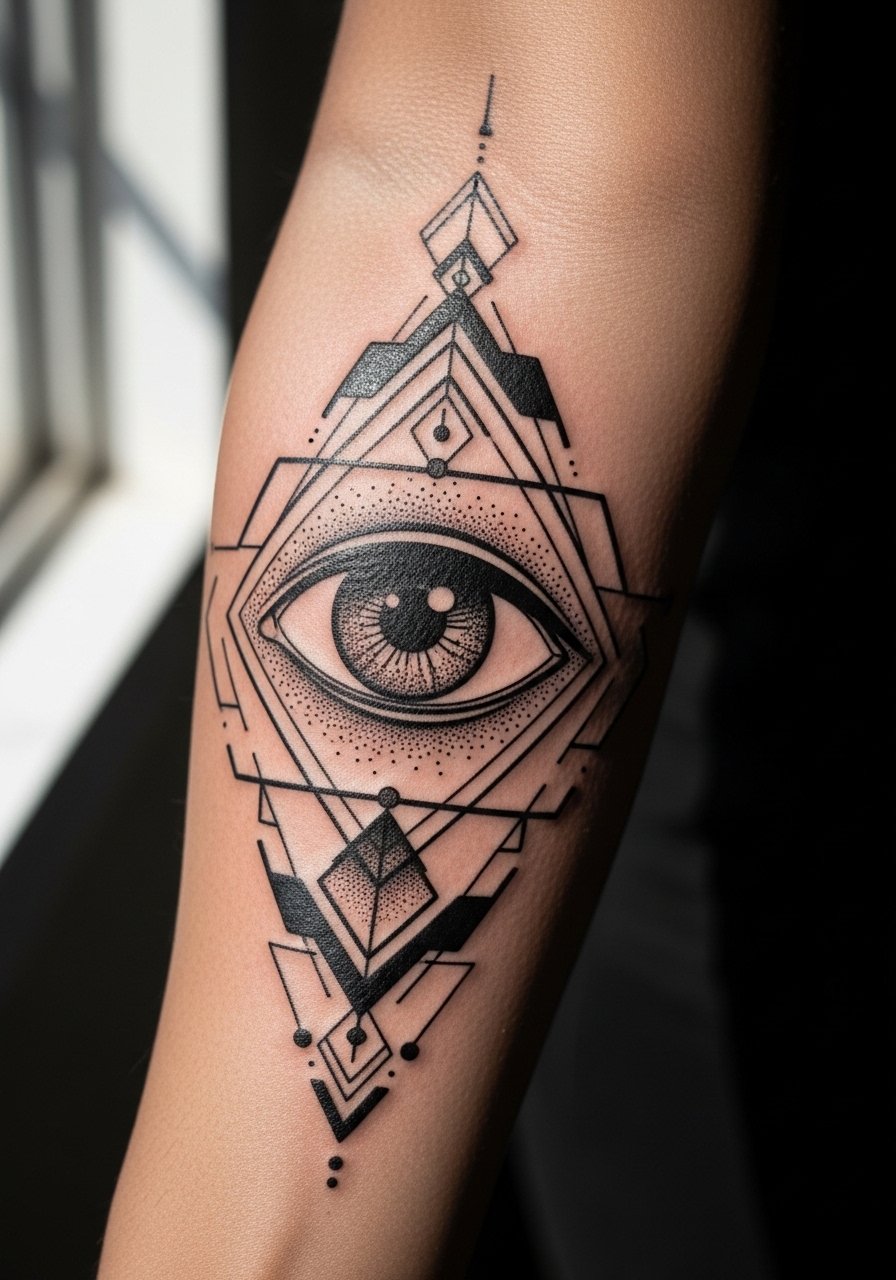
This is a smart way to anchor a sleeve concept where the third eye sits among shapes and margins rather than as a single centerpiece. In consults, bring a sleeve reference so the artist can plan line direction and negative-space breathing across the arm. The common error is shrinking the eye too small relative to surrounding shapes, which makes it visually compete instead of anchoring. Forearm sleeves can be staged over multiple appointments and will need spacing to avoid heavy blowout in high-motion zones. Ask about how the design will look standing and with the arm flexed so the eye does not distort.
11. Micro-Realism Third Eye on Ankle
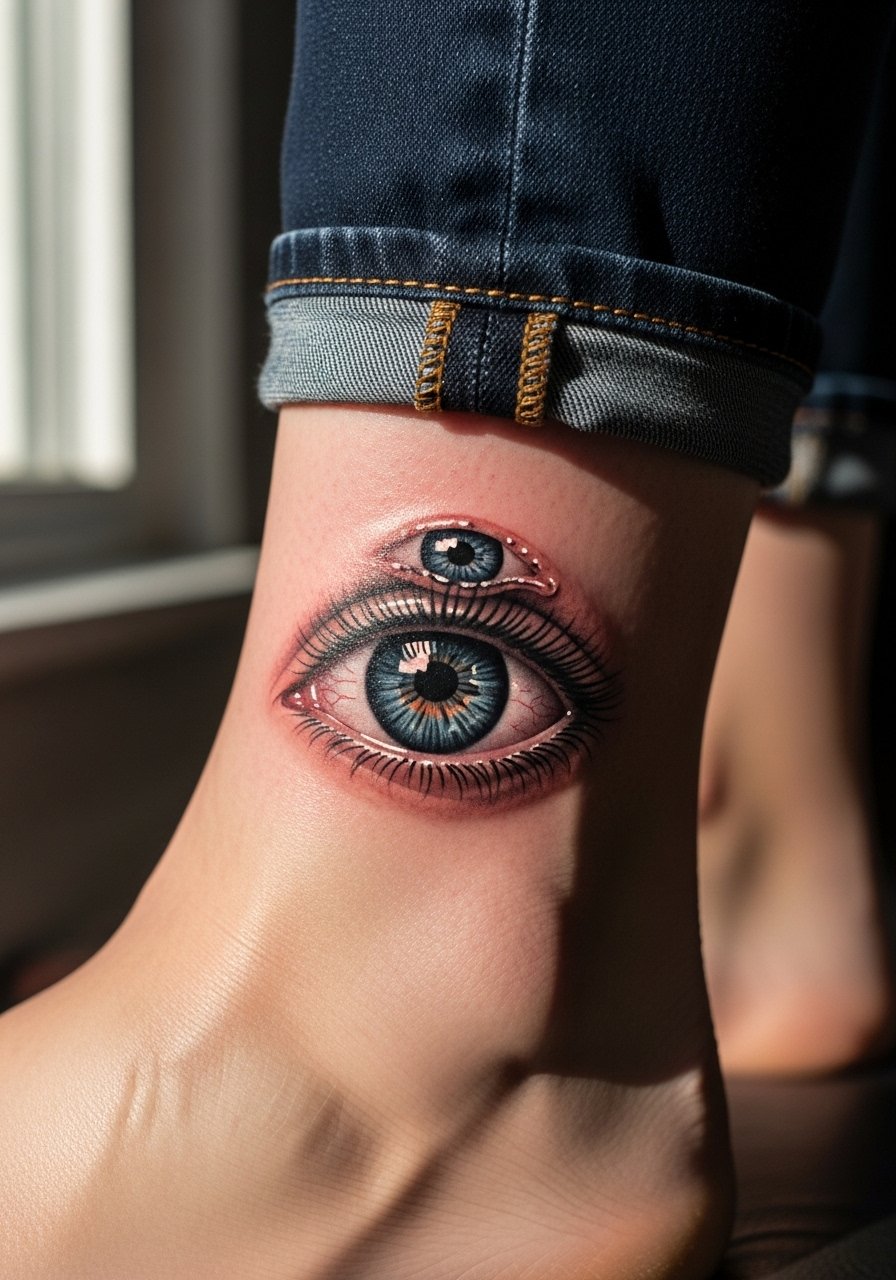
Ankle placements are sensitive to friction from socks and shoes during healing. For small realism, ask for crisp contrast between the pupil and surrounding highlights so the depth survives routine wear. The session feels sharp in short bursts because of the bone proximity. A common mistake is letting the artist go too dark on the first pass, which can leave the piece looking heavy on healing. Plan to wear open shoes and soft socks while the area is tender and expect touch-ups if you run a lot or wear tight footwear consistently.
12. Dotwork Mandala Third Eye on Lower Back
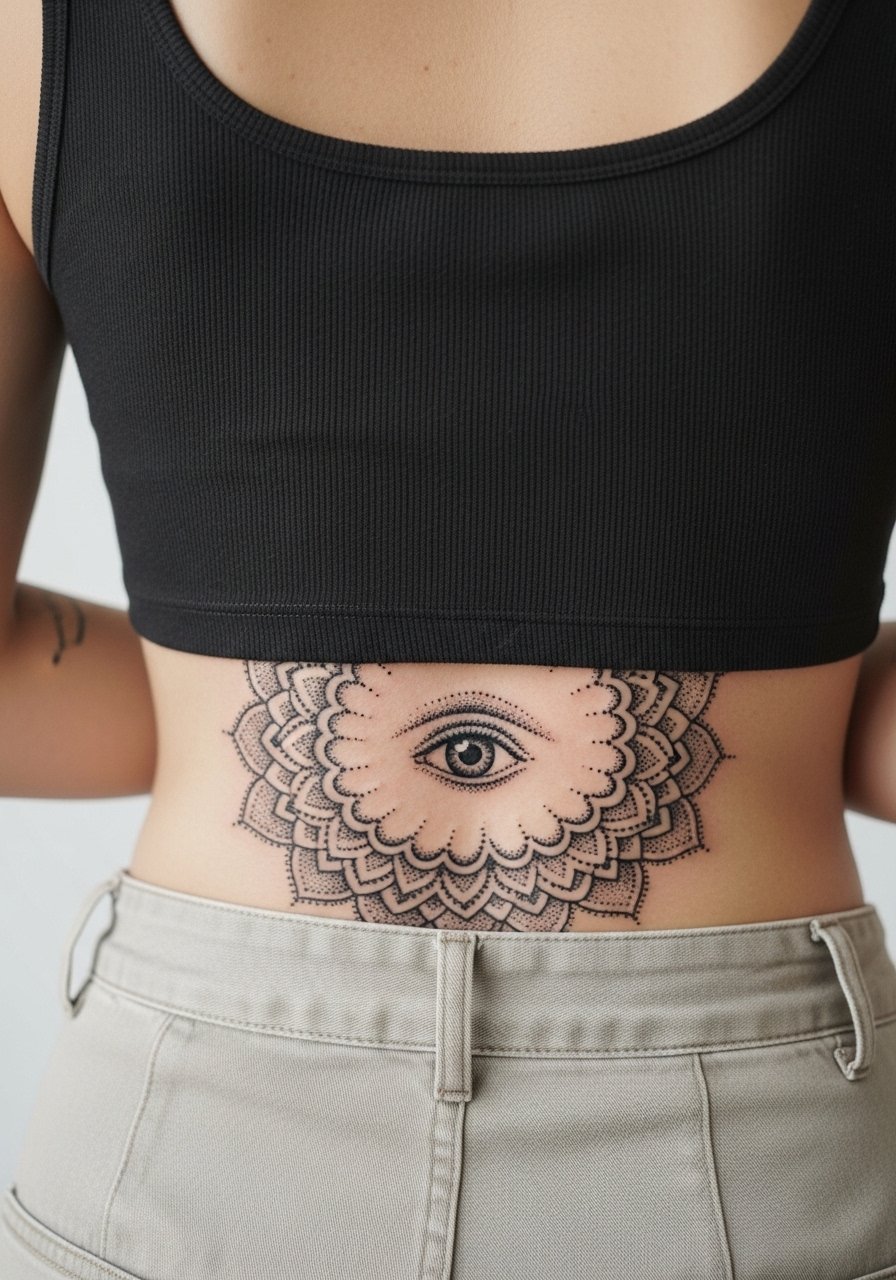
The lower back takes dotwork well because the skin stretches evenly and hides minor settling. If you want a crisp halo effect, ask the artist to set the stipple density in graduated rings so the center eye stays defined rather than dissolving into a single tone. Sensitive placement notes apply, so bring loose pants and a top you can shift for access. Avoid heavy cross-hatching that can fuse when the dots settle. The lower back is a forgiving area for touch-ups but consider how clothing waistlines will rub during the first two weeks.
13. Tiny Third Eye Above the Collarbone, Subtle Color Accent
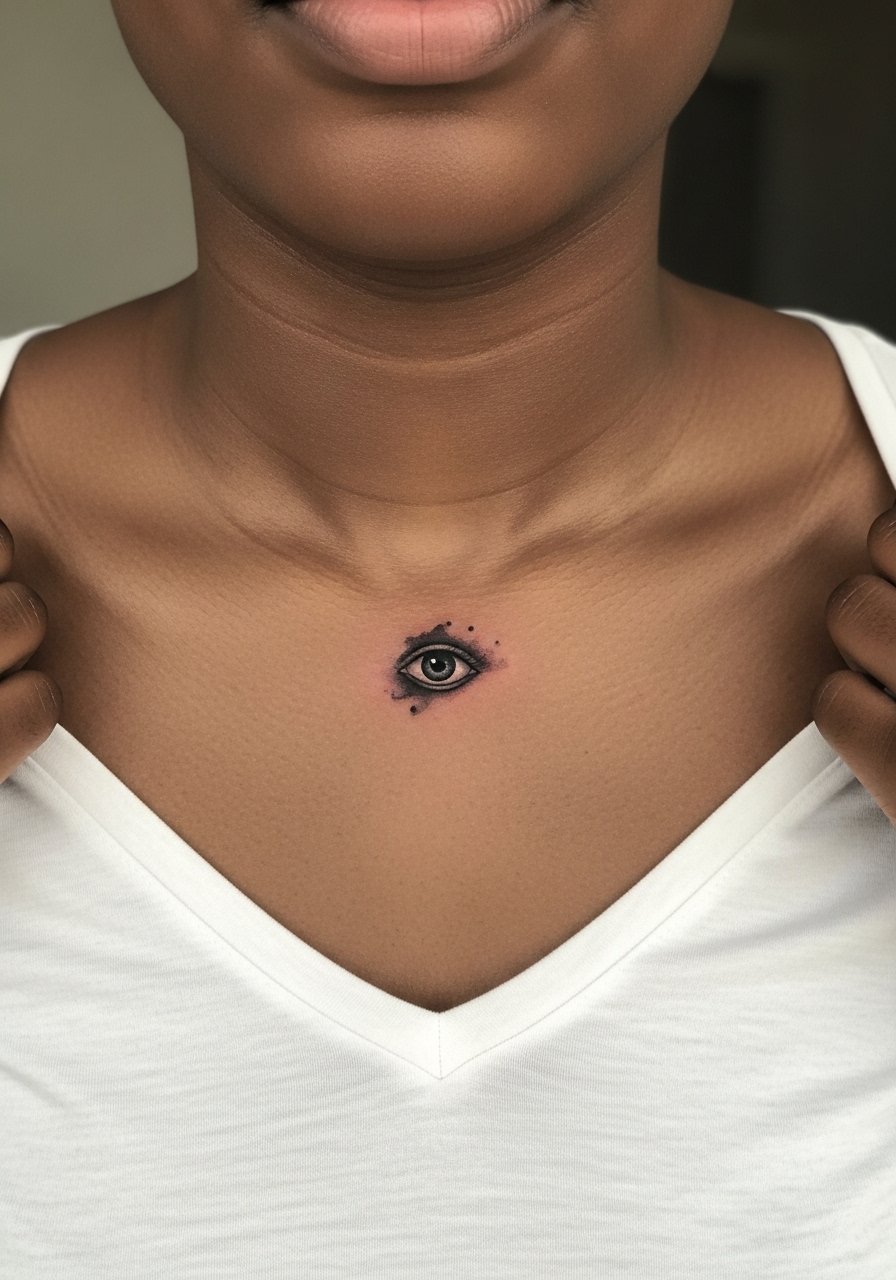
Small work above the collarbone reads elegant and is easy to hide with higher necklines. Request a restrained color wash behind the iris instead of color within the linework so you keep the minimal silhouette look. This area is prone to light scabbing where necklaces sit, so bring a v neck silk blouse for evening reveals and to limit friction. A common misstep is asking for saturated color right against the bone where ink retention can be uneven. Expect a short session and a quick healing window if you avoid abrasive necklaces.
14. Optical Illusion Third Eye on Upper Thigh Side

Optical tricks rely on crisp transitions between light and dark to sell the effect. For longevity ask your artist to reserve very thin highlight lines and larger midtones rather than tiny floating strokes that vanish. Thigh placement is one of the best for color and contrast because it avoids constant sun exposure and abrasion. A session for this kind of optical piece is moderate to long and may require a follow-up pass to polish highlights. Keep the area moisturized and avoid tight waistlines that could press on the design during early healing.
15. Minimalist Third Eye Cluster on Inner Forearm

A series of tiny eyes spaced along the inner forearm reads thoughtful and works as part of a growing collection. For this layout tell the artist you want consistent negative spacing between units so each eye ages independently and does not bleed into a tonal bar. The forearm gives you easy access and is low to moderate on pain. Show-off pairing for a cluster like this is a rolled cuff chambray shirt or a loose button down to make rolling sleeves part of the aesthetic. Expect touch-ups focused on the smallest eyes after one to two years.
16. High-Contrast Blackwork Third Eye on Calf with Negative Space

Bold blackwork here ages into a strong silhouette and resists the softening that hits fine line pieces. If you want it to last visually pick broad fields of saturation and crisp negative shapes, not tiny stipple within tight areas. Calf skin tolerates saturation, so the session can be heavier but will sit solidly as it heals. A common error is mixing ultra-fine dot work into large black fields without clear transitions, which reads muddy later. For casual jogger season, pair the piece with rolled ankle pants so the calf shows off in movement.
17. Psychedelic Split-Color Third Eye on Thigh
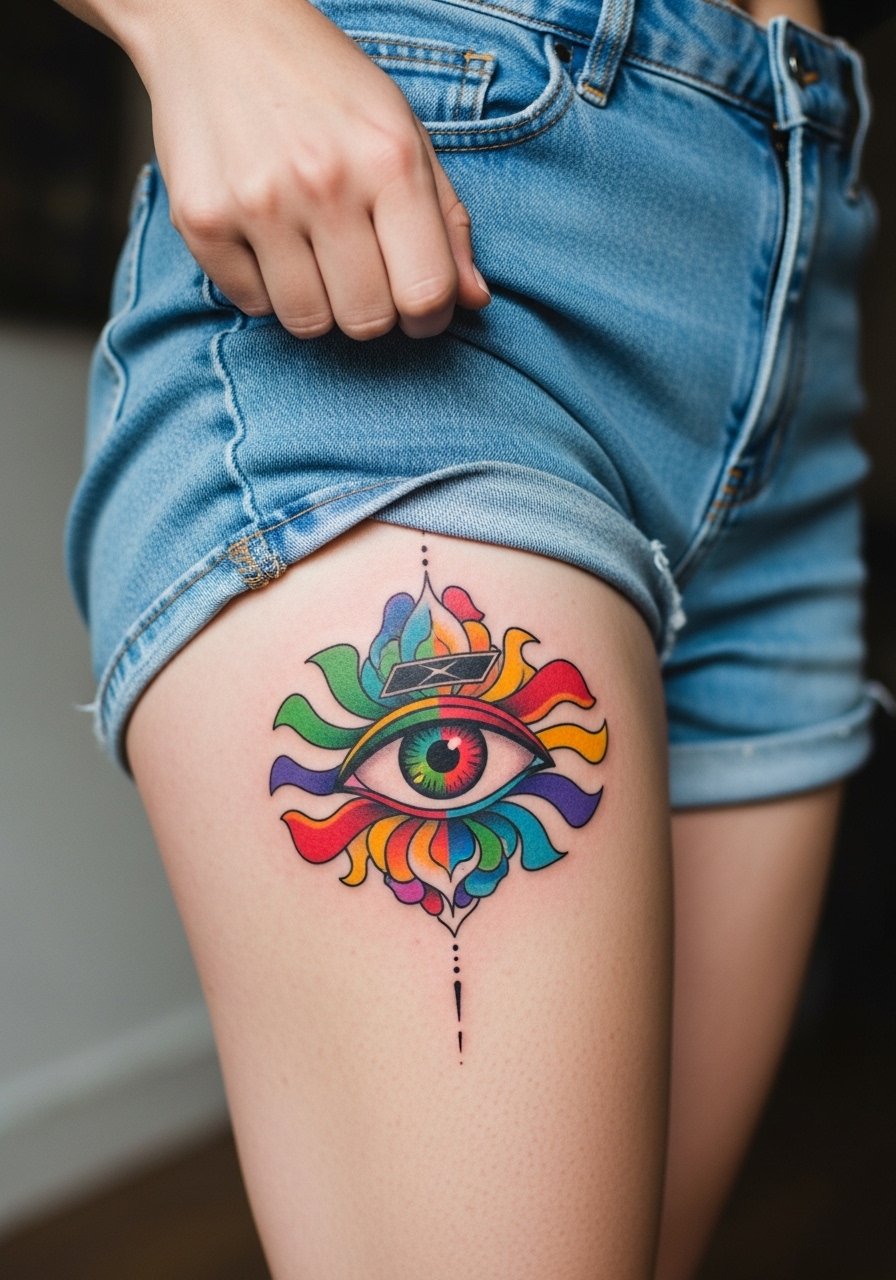
A split-color approach gives a modern, graphic energy where each hemisphere of the iris contrasts for a surreal effect. Ask for clear color demarcation lines and a palette that complements your skin tone to avoid early muddling. Thigh placements let artists layer color deeply without the constant abrasion of clothing. For showing it off pick high waisted shorts or a side-slit skirt so you control how much of the piece is visible. Expect longer sessions and a staged touch-up plan for color depth.
Frequently Asked Questions
Q: Will a fine line third eye on the wrist blur faster than one on the inner forearm?
A: From what I've seen, yes. The wrist gets more washing, sun, and motion than the inner forearm. If you want minimal lines on the wrist ask for slightly bolder line weight and plan for a touch-up at year one to keep the pupil and lashes crisp.
Q: How should I choose between a mandala frame and a simple triangle for a third eye design?
A: It depends on the visual intent and placement. Mandala framing suits areas with more flat surface like the shoulder or back and needs more session time for dot work. A triangle reads cleaner on forearms and biceps and is easier to keep sharp over time.
Q: Do colorful psychedelic third eyes need different aftercare than black and gray pieces?
A: The care routine is the same in principle. Color work may require more attention to sun protection once healed because UV is the main color killer. During healing keep the area out of direct sun and follow the artist's moisturizing schedule.
Q: Are there designs here you should avoid if you have darker skin?
A: Some ultra-fine single-needle details can get lost on darker tones in photos. If your skin tone is medium to dark request higher contrast, bolder outlines, or healed photos from the artist showing similar skin tones so you know how the piece will read.
Q: How do I find an artist who specializes in these minimalist third eye styles?
A: Use the hashtags like #ThirdEyeTattoo and #FineLineThirdEye on social platforms and search local studio listings on sites that show guest schedules. Also check community threads on r/tattoos for first-hand referrals and healed photos.