Fine line trends and saved boards have turned mandalas into an every-scroll staple, yet what holds up is often different from what looks best on a phone. Hands and wrists fade faster than forearms, custom work now costs more than many expect, and symmetry anxiety is common in the consultation chair. Read these 21 traditional mandala designs and you will find placement-minded options, what to ask your artist, and realistic aging notes that help you choose the right scale for the long run.
1. Simple Geometric Mandala Wrist Band
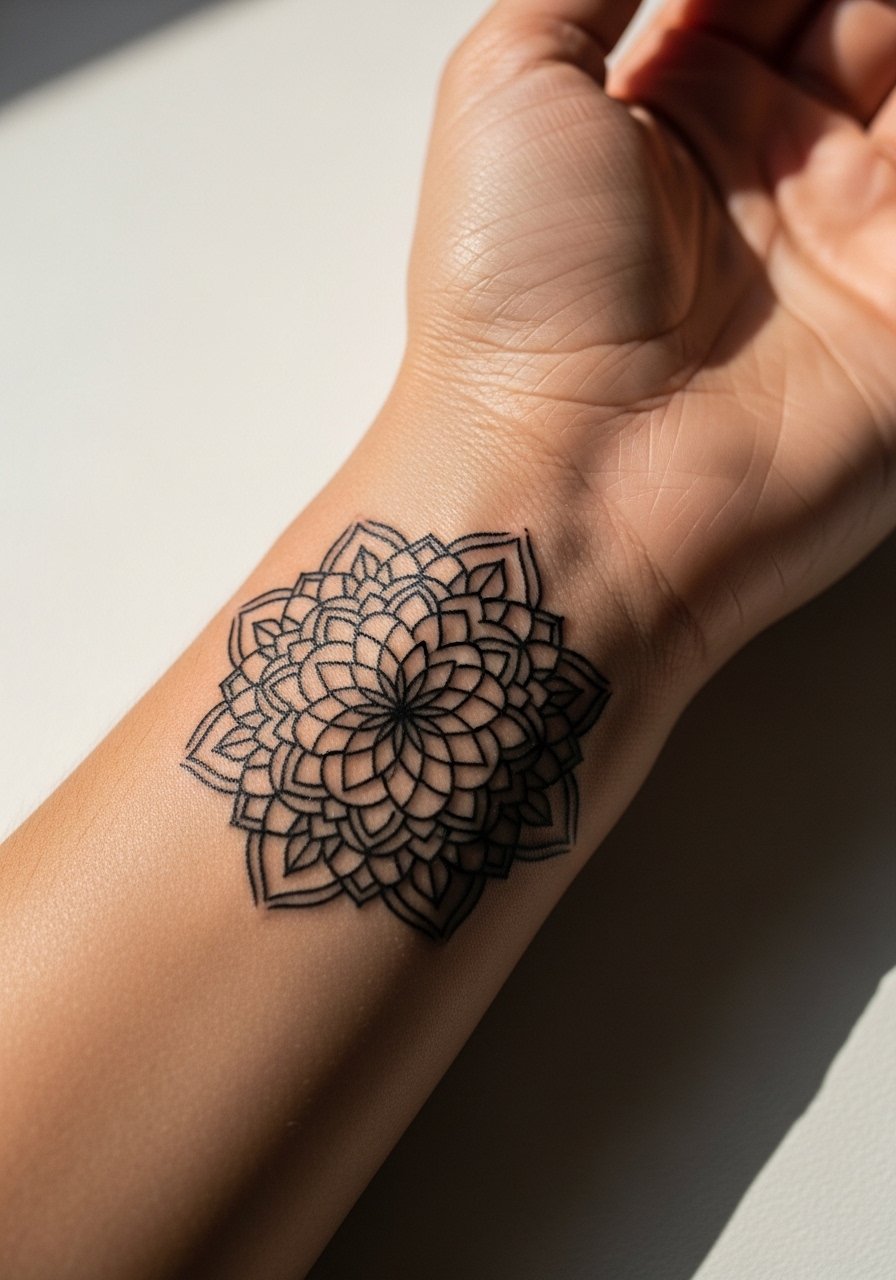
This classic wrist band mandala works when the circles and spokes have breathing room. Fair warning wrist tattoos face constant friction from washing and watches so thicker linework and slightly wider gaps stop the geometry from merging over time. In consultation ask the artist to build the pattern at twice the minimum scale you think you want so the negative space reads at year two. Expect a short session and a quick touch-up timeline around year two if you work with fine details. For the appointment, go jewelry-free and wear a sleeveless tank top so the artist has full access and nothing rubs the fresh ink.
2. Lotus Mandala Forearm Sleeve
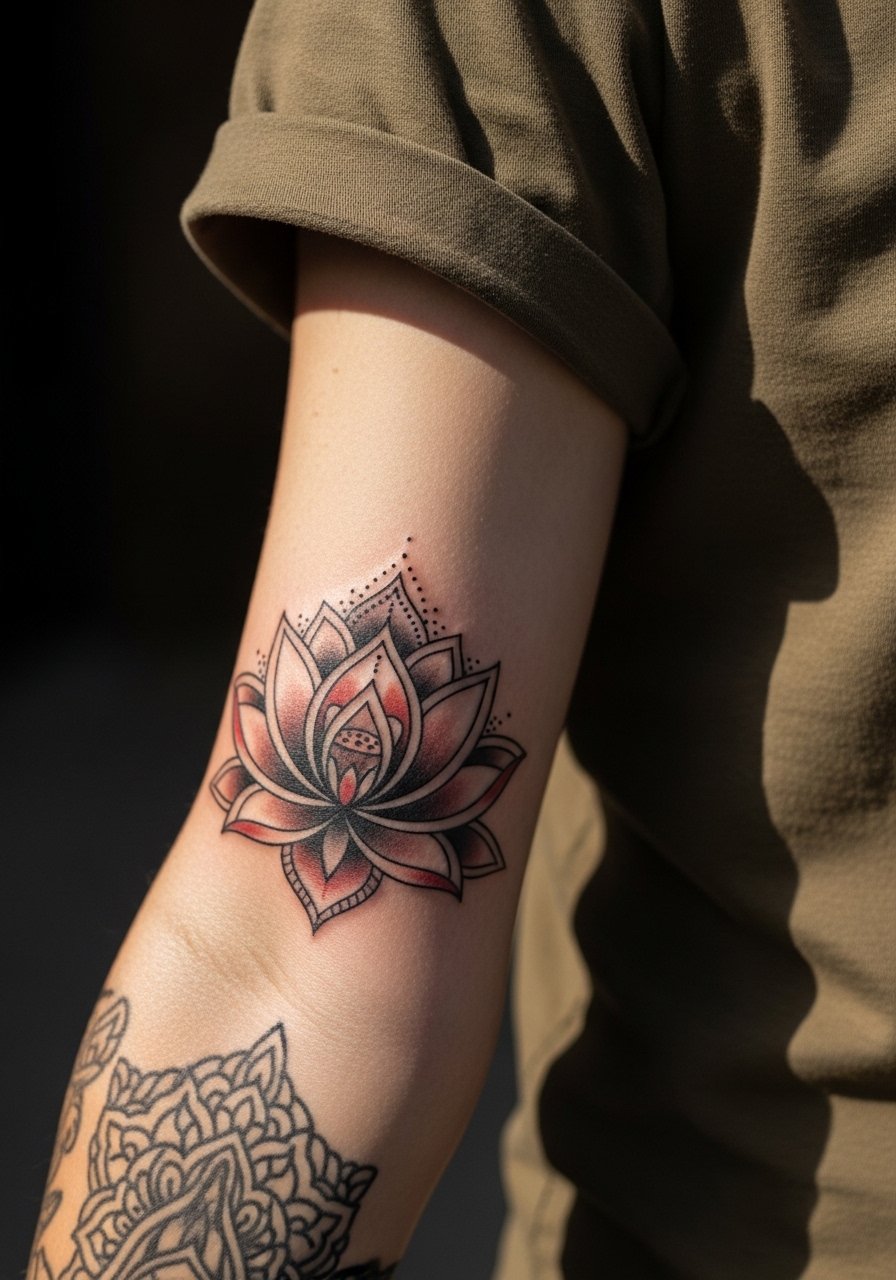
A lotus mandala that runs from wrist toward elbow combines floral warmth with radial precision. Tell your artist you want bold petal outlines and restrained color accents so saturation holds instead of bleeding into the stipple shading. Many people assume small color washes look delicate but those fades are the pain point later. The session feels steady since the forearm sits flat, and touch-ups often happen between years two and five depending on sun exposure. Pair daytime outfits with a rolled sleeve henley so the design shows without competing with patterns while you let the color deepen.
3. Full Back Mandala Centerpiece
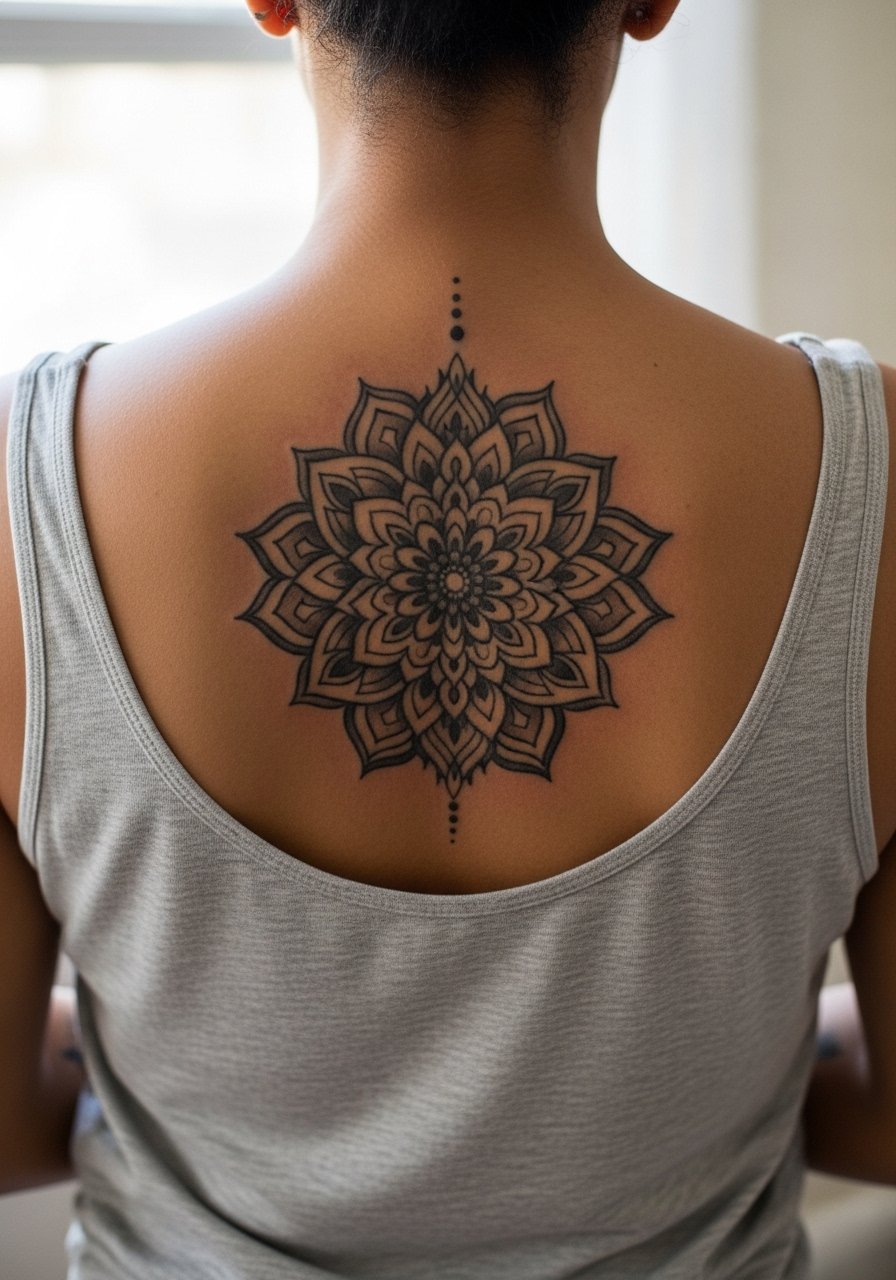
Full back mandalas let radial layers breathe and hold intricate stipple shading that ages well with touch-ups. Plan this as a multi-session project and bring reference that shows the exact spacing you want. A common mistake is trying to cram too much tiny detail into the center. That makes the core blur after a couple of years. Expect long sessions and a staged approach where you bank saturation early and add fine stippling later. For show-off looks try a low back crop top for evenings so the symmetry sits in the frame without distraction.
4. Sternum Chest Mandala
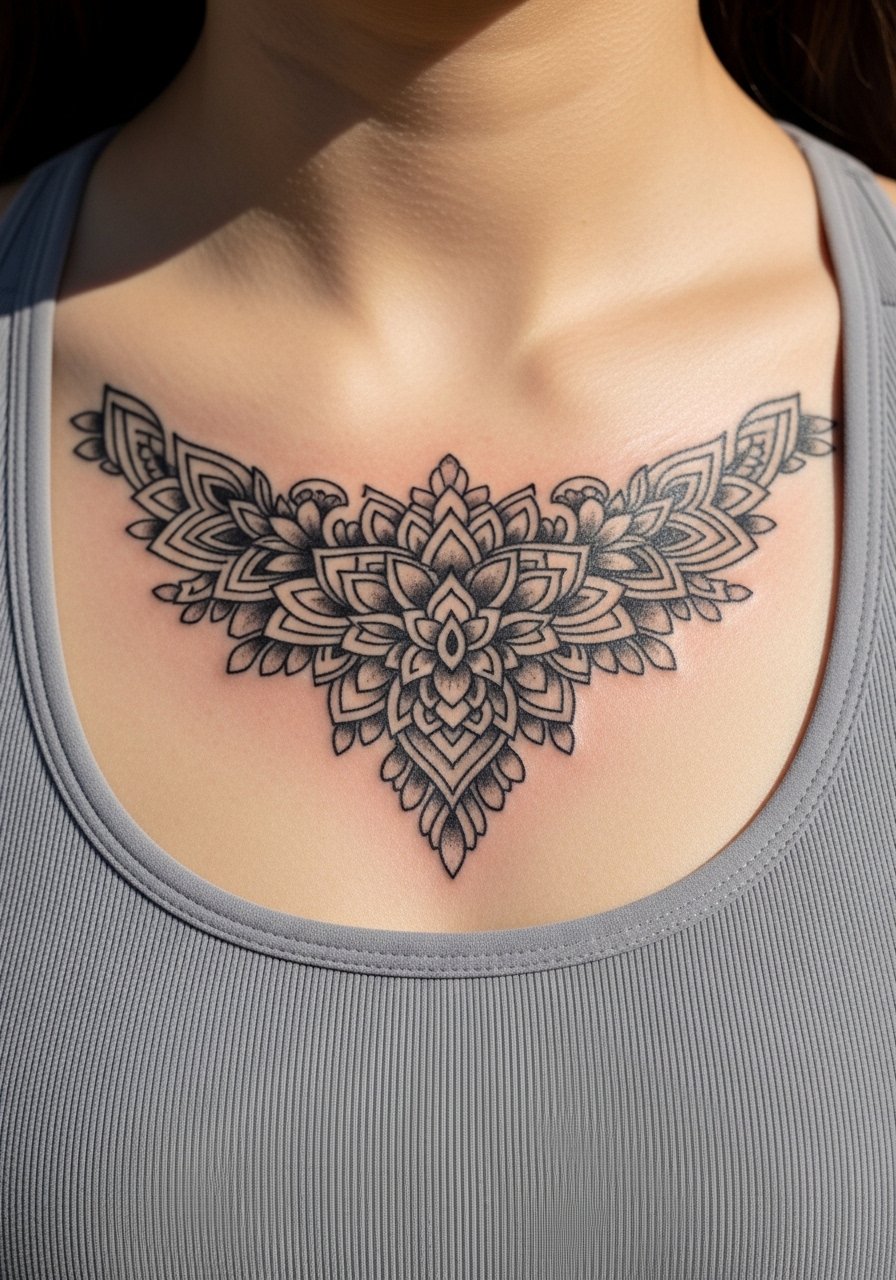
Sternum mandalas read beautifully when centered precisely over the sternum. Tell your artist you want matched bilateral arcs so the piece aligns with your breathing and contours. Fine line options look delicate but the sternum sits on moving tissue and odd spacing magnifies asymmetry. A common version that ages poorly uses ultra-fine petal veins that disappear into scar tissue. Expect moderate pain and two to three sessions depending on size. For the appointment pick a fitted sports bra or front-opening top so the artist can work without tugging.
5. Thigh Mandala Wrap
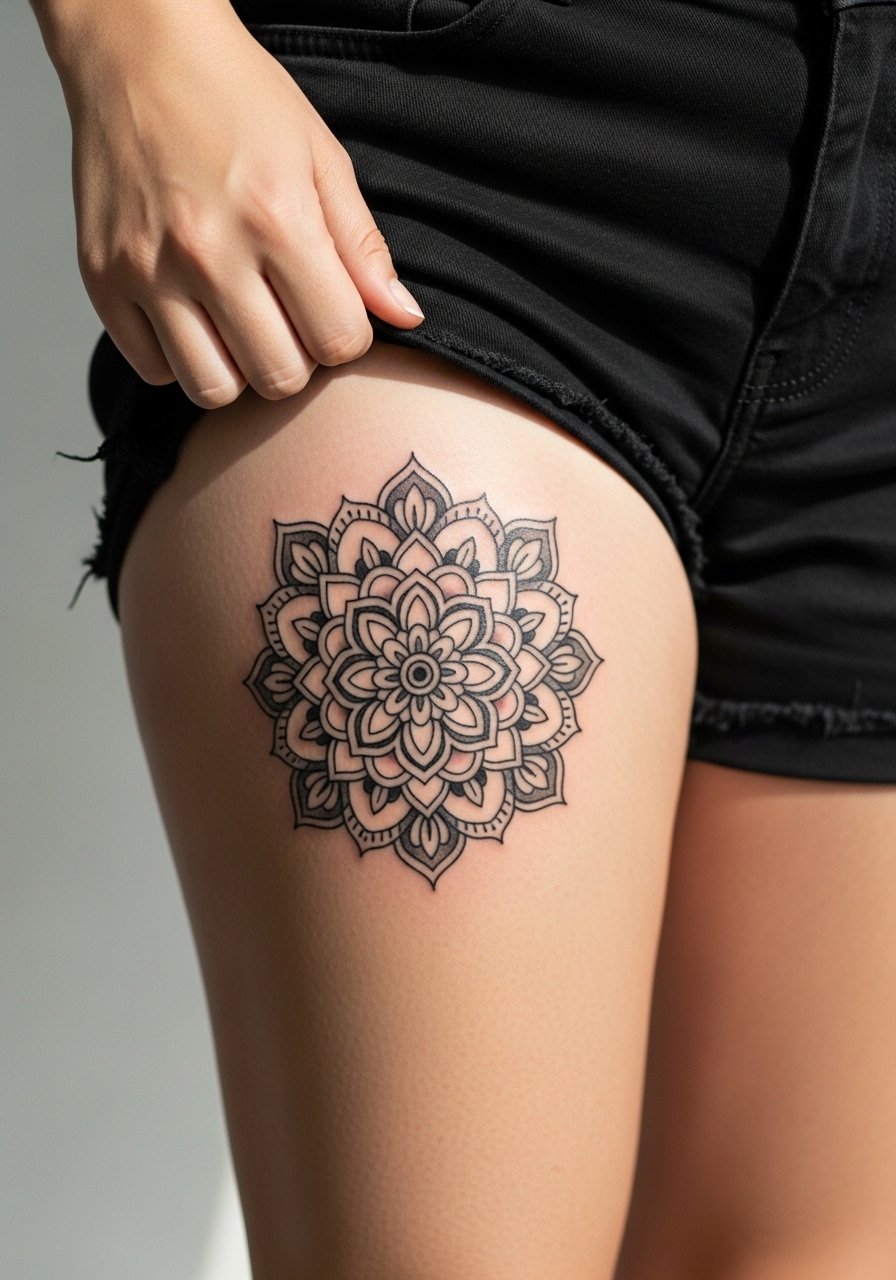
A thigh wrap uses the leg's curve to create an illusion of movement when you walk. The design tolerates larger scale which helps avoid stretching issues later. Bring photos of your favorite shorts or skirts to show how the wrap will show when you sit and stand. A common mistake is centering the mandala on a spot that stretches during weight changes. If you want long-term shape retention aim for the outer thigh rather than the inner crease. Session wear tip is loose joggers or a removable skirt. Pair finished work with black denim shorts to show the wrap in summer.
6. Garbhadhatu Shoulder Medallion
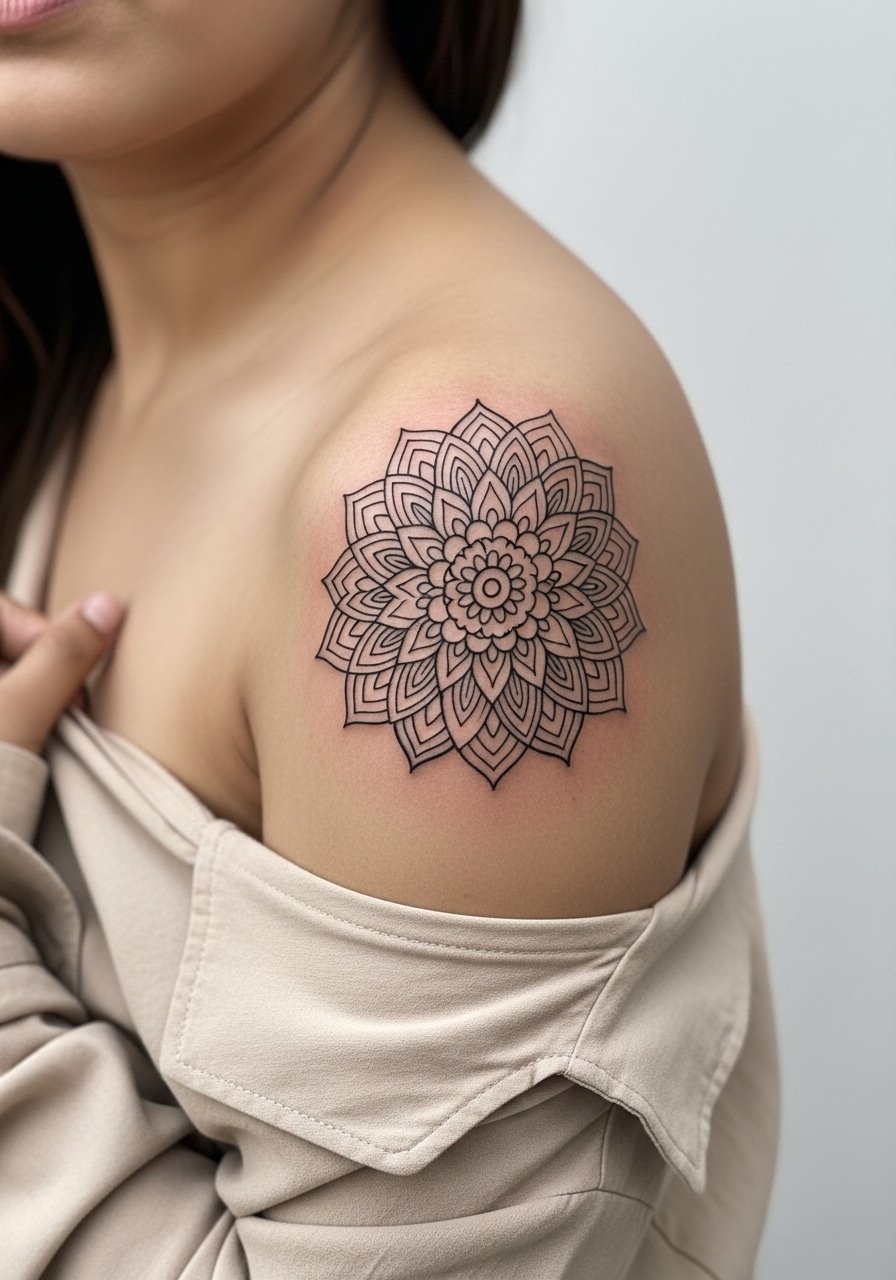
The Garbhadhatu mandala is layered and deity-focused so it benefits from simplified central elements for translation into tattoo. In your consult ask how much deity detail the artist can render at the intended size. The shoulder handles fine line well if the spacing is generous. One practical note is off-shoulder clothing choices often hide the work until you want to reveal it. For sessions wear a loose button-down shirt you can slide aside and for showing off try an off shoulder blouse. Shoulder pieces usually need a touch-up at year three depending on sun exposure.
Studio Day Picks
The small and exposed placements above require different prep than the larger pieces. These items smooth session logistics and the first week of healing for wrist, forearm, and shoulder work.
-
Stencil transfer paper kit. Lets you preview line thickness and symmetry on skin before any needles reach the area, especially useful for wrist bands and small forearm mandalas that need precise spacing.
-
Topical numbing cream. Applied before needle time it lessens sharp sensitivity around the sternum and inner thigh without changing the artist's work flow when used correctly.
-
Thin protective film roll. Useful for keeping wrist and hand pieces clean during the first week of constant washing and friction.
-
Fragrance-free gentle body wash. Mild cleansers avoid irritating new blackwork and help preserve crisp linework on forearms and shoulders as scabs form and shed.
-
Aquaphor healing ointment. A thin protective layer for the first few days keeps tight linework from drying into brittle scabs that pull pigment out.
7. Sri Yantra Inner Arm Compact
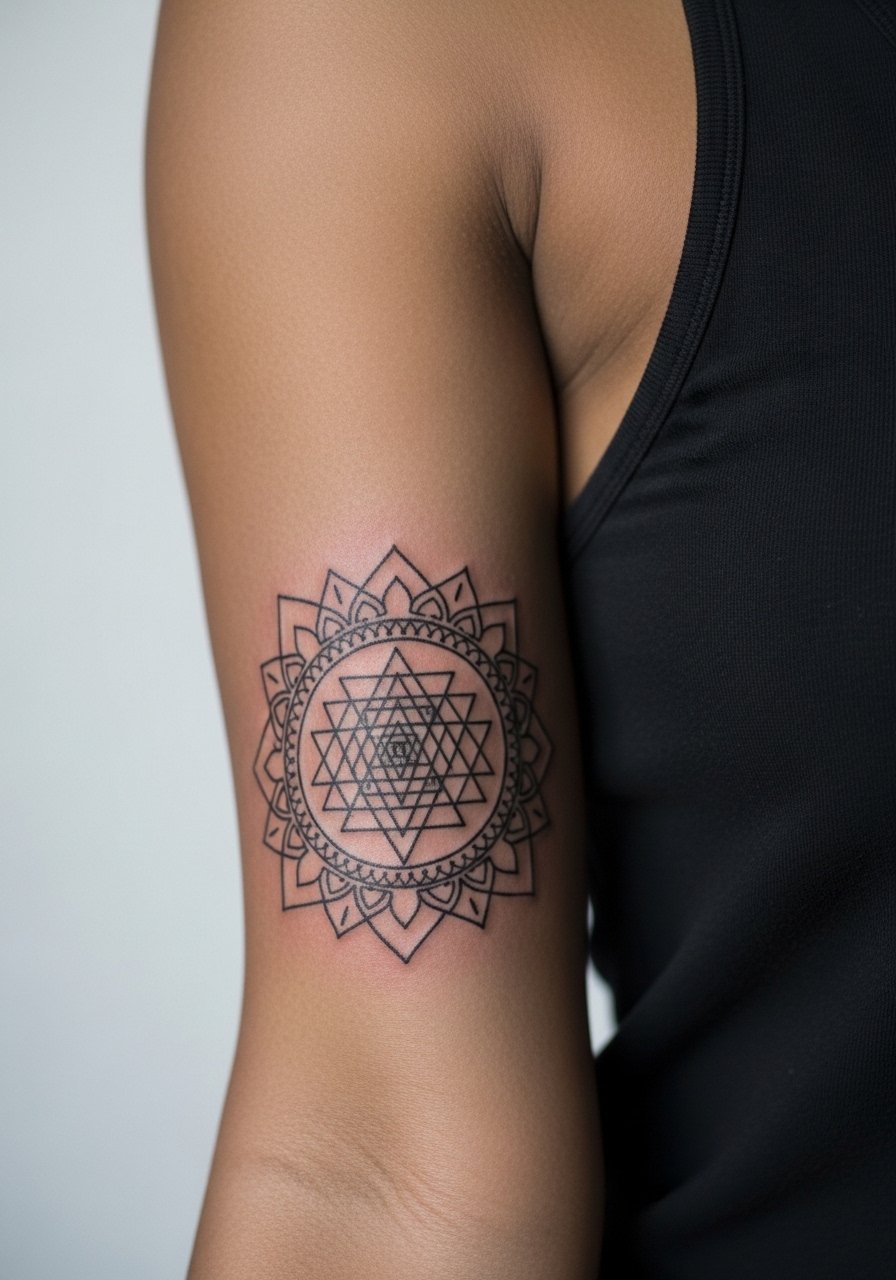
The Sri Yantra is geometry-heavy and rewards absolute line precision. Tell your artist you want measured triangle intersections and avoid filling every small angle with dot shading. The inner bicep is less friction-prone but the skin is softer so shallow placement risks softening lines. A common mistake is requesting too small a yantra where the intersections become muddy. Session feels awkward because the arm position holds for long stretches. Expect a 1 to 2 session plan and a touch-up at two to four years if you like denser dot work.
8. Nava Padma Calf Lotus
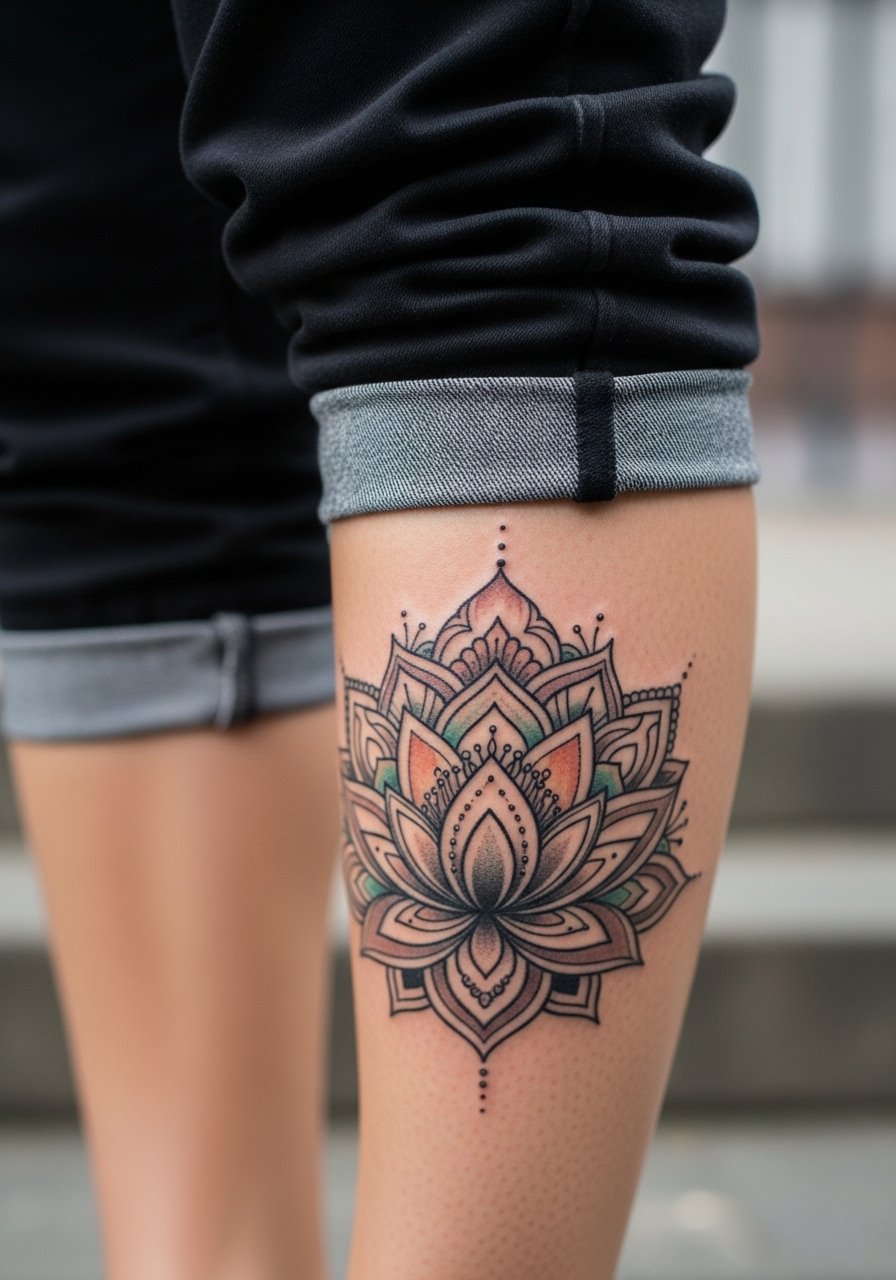
Calf placements heal under cloth and often keep more saturation than shin or ankle work. The Nava Padma lotus reads strongly with central petals and geometric outer rings. Ask the artist to anchor the mandala to muscle contours so movement complements the radial lines. People frequently underestimate how visible a calf piece is in shorts, so decide whether you want high visibility before committing. Session wear tip is rollable joggers. For showing off in warm months pair with cropped jogger pants or a midi skirt.
9. Ganesha Yantra on the Hand
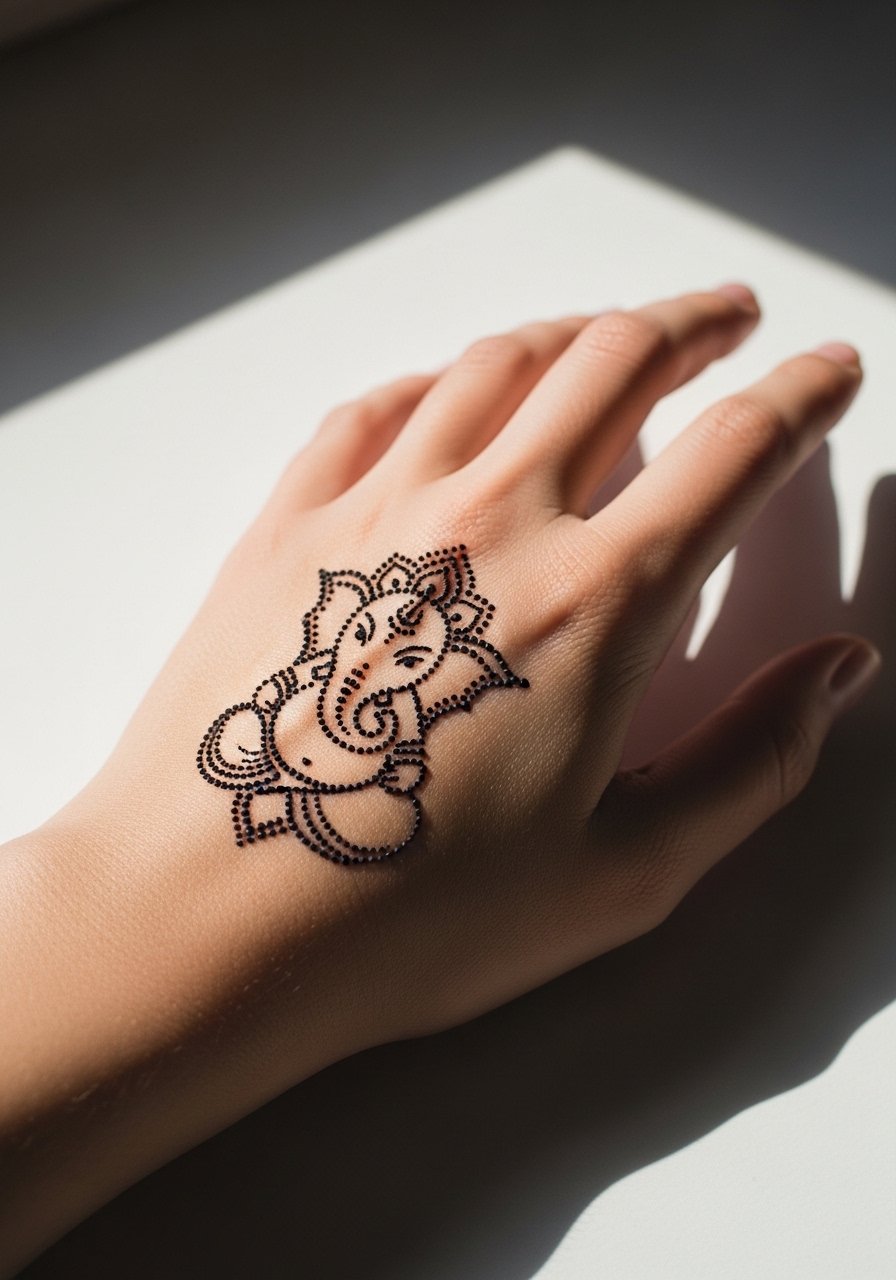
Hand mandalas are bold statements but heal under constant washing and surface use. If you want a deity element keep the rendering simplified and ask for bolder linework rather than fine stipples. There is a real trade-off between size and longevity. A common complaint is rapid fading from hand washing so thicker outlines and periodic touch-ups are normal. Be mindful that some workplaces still have visible-tattoo policies. Expect a two-session plan and consider touch-ups every one to three years.
10. Trident Yantra Thigh Panel
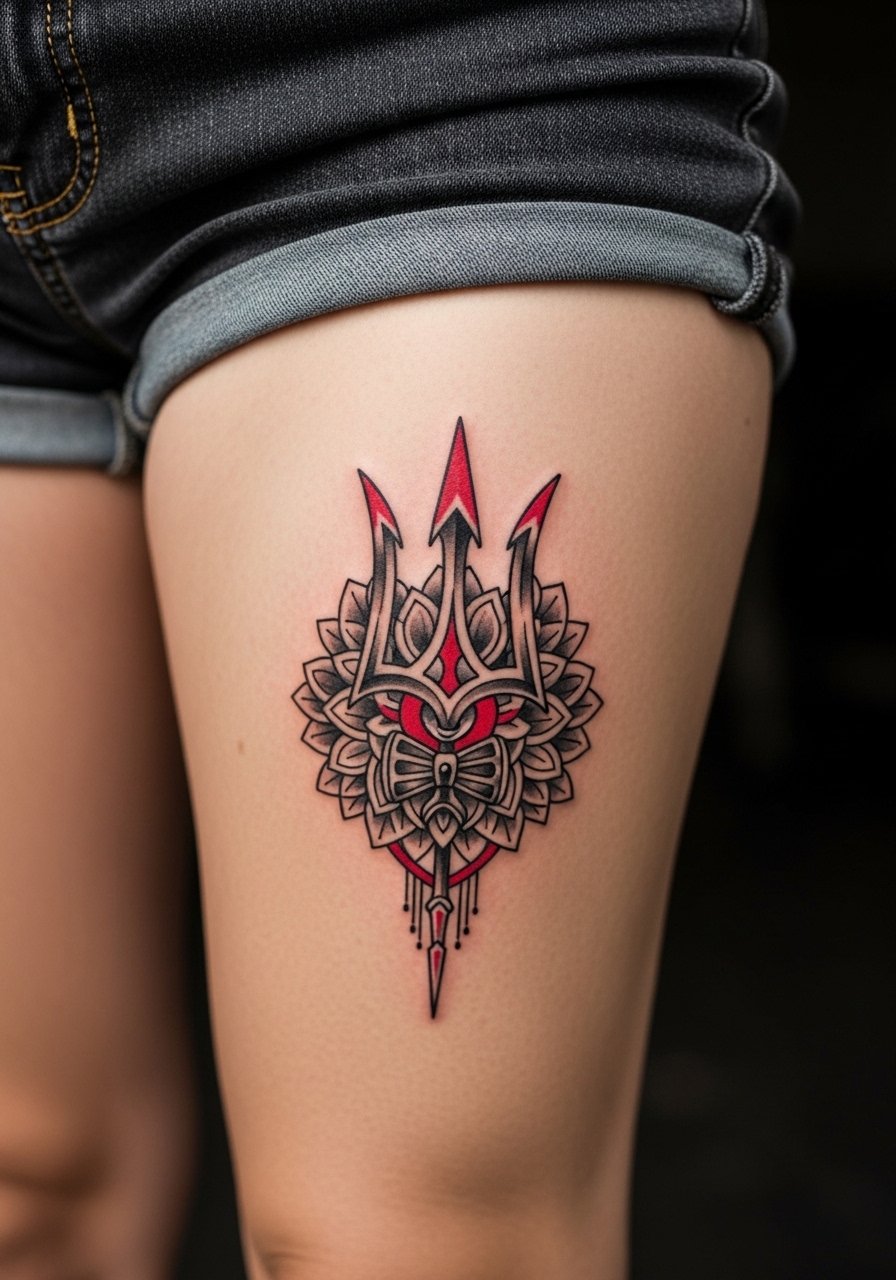
This inner thigh design balances an emblematic trident with radial lotus layers so symbolism sits within the body curve. Inner thigh skin moves with sitting and activity so fine lines may blur faster there. One controversy to state plainly is about healing methods. Some artists prefer occlusive film for the inner thigh to reduce irritation. Other artists recommend dry healing to let scabs form naturally. Name both camps in your consult and ask which approach the artist uses and why. Expect a higher pain rating and a careful aftercare plan.
11. Ankle Mandala Compass
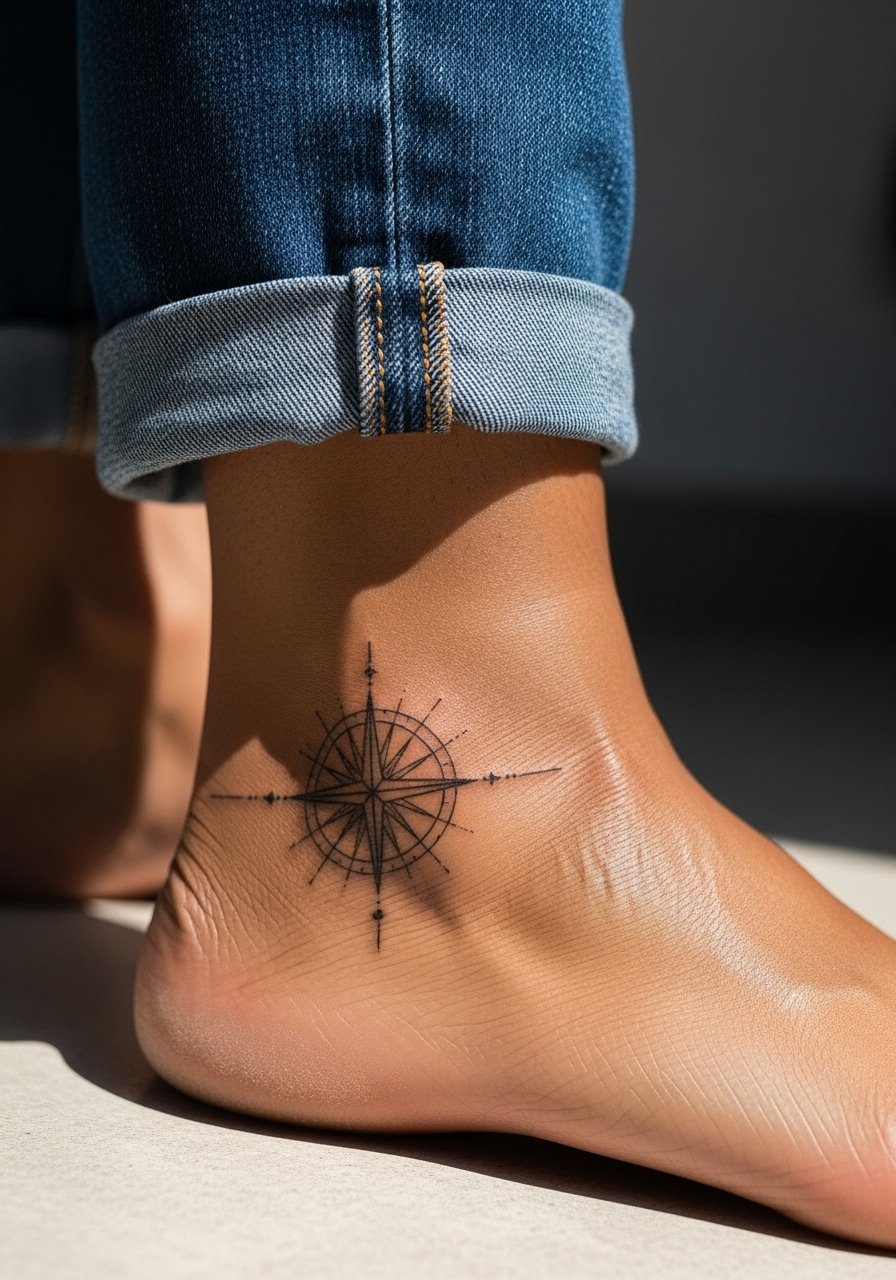
Ankle mandalas need simpler cores and more open rings because the anatomy there provides little soft tissue padding. Expect sharper pain on the bone and more erratic fading if you wear ankle-strapped shoes. Tell your artist you want slightly bolder outer rings and to avoid ultra-fine dot work that will blur. The session is quick and touch-ups are common for people who wear boots or sandals often. For showing off try shoes that leave the ankle exposed so the radial symmetry sits visually unbroken.
12. Collarbone Radiant Mandala
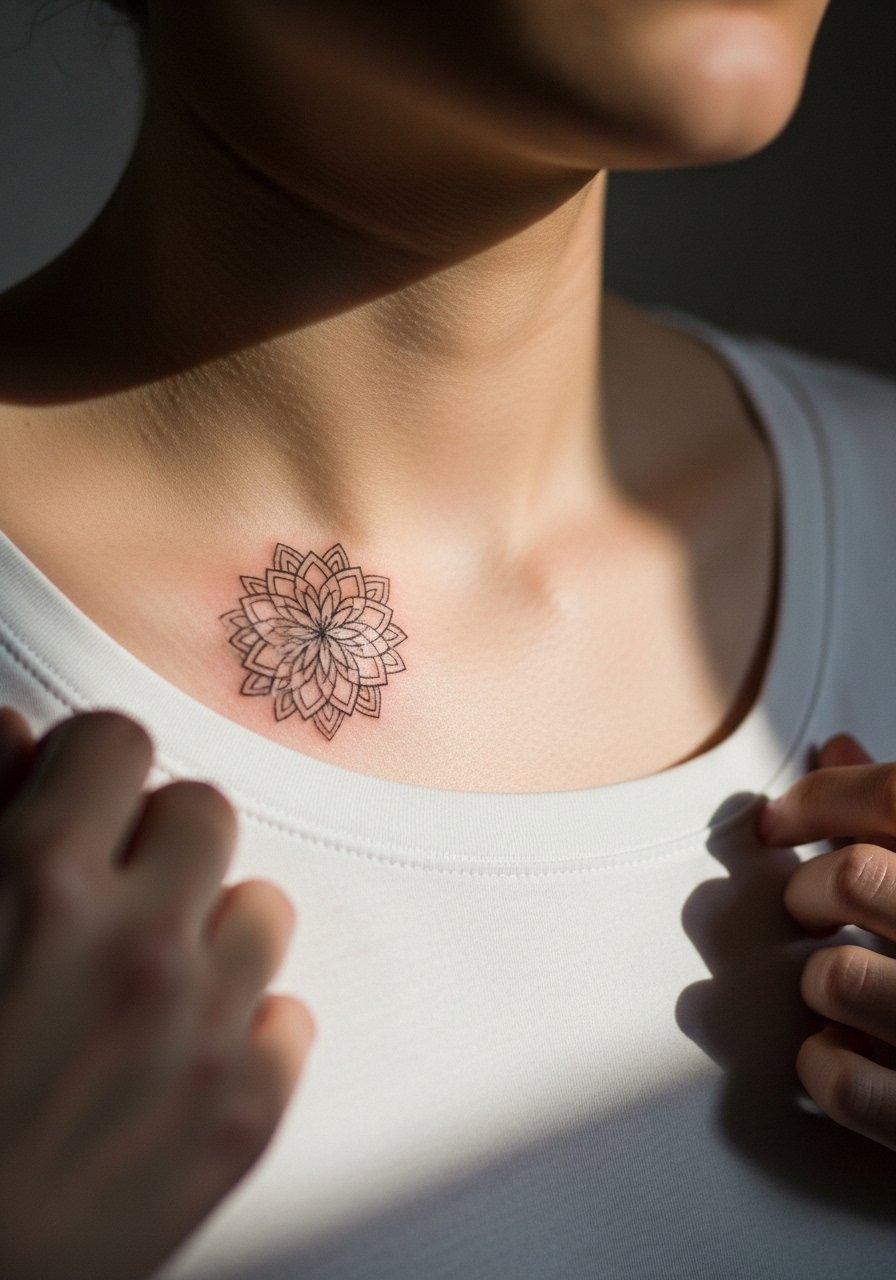
Collarbone mandalas read as a delicate anchor when placed just above the bone. A mistake I see is centering the mandala too high which shortens the perceived neck line. Ask the artist to map the design to your bone landmarks and to favor slightly heavier outlines at the perimeter so the shape remains defined over time. Pain is moderate and sessions are short. For the appointment wear a wide-neck shirt you can slide aside and for outfits a thin chain pendant complements the upper chest without covering the piece.
13. Finger Micro Mandala
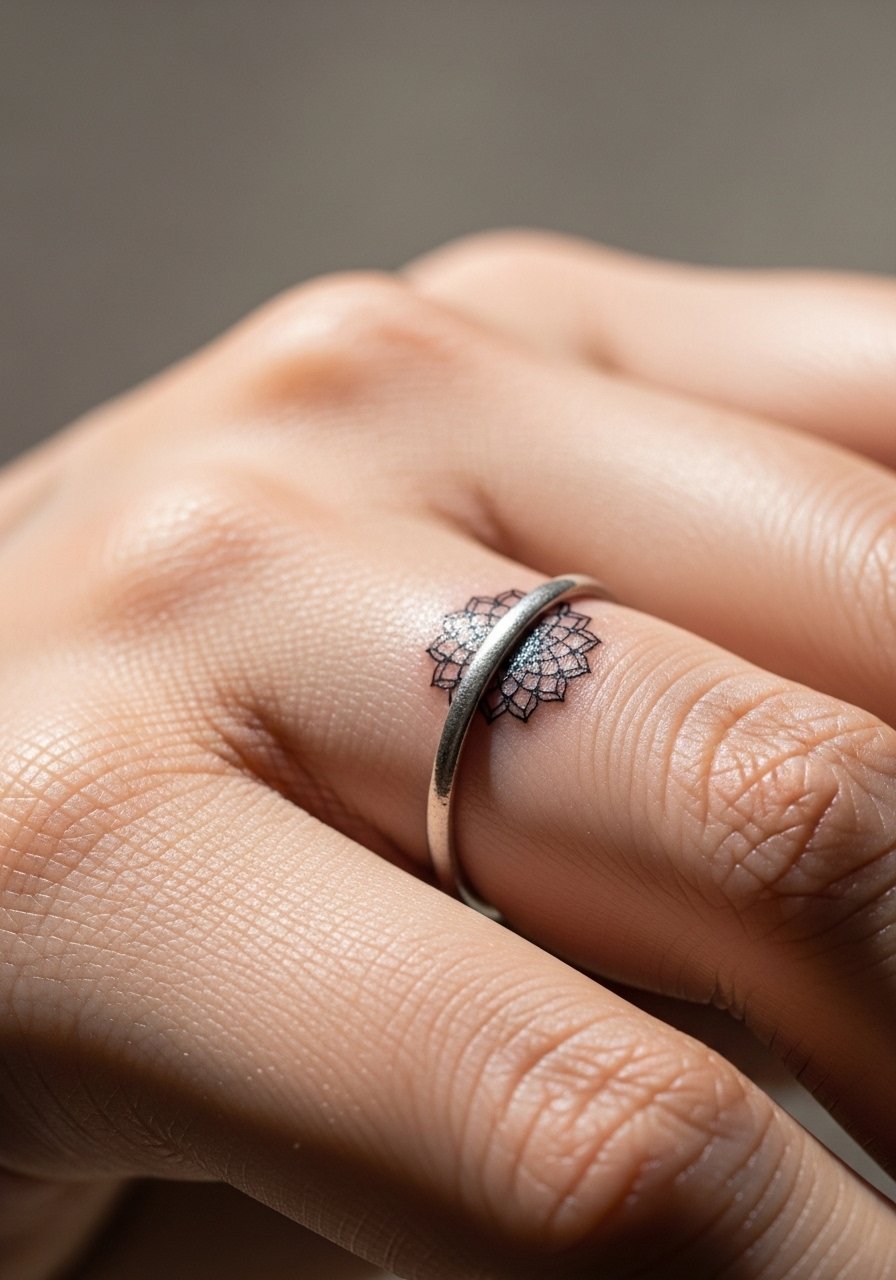
Finger mandalas are small and demand sacrifice in detail. The skin on fingers moves and regenerates quickly which causes fast fading. A common mistake is asking for too much interior detail. If you want longevity choose bolder outline rings and accept that inner flourishes may need touch-ups at year one or two. Sessions are brief but frequent retouch is part of the plan. Wear minimal rings during healing and expect to revisit the artist to keep contrast.
14. Spine Column Radial Mandala
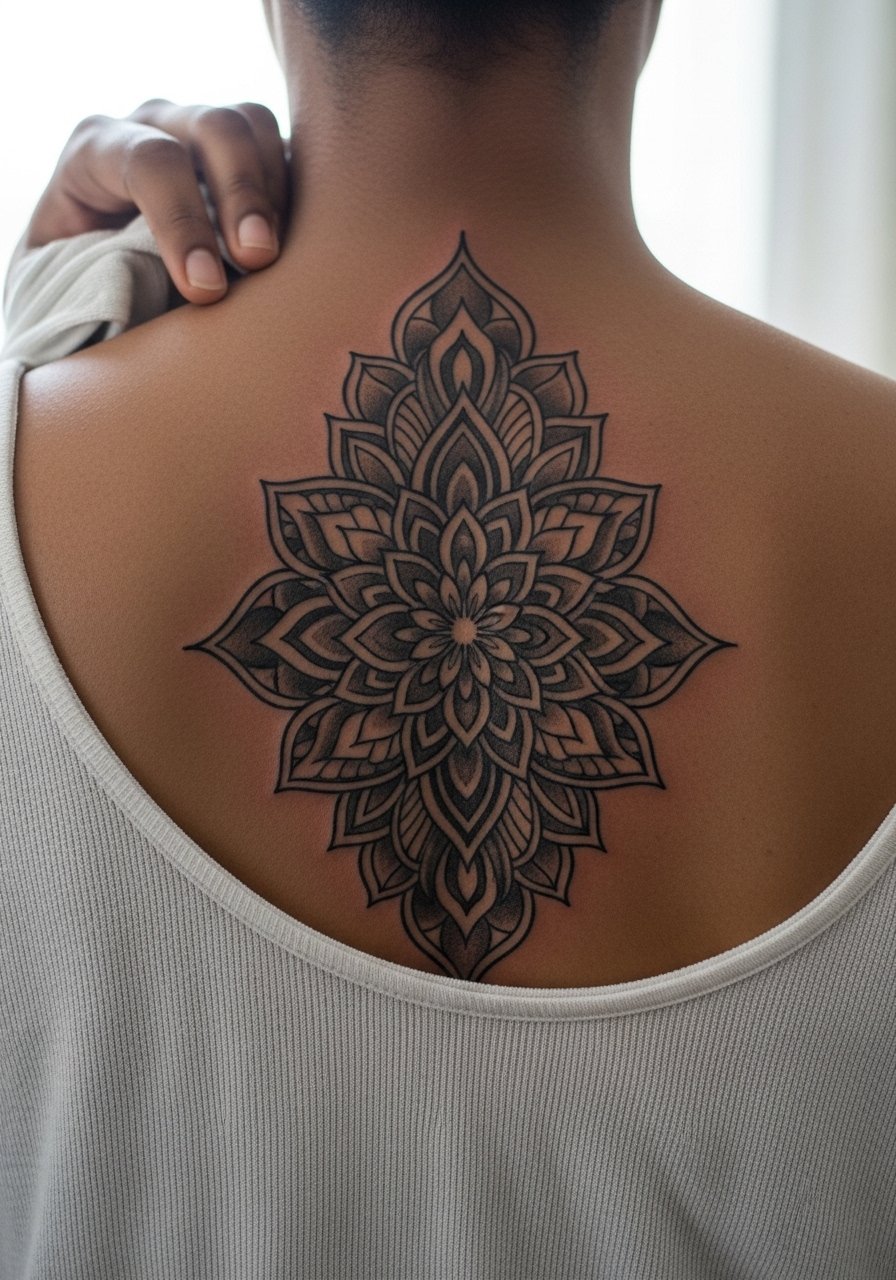
A spine-centered mandala reads like a personal axis when the radial rings expand outward evenly from the vertebrae. This placement loves symmetry but hates uneven stencils, so in consultation ask to see the exact alignment mapped on your spine while standing. Many clients miss how clothing and posture affect perception of the piece. Sessions are intensive and staged across multiple visits. A practical note is sun exposure on the upper back ages ink faster so plan a yearly check and protect with clothing or sunscreen.
15. Ribcage Sacred Geometry
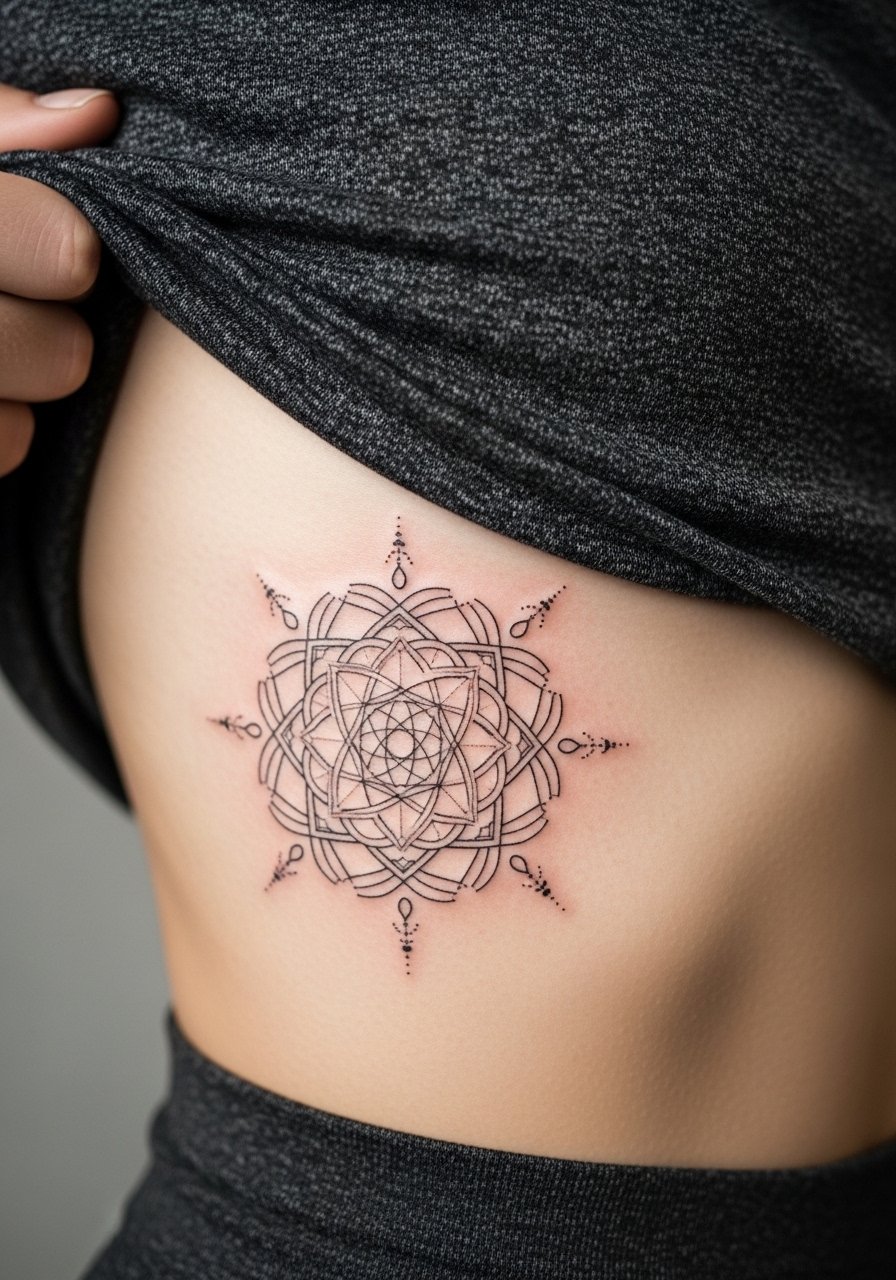
Ribcage mandalas look stunning but the area stretches and compresses with breathing. Artists split into two camps about fine line here. One camp argues the skin movement blurs ultra-fine work within two years. The other camp says with proper needle depth and spacing it holds. Name both camps and ask where your artist stands. If longevity is vital pick slightly bolder linework and build negative space into the design. Pain is high and healing needs careful aftercare.
16. Hip Sunburst Mandala
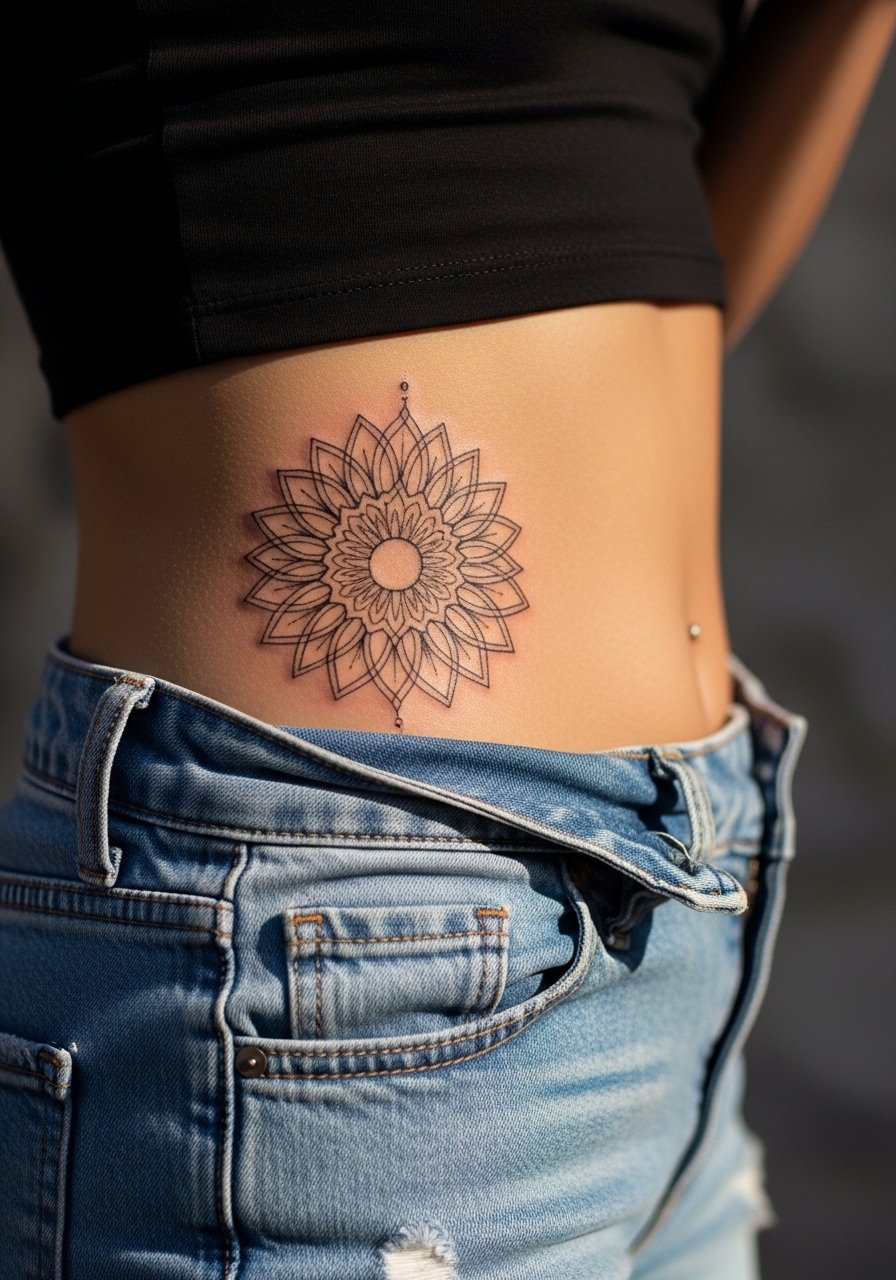
Hip mandalas are great for hidden personal pieces that peek out in swimwear. The skin there tolerates scale changes better than inner thigh, but positioning is key to avoid distortion when you move. Ask your artist to place the mandala relative to your hip bone landmarks and test sitting and standing poses with the stencil. Sessions are comfortable and sessions often split into detail and shading. For show-off looks keep high-cut bottoms or a bikini that frames the outer arc.
17. Behind-the-Ear Mini Mandala
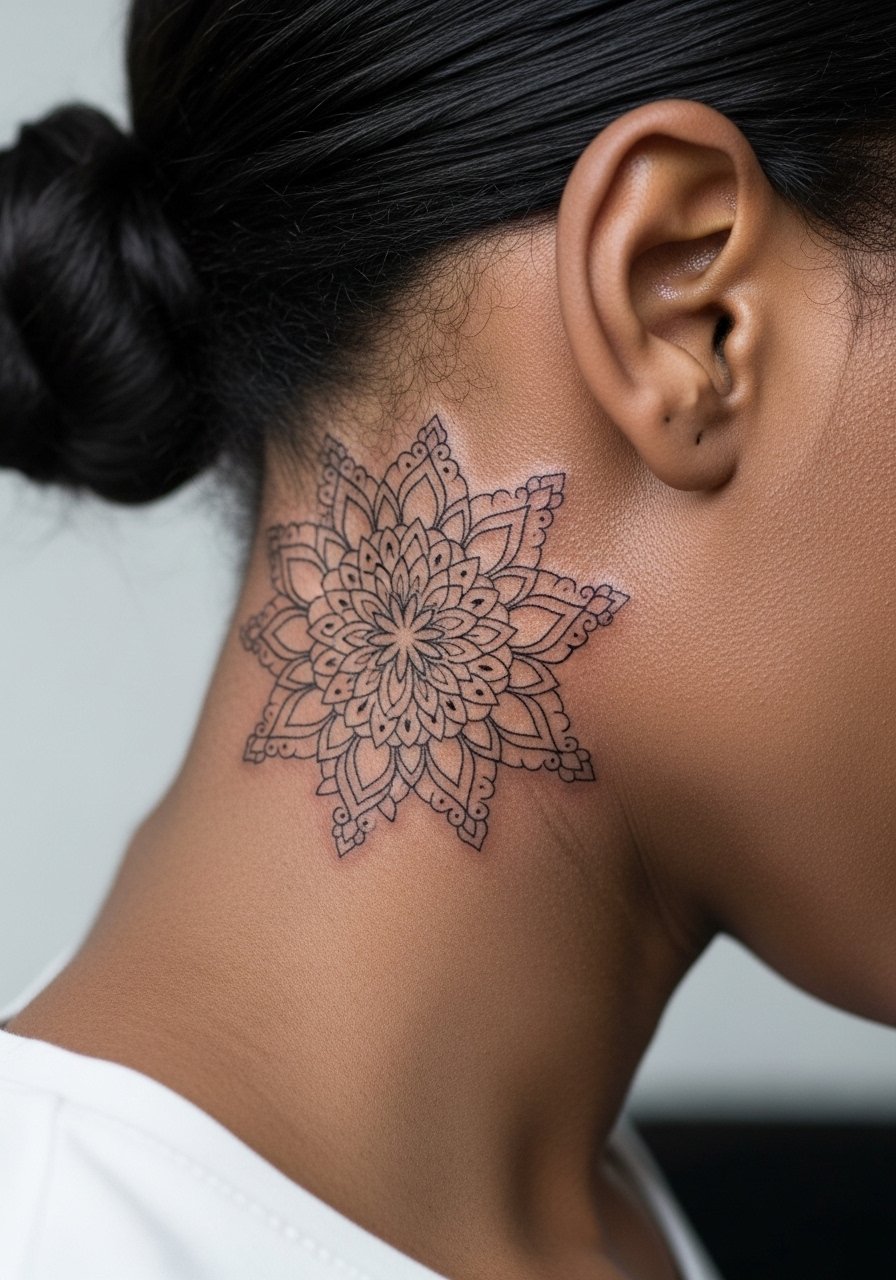
Small mandalas behind the ear offer subtle visibility but require a precise stencil because the curve of skin there alters perceived symmetry. Do not ask for tightly packed interior dots since the area is tight and will soften. This placement needs a specialized artist comfortable with tiny compositions. Keep in mind the spot is discreet unless you tuck hair back. Expect a quick session and a possible touch-up after a year if you expose it often to sun.
18. Outer Bicep Sun and Petal
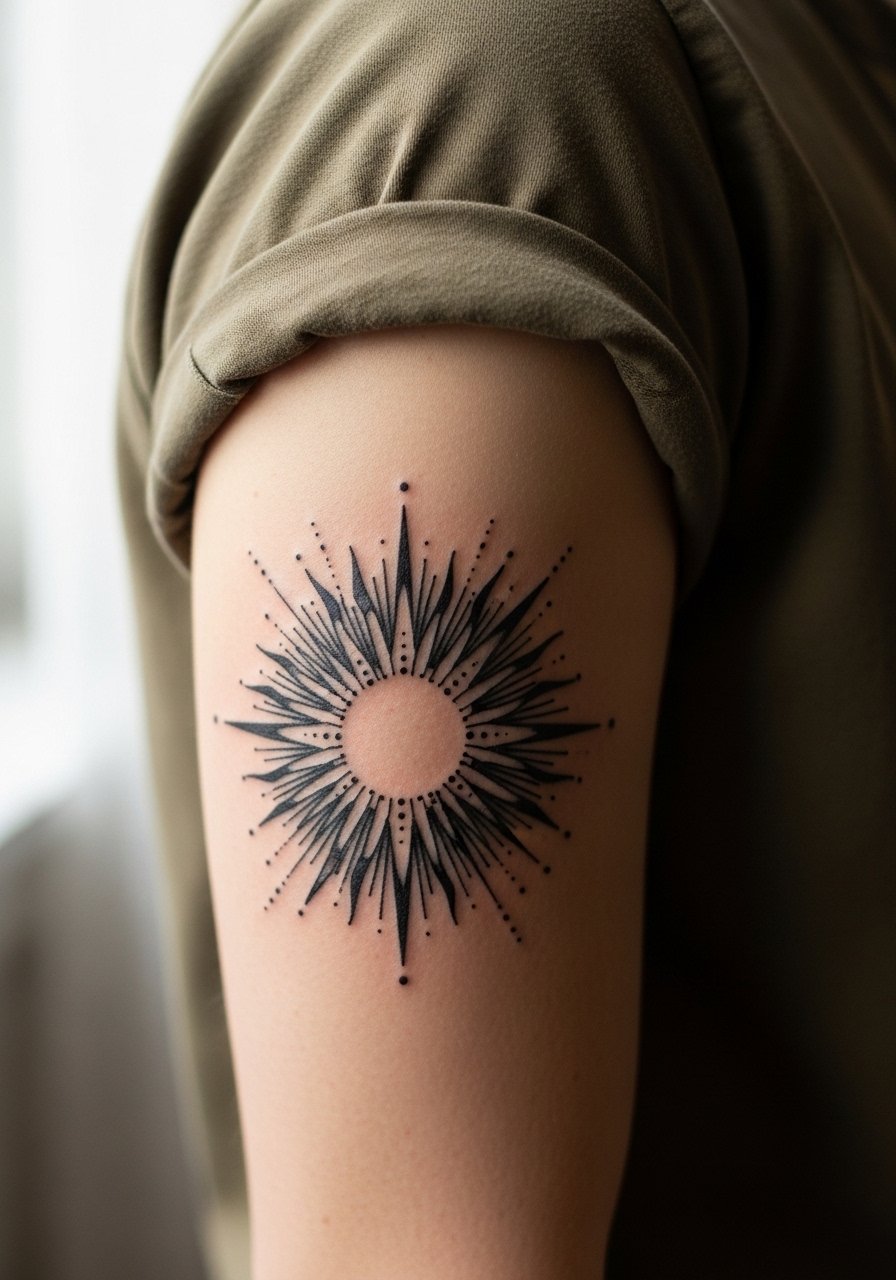
Outer bicep mandalas look strong and handle heavier saturation well. If you plan to build a sleeve later this is a friendly anchor because the bicep is stable and ages predictably. Request that the artist sketches how neighboring pieces could flow into the radial edges to avoid awkward overlaps. Sessions are comfortable and the bicep often needs fewer touch-ups than the wrist or hand. For casual outfits pair the piece with a rolled sleeve henley that frames the geometry without clutter.
19. Lower Back Mandala
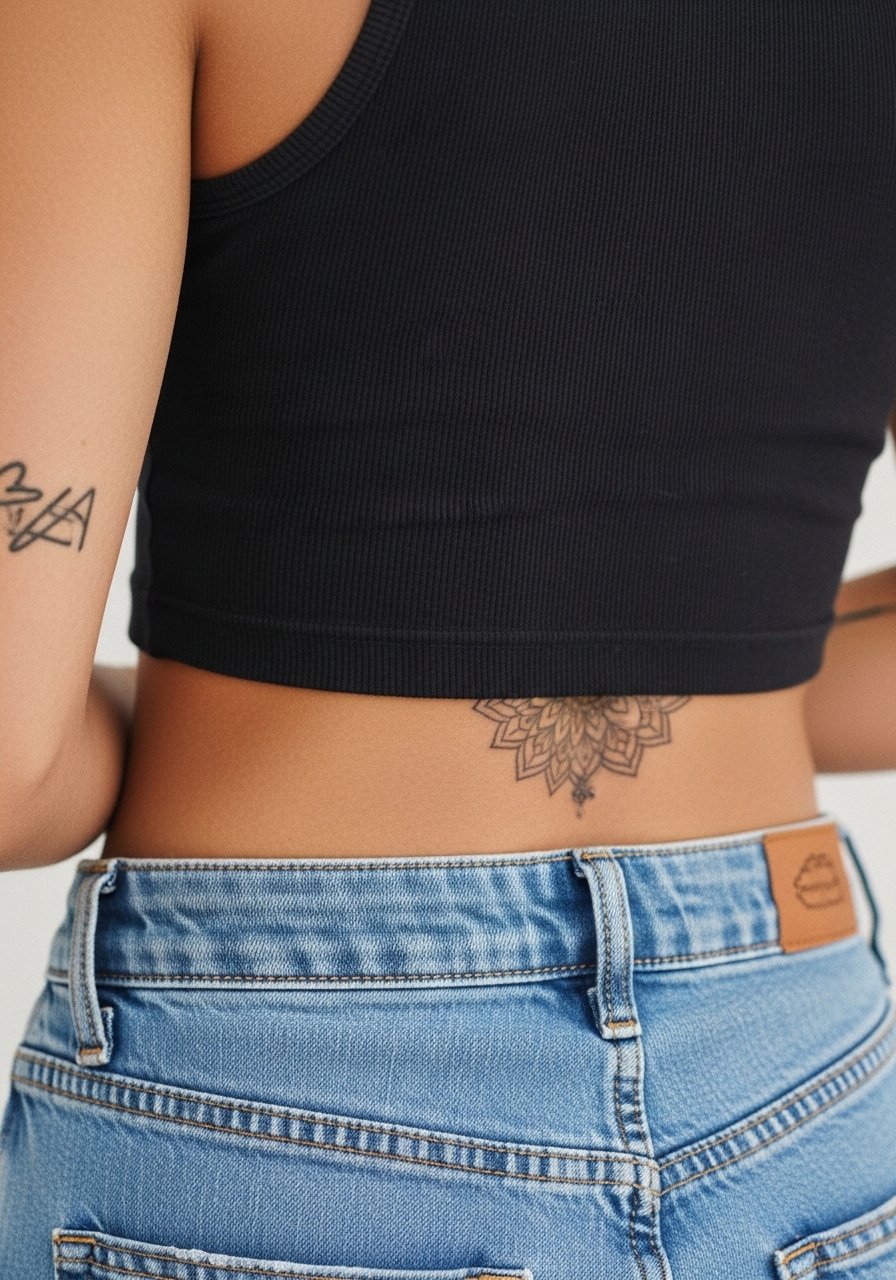
Lower back mandalas give you a wide canvas and the ability to hide or reveal as you wish. Placement on the lower back needs to consider clothing lines and how the mandala sits when you bend. A common mistake is placing too much detail in the center which gets lost with everyday movement. Sessions are long for larger backs and plan for multiple visits if you want layered shading. For summer wear a low back crop top to showcase the radial symmetry.
20. Hip-to-Thigh Cascade Mandala
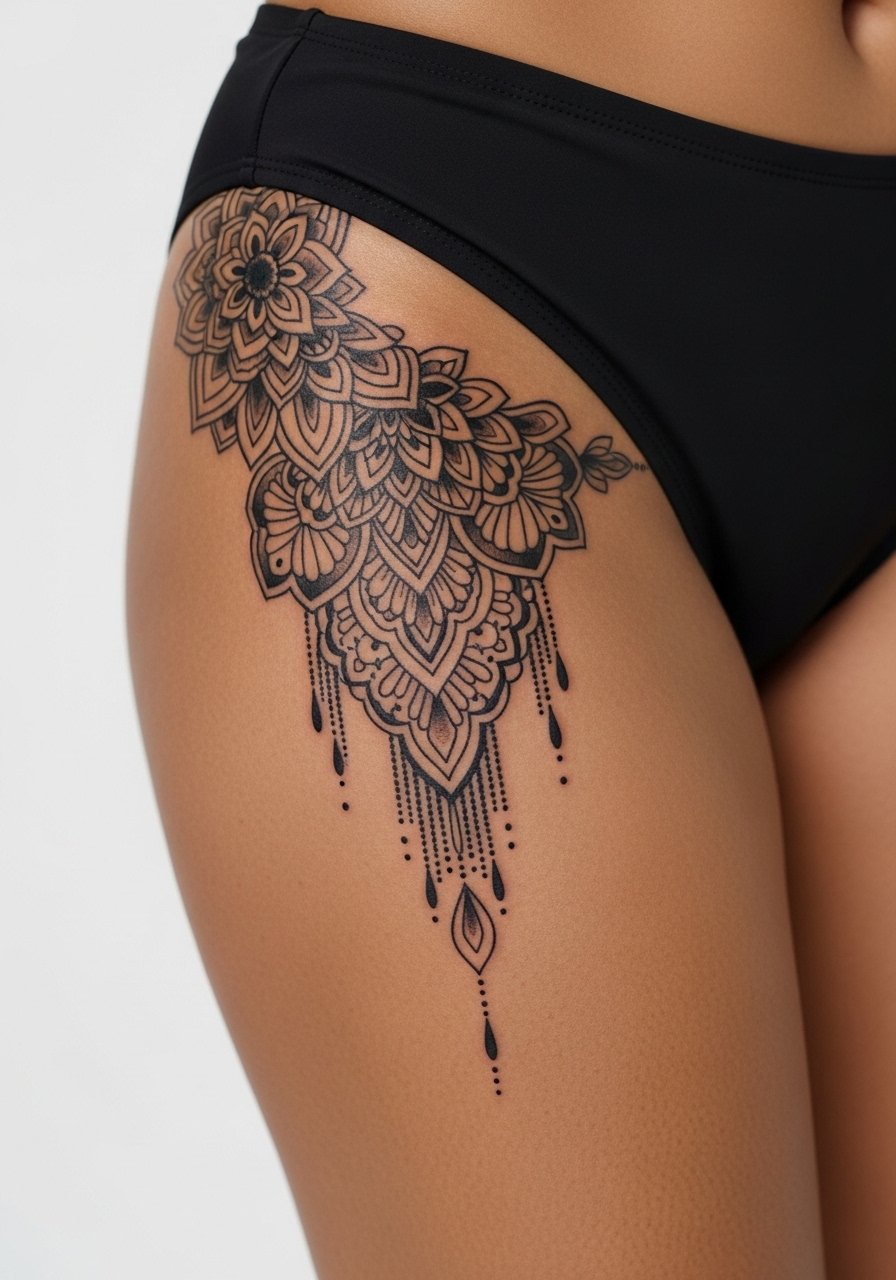
A cascade mandala uses connected rings to follow body contours so the piece reads as a single movement rather than a static circle. Tell your artist you want the central nodes offset slightly so the cascade looks organic when you walk. A real mistake is mirroring a flat reference image onto a curved surface without testing posture. Sessions often require position changes and thoughtful bandaging. For session wear bring high-waisted bottoms so the artist can shift fabric without exposing unnecessary areas.
21. Mandala Yoke Across the Chest
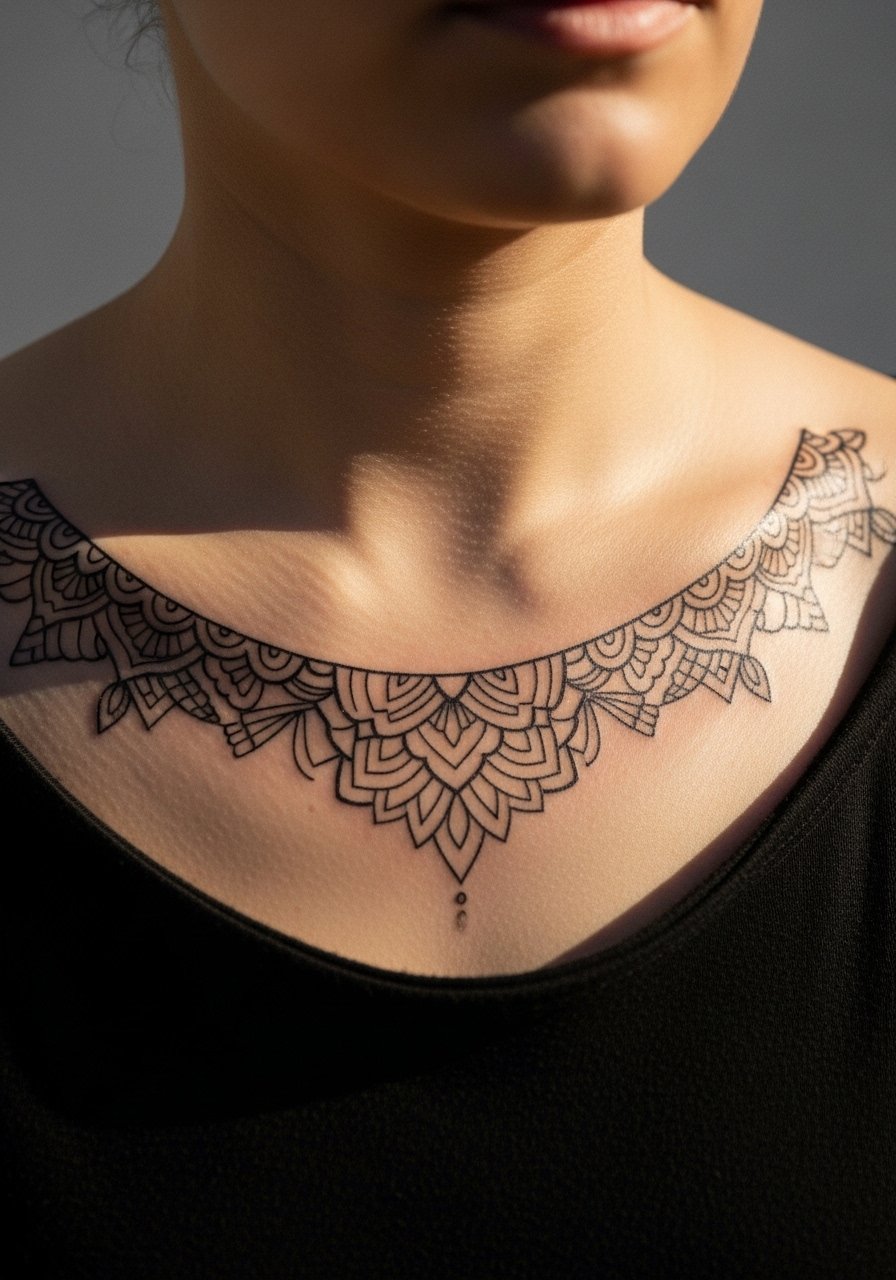
A yoke-style mandala frames the collarbone and works well as a statement that sits just above your clothing line. Ask the artist to map the top edge relative to your clavicles so the piece complements neck length and avoids looking top-heavy. A common aging issue is UV exposure on the chest from sunbathing which fades contrasts faster than covered areas. Sessions are moderate and touch-ups are cosmetic rather than structural. For the appointment wear a wide-neck shirt you can slide aside for access.
Frequently Asked Questions
Q: Will a wrist mandala fade faster than a forearm one and what can I do?
A: Yes, wrist mandalas usually fade faster because of constant washing and movement. Ask your artist for bolder outer rings and wider negative space so the geometry stays readable. Plan for touch-ups around year two and protect the healed area from daily sun exposure.
Q: How should I approach symmetry anxiety for a full back mandala?
A: Bring a clear reference and request the artist place and photograph the stencil while you stand and sit so you can check symmetry in real postures. Good artists will adjust the stencil repeatedly. If you feel unsure insist on a pause before the first pass.
Q: Is fine line safe on ribs and what about the healing method debate?
A: Fine line on ribs divides artists into two camps. One camp warns that the thin lines blur with skin movement within a couple of years. The other camp says proper depth and spacing make it last. Ask which camp your artist belongs to and why, then decide if you prefer bolder lines for longevity.
Q: What should I wear to a thigh wrap appointment to make the session easier?
A: Wear loose joggers or a removable skirt so the artist can position your leg comfortably without pressure. You want something easy to shift rather than tight fabrics that pull on the skin during long sessions.
Q: How often do hand or finger mandalas need touch-ups?
A: Expect more frequent touch-ups for hands and fingers than for torso pieces. Many people return within one to two years to maintain contrast. If you use your hands heavily at work plan that into your schedule before committing.
Q: Can I mix deity imagery like Ganesha into a geometric mandala respectfully?
A: Yes, but be mindful of cultural origins and opt for a simplified or stylized depiction rather than direct replication of sacred imagery. Many clients choose subtle nods or personalized variants to show respect while keeping it wearable.
Q: How do I find a geometric specialist if my town has few options?
A: Use hashtags like #mandalatattoo or #geometricmandala on social platforms and filter by location. Apps and forums can point to guest spots and conventions where geometric artists travel, which helps when local options are limited.