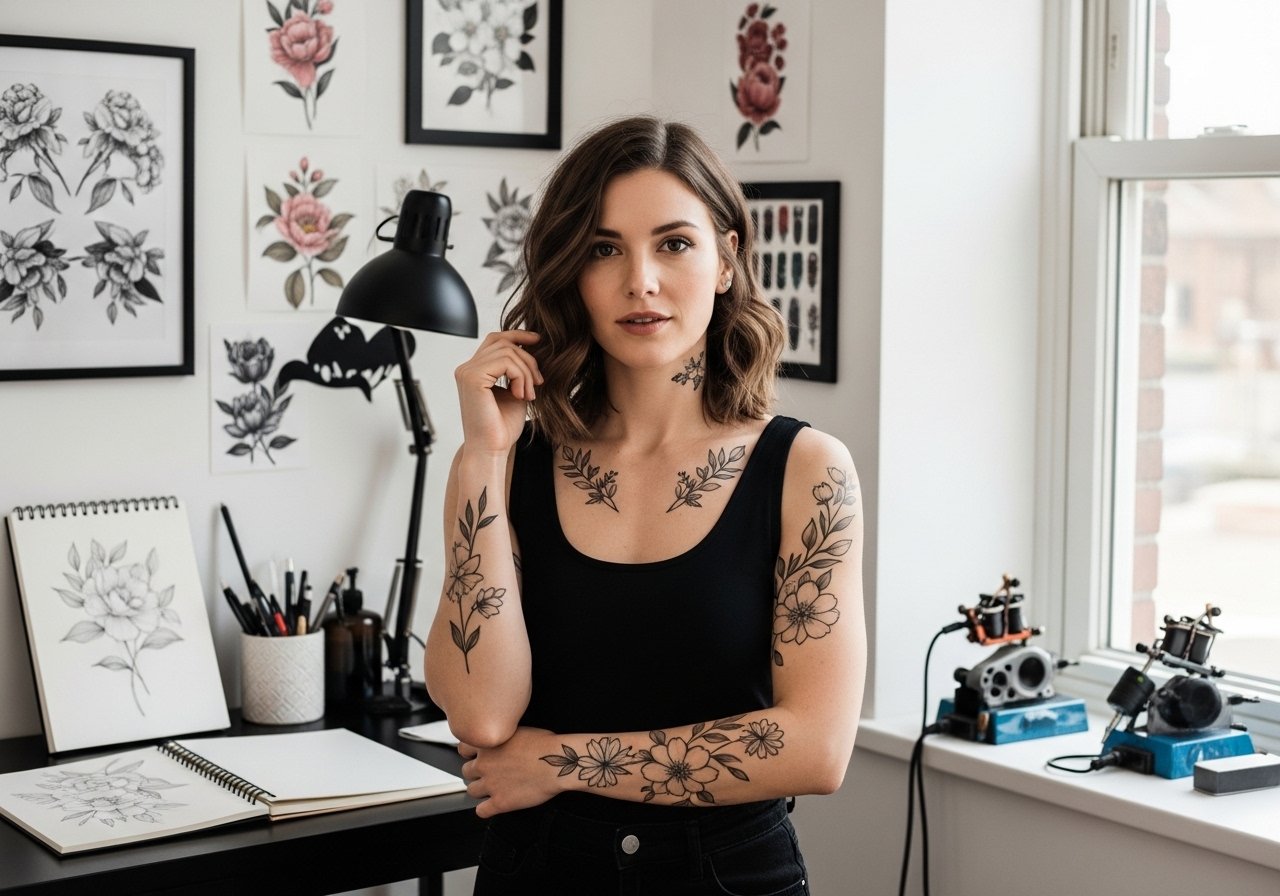
The fine-line trends that flood feeds look great at first but do not always survive real life. Upper back work is forgiving in some places and ruthless in others, costs can climb fast as sessions stack, and spine placements can be far more painful than the scapula area. Below are 17 practical sketch ideas that account for aging, session time, and wardrobe so you end up with art that still looks deliberate years from now.
1. Scapula-Centered Wolf Pack
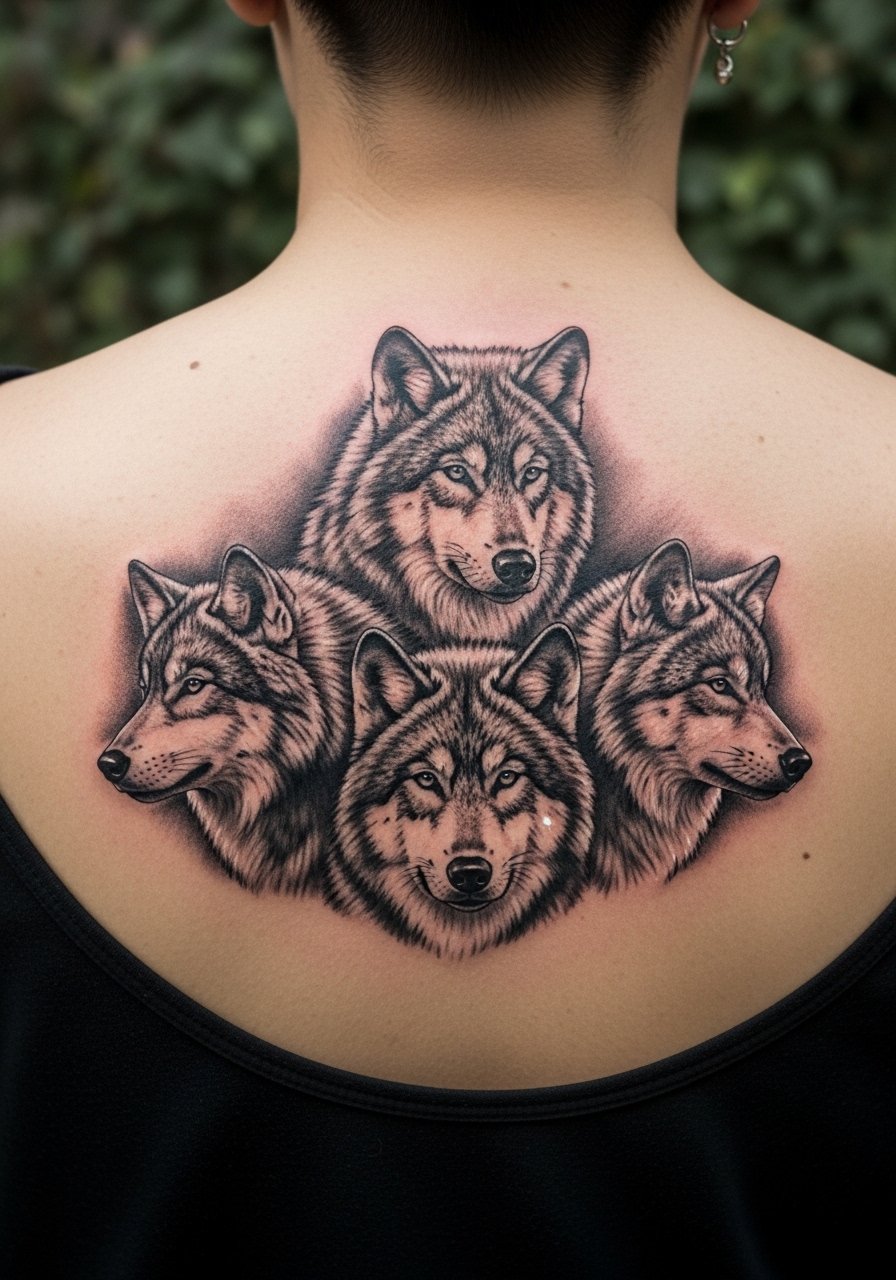
A scapula-centered wolf pack reads well on men who want something bold without committing to a full back. I recommend keeping the pack 6 to 10 inches wide so the muscles around the blades do not distort the faces when you bulk up. Tell your artist you want heavier linework on outer contours and softer stipple shading inside fur for depth. Pain is usually low on the blades, so most clients manage a two-hour session comfortably. A common mistake is packing too many tiny eyes into the group. That detail merges over time. Expect a touch-up around year three for high-contrast areas. For the session wear a loose button down shirt you can pull aside cleanly so the artist has clear access.
2. Viking Warrior Silhouette with Shoulder Extensions
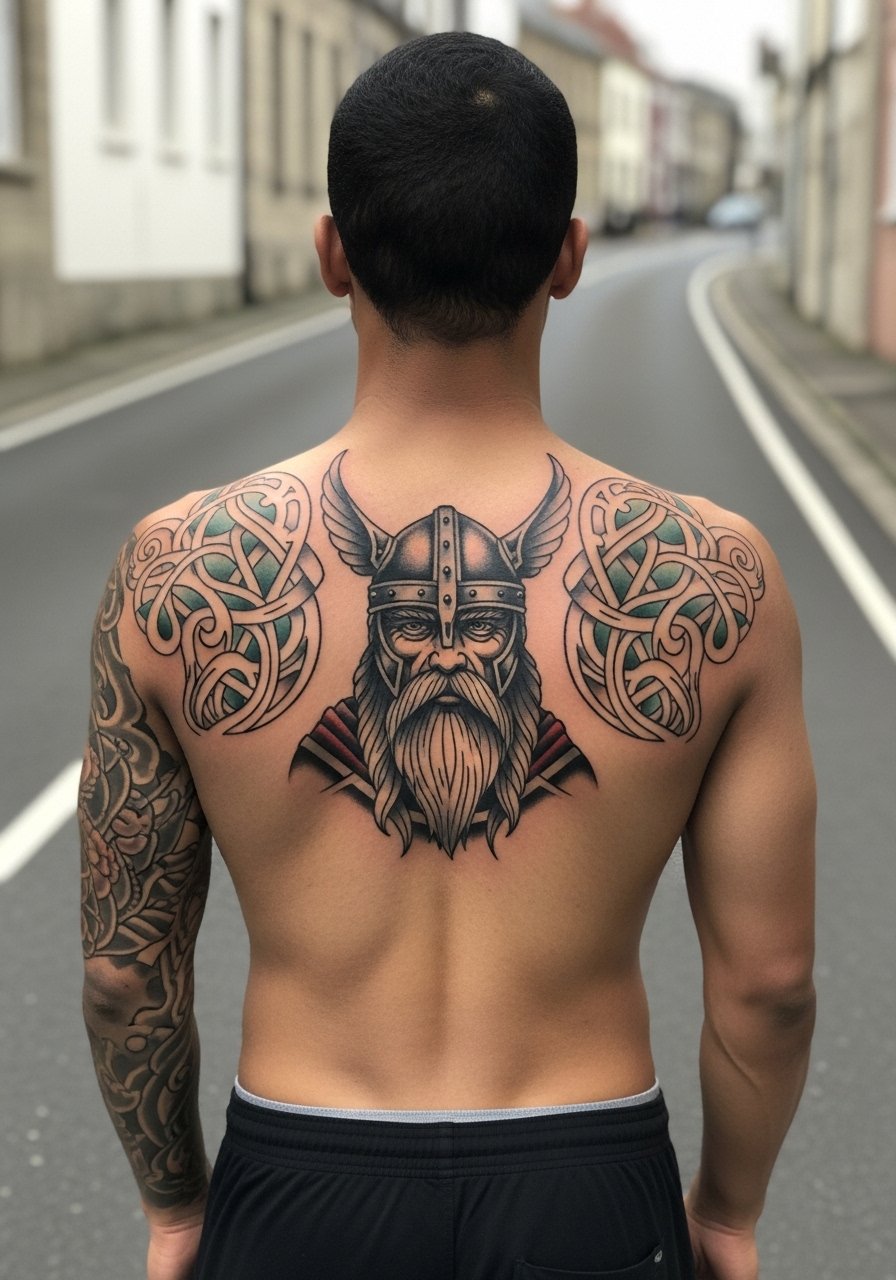
Choose a Viking silhouette when you want a motif that frames the shoulders and gives the top half a deliberate symmetry. Ask for bold outlines on the helmet and muted color pops in the background so the figure holds up as saturation fades. Shoulder extension pieces wrap toward the delts, which helps the art age gracefully even if you gain muscle. Sessions usually run three hours and often require a follow-up for color saturation. A frequent error is over-detailing the background sky, which softens into noise after a couple of years. To show the piece off, pair it with a sleeveless muscle tee gray that keeps the shoulder extensions visible and fits the industrial vibe.
3. Biomechanical Gears Emerging

Biomechanical pieces use high-contrast blackwork and layered shading to create a three-dimensional effect across flat upper-back planes. This style benefits from deep saturation and strategic negative space so the metallic elements keep their separation as the skin moves. Expect longer sessions and multiple visits because of the heavy shading. Blowout risk increases if linework is placed too close to thin skin over the spine, so discuss placement that stays mostly on the flatter muscle areas. A mistake I see often is trying to compress too many gears into a small area. Let the artist breathe the composition and plan for a touch-up at year two if you want the darkest shadows to stay crisp. For show-off looks, a cargo pants relaxed fit and an open-back vest photograph well with biomech textures.
4. Samurai Armor Full Panel
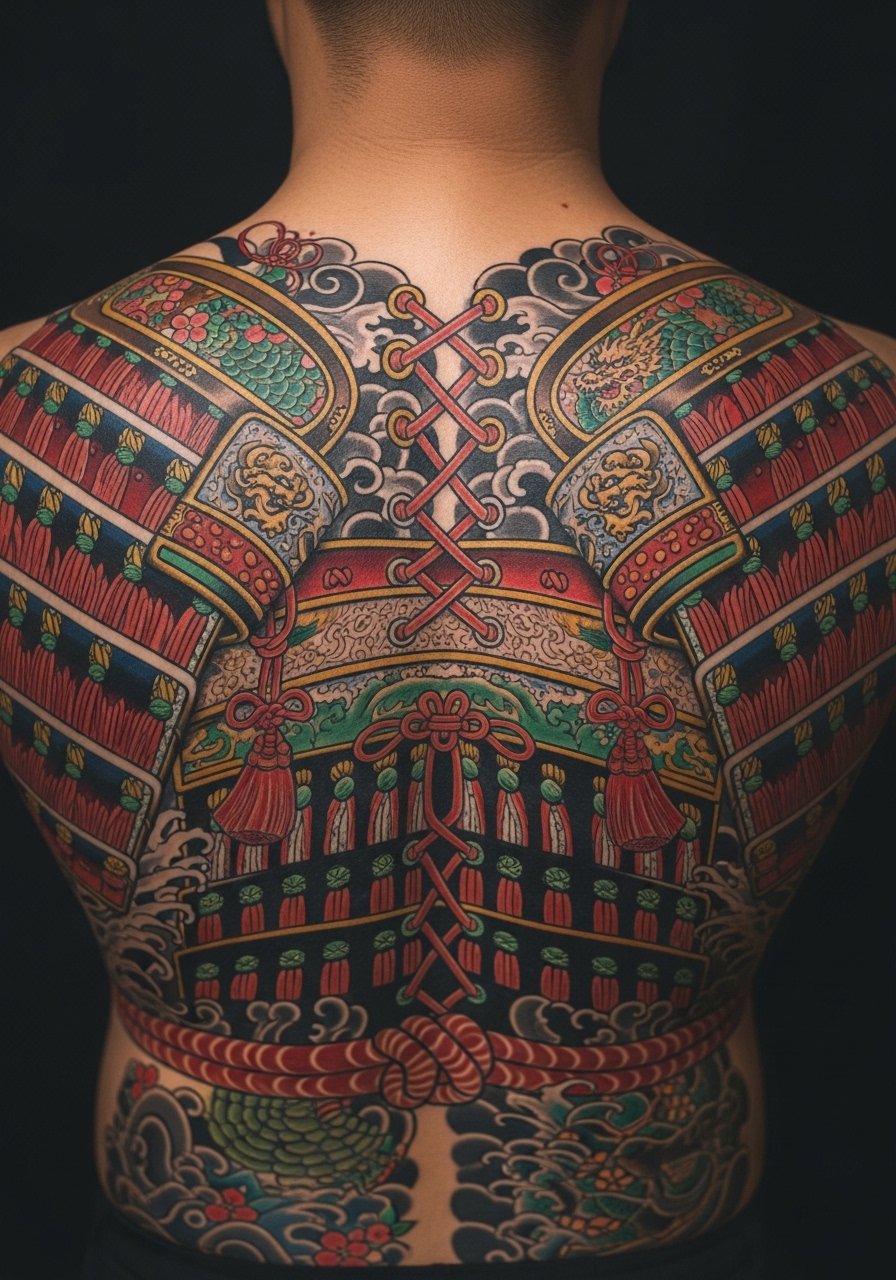
Samurai armor works best as a panel that sits from the scapula region toward the spine and chest, especially if you plan a bodysuit later. Tell your artist you want tebori-style depth cues without tiny, hyper-fine lines that can blur on the back. Color sessions are longer and require more healing windows, which drives up cost and scheduling. One pitfall is oversaturating with small floral filler right next to armor plates. Those small blooms often soften beyond recognition. Pain on the blades is moderate, but spine-adjacent plates can spike sensitivity. Expect multiple sessions and plan them months apart. Pair the finished look with a men's v-neck tee white for evenings when you want the colors to pop.
5. Lion Mane Mandala Centered on the Blades

A mandala framing a lion head balances aggression and symmetry when placed directly on the shoulder blades. Ask for heavier outer linework and stipple shading for the mane so the pattern remains distinct at distance and up close. Pain for this placement is generally mild and most clients finish in two sessions. The common mistake is making the inner mandala rings too dense. Dense rings collapse with time and become muddy. For longevity, space the linework and keep midtones in stipple rather than heavy gray wash. To style it casually, try a men's racerback tank olive that shows the symmetry without competing patterns.
6. Geometric Apex Predator Bear

Geometric predator pieces use mathematical shapes to suggest form and weight. This bear design works well when you want something masculine but modern. The key consult note is to request thicker transit lines and avoid micro-shading inside tight polygons because those areas can blur within two to three years. Pain on the lats is low, so a full-session block of about three hours usually gets a solid foundation in. A mistake is scaling the shapes too small. Give each polygon room to breathe. Over time, the hardest edges may soften, but strong transit lines will keep the geometry readable. For sessions and after, wear a side slit tank top men that lets the artist wrap around the lats without bunching cloth.
Studio Day Picks
The scar and muscle movement questions that came up in ideas 1 through 6 mean a few session and healing items are worth bringing or ordering ahead.
-
Stencil transfer paper kit. Lets you preview the sketch placement on skin before the needle starts, which is especially useful for pack and mandala layouts on the blades.
-
Topical numbing cream. Applied per instructions before high-pain spine work it can reduce anxiety and make long sessions more manageable.
-
Thin protective film roll. Helpful when you need a breathable cover on broad back pieces that face friction from clothing during the first few days.
-
Fragrance free gentle body wash. Cleanses healing skin without perfumes that irritate fresh ink, which matters for color-heavy panels.
-
Aquaphor healing ointment. Thin layers in the earliest phase lock in moisture and limit scabbing on detailed linework.
7. Dragon Spine Extension

A dragon that starts on the upper back and traces the spine is dramatic and spiritual, but it carries important trade-offs. The spine is a high-pain zone so many clients opt for topical numbing for longer sessions. Artists disagree on numbing. One camp warns it dulls the skin so line depth is inconsistent. The other camp uses numbing selectively for client comfort while maintaining consistent machine technique. Ask your artist which approach they trust and why. For longevity, keep the scales larger near the spine and save fine texture for outer sections. Expect multi-session work and color refreshes over time. For showing it off, a zip hoodie men slim unzipped halfway makes the spine flow visible without full exposure.
8. Koi Fish with Storm Background
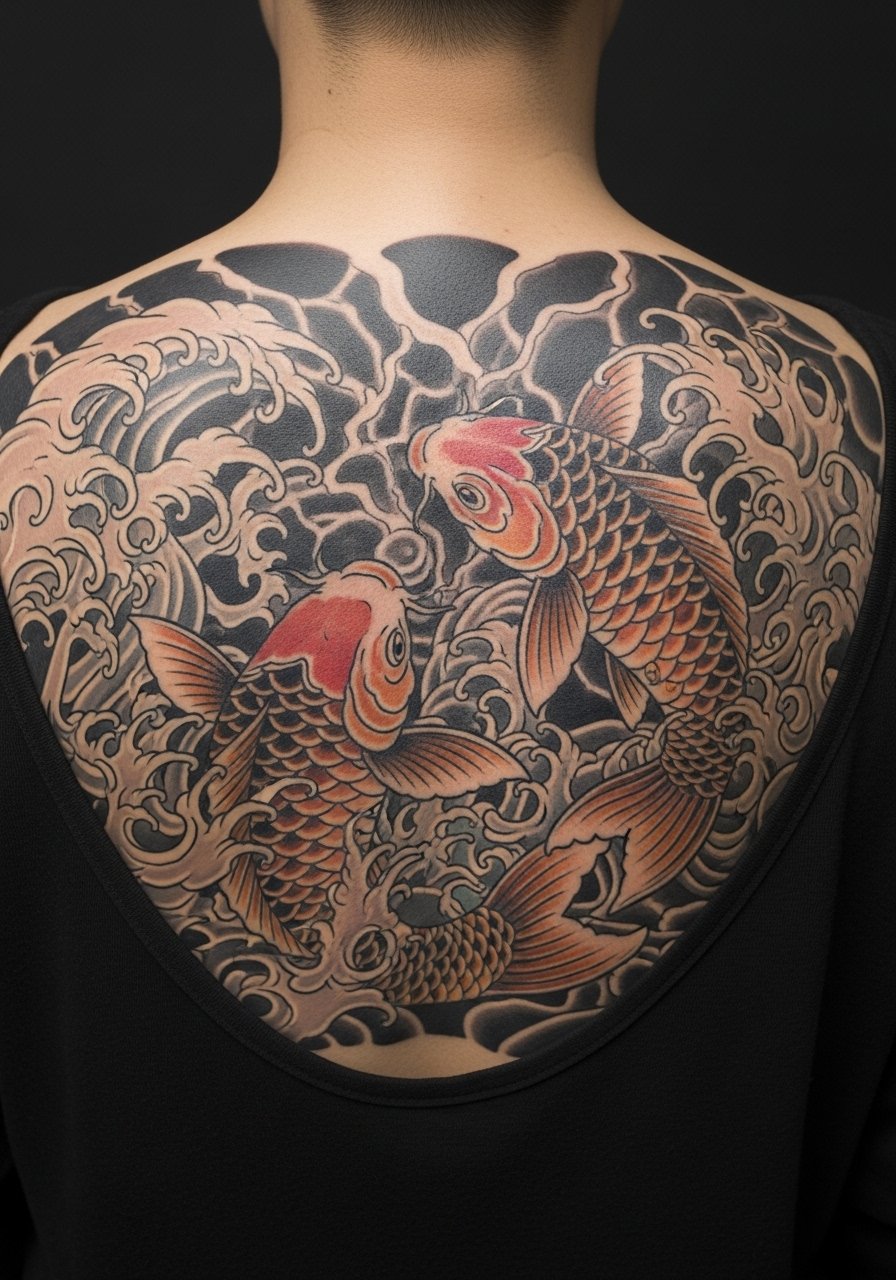
Koi panels are built for movement and require deliberate spacing between elements so the water and fish retain separate identities as the piece ages. Tell your artist you want color layering that reads from a distance, not tiny stippled highlights that blend together. These designs need long color sessions and extended healing windows. A common misstep is crowding the background with tiny waves that end up as a single gray wash. Expect several sessions over months and plan gym breaks during the initial four to six weeks. For casual wear, a men's v-neck tee white keeps colors bright and draws the eye away from busy patterns.
9. Hanya Mask Warrior

The Hanya mask is a strong cultural motif and reads as protection when placed on the shoulder blade. In consultation mention whether you want a direct traditional rendering or a stylized nod. A respectful approach avoids exact replicas of ceremonial work and instead incorporates motifs inspired by the tradition. Bold outlines with color fills tend to age better on the shoulder blade than overly fineline masks. Sessions commonly run around three hours with a follow-up for color saturation. The main mistake is shrinking the mask into a space that flattens facial features when healed. For show-off days, wear a men's fitted tank top black that frames the mask and leaves the delts visible.
10. Nature Landmark Scene, Mountain Range Panorama
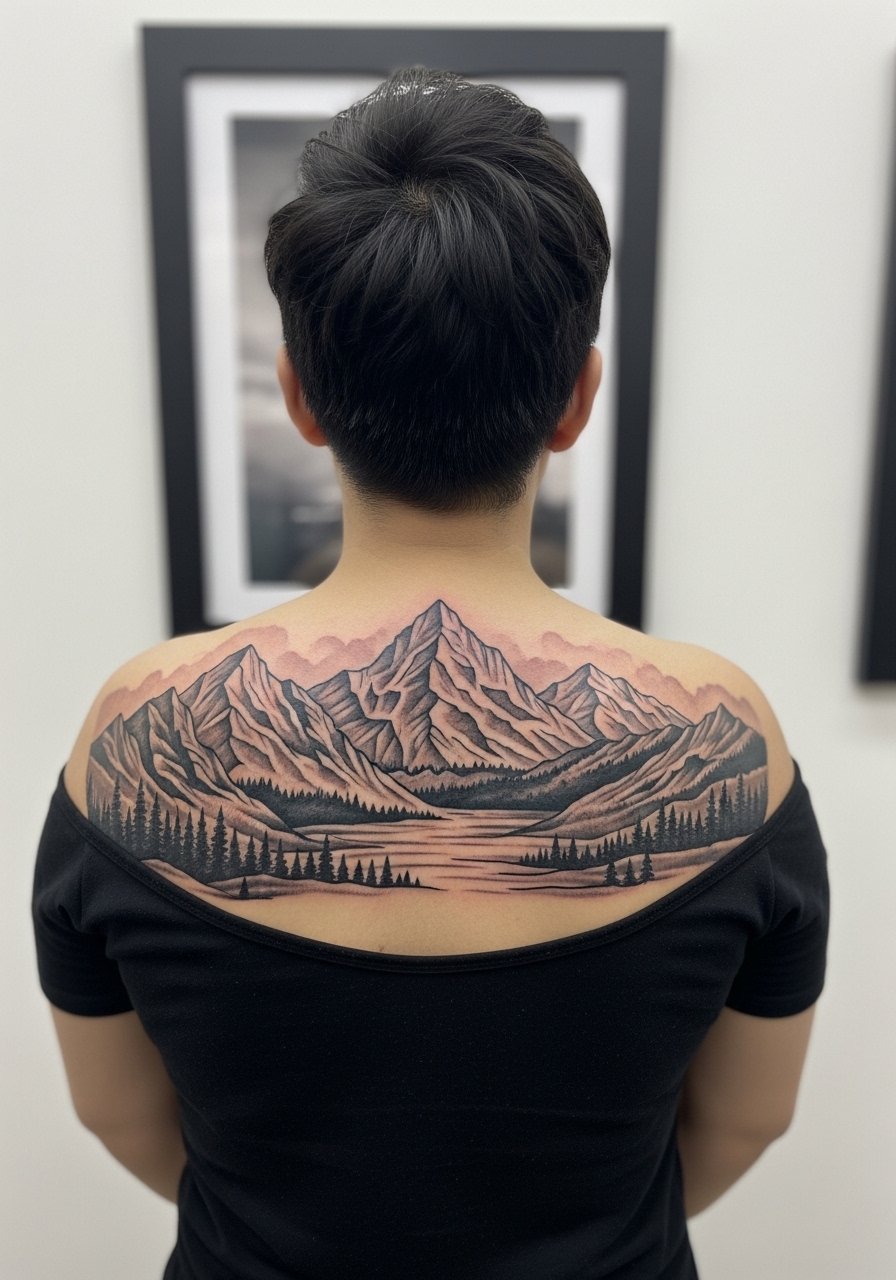
A panoramic mountain scene is a great option if you want a concealable piece with personal meaning that still reads as a strong graphic. For stability, keep the horizon slightly above the scapula line so muscle movement does not curve the peaks when you change posture. The biggest mistake is over-detailing fine tree lines that soften after a year. This is an illustrative realism job so plan for two to three sessions depending on size. For the session wear a loose button down shirt that you can remove without worrying about hair products or lotion transfer.
11. Spartan Helmet with Shields
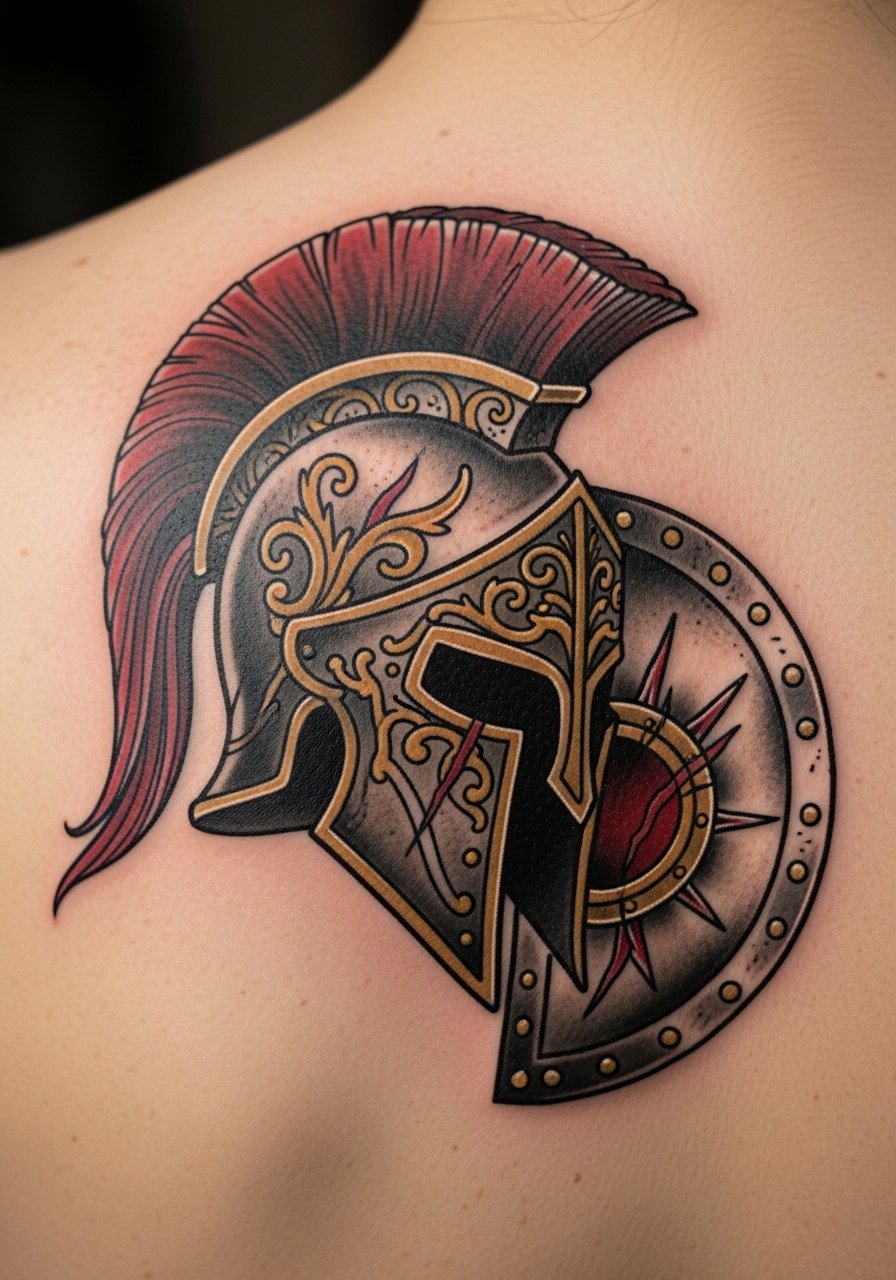
A Spartan helmet centered on the upper back uses symmetry to anchor the chest and shoulders visually. Ask for thicker outer linework on the helmet rim and more restrained shading inside the faceplate to avoid softening into a flat gray. This piece usually finishes in three sessions for linework and color packing. A frequent error is adding fine text or insignias around the helmet, which age unevenly. For showing off the symmetry, pair it with a slim silver chain necklace that sits just above the upper back line when wearing low collars.
12. Tech-Organic Cyber Wolf Wrap

Tech-organic designs blend organic fur textures with metallic plating for a layered effect that flatters broad backs. Tell your artist you want contrast between the matte fur areas and the shiny mechanical parts using stipple shading for organic texture and smooth gradients for metal. These are session-heavy pieces, often four sessions or more. A common mistake is mixing too many tiny metallic reflections in the fur, which can become a gray haze. For showing the industrial edge, style with a men's chain necklace and a sleeveless muscle tee that exposes the wrap without clutter.
13. Cherry Blossom Samurai Backdrop

Cherry blossom backdrops give samurai figures a softer context, but color placement matters for longevity. Artists split on aftercare approaches here. One camp recommends Saniderm for broad color fields because it speeds surface healing. The other camp prefers dry healing on muscle areas to avoid sweat buildup trapped under film. Name both options when you consult your artist and ask which method they use for multi-session color panels. A mistake I often see is putting delicate pink blossoms directly against bright red armor fills without buffer lines. That contrast muddies as saturation drops. These pieces need staged sessions spaced over months. For the day, bring a loose kimono robe so you can expose the back for stenciling and stay comfortable afterward.
14. Minimalist Compass Cluster on Upper Back
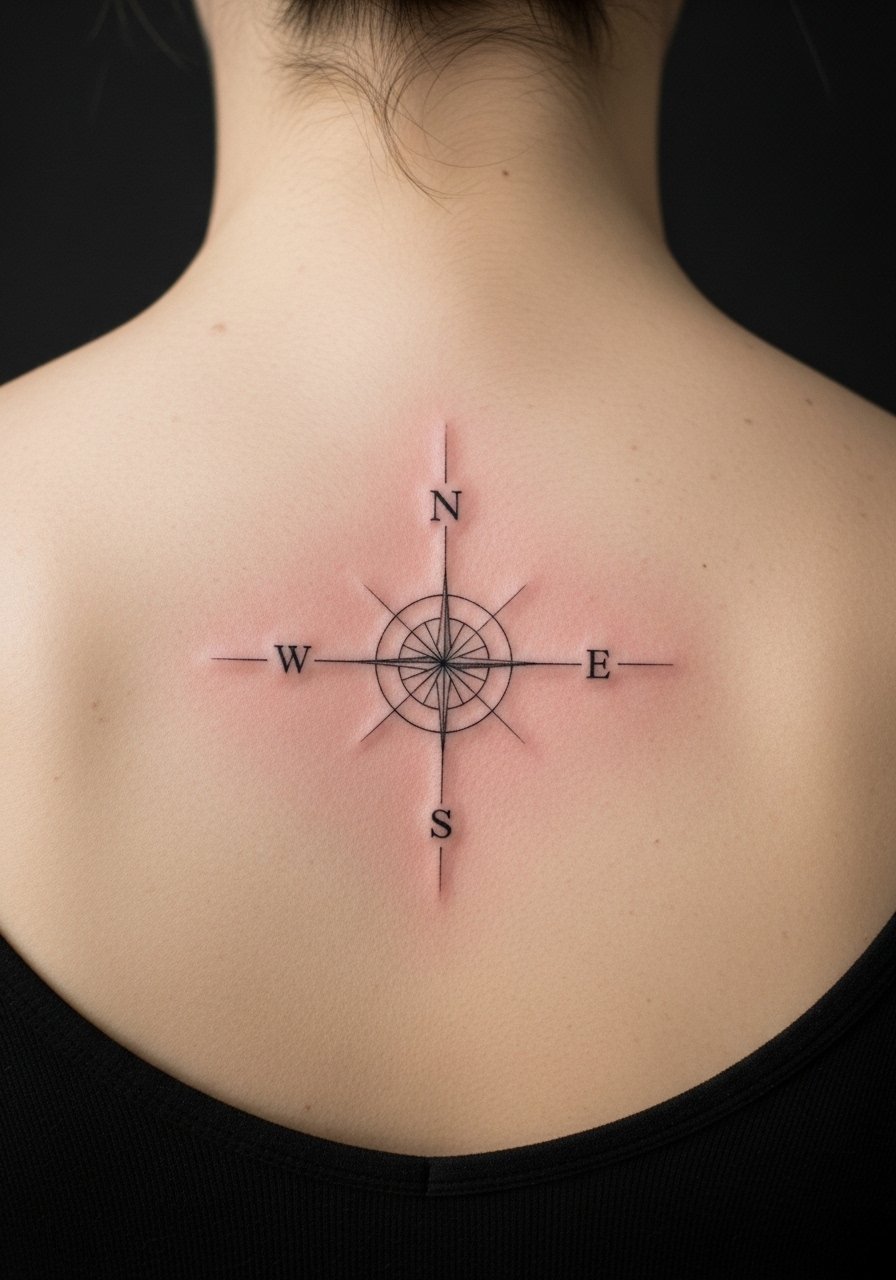
A compact compass cluster works when you want something subtle but intentional. Because fine line work can blur on the back, especially in dense clusters, ask for slightly heavier compass outlines and simplified inner tick marks. Pain is mild on the blades and most clients finish in one session. The common mistake is cramming multiple tiny compasses too close together. Over time they merge and lose definition. Plan on a touch-up by year three if you want the fine points to remain crisp. For the session wear a racerback tank so the artist can reach between the blades without friction.
15. Spartan Helmet Variation with Geometric Insets
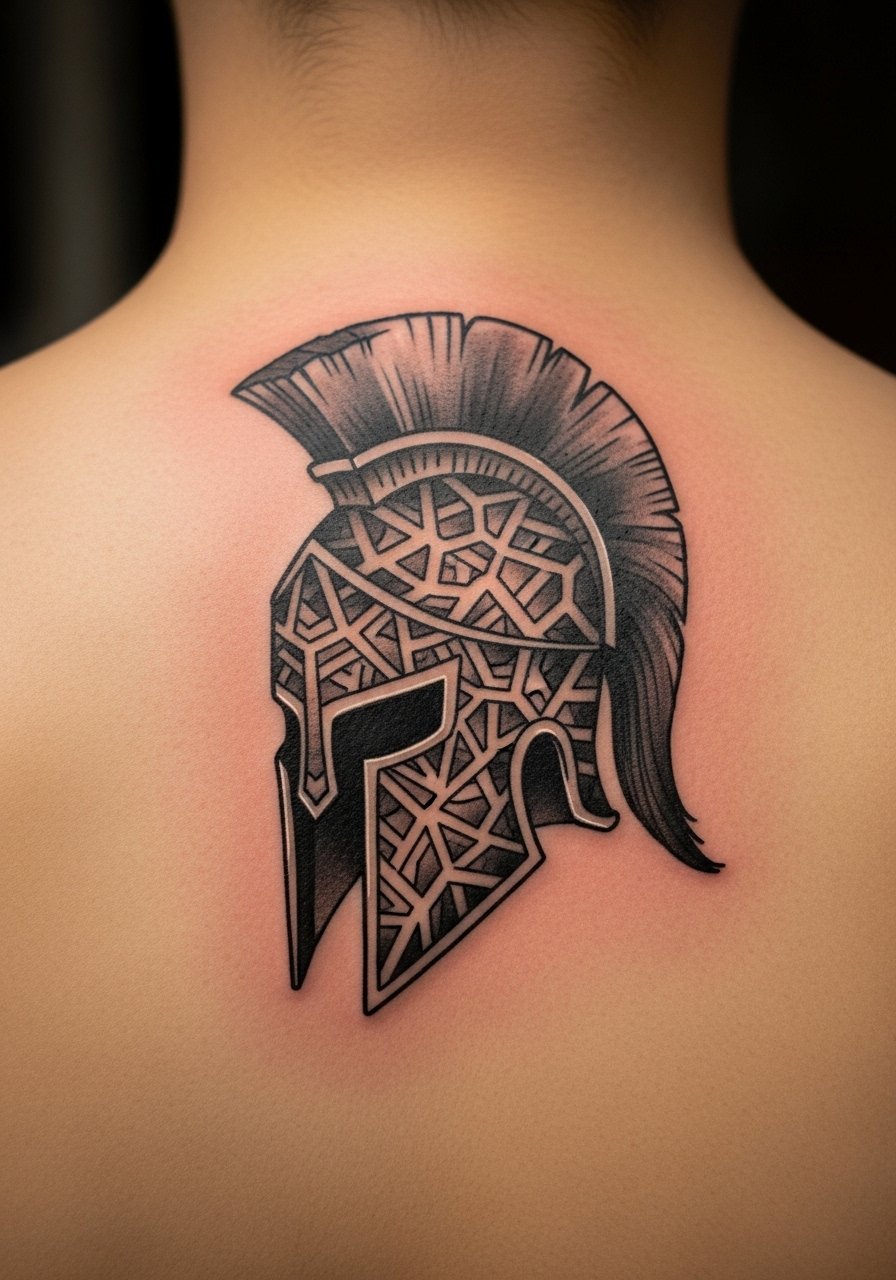
This hybrid uses classic warrior imagery with geometric fills to modernize the look. Ask for the insets to be larger polygons rather than micro-tiles. Large polygons last better and keep contrast against the helmet lines. Sessions are moderate in length but may need a second visit for precise black fills. The mistake is treating the geometric sections like embroidery and filling them with micro-dot work that blurs. For a coordinated outfit, try a cropped hoodie athletic that reveals the top of the helmet while keeping the rest casual.
16. Nature Landmark with Celestial Overlay
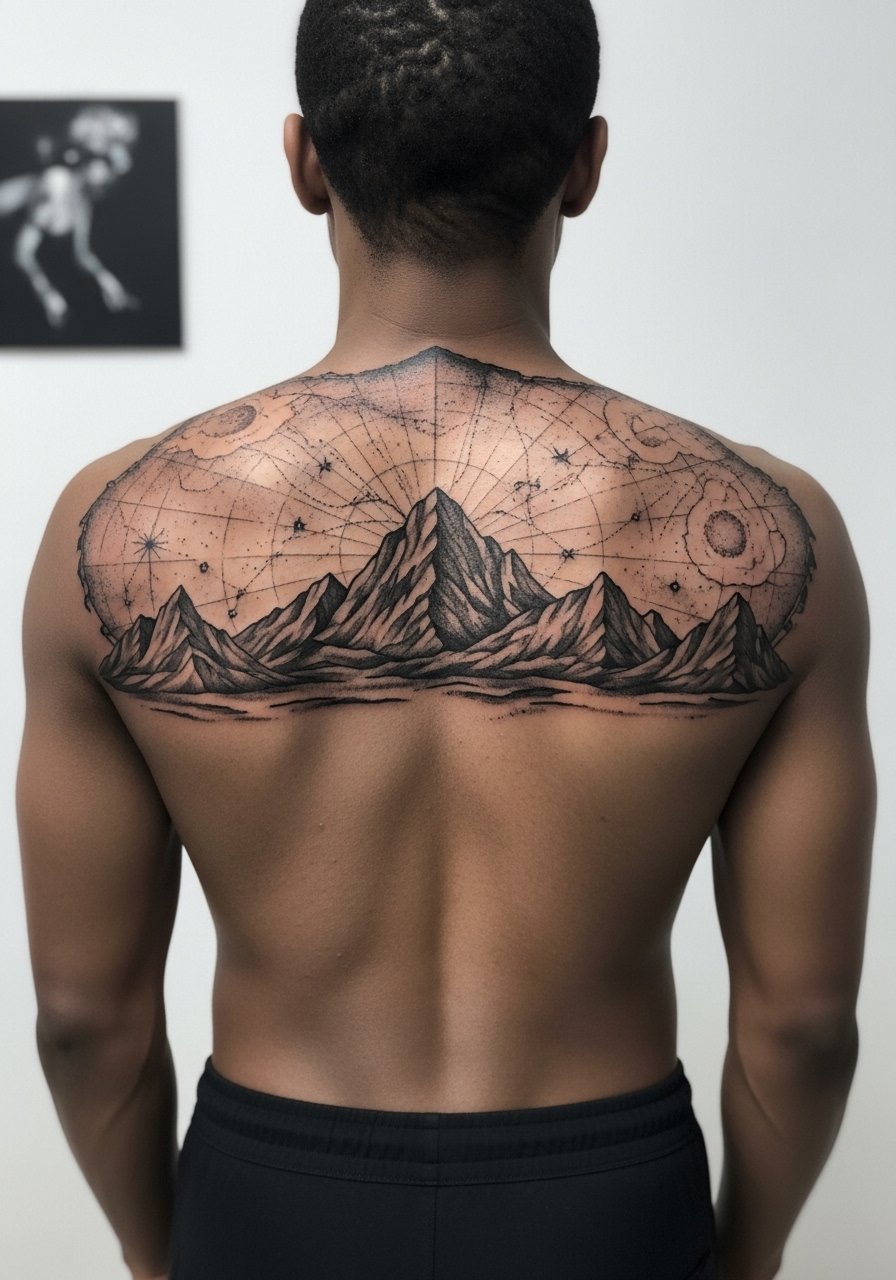
Add a celestial overlay to a mountain panorama for a design that balances realism and geometry. During consultation specify which elements must remain crisp at distance, like ridgelines and primary star points. The biggest error is using dense dot work for the sky that coalesces into a gray patch. Keep star elements sparse and use stipple sparingly. Session feel is relaxed on the blades but can get prickly near the spine. Expect a follow-up touch-up for any faded star dots after a couple of years. For session comfort, wear a loose button down shirt you can remove or shift without disturbing the area.
17. Armor Fragment and Cherry Petal Mix
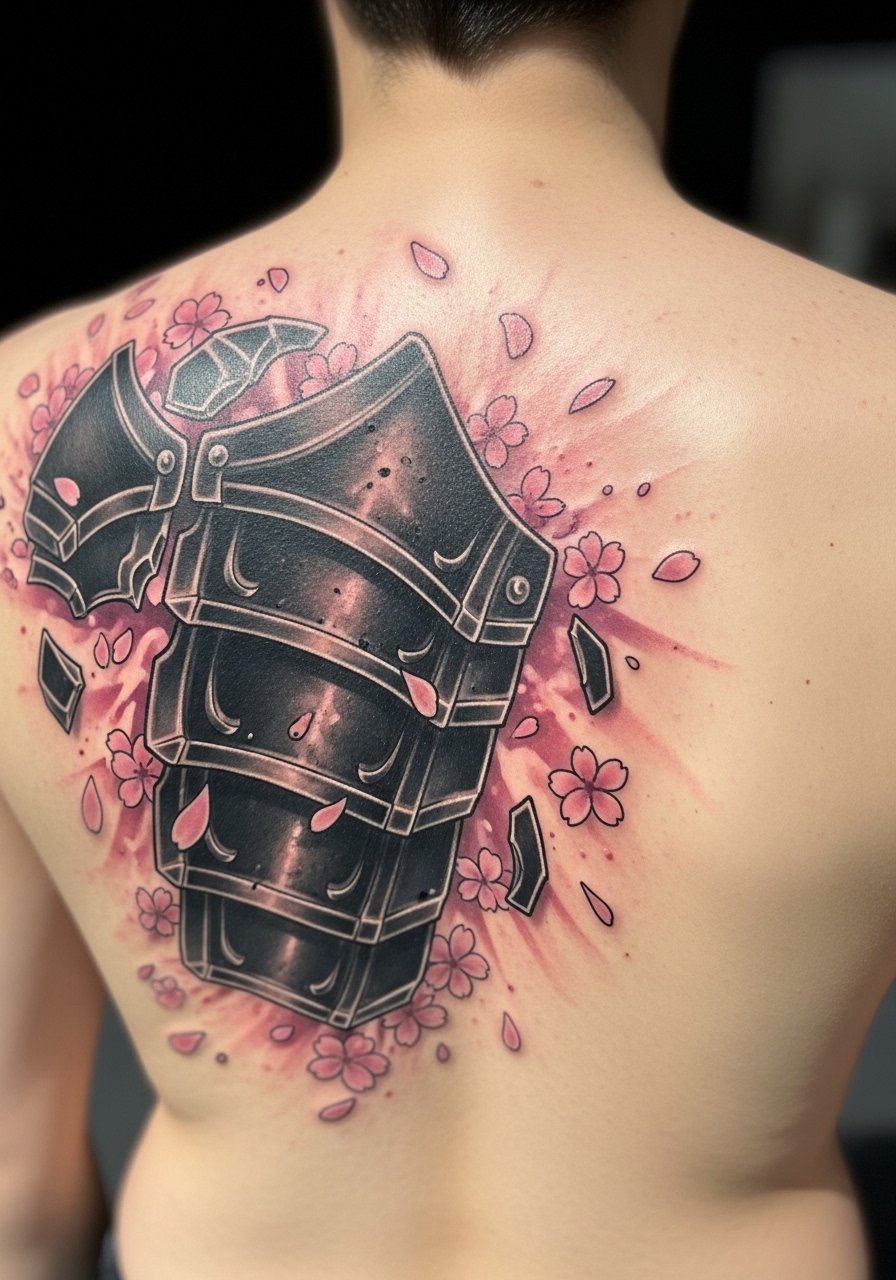
This hybrid pairs rigid armor plates with delicate petals for contrast that ages well when composed carefully. Ask for the petals to be slightly spaced and the plate edges to have thicker outer lines so the two elements retain separation as the ink settles. The session will alternate between tight linework and soft color packing, which can be tiring for the skin. A typical mistake is filling the petals with tiny internal shading that fades into smudge. Plan for a small color-refresh at year two for pale pinks. For the appointment, a loose kimono robe is practical when the artist needs full upper-back access without fabric rubbing at the end.
Frequently Asked Questions
Q: Will upper back designs stretch or warp if I bulk up at the gym?
A: It depends on placement. Designs centered on the scapula tend to tolerate muscle gain better than pieces that run down the spine or wrap around the lats. Ask your artist to preview the stencil while you pose in common gym positions so you can see how the design shifts.
Q: Is color worth it on the upper back or should I stick to black and gray for longevity?
A: Color can look fantastic but it needs more maintenance, especially bright reds and pinks. Black and gray will generally keep contrast longer, but smart color placement and staged sessions make color viable for full upper-back panels.
Q: How bad is the pain along the spine compared with the shoulder blades?
A: Most people report much higher sensitivity on the spine than on the blades. Topical numbing is an option. Some artists avoid it for long sessions because they prefer consistent skin feedback. Discuss the trade-offs with your artist before booking.
Q: What should I wear to a session for an upper-back piece so the artist has clean access?
A: Bring clothing you can remove or shift without rubbing fresh ink. For blade-centered work a racerback tank or a loose button-down works well. For full panels try a kimono-style robe for easy on and off.
Q: Do fine-line mandalas and geometric insets hold up on upper back skin?
A: Fine lines risk blurring if the design is too dense. For mandalas and geometric work ask for slightly larger spacing and stronger outer transit lines. That approach preserves detail and reduces the need for frequent touch-ups.