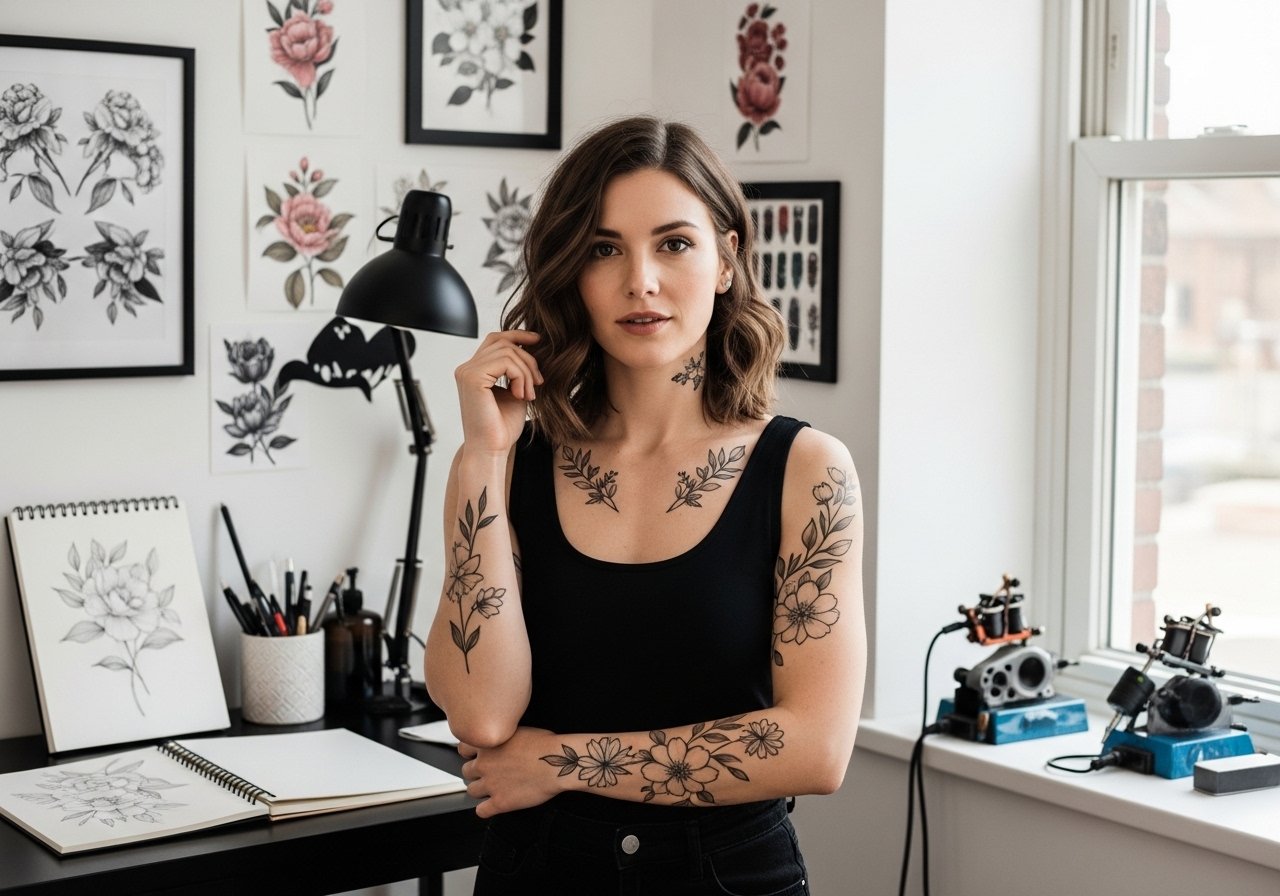
Fine line watercolor on dark skin can look like soft smoke or like a bruise if it is placed or saturated poorly. I have seen pieces that read as delicate and luminous for years and others that lose their color and become a fuzzy patch. The secret is contrast, smart placement, and telling your artist exactly how you want saturation and spacing handled before the needle hits skin. Read on for 17 watercolor-forward ideas that translate well on darker tones and what to ask for at consult.
1. Watercolor Botanical on Inner Forearm
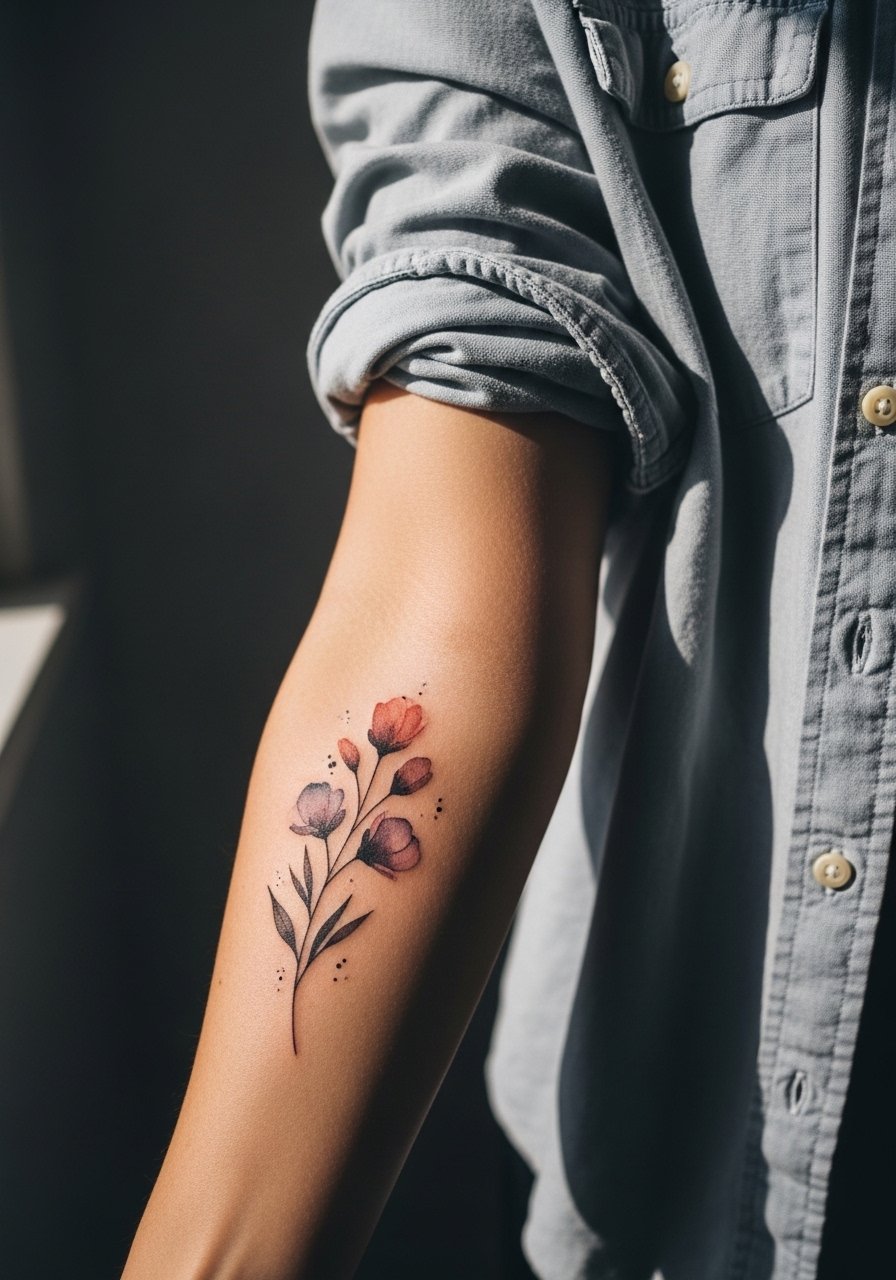
The inner forearm gives watercolor room to breathe and keeps colors visible without aggressive saturation. I tell artists to keep the linework slightly bolder than they would on lighter skin so stems hold against the color wash. Expect a low to moderate pain level and a two-hour session for a modest piece. A common mistake is asking for feathered edges without enough contrast, which makes the color bleed into the skin tone over time. For show-off outfits, the piece plays well with a loose button-down shirt rolled at the sleeves so the forearm can peek out without competing with bold patterns.
2. Ribcage Watercolor Floral
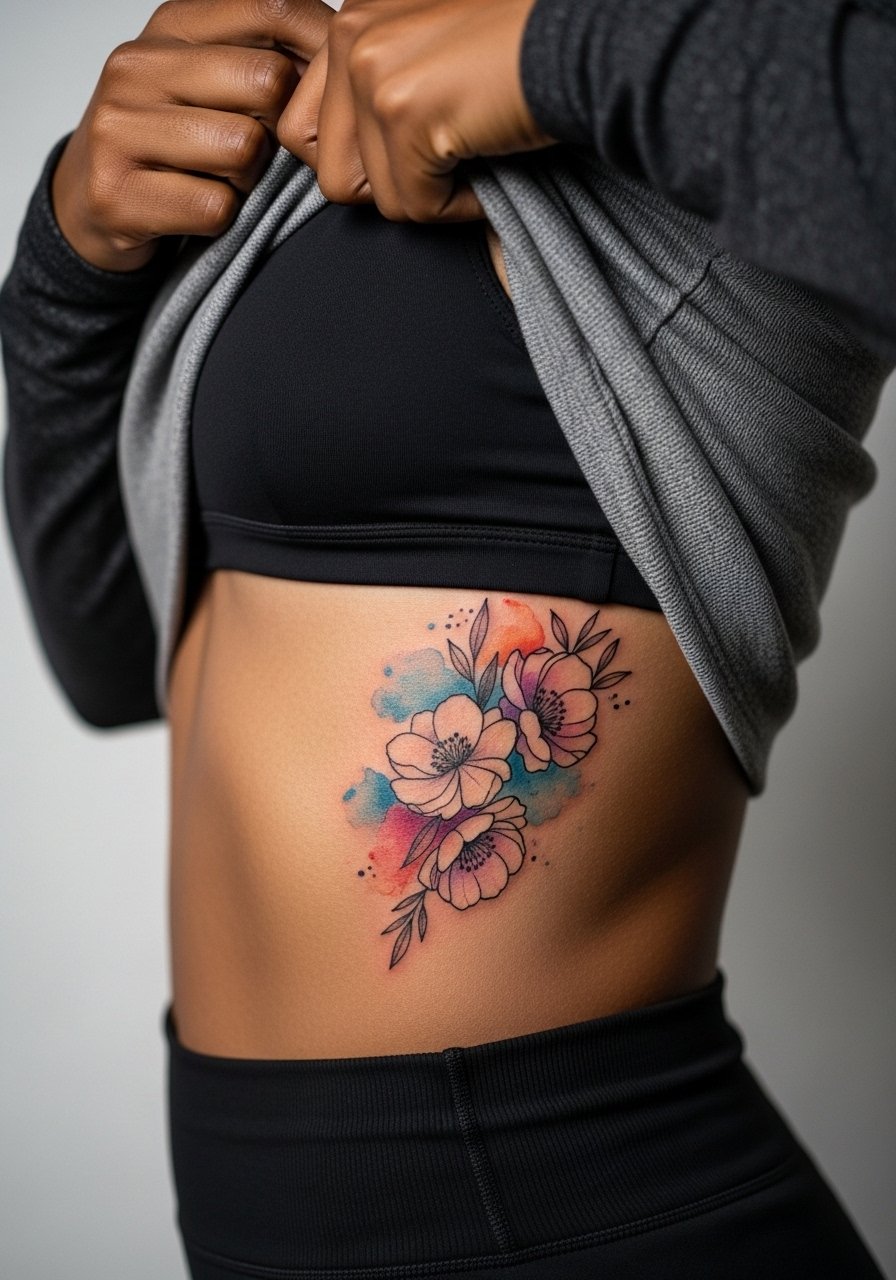
Fair warning, the ribcage is a high-pain spot, but it produces dramatic, long vertical canvases for watercolor gradients. Artists split on fine line there. One camp says the stretch and movement blur tiny details within two years. The other camp says spacing and deeper saturation keep the linework distinct. Ask your artist which approach they use and why. For sessions, wear a cropped top you can lift without shifting the stencil. The rib canvas tends to need larger shapes and stronger contrast than the forearm so washes remain visible at six months and beyond. Touch-ups are common at year two for midtones.
3. Ankle Watercolor Constellation
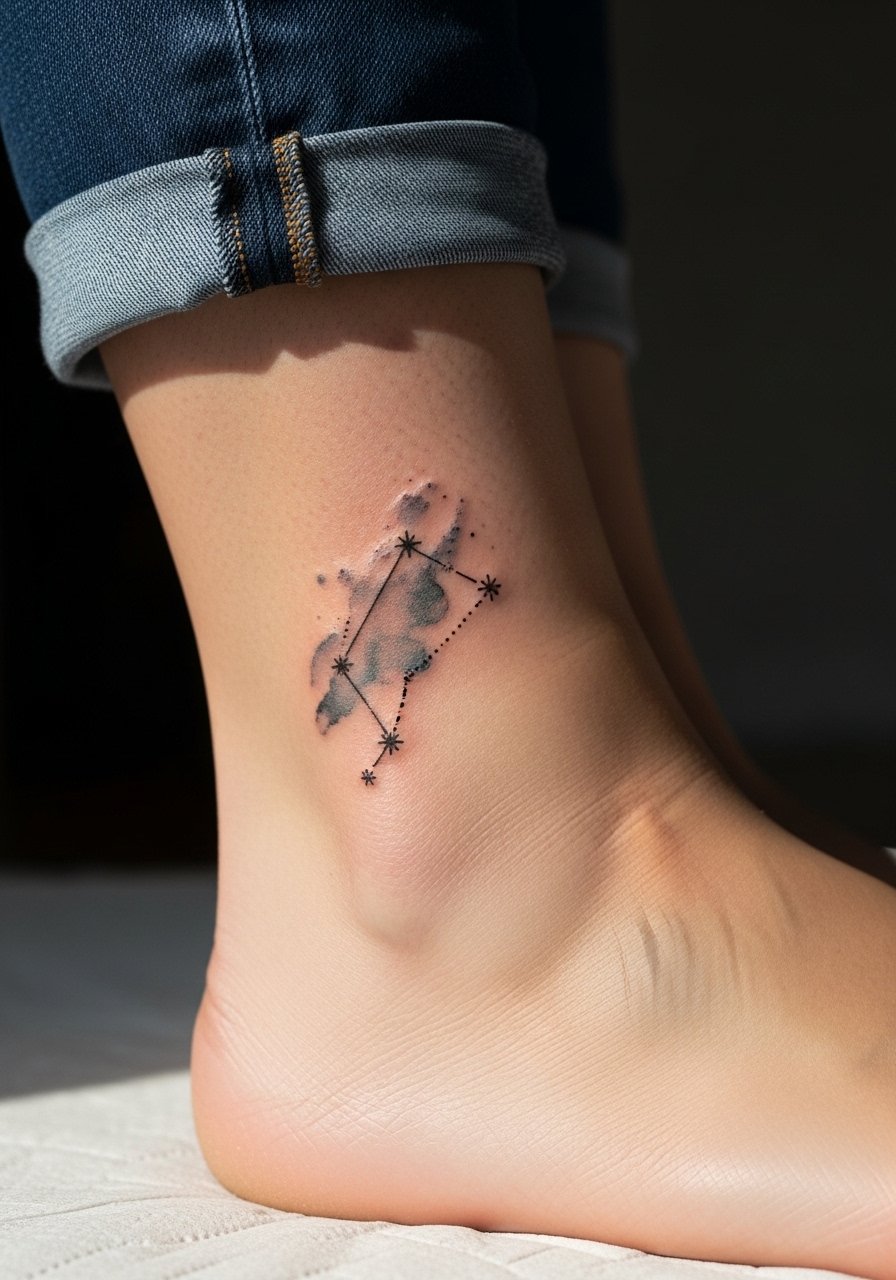
Ankle pieces face constant friction from socks and shoes, so keep washes compact and avoid large pale fills that will fade fast. I recommend asking for slightly higher saturation around star points and for dot work in the constellation using stipple shading to hold the design. Expect a short, under-an-hour session and a sharp sting during needle passes. For showing it off, pair the design with low-profile footwear and a simple strappy sandal so the ankle stays visible without rubbing. Blowout risk is low here if the artist avoids packing too many colors into a tiny space.
4. Watercolor Shoulder Cap with Stipple Shading
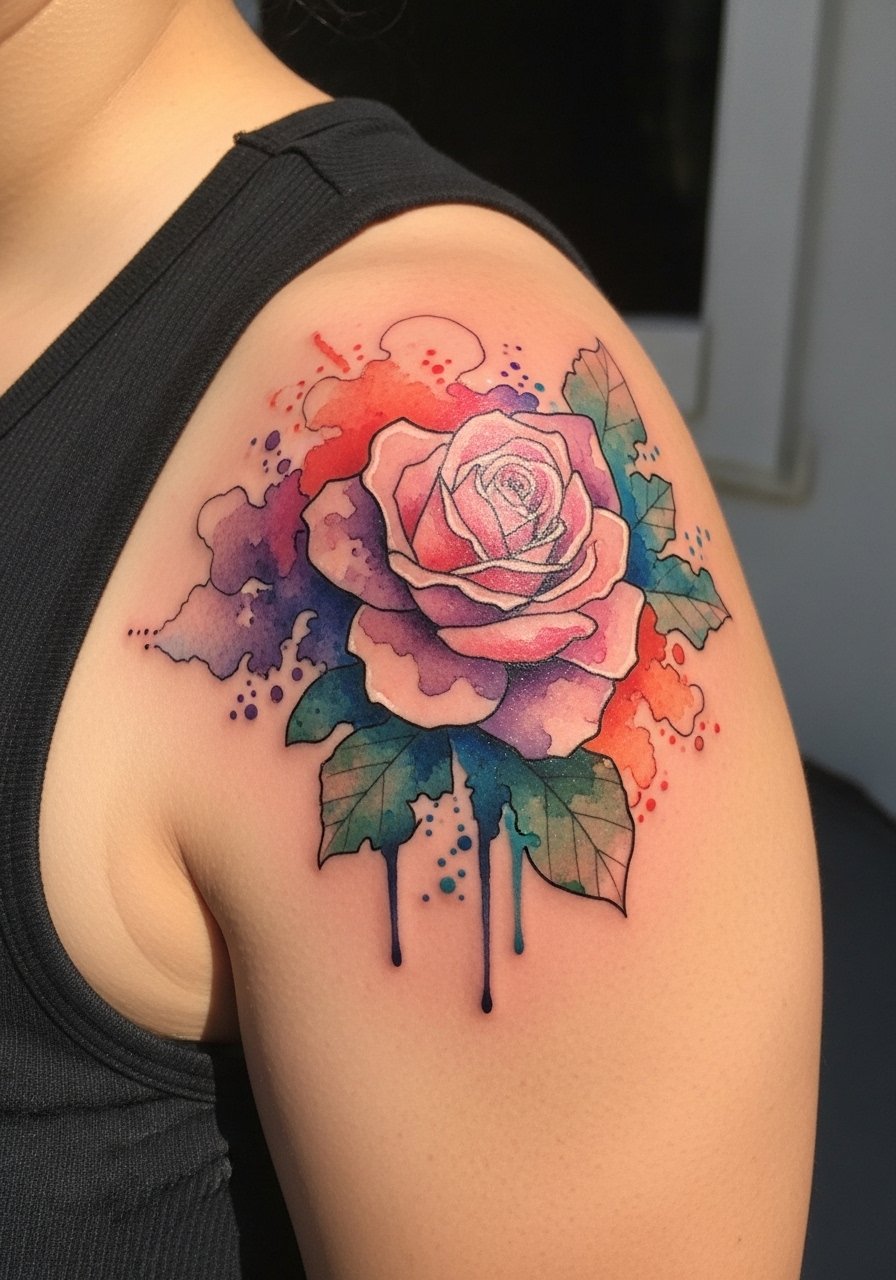
The shoulder cap is forgiving for watercolor because the skin there takes saturation reliably and it moves less than the ribcage. When you consult, request stipple shading to anchor soft washes so the tattoo retains shape as it heals. One mistake is asking for ultra-fine line detail at the very edge of a watercolor wash, which tends to feather. Expect a one to two hour session and moderate pain. For session comfort, wear a loose tank top that you can pull down on one side so the artist has full access without exposing more than necessary. The piece will usually need a light touch-up at year three to refresh lighter tones.
5. Collarbone Watercolor Script with Soft Wash
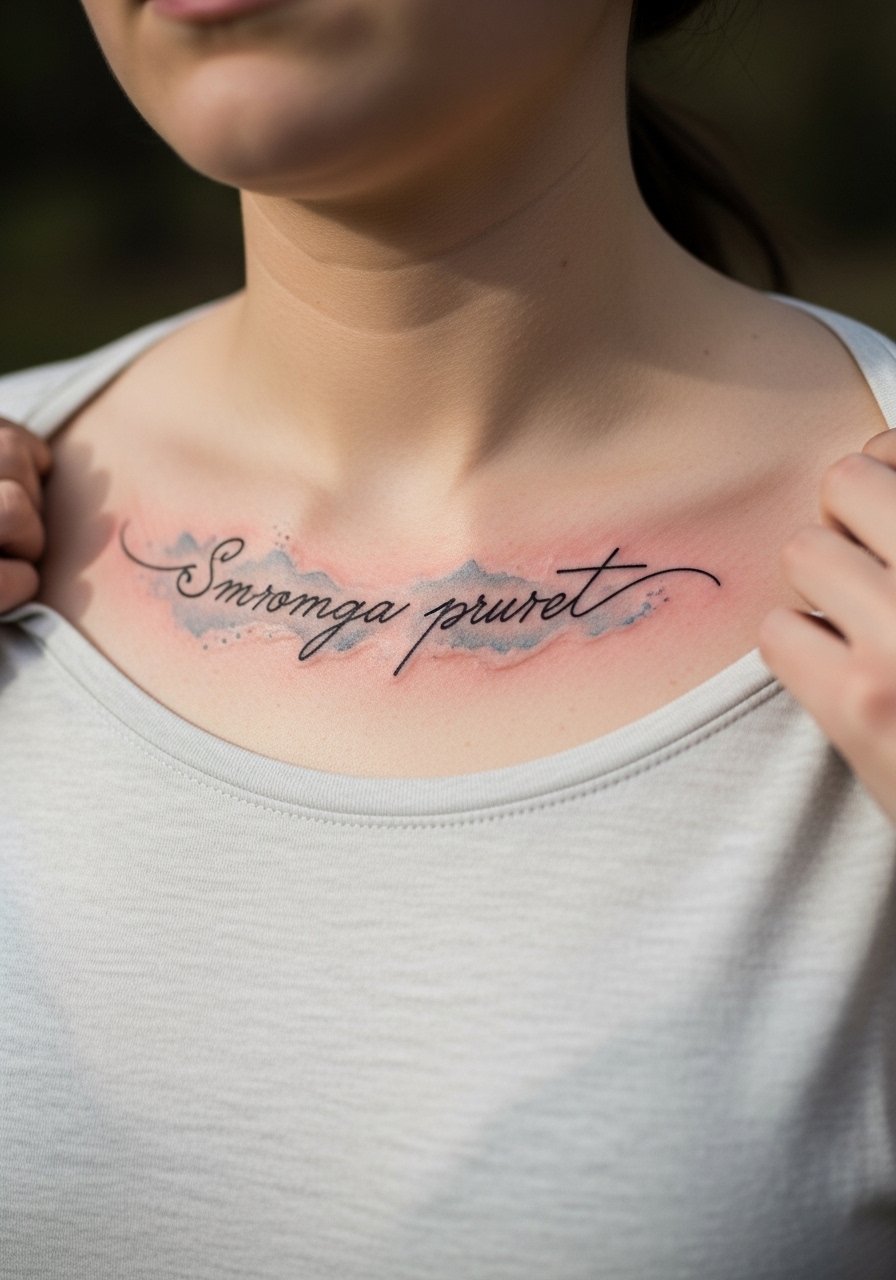
Collarbone work reads beautifully with a narrow ribbon of wash under script. Tell your artist you want the linework slightly heavier than a usual script so the letters read clearly against dark tone. Pain is moderate near the bone and sessions are often quick, under an hour for short wording. Common mistake is placing watercolor too close to the clavicle line, which creates awkward shadowing as the body moves. For show-off looks, a wide-neck shirt pulled to one side highlights the area without feeling overexposed. Expect color softening by year two and plan for a touch-up if you want to keep the wash vibrant.
6. Sternum Watercolor Mandala
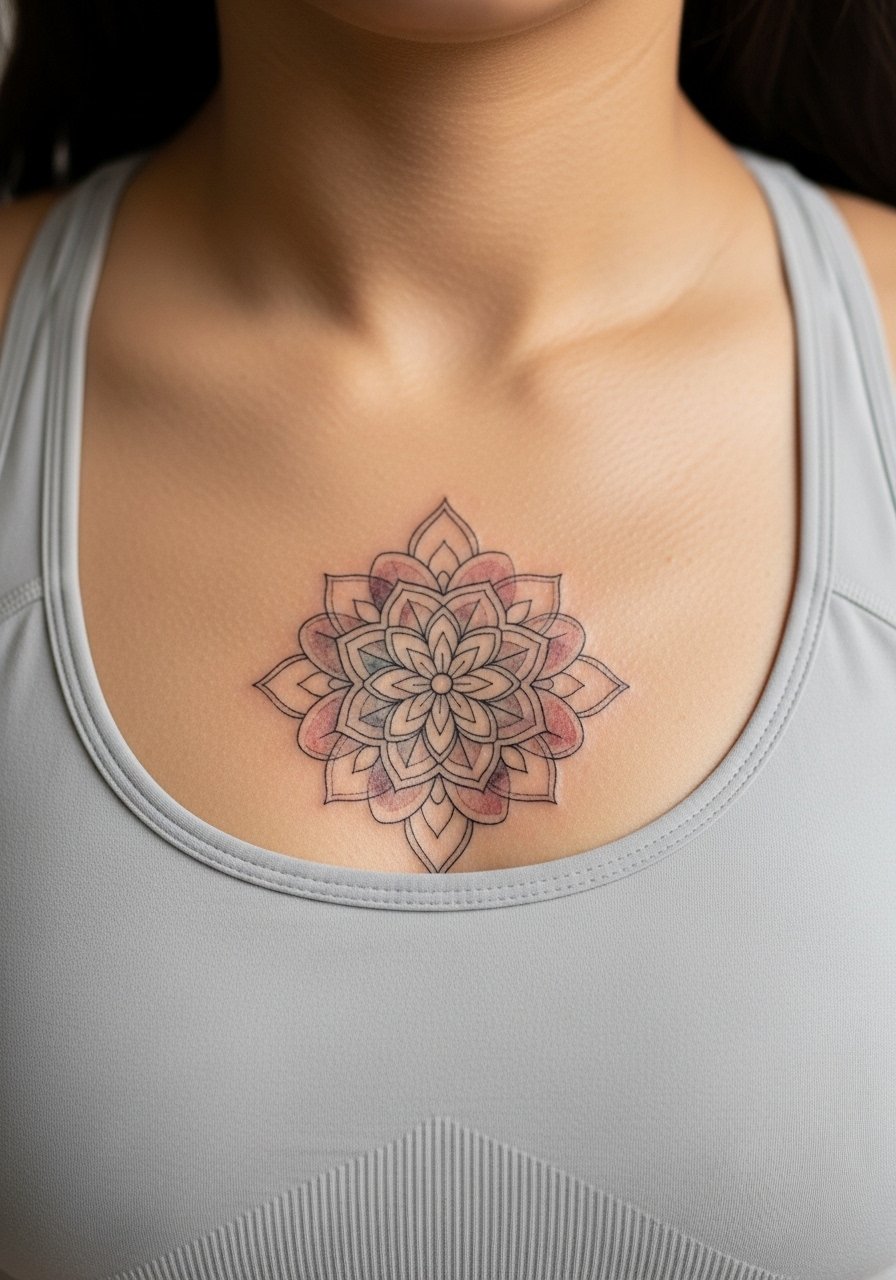
Sternum placements are sensitive and the skin there behaves differently from the forearm. Most artists will advise tighter spacing and stronger contrast so mandala geometry remains readable. There is a debate about how much delicate line to use in this zone. One camp warns that tight mandala detail on the sternum blurs quickly. The other argues that with correct depth and spacing it settles fine. Ask your artist which side they fall on and why. For the session wear, a fitted sports bra gives easy access and keeps you comfortable. Pain is high, sessions can be long, and touch-ups at year two are not uncommon for the lighter color fills.
Studio Day Picks
The pieces above include both small visible spots and more intimate torso work, so a handful of specific items smooth the session and the first week of healing.
-
Stencil transfer paper kit. Lets you preview linework placement on skin before committing, helpful for the collarbone and forearm pieces discussed above.
-
Topical numbing cream. Applied per instructions 30 to 45 minutes before can reduce sting for sensitive zones like the ribcage and sternum.
-
Thin protective film roll. Useful for small wrist and ankle tattoos that face friction from clothing in the first few days.
-
Fragrance-free gentle body wash. Cleans healing areas without irritating the delicate watercolor washes in early healing.
-
Aquaphor healing ointment. A thin layer in the first days helps lock in moisture for fine line and light color work without suffocating the skin.
7. Watercolor Back Piece with Negative Space
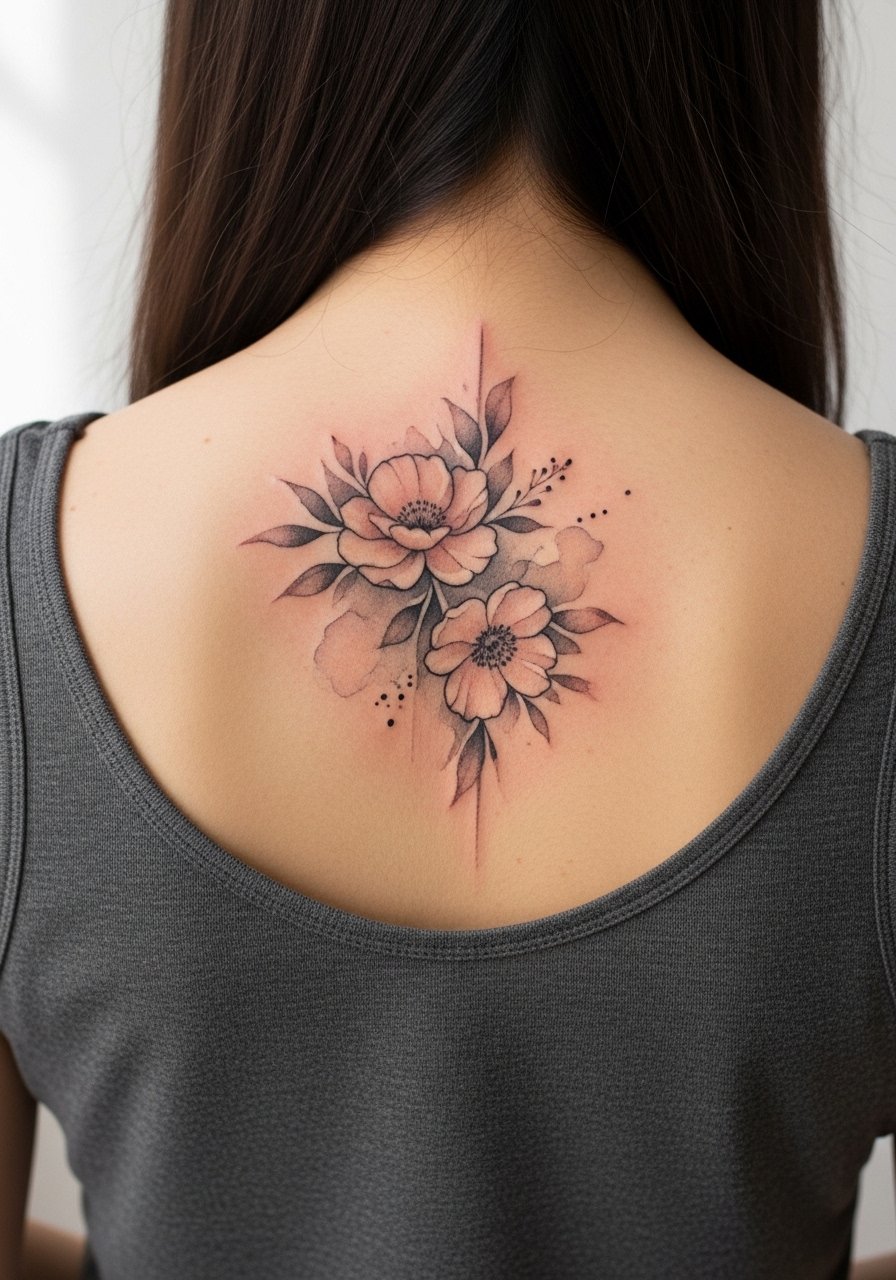
Large back work lets watercolor breathe with built-in negative space to keep washes visible on darker skin. I recommend telling the artist to plan contrast nodes around the darkest areas so the midtones read as color rather than a shadow. Sessions are multiple hours and may be split across appointments. A common error is overfilling the background with pale color, which becomes an indistinct gray after healing. For wardrobe, open-back tops or a button-back dress showcase the piece without tugging at the area during healing. Expect touch-ups for palettes with many midtones.
8. Watercolor Calf Landscape
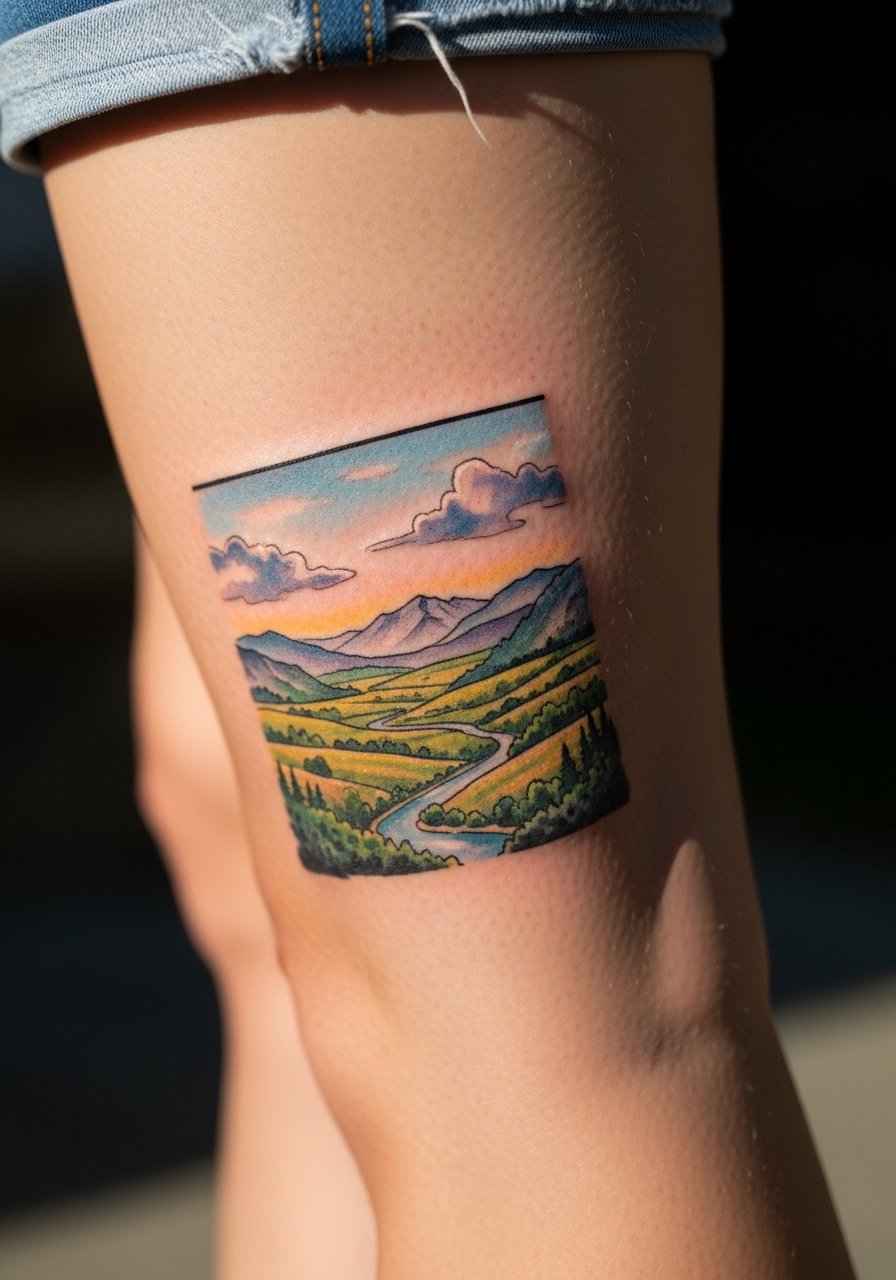
Calf pieces are low-friction and show watercolor well because the skin takes saturation evenly. Ask your artist to anchor washes with a thin band of darker pigment along the horizon so the design reads from a distance. Sessions are moderate length and pain is usually mild. One mistake is crowding the composition vertically without enough spacing, which causes the washes to merge after six months. When you want to show the design, roll shorts slightly or wear cropped trousers and a clean drawstring linen pant for casual looks. Calf work may only need a light touch-up at year three.
9. Finger Watercolor Accent
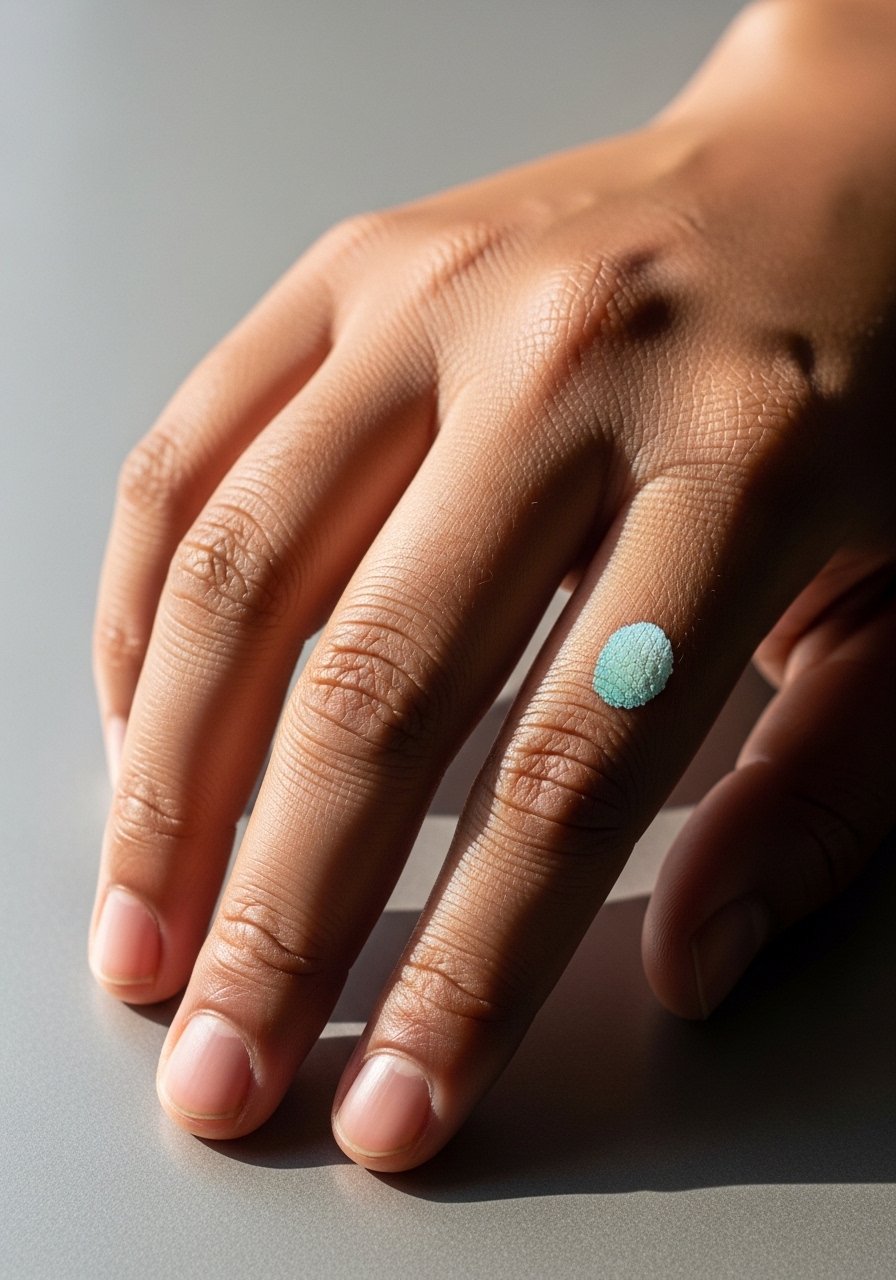
Finger tattoos face heavy wear and frequent washing, which is especially true for watercolor accents. I advise keeping color minimal and relying on crisp micro linework for the motif. Expect a short but sharp session and a higher chance of fading. Common mistake is asking for large watercolor fills on tiny finger areas. That looks pretty fresh and then disappears. For session prep, avoid hand lotions that confuse the stencil. If you want to accessorize, a thin stacking ring set can frame the finger without covering the ink. Plan on touch-ups as early as six to twelve months.
10. Watercolor Thigh Bloom
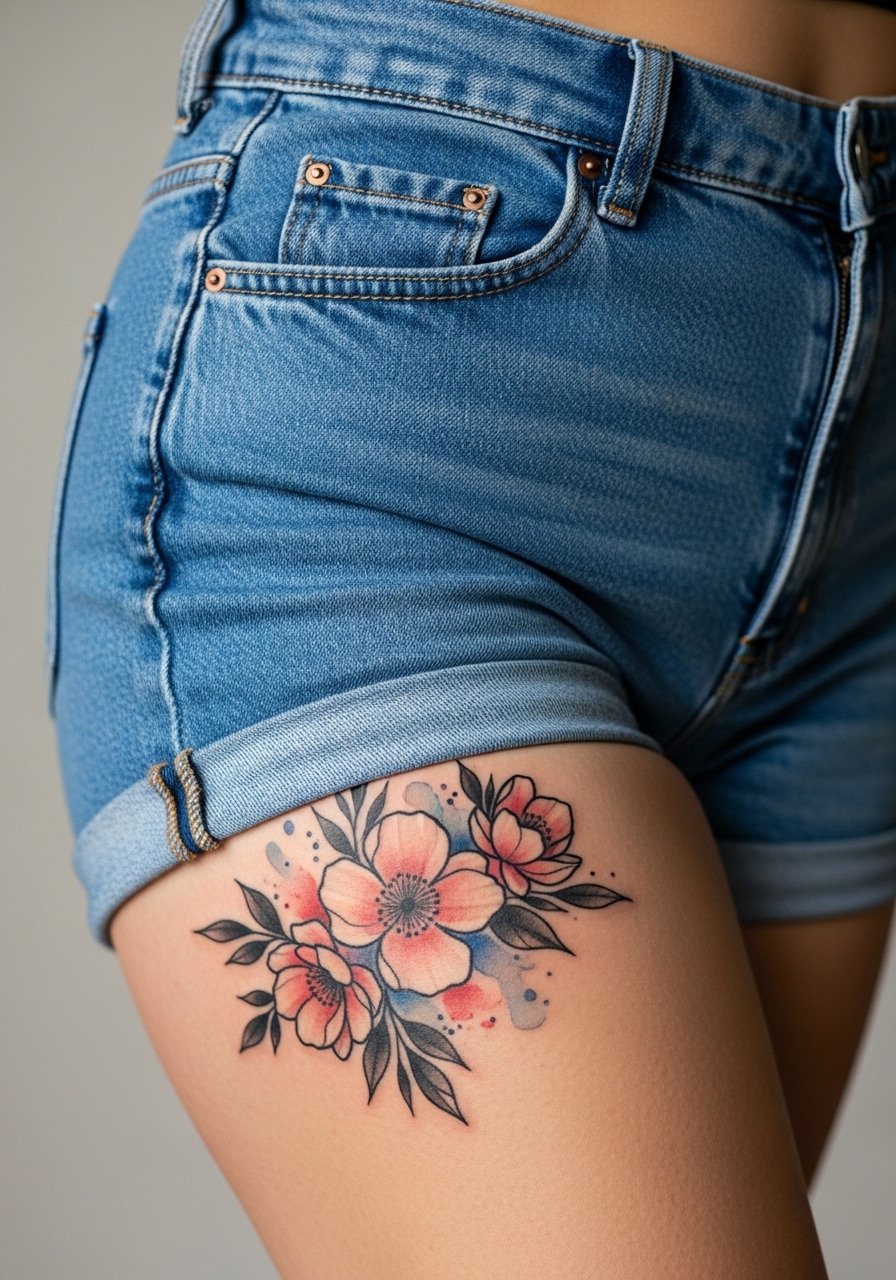
The upper thigh is a forgiving canvas for larger watercolor blooms because friction is low and the area holds saturation well. Tell your artist you want layered washes with selective linework around petals to prevent the image from softening into an indistinct mass. Sessions can be long but comfortable for many people. A common mistake is underestimating how often shorts rub the area during summer. For the session, wear high-waisted bottoms or a wrap skirt you can shift without exposing more than needed. Expect the piece to age well, with lighter shades fading before deeper tones.
11. Watercolor Neck Accent
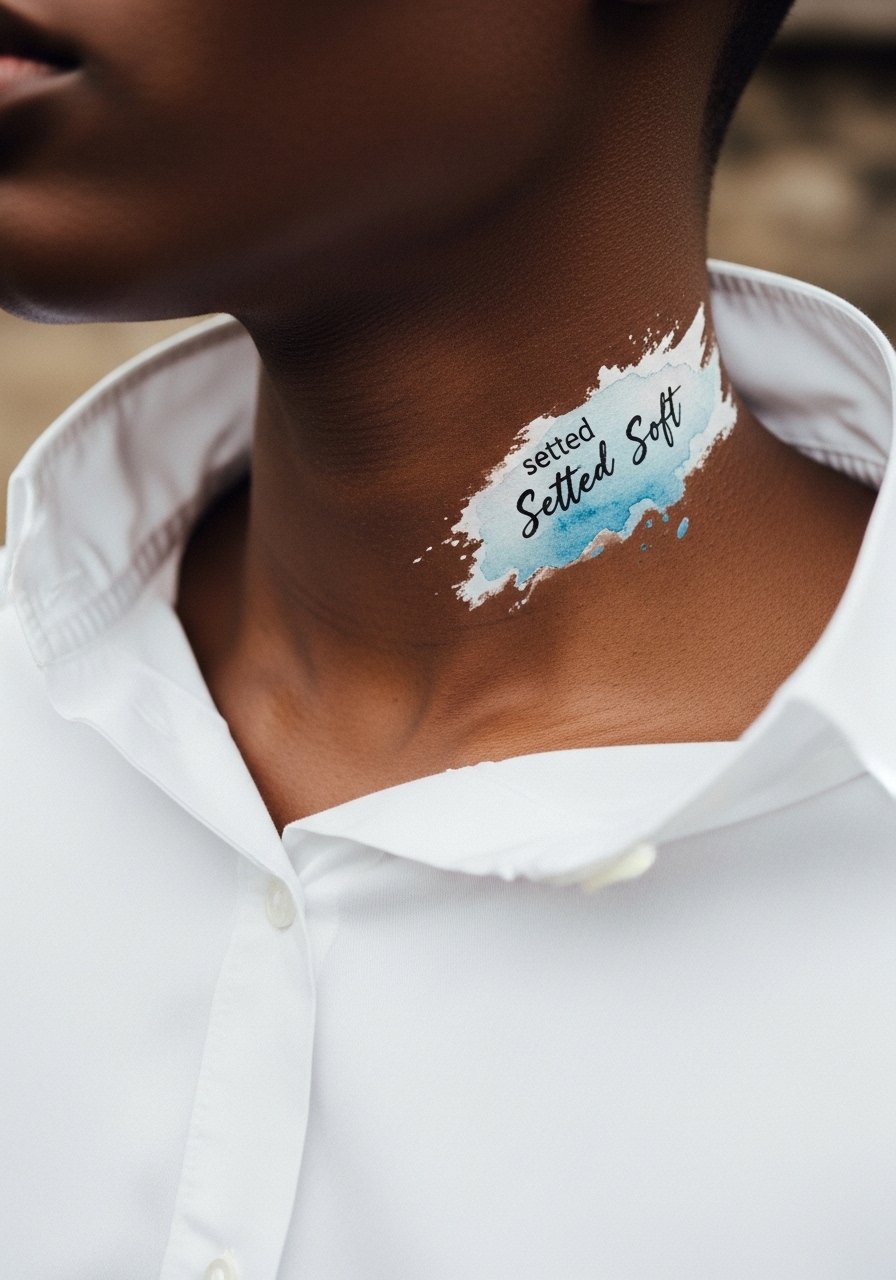
Neck tattoos are visible and can carry professional considerations, so think through placement and size. Watercolor on the neck requires confident linework to prevent midtones from reading as bruising. Pain is moderate and sessions are short for small accents. Ask your artist about spacing and how they handle saturation near thinner skin zones. A frequent mistake is placing too much pale wash against dark tone without a dark anchor. For showing it off, a thin chain pendant necklace can sit above the wash without competing for attention. Expect touch-ups within a couple of years for lighter washes.
12. Watercolor Sleeve Accent with Blackwork Anchors
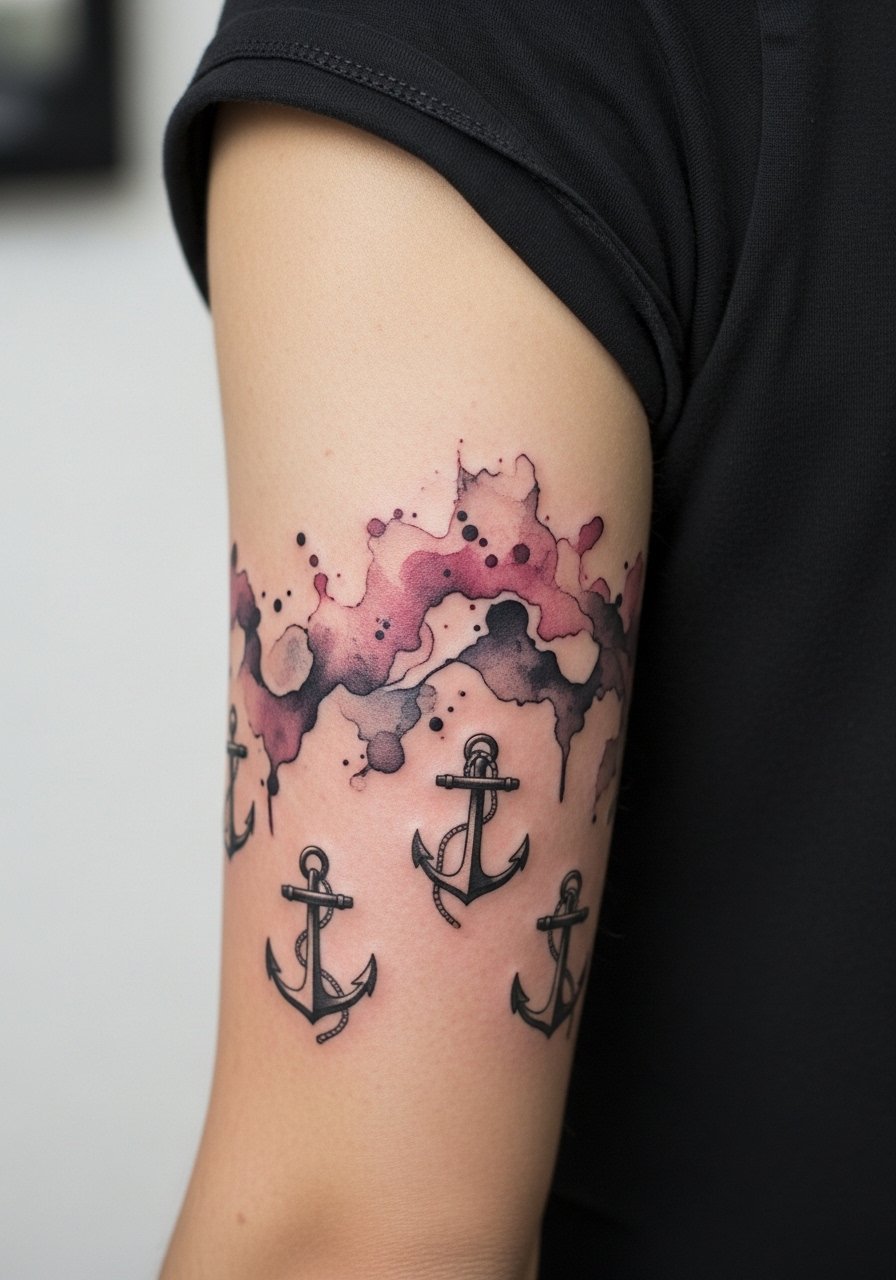
Combining watercolor with selective blackwork anchors helps maintain visual structure as colors soften. When you consult, request placement of black anchors in high-contrast zones so as the midtones fade they still read as form. Sessions often take several appointments depending on length. A big mistake is asking for continuous pale washes without these anchors, which can blur after repeated sun exposure. For casual looks, roll up sleeves on a short-sleeve linen shirt to let the sleeve peek out without constant sun. Touch-ups for sleeves are best planned for three to five years.
13. Watercolor Foot Outline
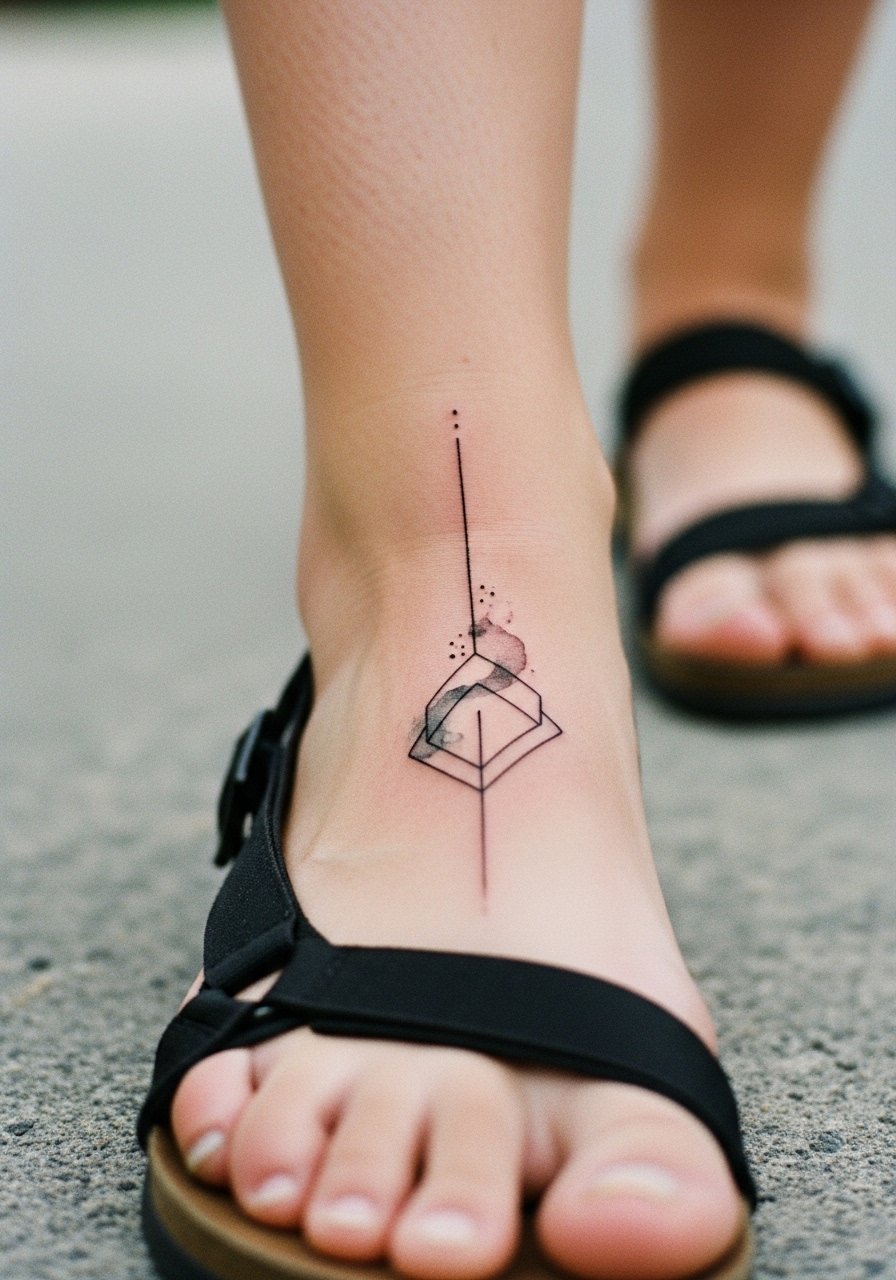
Foot tattoos get heavy wear and are exposed to sun and footwear friction. Keep watercolor fills restrained and favor bold outline or small washes that can weather better. The session is short but the area is sensitive. A common error is overspreading pale color across the dorsum, which fades quickly and looks uneven. For recovery, wear open-toed shoes and avoid tight sneakers until the area heals. Plan for early touch-ups and accept that the foot often needs maintenance more frequently than arm work.
14. Watercolor Hand Back Motif
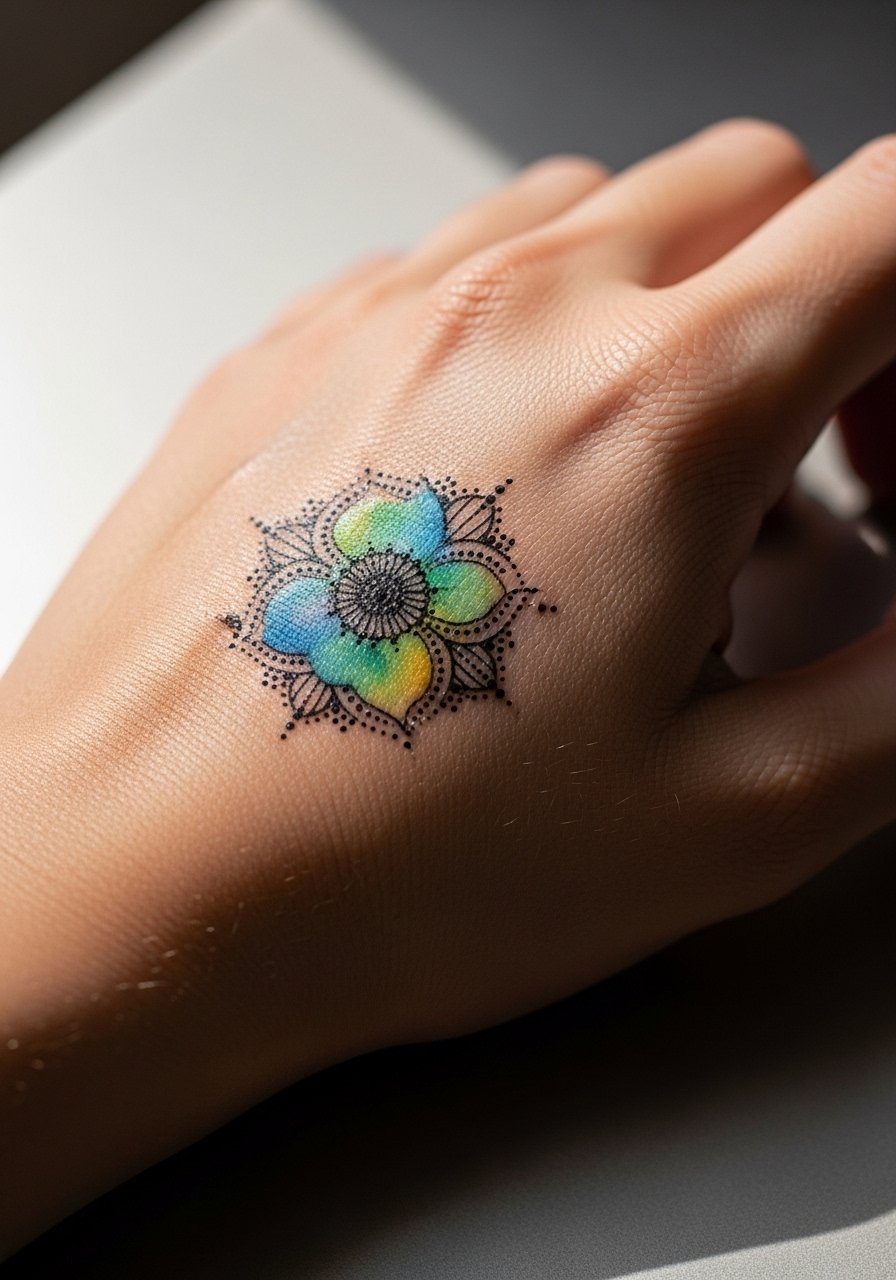
Back-of-hand watercolor carries high visibility and friction from daily tasks. Ask your artist to use crisp dot work and compact washes so the motif keeps its shape. Pain is high and heal time can be rocky if you work with your hands. One mistake is choosing washes that require large areas of unbroken skin; that fades first. For showing the design without overexposure, stack light bracelets or wear a minimal cuff bracelet that draws the eye without covering the tattoo. Expect touch-ups at the one-year mark for many hand pieces.
15. Watercolor Inner Bicep Portrait Accent
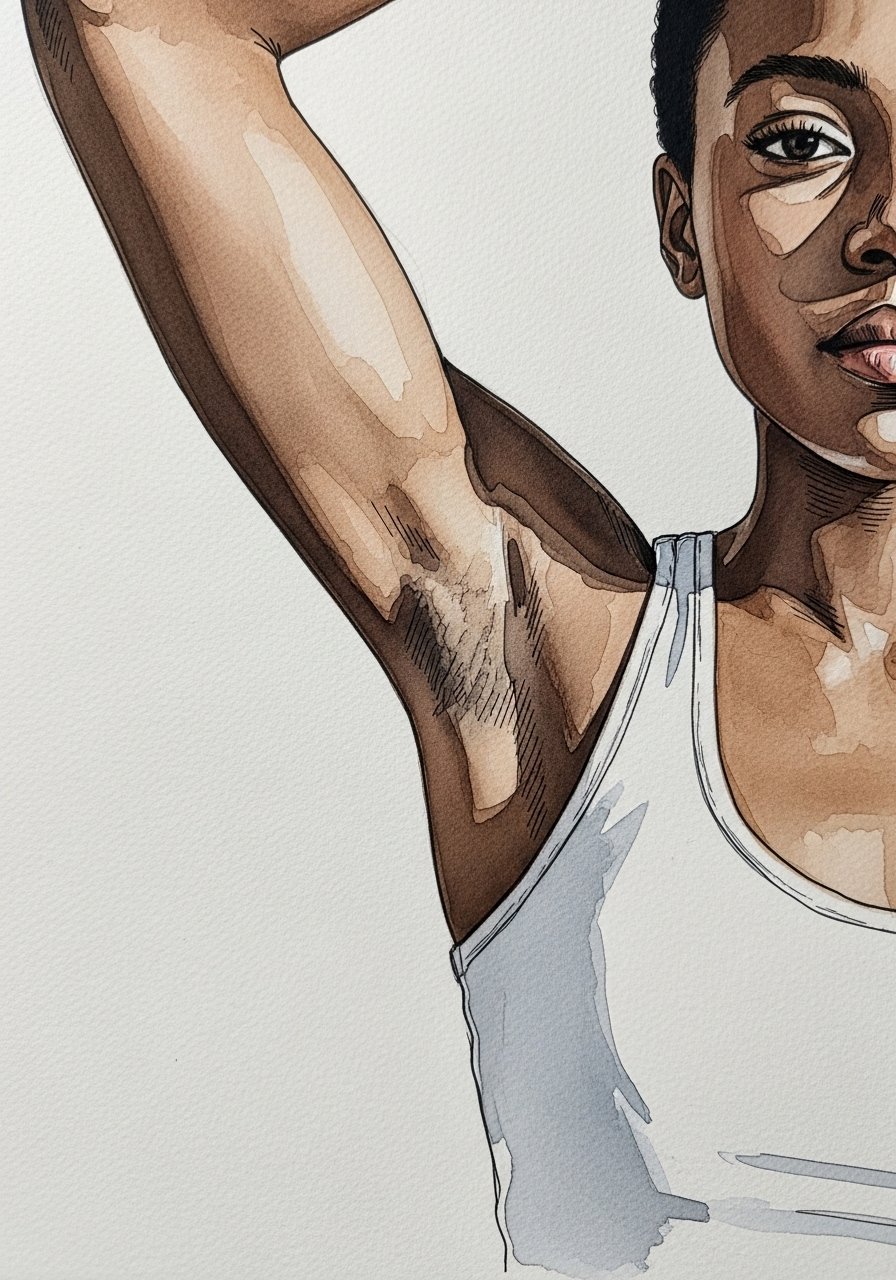
Inner bicep placements are softer and can hide detail well when needed. For portrait accents, request higher contrast around facial features so the subject reads against darker tones. Pain is moderate and session time varies with size. A frequent mistake is asking for tiny facial detail that will merge as flesh settles. For session comfort, wear a loose tank top so the arm can be raised without exposing the torso. Touch-ups may be needed at year two for midtones and soft edges.
16. Watercolor Collarbone Chain with Tiny Gems
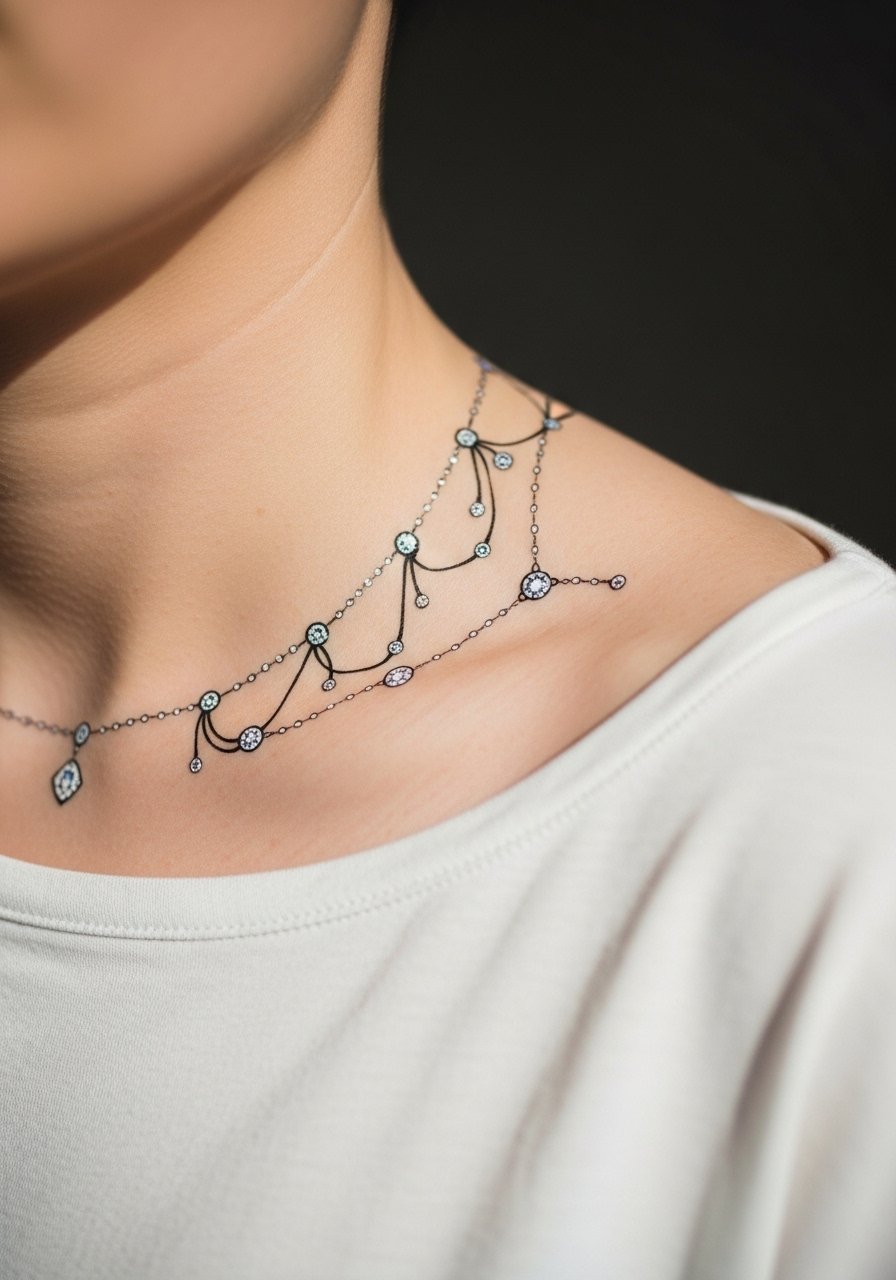
A delicate chain with tiny watercolor gems above the collarbone reads well when the gems are slightly oversaturated so they do not disappear into skin tone. Tell your artist to favor small, darker centers with pale halos rather than broad pale blobs. Sessions are quick and pain is low to moderate. For showing the piece, a thin chain pendant necklace layered above the tattoo complements without competing. Expect the halos to soften by year two and plan for a touch-up if you want to maintain crisp color.
17. Watercolor Spine Column with Negative Space
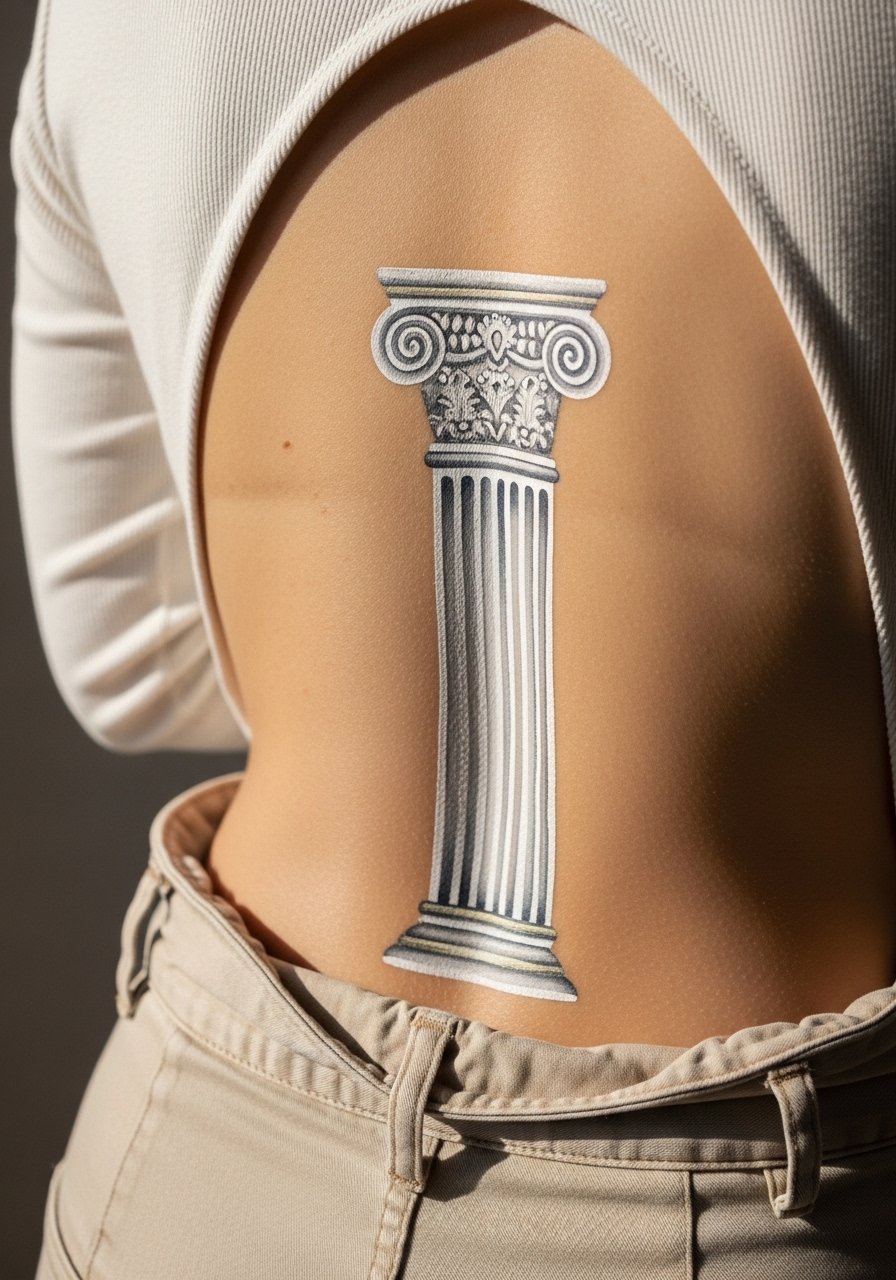
Spine pieces read strongly when negative space lets color sit like a ribbon. Ask your artist to map out vertical spacing carefully so the washes do not merge, especially in motion. Sessions can be lengthy and pain varies with proximity to the bone. A common mistake is compressing elements too tightly down the vertebrae, which blurs movement lines over time. For session wear, choose an open-back top or a shirt you can shift without removing entirely. Touch-ups are often requested after two to three years for midtone refresh.
Frequently Asked Questions
Q: Do watercolor tattoos show up on dark skin, or do the colors disappear?
A: Watercolor can read beautifully on dark skin when the artist builds contrast and uses slightly stronger saturation in anchor zones. I have seen pale washes lose punch when they are not paired with darker linework or points of saturation. Ask for test patches or examples the artist has done on similar skin tones.
Q: How often will I need touch-ups for watercolor pieces on the ribcage or sternum?
A: Expect the sternum and ribcage to need touch-ups sooner than the forearm because of skin movement and thinner tissue. From what I have seen, minor refreshes at year two are common for lighter midtones, but it depends on sun exposure and how the wash was packed at the start.
Q: Are watercolor hand and finger tattoos worth it given their fading?
A: They can be if you accept maintenance. Fingers and hands will fade faster because of washing and friction. Keep motifs small, ask for anchor points in the design, and plan touch-ups at six to twelve months if you want the color to stay crisp. Minimal designs with dot work hold up best.
Q: What should I wear to a session for a large thigh or back watercolor piece?
A: Wear loose, comfortable clothing that you can move or shift without dislodging the stencil. For thigh work a high-waisted skirt or wrap skirt makes access easy. For back sessions, a button-down you can pull aside helps the artist without exposing more than necessary.
Q: Is it disrespectful to use traditional cultural motifs with watercolor on dark skin?
A: Cultural origin matters. If a design traces to a specific cultural or religious tradition, mention that to your artist and discuss respectful adaptations rather than direct replicas. Many choose to reinterpret motifs with personal meaning while avoiding obvious appropriation.
Q: Will sun exposure ruin watercolor faster than traditional blackwork?
A: Yes, UV exposure fades color faster than black pigment. From what I have gathered, watercolor pieces need more diligent sunscreen once healed. Leaving a watercolor piece unprotected will reduce saturation noticeably over a few seasons.
Q: How do I find artists who understand watercolor on dark skin without naming people?
A: Use local discovery paths like hashtag searches with your city plus "watercolor tattoo," directory filters for portfolios that show healed work on darker tones, and community threads where people post recent healed photos. Ask to see healed pictures of similar skin tones during consultation.