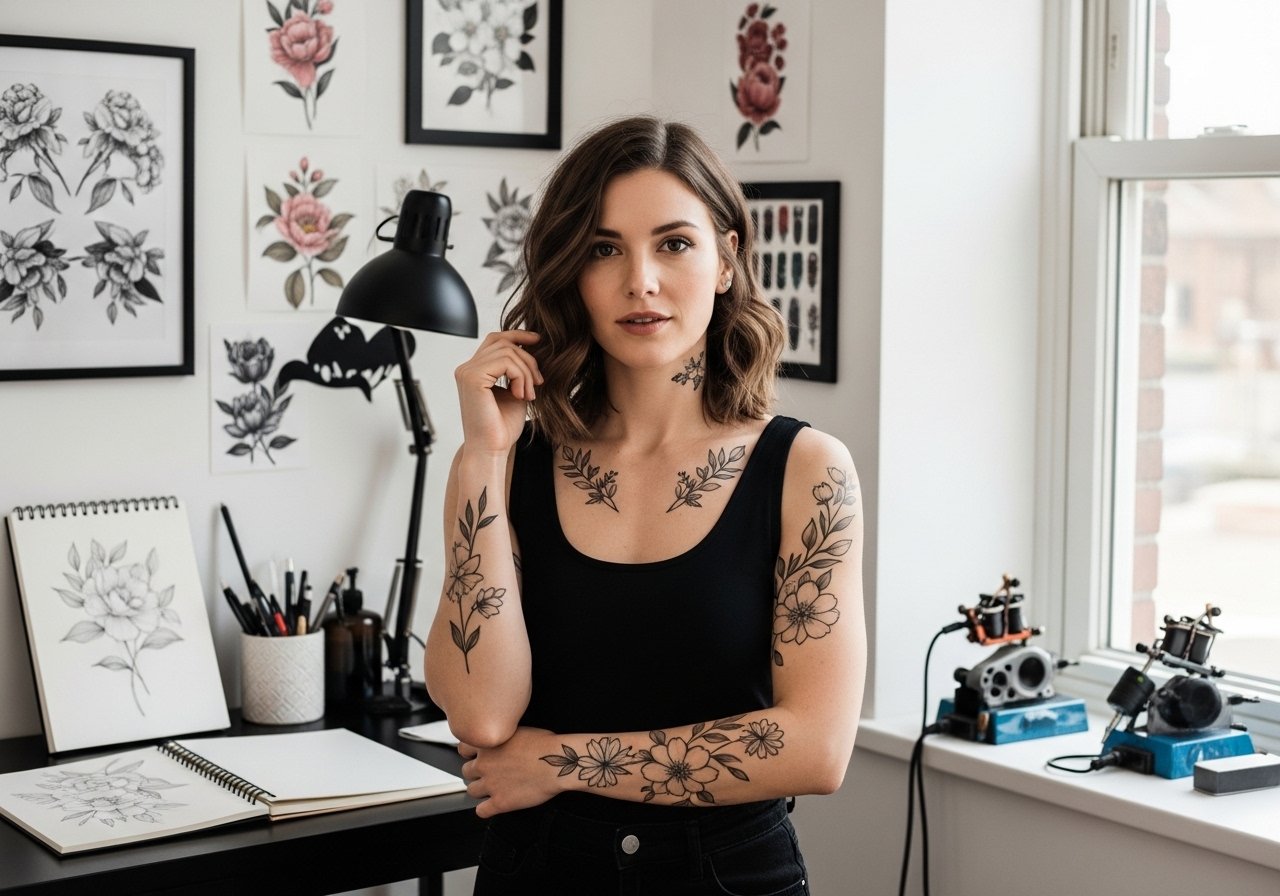
Fine line watercolor and bold wash techniques meet samurai iconography in ways that can read delicate or thunderous depending on placement and saturation. Expect a piece that looks painterly fresh and then changes a lot as it heals. Pick your placement with aging in mind, tell your artist whether you want crisp linework or washed pigment, and one careful consultation will save you a lifetime of touch-ups. Below are 27 samurai tattoo directions to spark the exact conversation you should have in the chair.
1. Mini Samurai Portrait on Inner Forearm
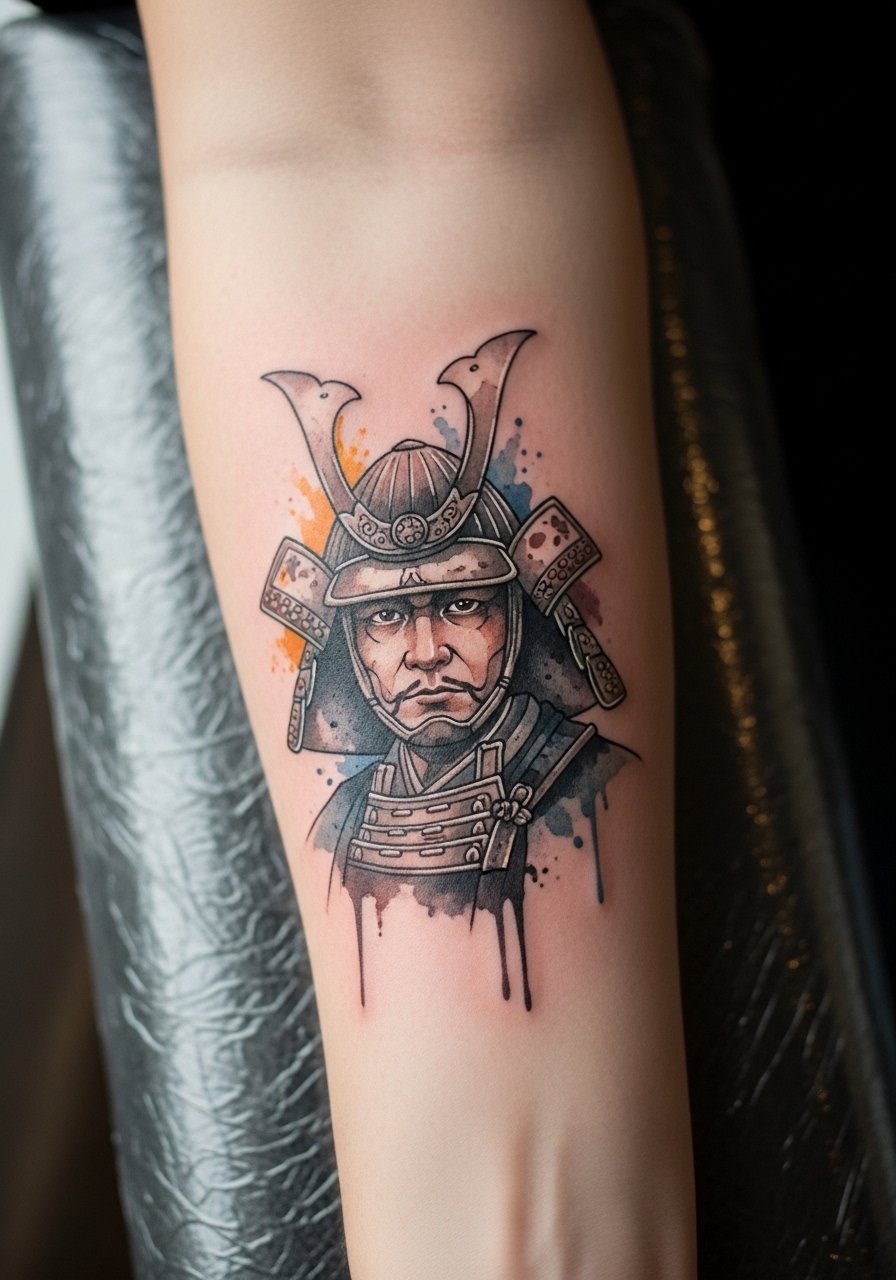
I recommend this when you want samurai detail in a compact, everyday spot. Fair warning, inner forearm work is visible and gets a lot of sun, so expect more gradual fading unless you add deliberate shading and denser saturation near the focal lines. Tell your artist you want slightly heavier linework around the face and looser watercolor fills in the armor. Common mistakes include asking for ultra-fine detail at too-small a scale, which blurs after a year. Session pain is usually mild to moderate and touch-ups at year three are common. Pair with a rolled-sleeve linen shirt for showing it off.
2. Stacked Wrist Samurai Band
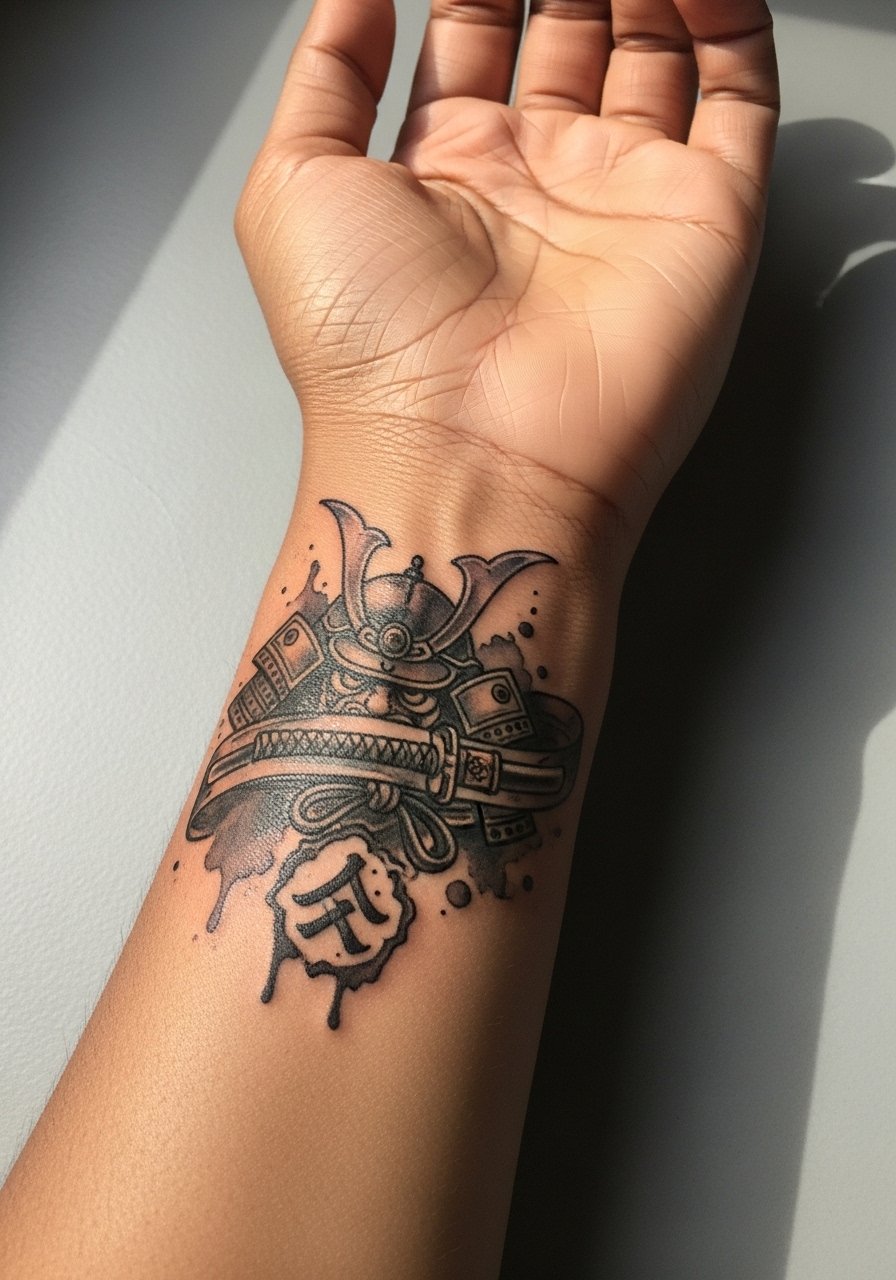
The wrist band reads like jewelry and suits someone who wants readable detail in a small band. Pain on the wrist is higher than the forearm because of thin skin and bone proximity. In consultation, ask for slightly increased spacing between motifs so the color wash can settle without merging. A common version that ages poorly is a high-density wash with no negative space. That tends to bleed into a muddy ring by year two. Expect a short session but plan for touch-up of linework sooner than larger pieces. Hand tattoos can affect work options, so think career before booking.
3. Shoulder Samurai with Sumi-Style Splash
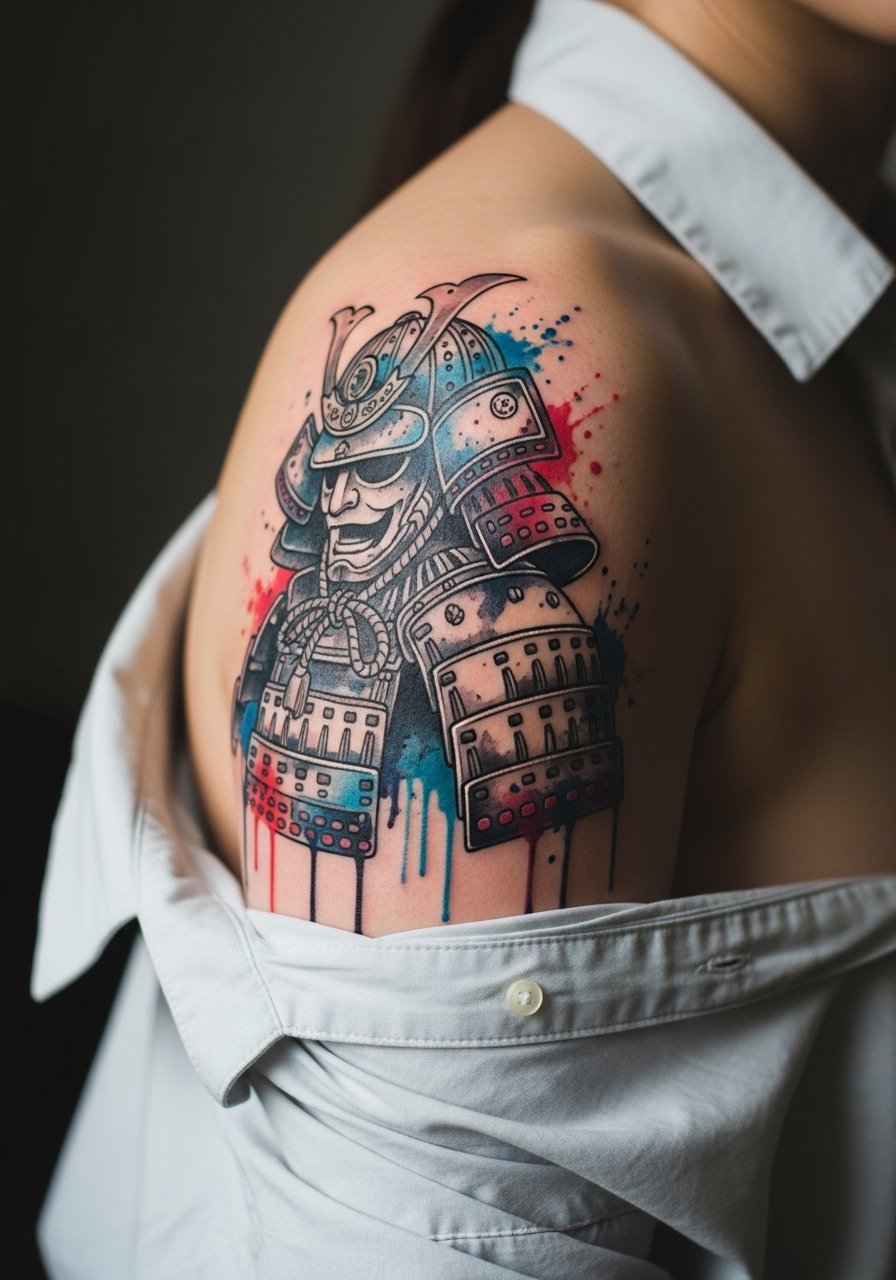
There is something about shoulder placement that makes watercolor breathe. The skin here accepts saturation without as much blowout risk as the forearm. Tell your artist you want sumi-style black wash behind the figure to anchor the colors. The big mistake is asking for a too-dense watercolor fill without bold anchor lines. That will fade into an indistinct blob over years. Sessions are usually comfortable and you can expect the piece to age gracefully if you keep UV exposure low. For the studio wear, bring a loose button-down shirt you can pull aside.
4. Thigh-Length Samurai Scene
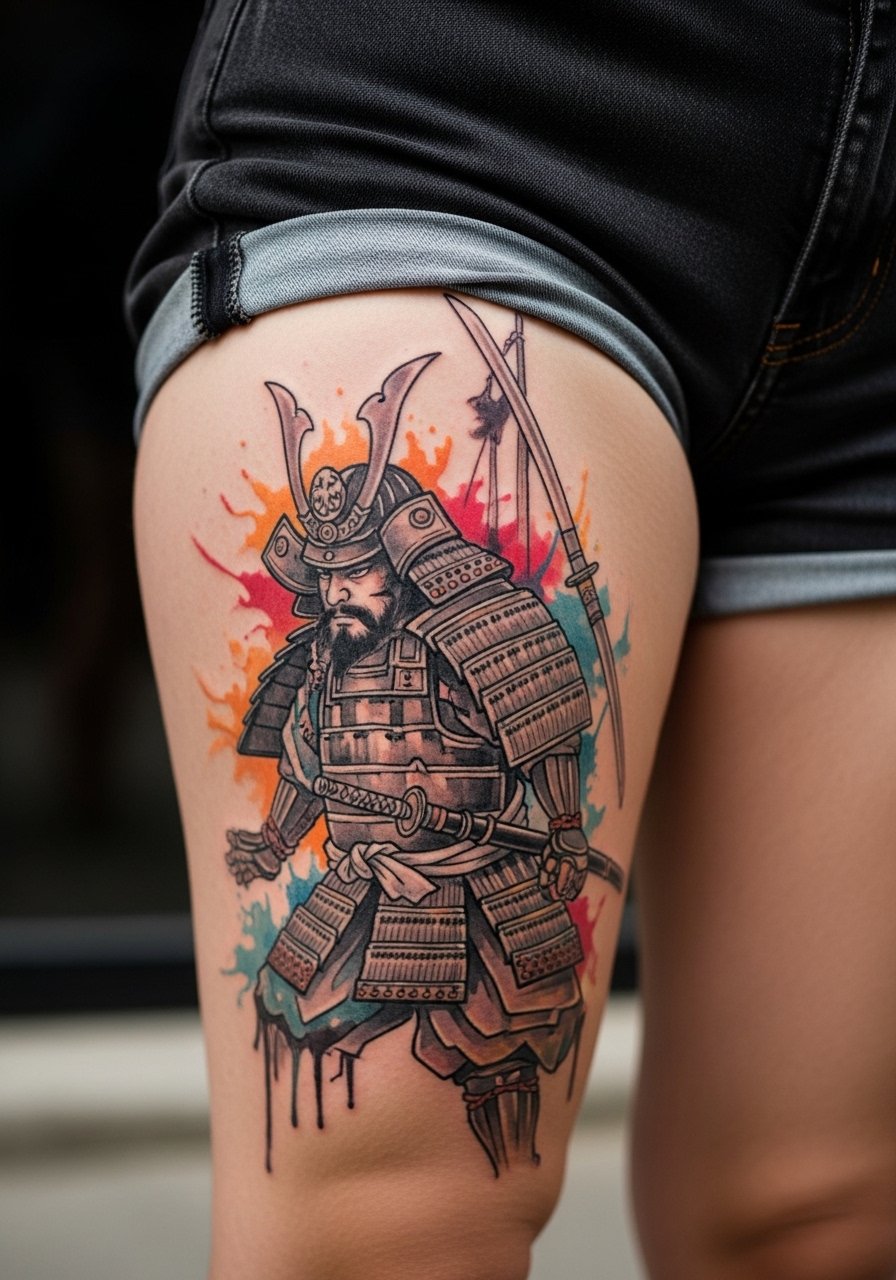
A larger thigh piece lets you combine background landscape with a samurai figure. The thigh tolerates long sessions and usually heals with less visible blowout than thin-skinned areas. In consultation, specify where you want negative space so the watercolor gradients look intentional rather than accidental. A common early mistake is compressing the scene into too-small an area. That robs the composition of air and forces heavier saturation that ages poorly. Session feel is low to moderate pain and multiple sittings may be necessary. Wear loose shorts like a drawstring linen short to the appointment.
5. Calf Samurai with Misted Color

Calf placements show motion well and the vertical shape suits a standing samurai. I've seen calf pieces keep vibrancy longer because they are sheltered from daily friction and sunlight. Tell your artist to use stipple shading in shadow areas and a thin outline to control the watercolor bleed. Mistakes often come from overly soft edges with no anchor, which can make the figure read flat after a couple of years. Sessions can be longer but tolerable. For after the session, a looser pant leg helps; bring pants you can roll up like relaxed linen joggers.
6. Collarbone Samurai Crest
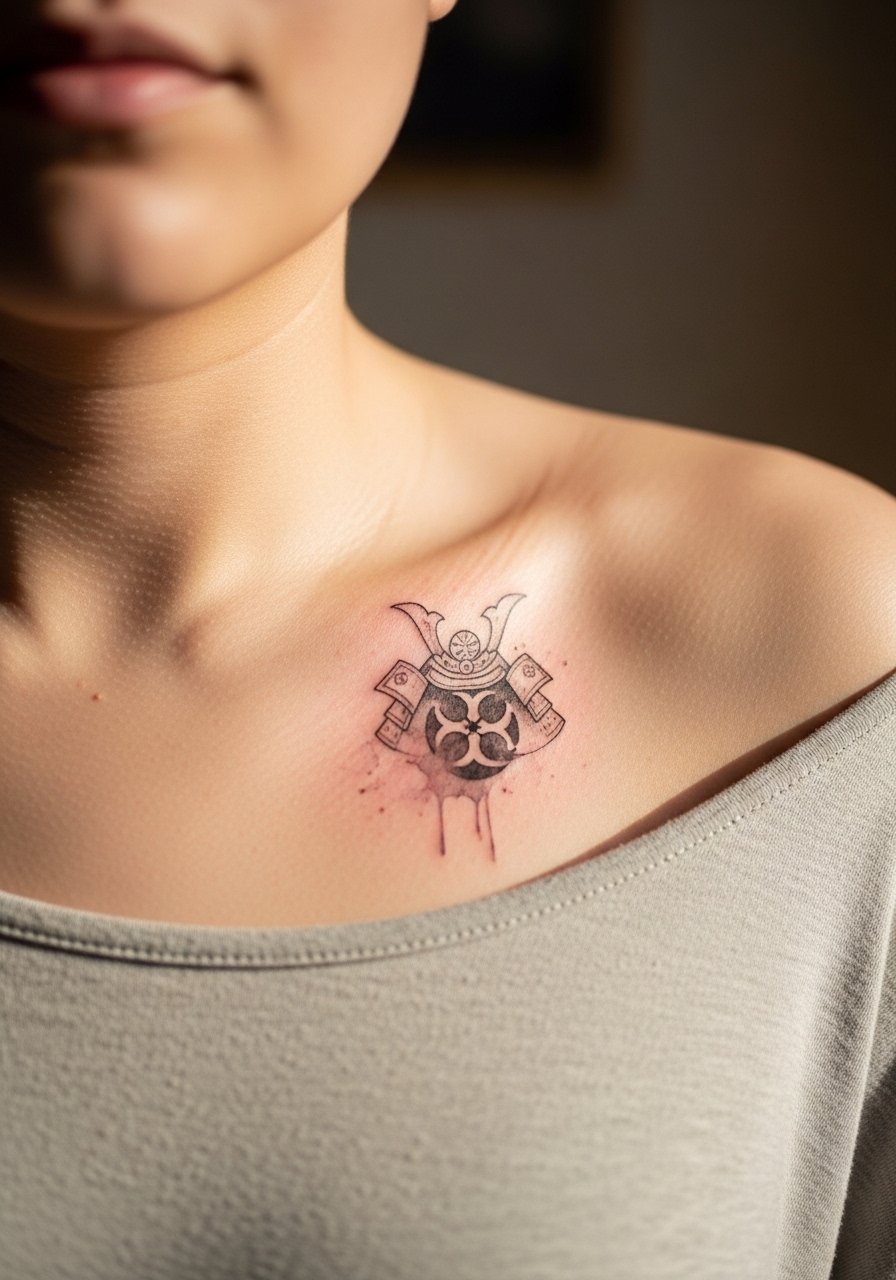
Collarbone pieces are high-impact and flirt with career visibility concerns for some people. Pain is moderate at the bone line. For a watercolor samurai crest, ask for bolder anchors where the piece meets the collarbone so it holds up against skin movement. A common mistake is getting the crest too low or too central, which makes it hard to style. Expect the color wash to soften by year two and plan for a touch-up if you want sharp contrast preserved. Pair this with an open-neck blouse when you want it visible.
7. Miniaturized Samurai on the Ankle
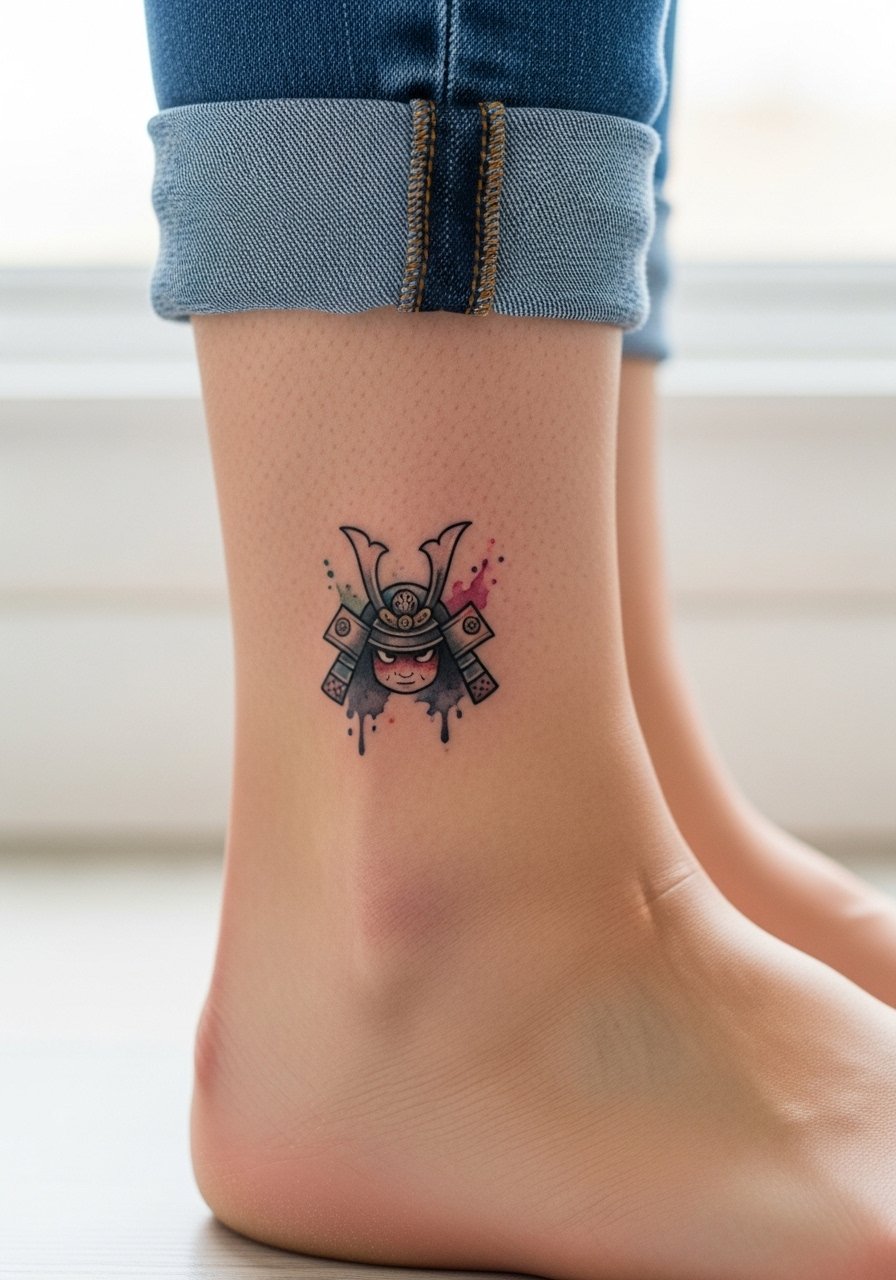
Ankle samurai pieces are compact and subtle. I often see them fade faster due to footwear friction and frequent washing. Talk to your artist about increasing lineweight on structural elements so the silhouette remains readable. The mistake is asking for too much fine detail at a tiny scale. Pain is moderate and sessions are short. For styling, sandals or cropped pants highlight the piece. Consider sandals with a slim strap that leaves the ankle exposed.
8. Full Sleeve Samurai Narrative
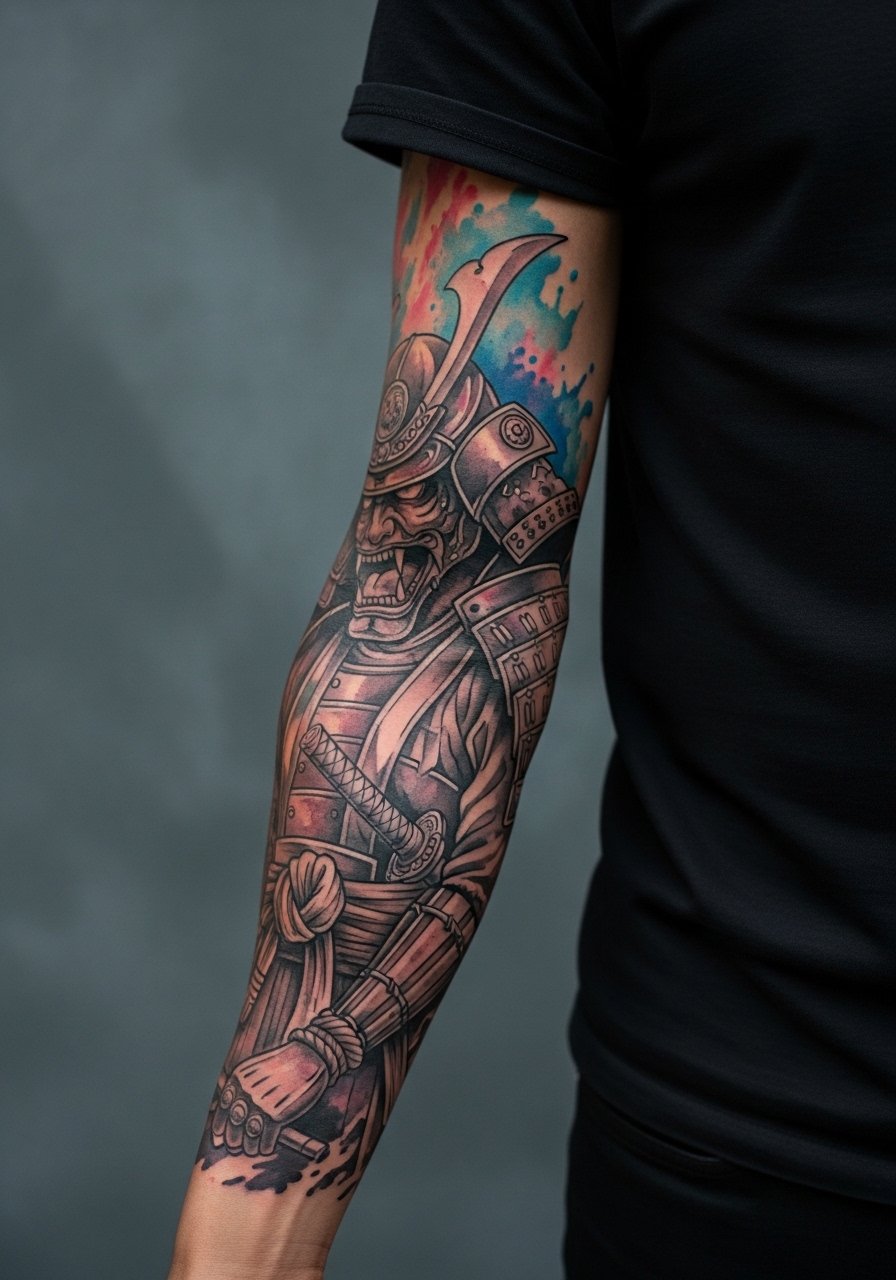
A sleeve is where watercolor samurai work can become a narrative. If you want elements that age well, anchor major figures with heavier linework and use wash transitions for background movement. The common mistake is packing in small motifs without breathing room. That leads to mudding after a few years. Expect multiple long sessions and plan consults for flow across the elbow where movement shifts pigment. Wear a short-sleeve button shirt to the appointment so the artist can work from shoulder to wrist.
9. Back Piece: Samurai in Storm
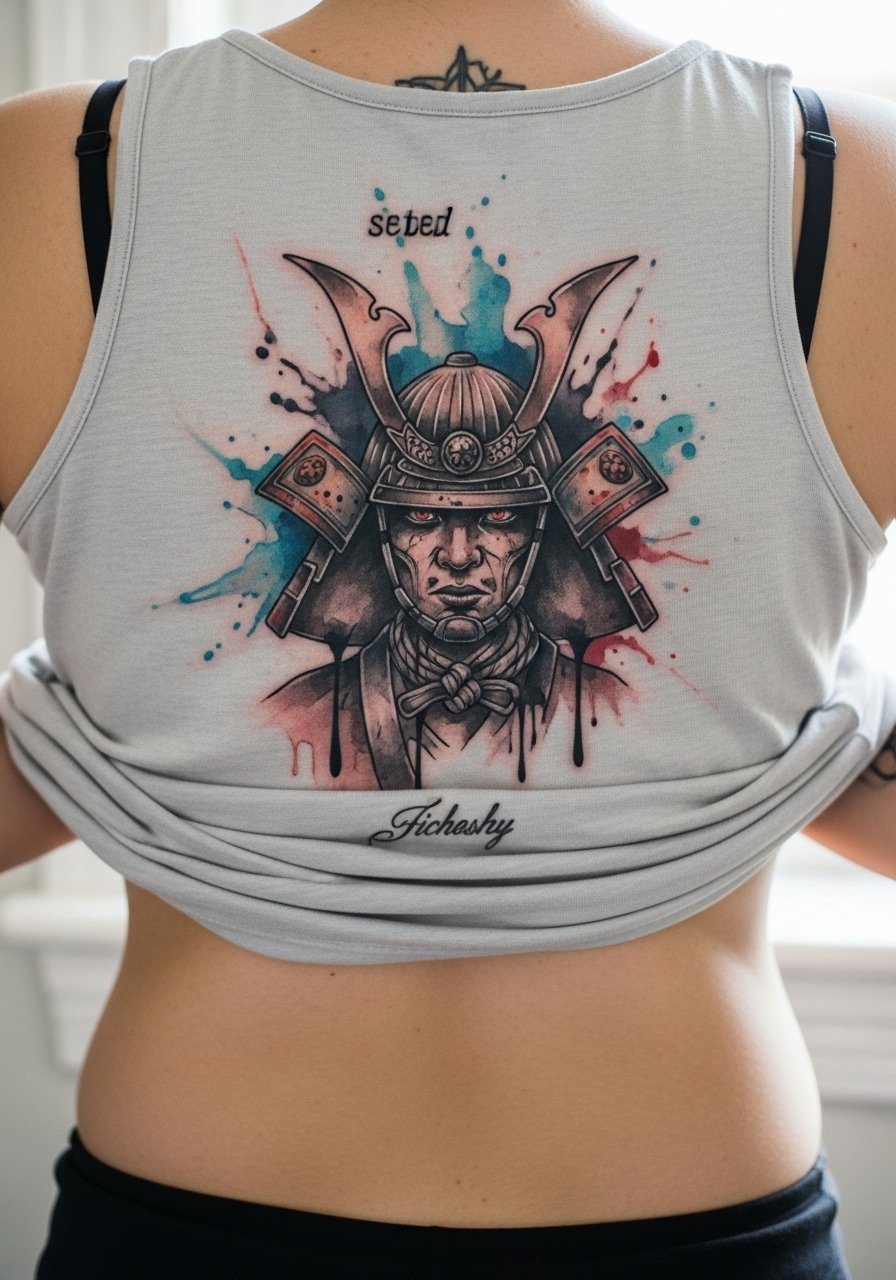
Large back pieces let the watercolor technique breathe and include environmental elements like rain or wind. In consultation, map the composition with the artist so the samurai sits with the shoulder blades rather than on top of them. The main mistake is asking for too many tiny details given the canvas. Sessions are long and usually split into multiple days. For touch-up rhythm, large washes may need color refresh after five years depending on sun exposure and garment friction.
10. Sternum Samurai Emblem
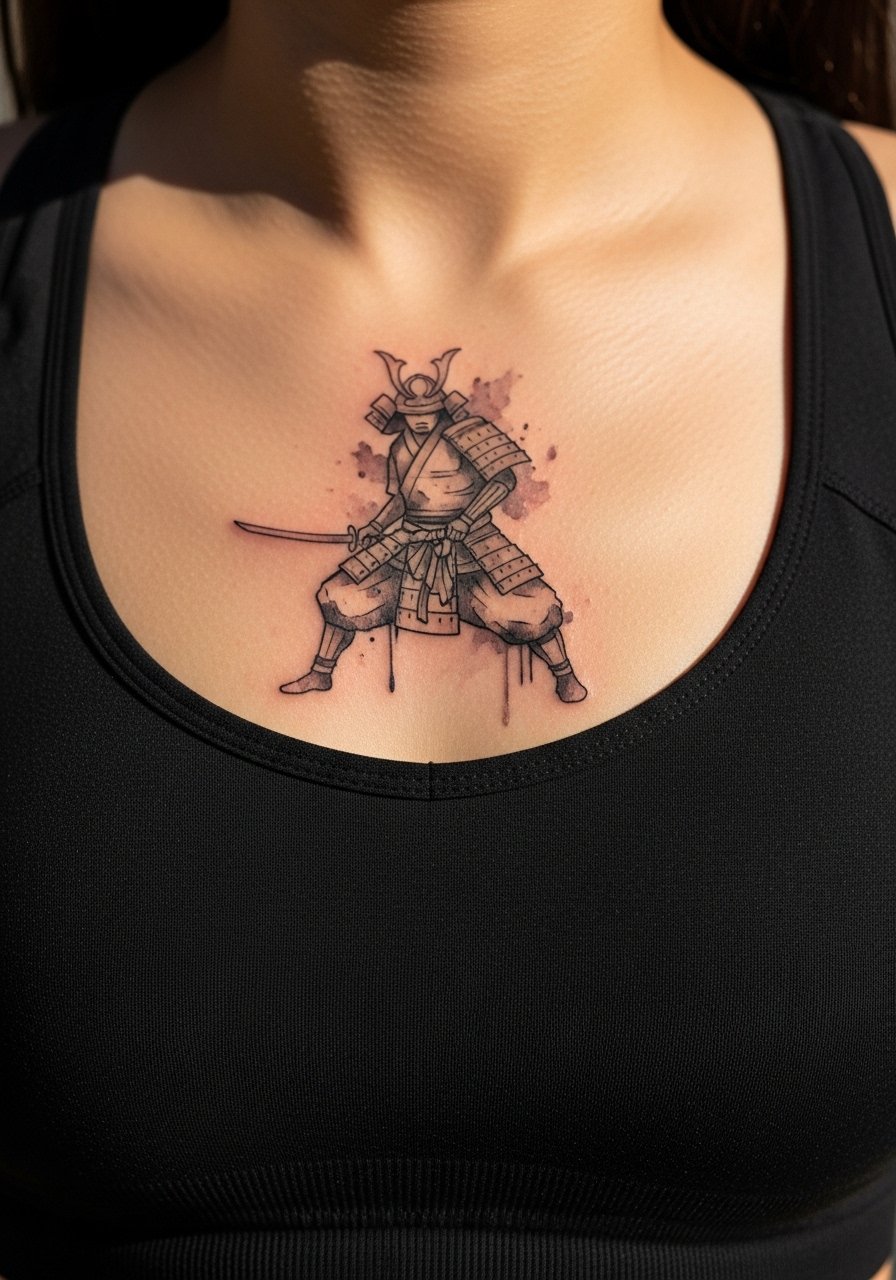
Sternum placement is intimate and can be painful, especially near the bone. There is debate about fine detail here because skin tension changes with breathing. One camp warns that the area stretches and blurs fine lines quickly. The other camp says careful depth and spacing prevents that. Ask your artist how they handle breath-induced movement before booking. A common mistake is compressing intricate armor detail into the sternum's tight space. For the session, wear a sports bra or a zip-up hoodie you can adjust.
11. Ribcage Warrior with Loose Wash

Fair warning, ribcage sessions are high on the pain scale and controversial for certain fine-line approaches. Artists split into two camps. One side argues that ribs stretch and the lines blur within two years. The other side says that with correct needle depth and spacing, fine line can settle fine on ribs. Ask your artist where they stand rather than assuming. I suggest pairing bold anchors with airy washes to preserve legibility long term. Sessions are often split and you should expect touch-ups at year three to five depending on sun exposure.
12. Half-Sleeve Samurai with Cherry Blossom Wash
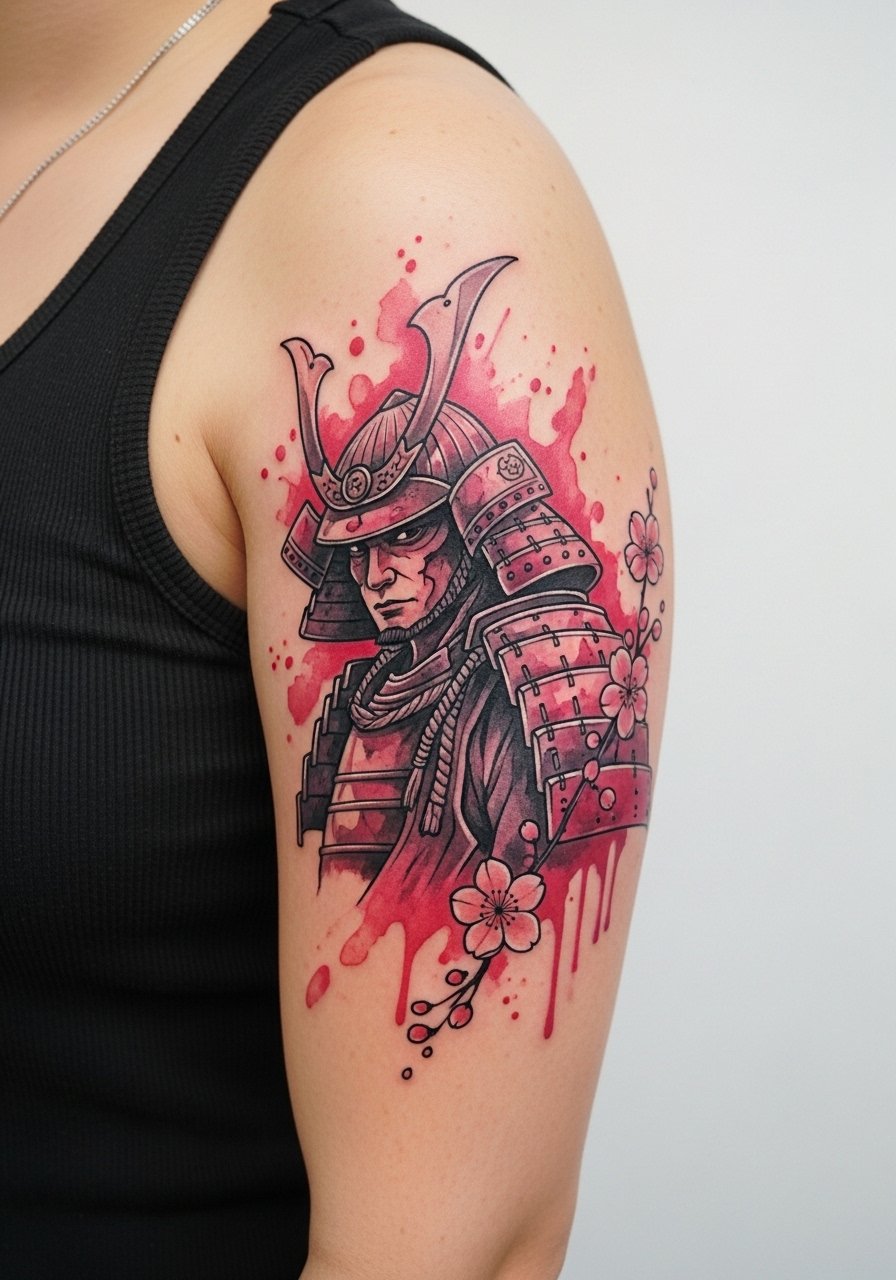
This style reads feminine or neutral depending on palette choice and pairs well with visible wear. Because the upper arm moves less than the forearm, fine line retains clarity longer. Tell your artist you want stipple shading in the shadows to add texture beneath the watercolor layers. The mistake people make is asking for pastel washes without any dark anchors. Those can vanish into skin tone over time. For showing the piece, pair with a racerback tank.
13. Samurai Bust on Upper Arm
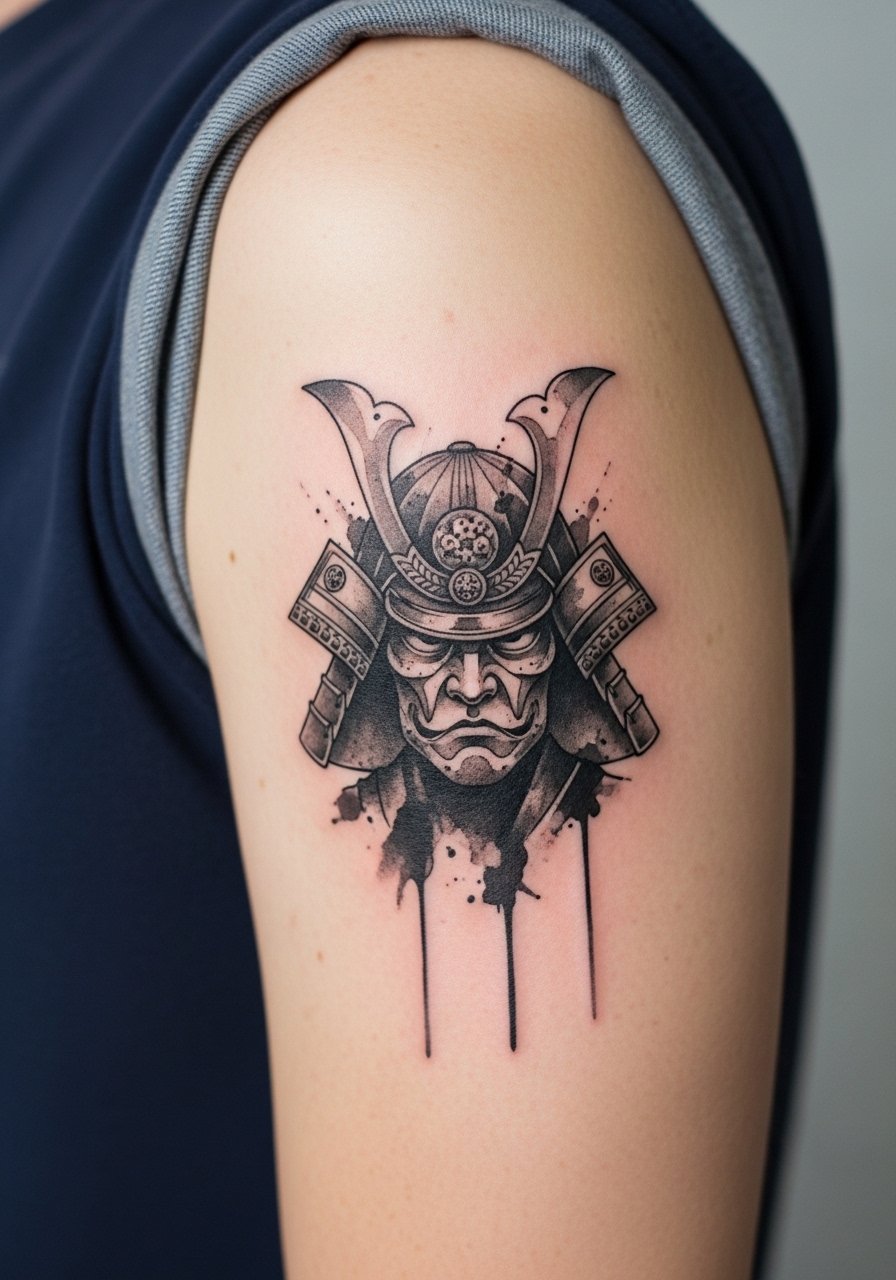
Upper arm busts are classic and tolerate heavier saturation. I've seen these hold up better than tiny wrist work because the skin is thicker and receives less abrasion. When you consult, clarify the scale of facial detail you want compared with armor texture. A frequent error is overworking the face at a scale where pores and aging will soften features. Sessions are moderate pain and often done in a single long sitting if the area is large enough.
14. Samurai Helmet Micro on Finger

Finger tattoos are trendy and fragile. Expect rapid fading from constant washing and friction. The main mistake is asking for watercolor gradients on a fingertip. Tiny watercolor details will disappear faster than linework. If you want a finger samurai, request a bold silhouette with minimal color. Sessions are short but expect touch-ups as early as year one. For showing small finger art, thin gold stacking rings keep attention on the motif.
15. Samurai Portrait Across the Chest
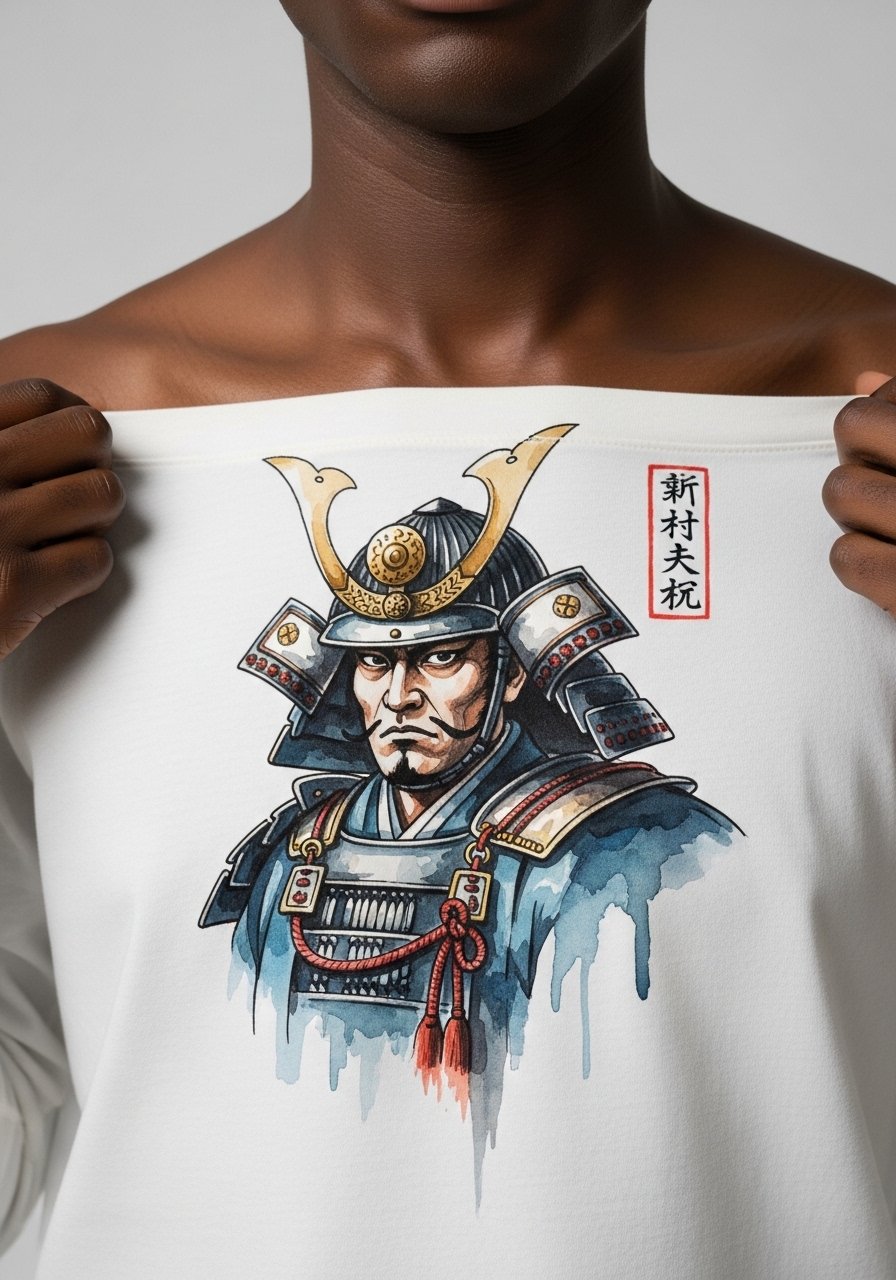
Chest pieces read bold and personal. Chest skin shifts with breathing which affects how watercolor behaves. Tell your artist whether you want the composition centered or offset, because symmetry can look different on body curves. A common aging problem is not anticipating the way chest muscles and movement soften edges. Sessions can be painful near the sternum and collarbone. For visibility and modesty, choose tops that can be adjusted like a wide-neck tee.
16. Shin Samurai with Wind Brushwork

Shin pieces are visible when you want them to be and are often less protected which affects color longevity. I've seen shins maintain contrast when artists use denser saturation in the main figure and airy washes for background motion. The big mistake is relying only on light washes over time without a structural outline. Pain is moderate and you may sit through long stretches. For the session, wear pants you can roll up like relaxed joggers.
17. Samurai on the Nape of the Neck
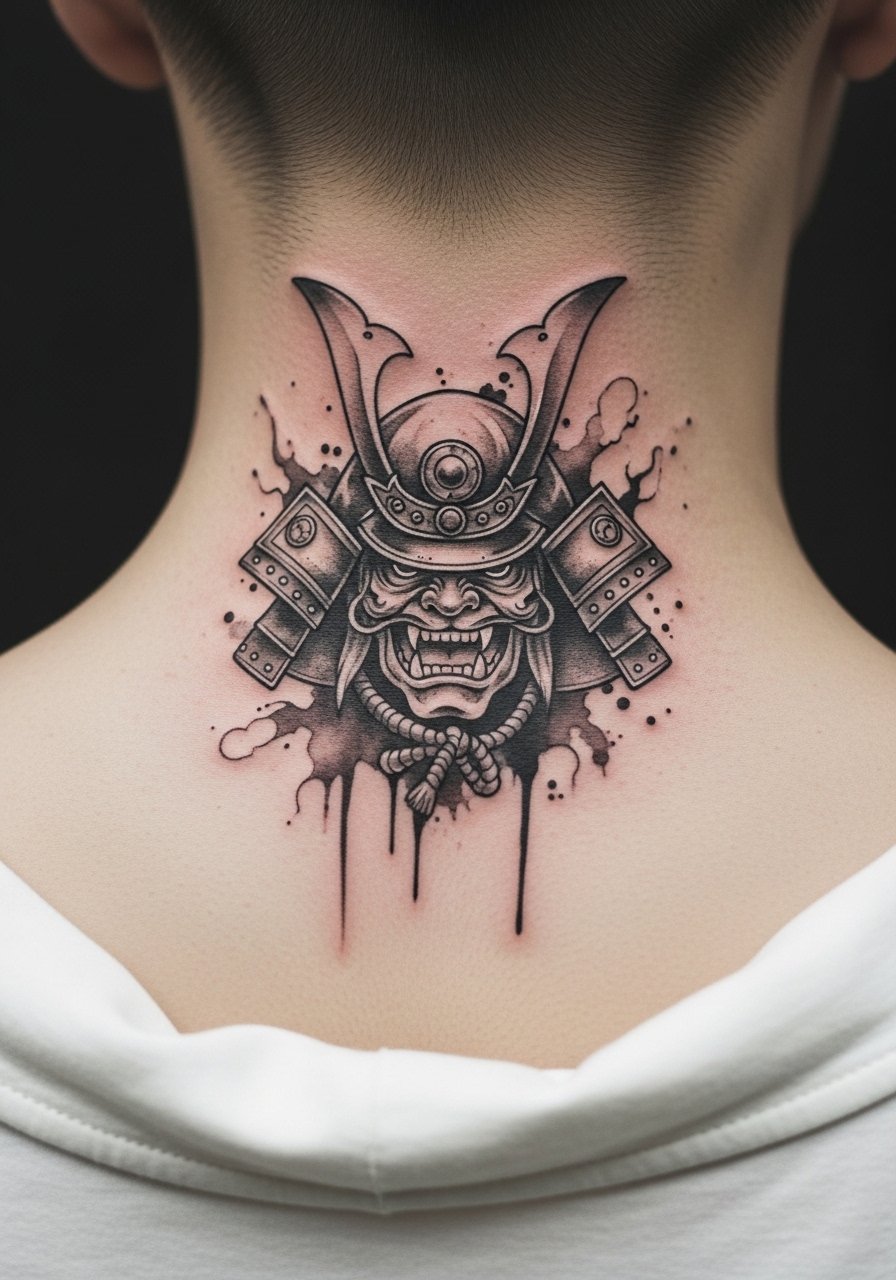
Nape placements are subtle and can be covered or revealed as needed. The main consultation point is hairline and collar placement to ensure it stays hidden when you want. One mistake is placing text or tiny detail that becomes unreadable as hair grows or recedes. Pain is moderate and touch-ups are common if exposed to sun frequently. For discreet showing, choose shirts with a lower back collar or wear hair up.
18. Hip Samurai Accent Piece

Hip tattoos are intimate and shift with body movement. Expect moderate pain and take care to discuss how the piece sits with typical outfits. A common error is compressing a complex scene into a small crescent on the hip. The hip tolerates color but not tiny facial detail. Session wear should be loose and easy like high-waisted shorts so you can adjust coverage without friction during healing.
19. Watercolor Samurai Hand Panel
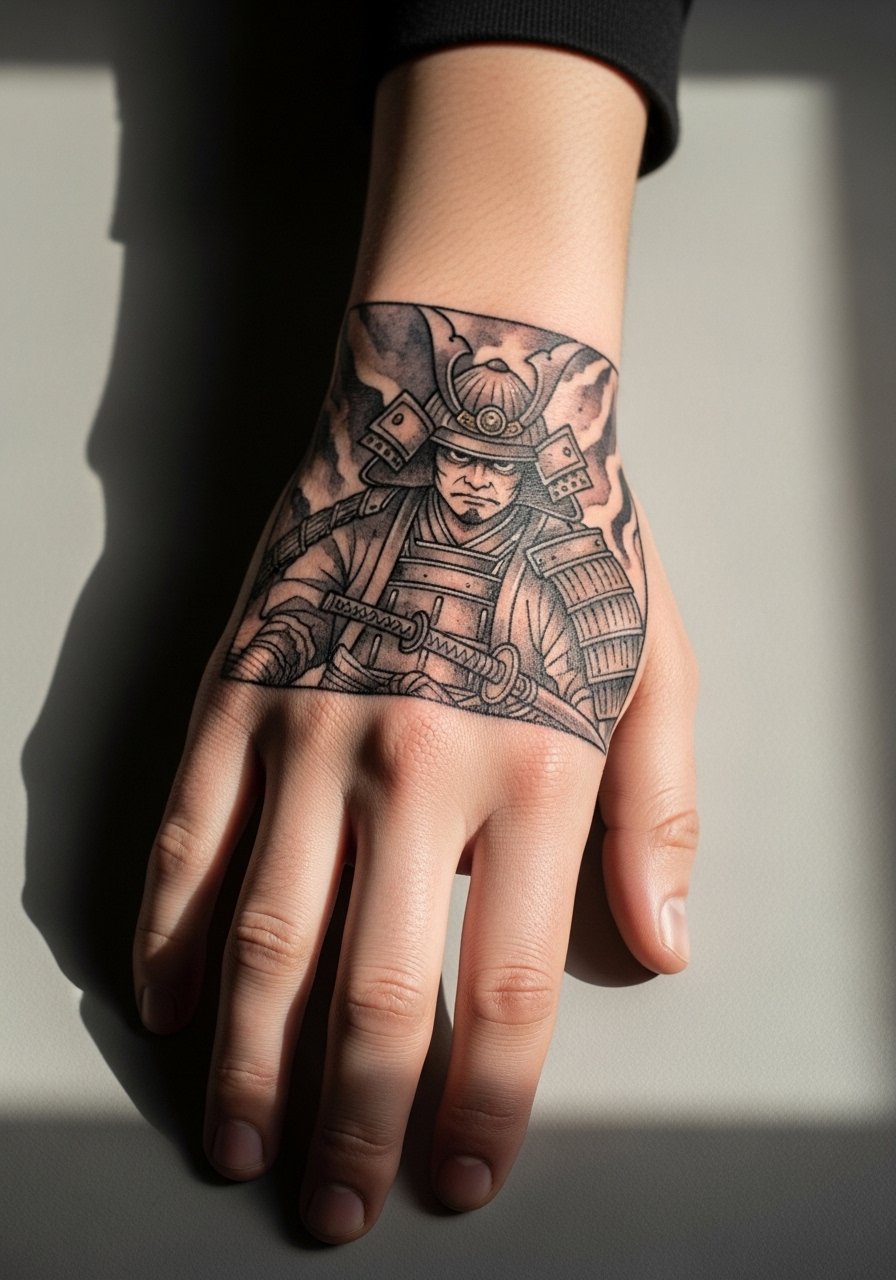
Hand tattoos remain controversial in the industry because of longevity and workplace perceptions. One camp says hand work is fine if you accept frequent refreshes. The other camp warns that hands fade and blur quickly due to washing and sun. Be direct in consultation about your tolerance for touch-ups. The technical mistake is heavy watercolor fills on the hand. Instead, prioritize a defined silhouette and minimal wash. Pain is higher here and touch-ups at year one are normal.
20. Samurai Thigh Stripe with Negative Space
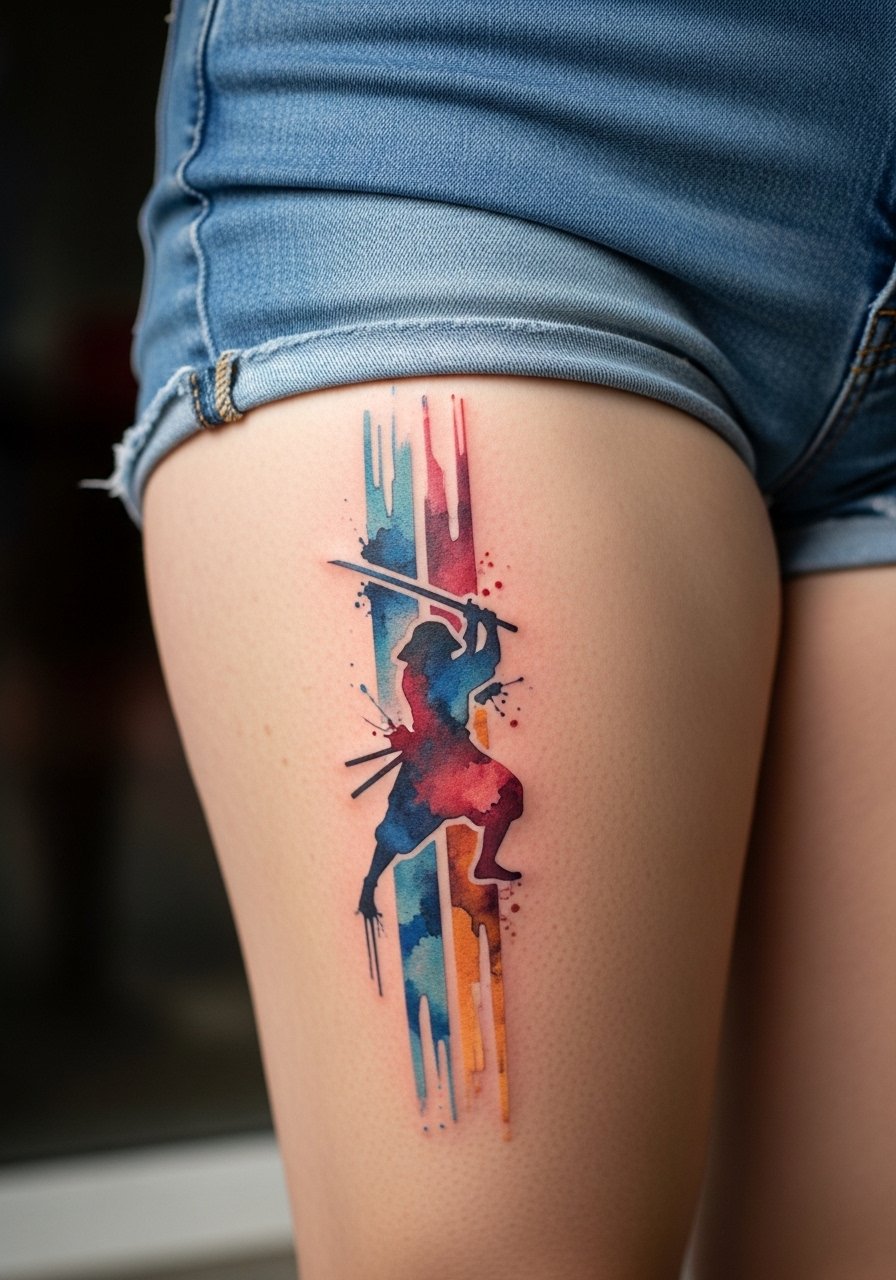
Negative space makes this design age more gracefully because it gives the eye clear resting points. When consulting, specify how much skin you want to remain uninked so the samurai figure reads at a glance. A common mistake is trying to fill every inch, which leads to muddied washes. Pain is low to moderate and larger thigh pieces are good for multi-session plans. For studio comfort, bring a wrap skirt or loose shorts.
21. Samurai Waistband Accent
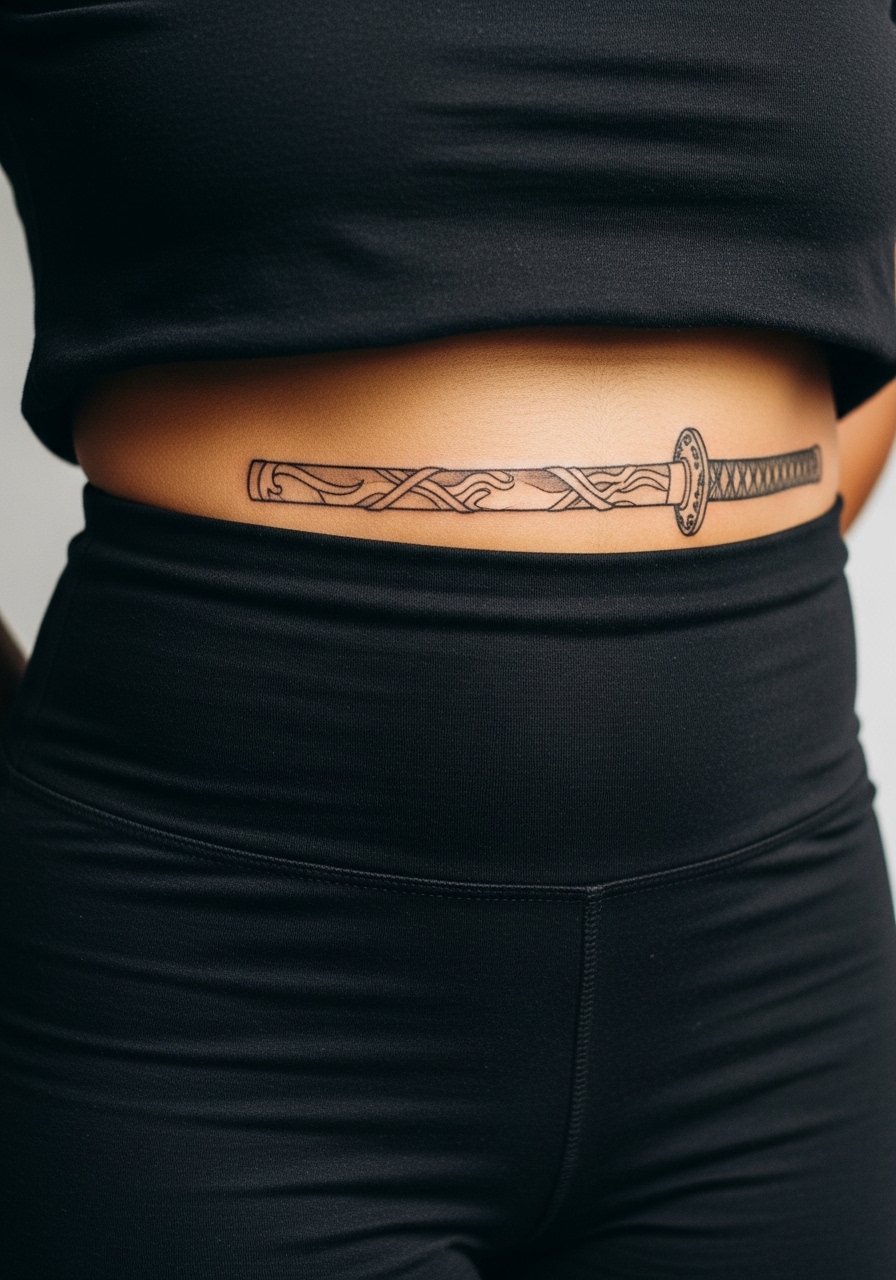
Waistline pieces can peek above jeans or swimwear and are great when you want seasonal visibility. The trick is mapping how the piece sits when you bend. The usual error is placing the focal point too low where belt friction will dull the color. Pain varies by proximity to bone. Sessions are typically short and touch-ups may be needed after garment abrasion seasons.
22. Samurai Sleeve Accent Near Elbow
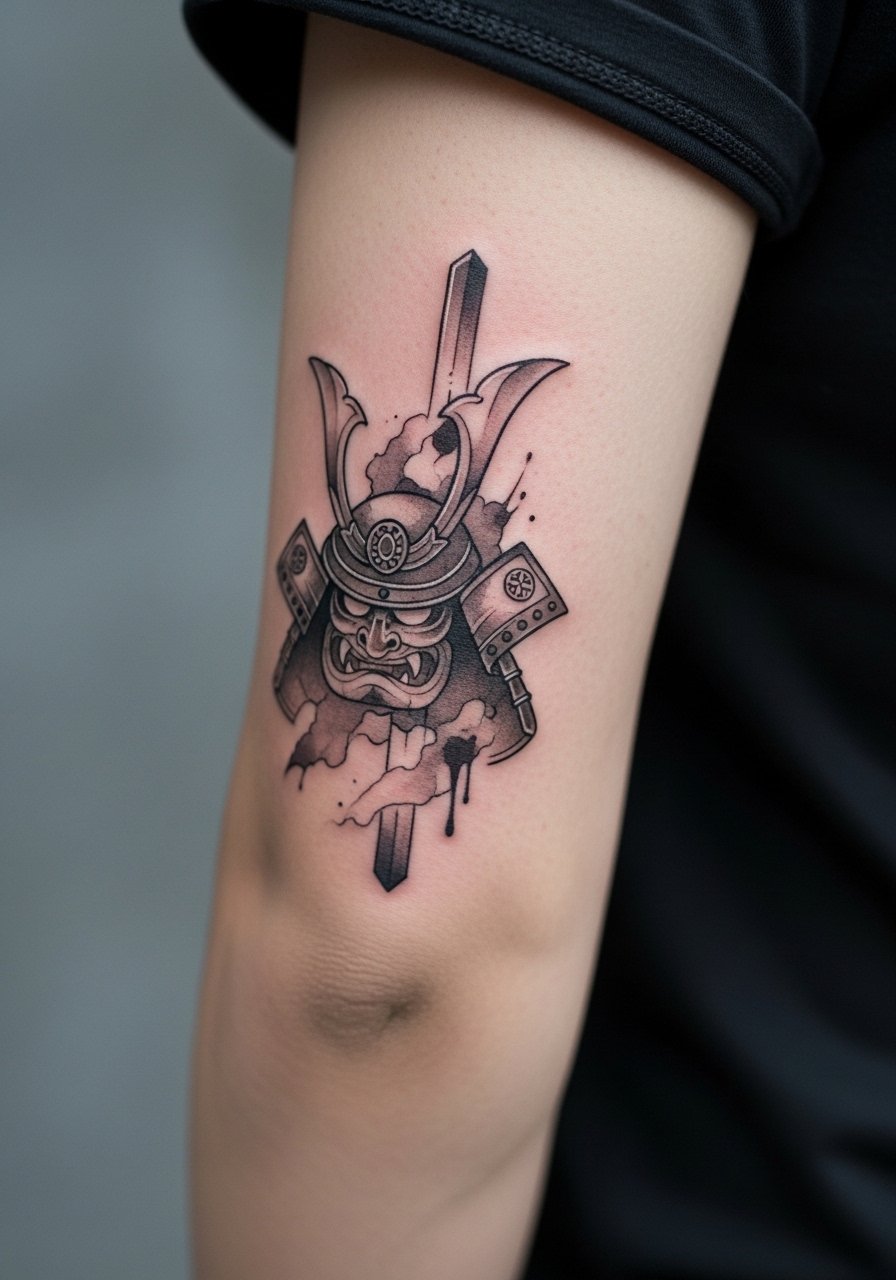
Elbow-adjacent work must account for joint movement and thicker skin. I've noticed that pieces with slightly stronger line anchors at the joint retain clarity longer. Ask your artist to plan the composition so that major lines do not fall directly over the hinge point. The mistake is crowding thin line details across the elbow. Sessions can be uncomfortable and may require breaks. For the appointment bring a short-sleeve tee you can roll.
23. Samurai with Geometric Frame on Upper Back
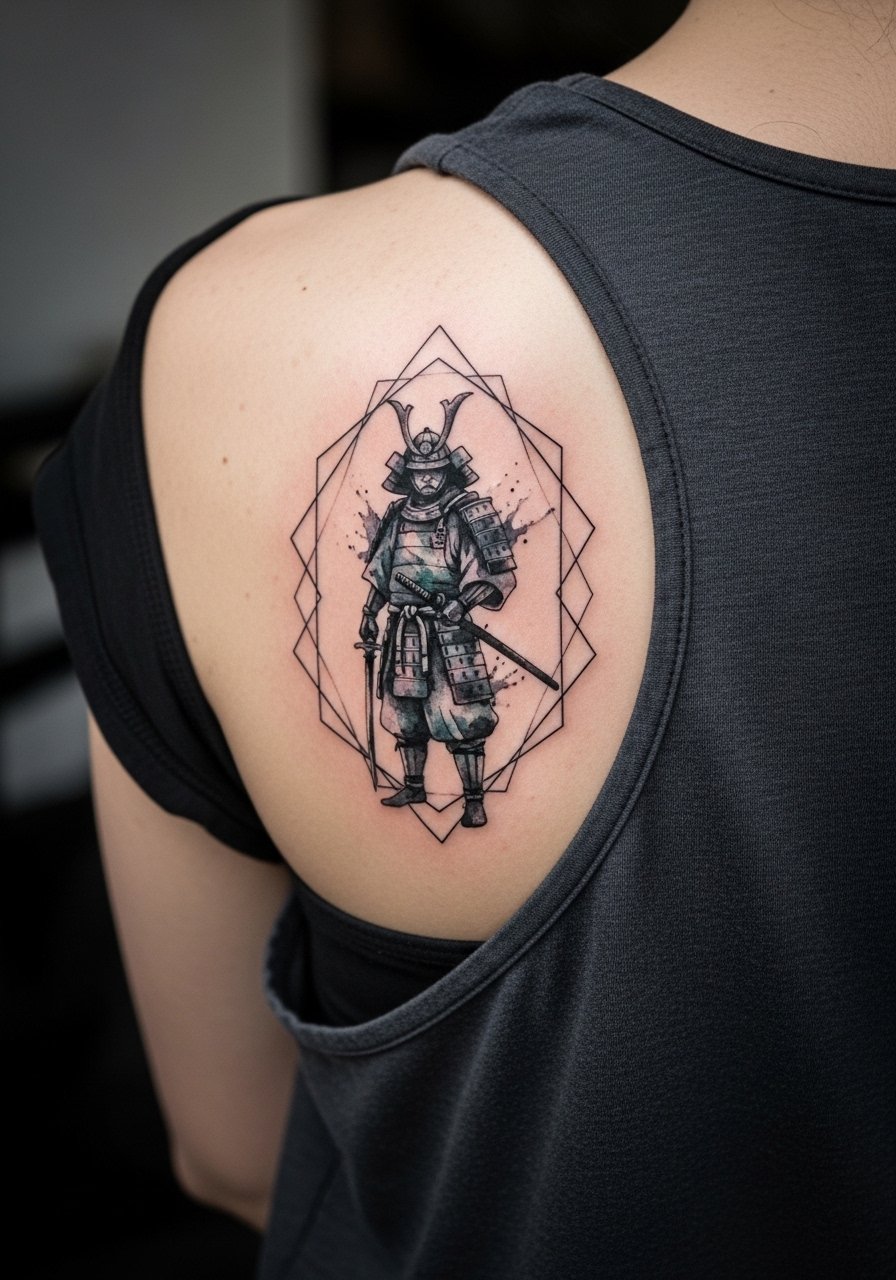
Combining geometric frames with watercolor samurai can help preserve the figure's proportions over time. In consultation, ask the artist to test the frame scale against your shoulder width. Mistakes happen when frames are too tight and compress the image with movement. Large formats like this benefit from multiple sessions and planned touch-ups as you age.
24. Mini Samurai Behind the Ear
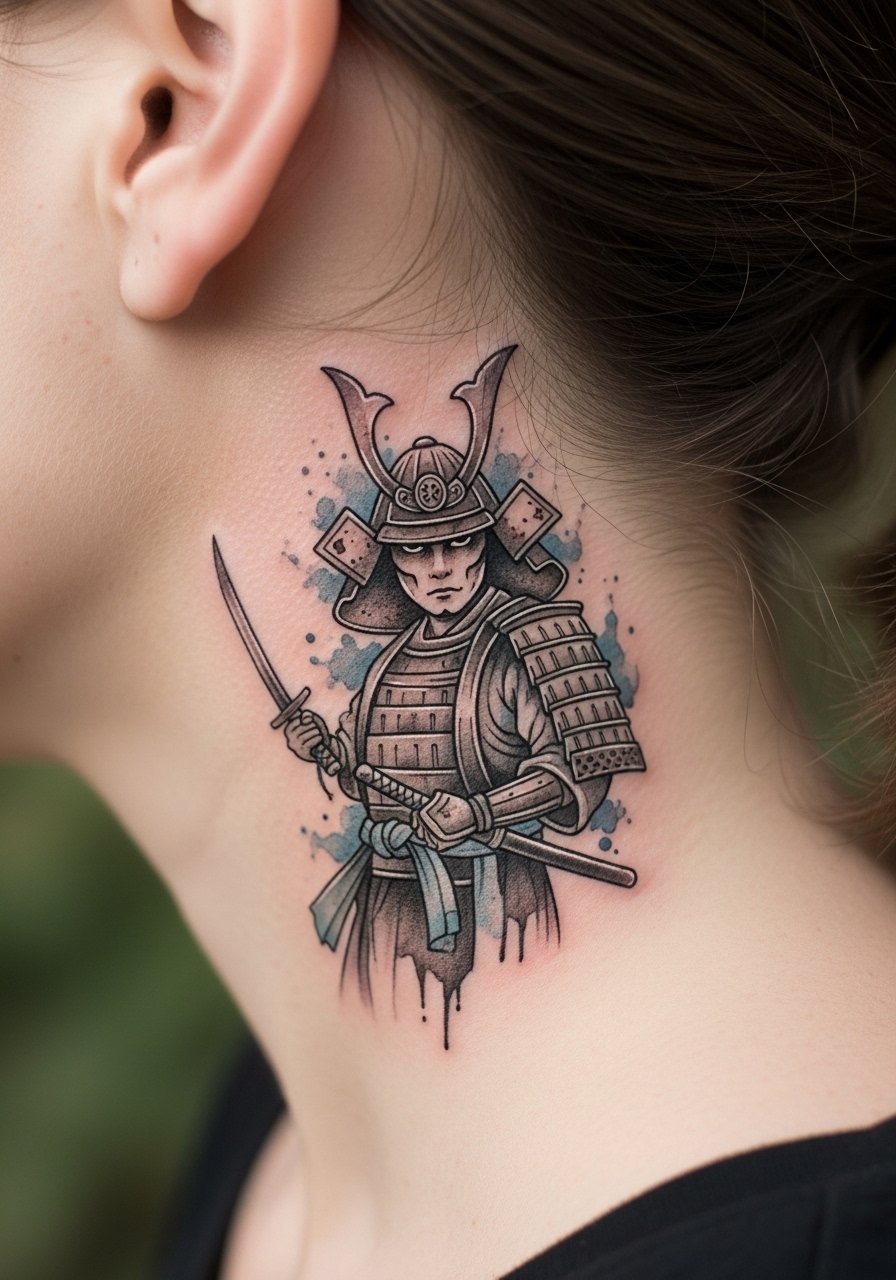
Behind-the-ear pieces are tiny and private. They need careful placement just below the hairline so hair can cover them when you want. A common mistake is expecting watercolor detail at this scale. Keep design simple and ask for a stronger outline if you want longer readability. Pain is mild. For the session, wear your hair up and bring a thin hair tie.
25. Lower Back Samurai Panel
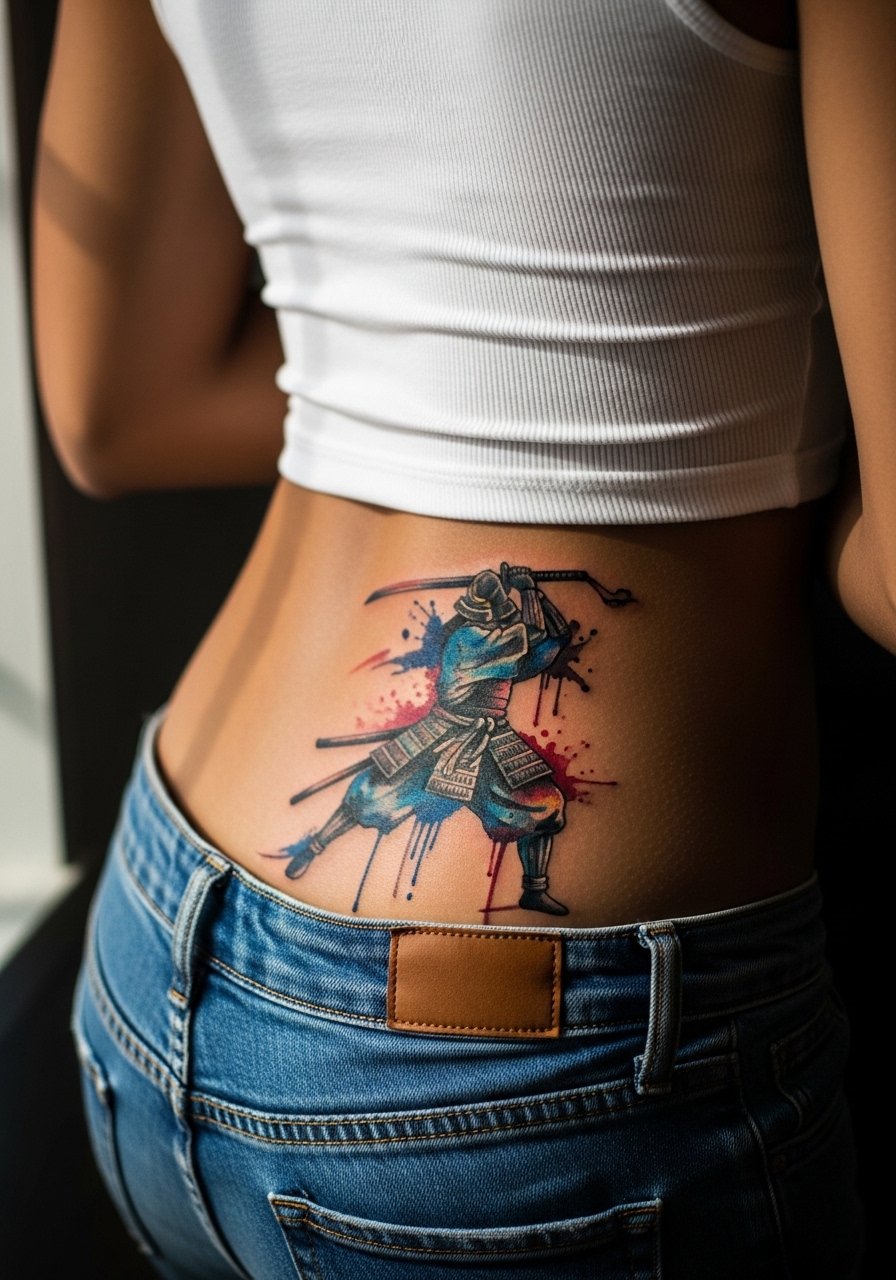
Lower back samurai panels allow horizontal storytelling and hide easily under clothing. Avoid putting the main detail where waistbands sit, or you will get constant friction. The mistake is compressing heavy color under belt lines. Sessions are moderate and healing can be affected by sitting and bending. If you plan to show it off, low-rise or high-waisted combos work depending on exposure.
26. Inner Bicep Samurai Portrait
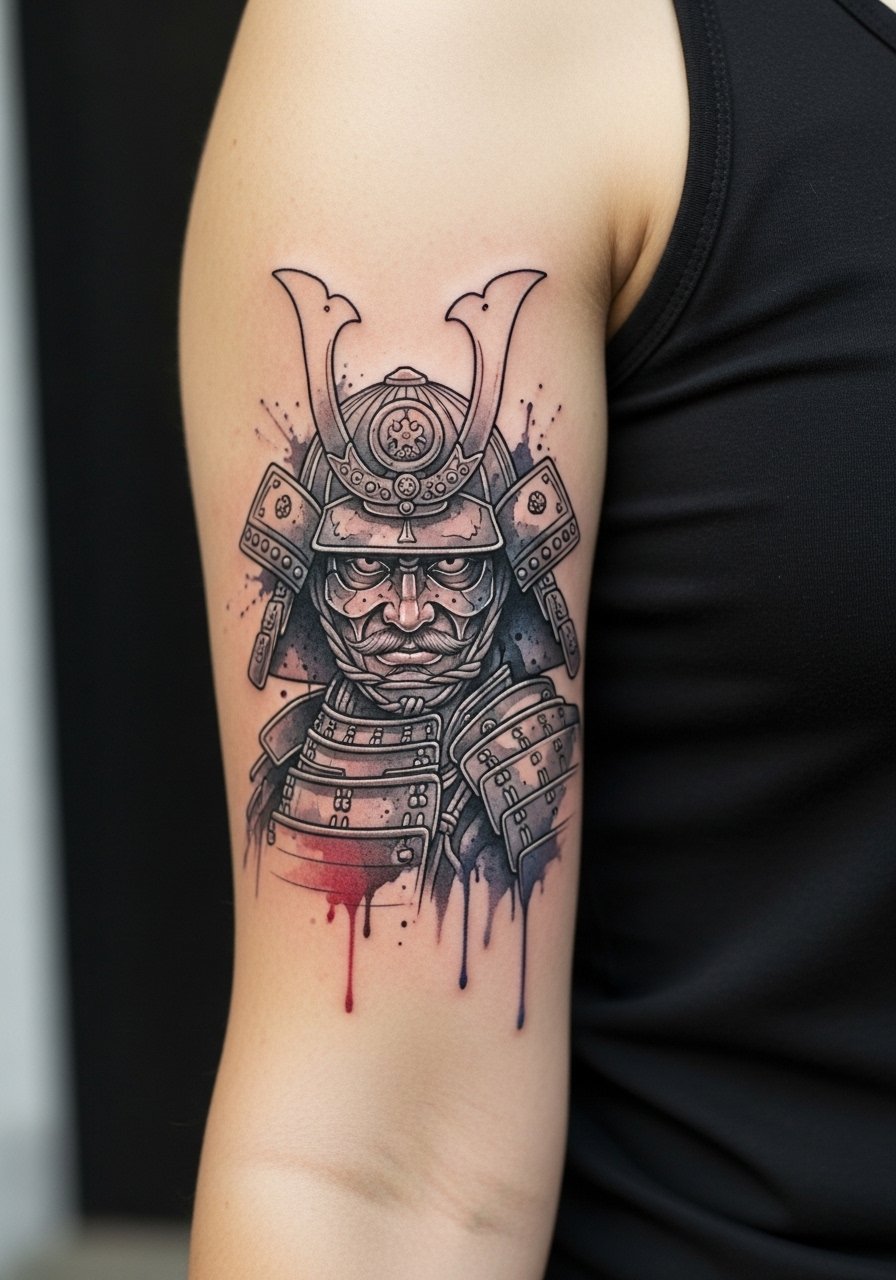
Inner bicep work tends to sit well because the area experiences less sun and abrasion, but the skin is softer so blowout risk exists. Tell your artist you prefer slightly bolder contour lines to avoid diffusion. The typical mistake is expecting ultra-fine stippling without realizing the softness of the canvas. Sessions can be moderately painful when the arm is held in unusual positions. For the appointment, wear a tank top you can move easily.
27. Full Back Samurai With Mount and Sky
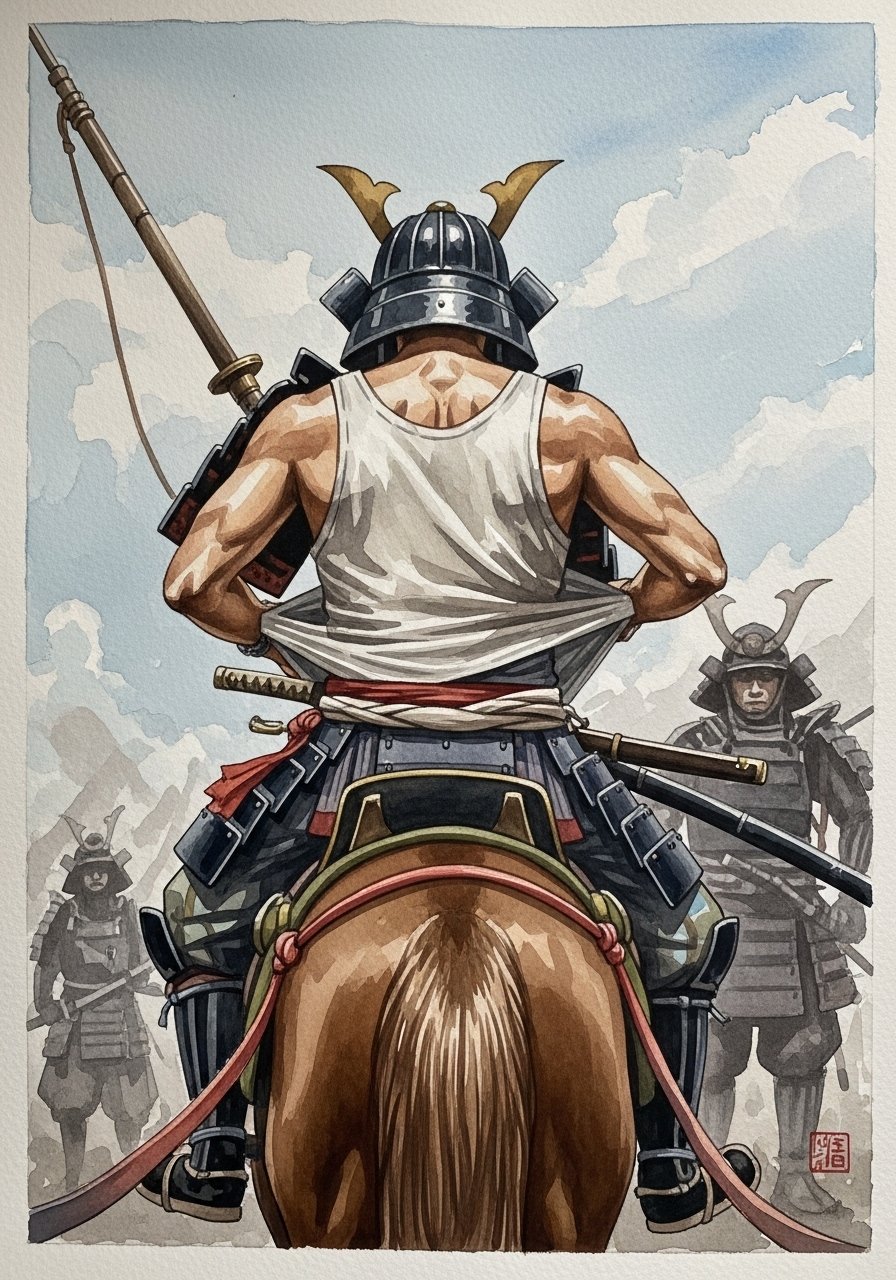
Full back compositions are the ultimate statement and require careful planning of flow across muscles and spine. I always tell people to think in panels so that each section reads alone and as part of the whole. A common mistake is treating the back like a single canvas without adjusting for curvature. These pieces almost always need multiple sessions and a touch-up plan beyond year five. For consults, bring movement-friendly clothing so the artist can see how the image sits when you move.
Studio Day Picks
The forearm, shoulder, and chest samurai pieces above each have different prep and healing needs, so a few targeted items make the studio day more comfortable and protect linework in the first week.
- Stencil transfer paper kit. Lets you preview the linework on skin before the needle starts, which is especially helpful for the mini portraits and wrist bands among ideas 1-6.
- Topical numbing cream. Applied about 45 minutes before a sensitive ribcage or sternum session reduces sharp pain without affecting the artist's line.
- Thin protective film roll. Keeps small placements like finger and wrist pieces cleaner during early wash cycles and shields from accidental rubbing.
- Fragrance-free gentle body wash. Cleans healing areas without stripping color from delicate watercolor fills on arms and legs.
- Aquaphor healing ointment. Thin applications in the first 48 hours lock in moisture for fine line anchors without clogging needle channels.
Frequently Asked Questions
Q: Do watercolor-style samurai tattoos need different aftercare than traditional ones?
A: The core care steps are the same, but watercolor fills are often shallower and use more subtle gradients. That means keeping sun exposure low and avoiding abrasive friction matters more for these pieces. Follow your artist's guidance on washing and moisturizing, and expect to check in about touch-ups earlier than you might for heavy blackwork.
Q: Will a samurai portrait blur if I get it on my ribs or sternum?
A: It depends on scale, spacing, and the artist's technique. Some artists avoid ultra-fine line on ribs because the skin shifts and that can soften detail. Other artists plan depth and spacing so fine lines settle. Ask the artist directly how they handle breathing motion and where they place anchors before booking.
Q: How often should I expect touch-ups for a watercolor samurai sleeve versus a mini ankle piece?
A: Larger sleeves with stronger anchors often need less frequent color refresh, perhaps every five years depending on sun exposure. Mini ankle or finger pieces face more daily abrasion and may require touch-ups as early as one to three years. Consider your lifestyle and how often you wear protective clothing when planning.
Q: Are hand or finger samurai tattoos still frowned upon by studios?
A: Some studios are cautious about hands and fingers for longevity and client satisfaction reasons. Others will do them if you accept the likelihood of faster fading and future touch-ups. Be transparent in consultation about how you intend to live with the piece and ask for examples of healed hand work in the artist's portfolio.
Q: What should I wear to a full back or thigh appointment to keep things easy for the artist?
A: For back sessions, choose a loose tank or button-down you can adjust. For thighs, wear high-waisted shorts or a wrap skirt you can shift without rubbing the area. A comfortable, adjustable outfit keeps the artist from wrestling fabric and helps you stay still during longer sittings. For a show-off option later, an open-back midi dress highlights upper and mid-back work without overexposing.
Q: How do I balance watercolor washes with long-term legibility in a samurai design?
A: Ask your artist to mix stronger anchor lines around the figure and use watercolor washes for background motion. Negative space is your friend. Plan the composition so important details sit within darker anchors and the washes sit behind them. This strategy preserves readability while keeping the painterly look.