Fine line watercolor dominates Pinterest right now, yet the pieces that still read clean after two years are often the ones with subtle structure beneath the wash. That gap between what trends and what ages matters most for upper arm work. Below are 17 upper arm watercolor concepts with practical notes on placement, how to ask for them in a consult, and what to wear for the session and the reveal.
1. Watercolor Wolf Portrait on Outer Upper Arm
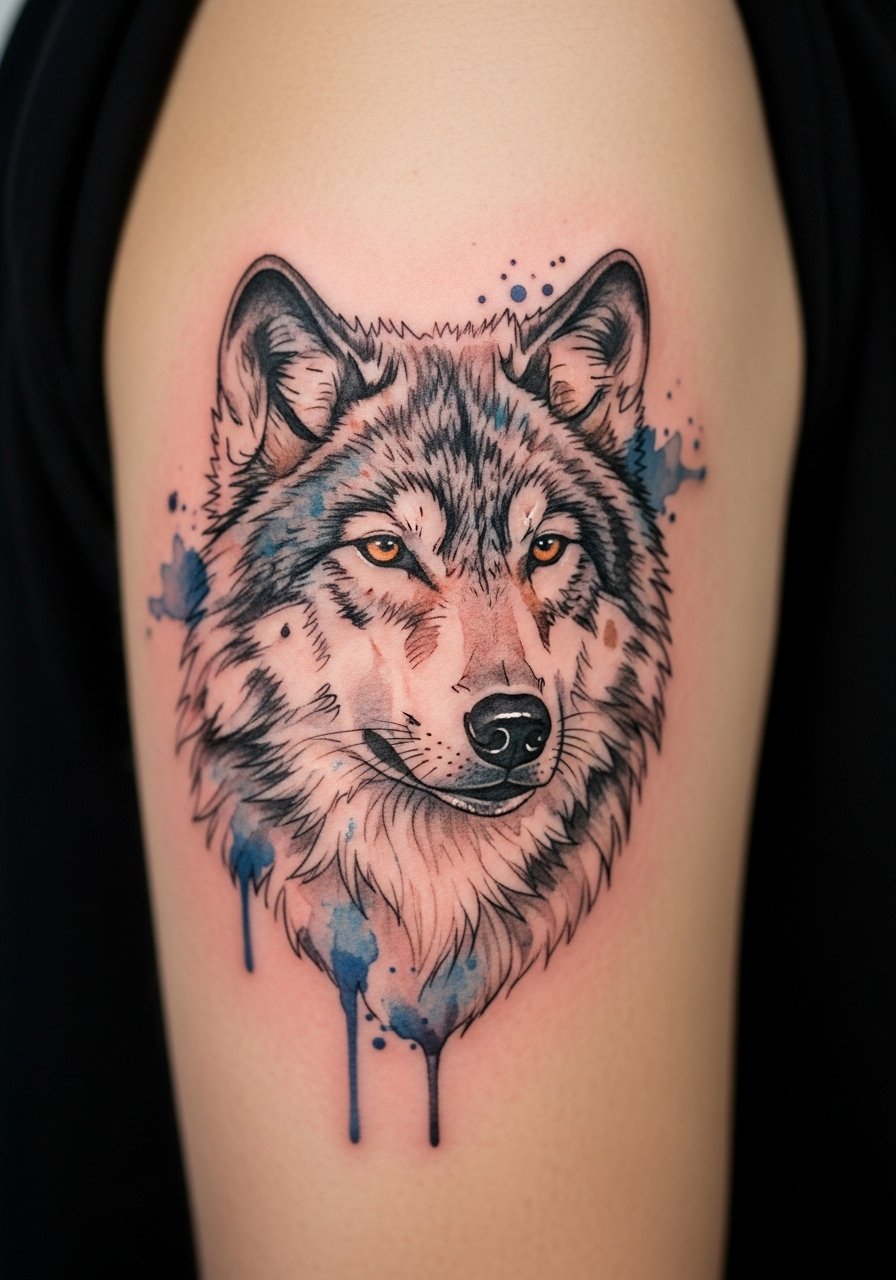
I bring this one up first because it balances masculinity with painterly wash. For a wolf that holds up, ask for soft outlines around the muzzle and ears so the washes read after the first year. Common mistake is going purely outline-free on the bicep and then needing touch-ups when the snout blurs. Expect a moderate pain level and a one to two hour session for a six to eight inch piece. For showing it off, a fitted athletic tank works best, and throw on a leather cuff bracelet opposite the arm to frame the color.
2. Abstract Color Splash Skull on Bicep

Most guys pick this when they want the drama of a skull without heavy blackwork. Tell your artist you want paint runs and gravity trails rather than hairline detail. The big drawback is fade if the skull sits on the high-movement area of a pumped bicep. Do the piece slightly off-center on the bicep to reduce distortion when you flex. Single session for a medium four to six inch design. For session comfort wear a sleeveless muscle tee so the artist can rotate your arm easily.
3. Floral Watercolor Sleeve Starting Upper Arm

Most full-sleeve starts on the upper arm because the shoulder gives room for flow. My advice is to plan negative space and include a few bold anchors so the piece ages with definition. The common error is packing flowers too tightly at the start and losing separation after a year. Expect three to five shorter sessions for a sleeve start and mention in your consult that you lift weights so the artist can plan for stretch. For the first sessions wear a loose button-down shirt you can pull aside without tugging the stencil.
4. Animal Portrait Owl in Blues on Inner Upper Arm
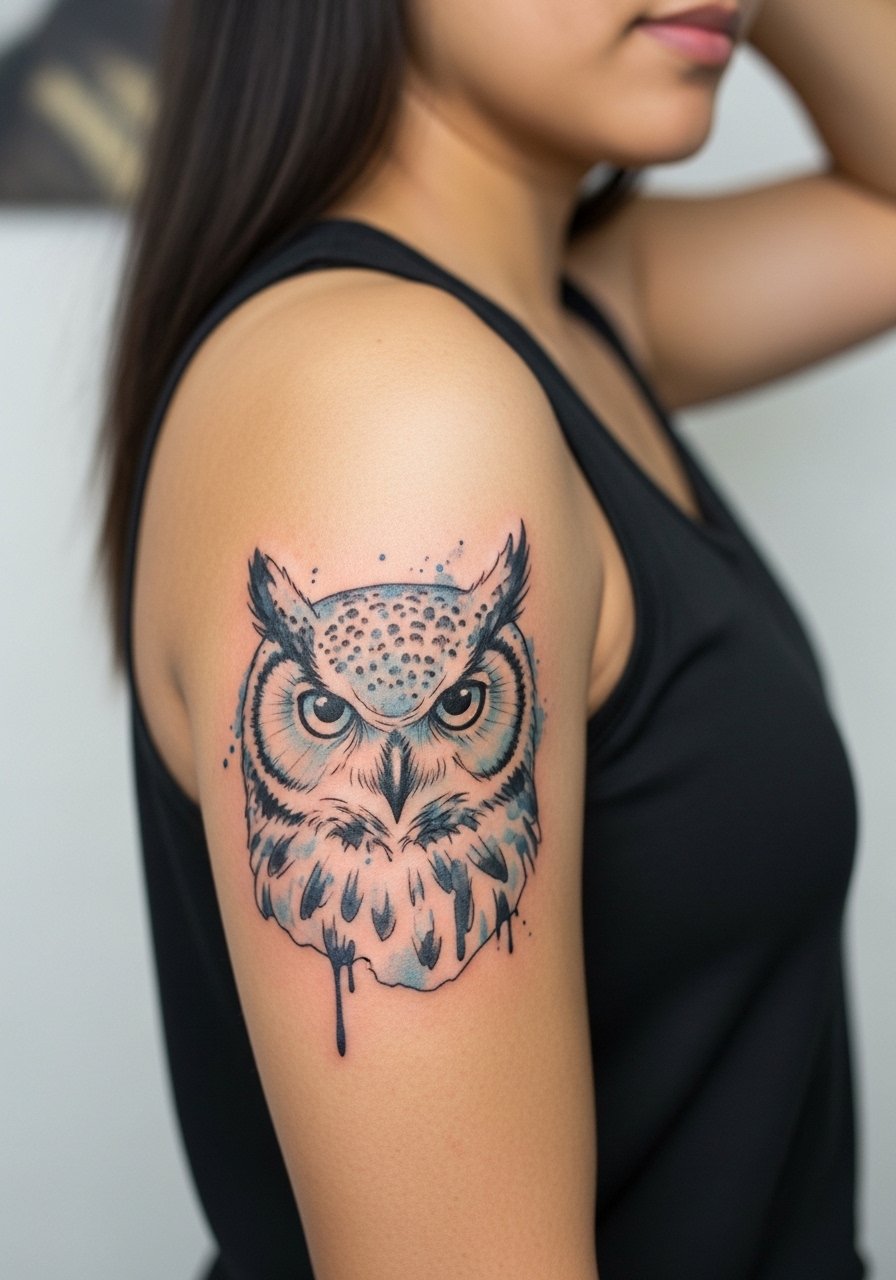
Fair warning, the inner arm stretches more with movement so line density needs adjustment. Ask for slightly thicker key lines in the eye sockets and a softer wash around feathers so it still reads at two years. A frequent mistake is insisting on ultra-fine detail in the inner bicep then being surprised by softening. Sessions are typically two sittings for a five to eight inch portrait and pain is usually lower than ribs but higher than outer arm. For the reveal, slim henleys in white or gray keep attention on the blues without clashing.
5. Geometric Compass Watercolor on Shoulder Cap

I recommend this for guys who want a travel motif with clean geometry anchoring loose washes. A clear mistake is making the compass too small on the shoulder cap. The lines need space to breathe or the geometry merges after healing. One to two sessions and relatively low pain because of the shoulder flesh. During the consult say you want the compass to read at a distance and that you want modest black accents. For show-off looks a v-neck polo in an earth tone frames the shoulder without covering the tattoo.
6. Landscape Horizon in Sunset Colors on Bicep
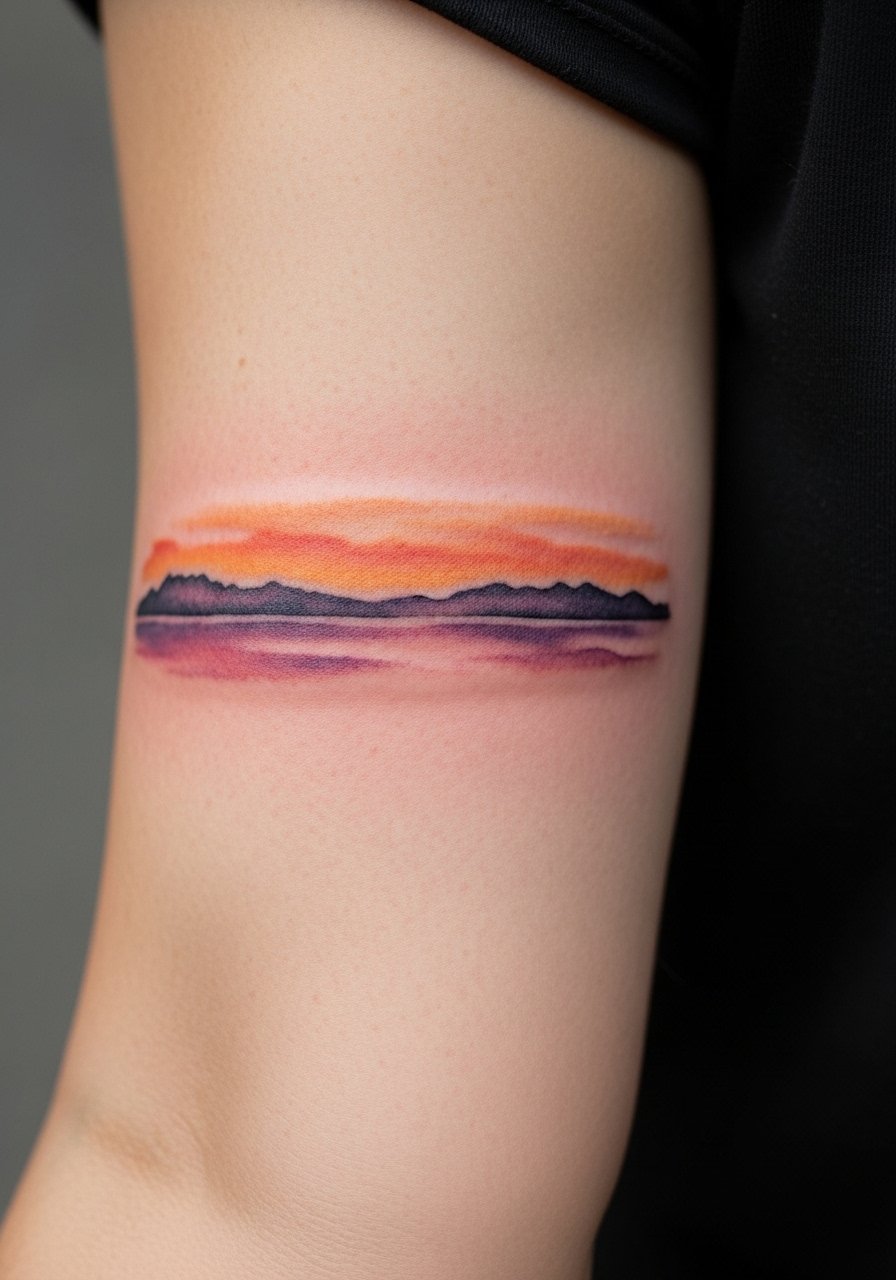
Most landscape pieces work best as horizontal bands on the outer bicep so they sit flat when your arm is relaxed. Tell your artist you want crisp horizon line anchors and graded sky washes so the scene does not collapse into a single blur. Healed at six months the colors will soften, and by year two expect the sky to need a touch-up to restore mid-tones. Two sessions is common for wide eight by four inch scenes. For wearing after the session pick a slim henley shirt that lets the band peek out when sleeves are rolled.
Studio Day Picks
Those first six designs include a mix of tight linework and loose washes, so a few specific prep items smooth the session and the first week of healing.
- Stencil transfer paper kit. Lets you preview placement on the round surface of the upper arm, which matters for portrait and landscape pieces.
- Topical numbing cream. Useful for longer three hour sits on the shoulder and bicep without changing how the artist approaches depth.
- Thin protective film roll. Guards delicate washes on the bicep from shirt friction during the first few days.
- Fragrance-free gentle body wash. Cleanses healing watercolor work without stripping the pigment anchors the artist left.
- Aquaphor healing ointment. Thin layers during the earliest window help fine line anchors recover without heavy crusting.
7. Clock with Dripping Numbers on Tricep
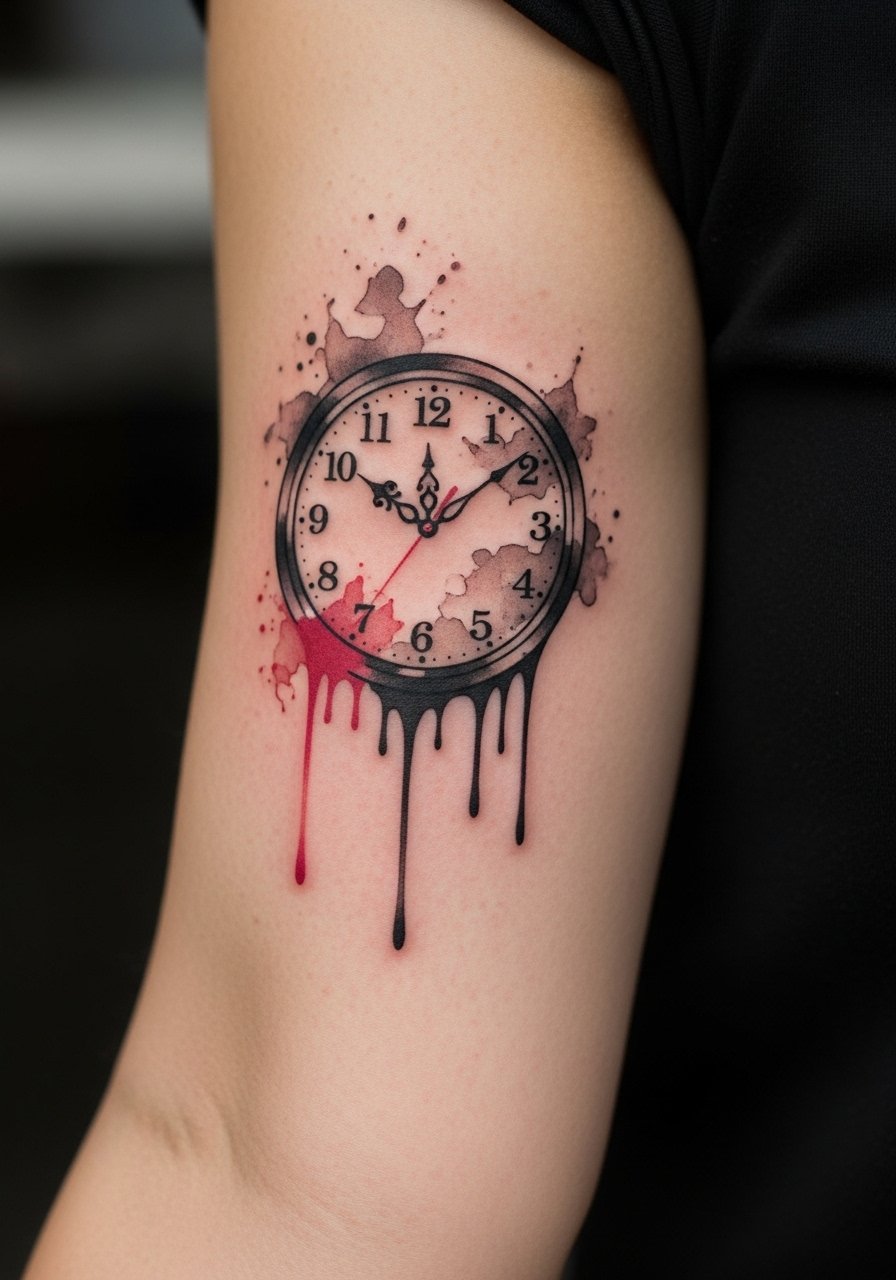
When the concept is about time and loss you want the drips to look intentional rather than sloppy. Tell your artist you want the clock face crisp with selective paint runs so the numbers flow naturally off the edge. Tricep placement means the piece is visible when your arm is turned, but the skin moves more than shoulder flesh so avoid micro-detail near flex lines. Single session for a five inch design and expect the tricep to be a middling pain spot. For showing it off push sleeves up and layer with a thumbhole hoodie for casual evenings.
8. Rose Thorn Hybrid with Bold Outline on Deltoid
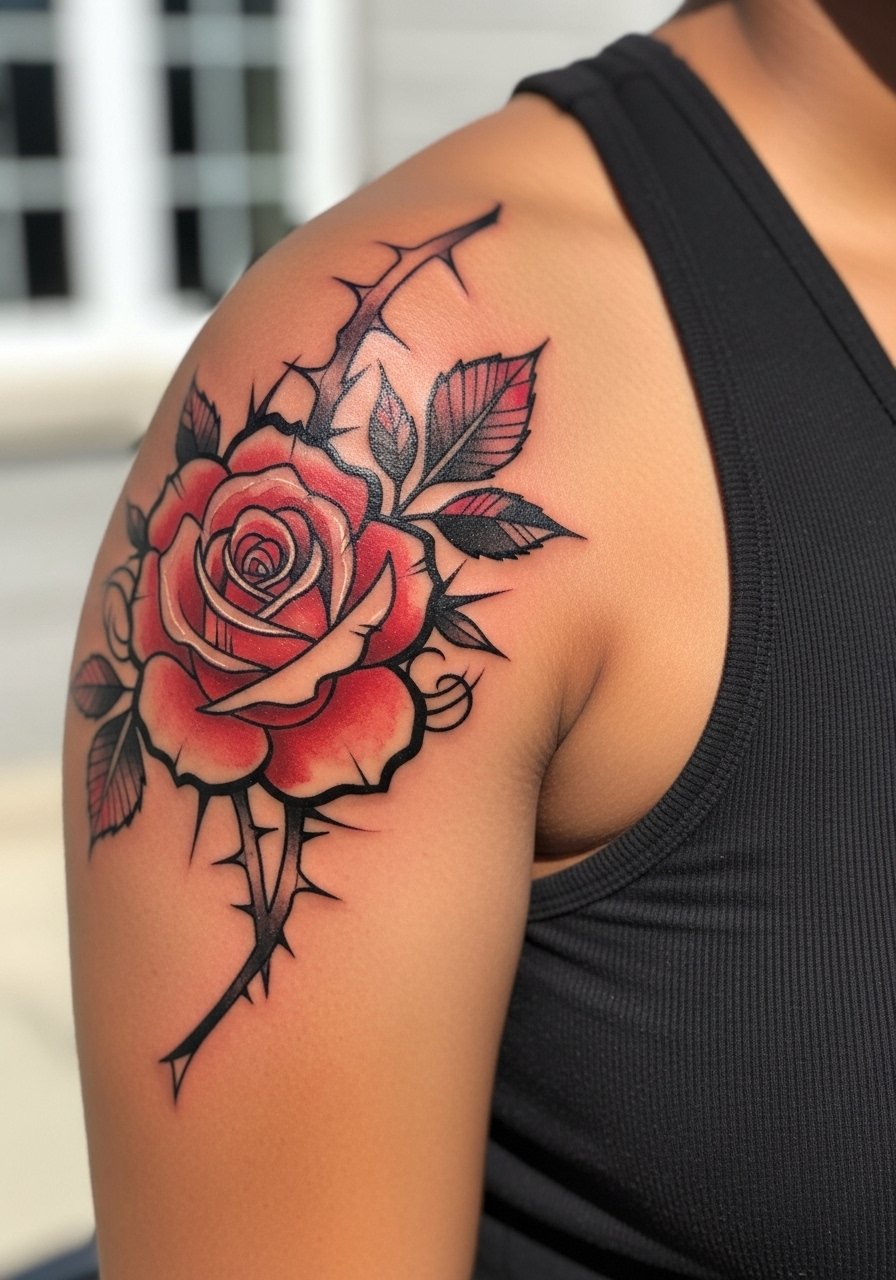
This is the hybrid approach that addresses fading complaints. The camps split on pure watercolor versus hybrid work. One camp prefers no-black versions for painterly fidelity. The other camp argues that adding bold anchors preserves structure on active arms. My take is to keep a tasteful outline on key petals and let the washes live between those anchors. Two sessions and low to moderate pain on the deltoid. For session wear bring a loose tank top so the artist can access the shoulder easily.
9. Eagle in Flight Watercolor Wrap on Bicep

This one is large and dramatic and should be planned as a wrap rather than a flat patch. My consultation tip is to show the artist the wing spread you want while standing and while flexing so they can place a wing joint over less mobile skin. Common mistake is forcing a full wrap into a single session. Expect multiple sessions and honest talk about touch-up timelines at year two or three. For a casual reveal pair the piece with rolled sleeves or a fitted short sleeve button up shirt.
10. Mandala Splash with No Outline on Inner Arm
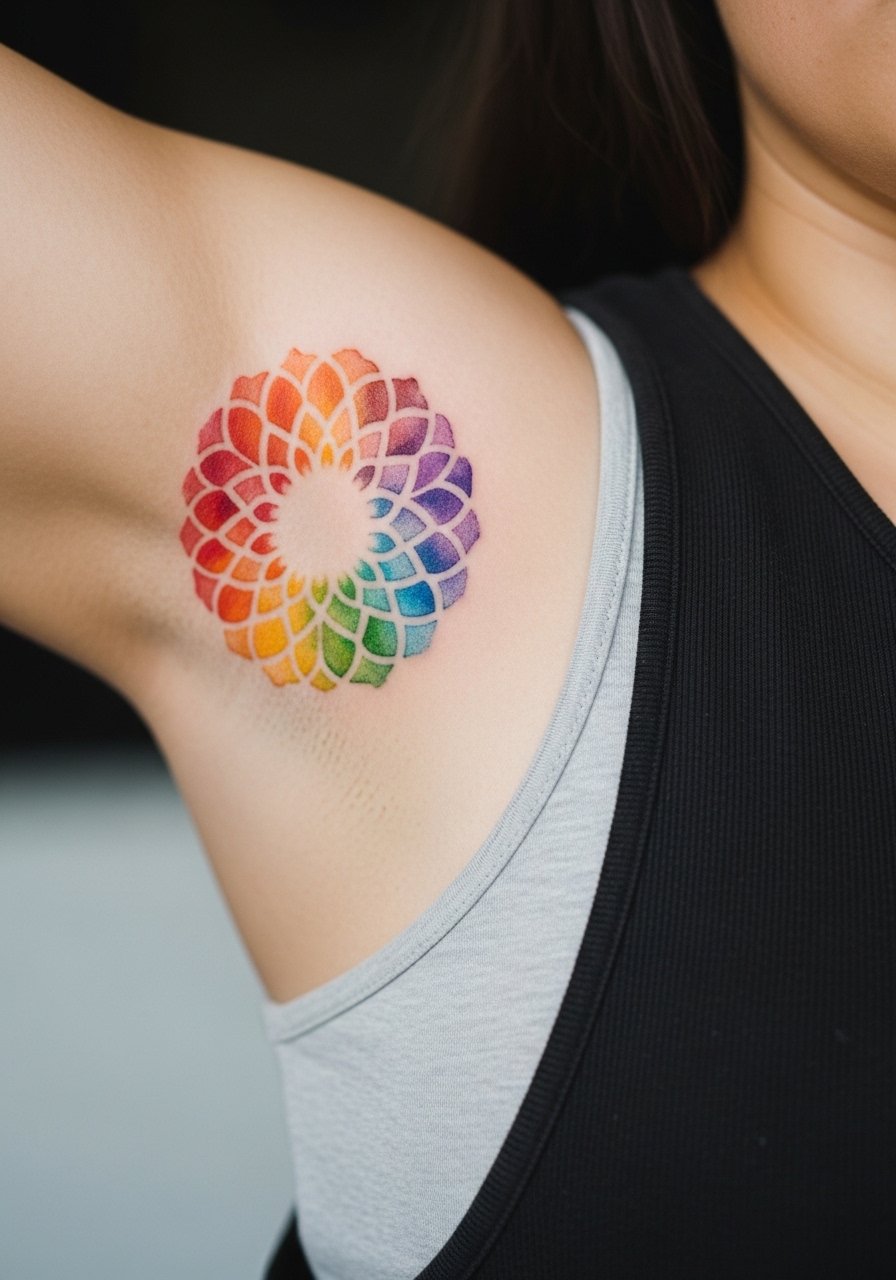
Mandalas with pure washes look meditative but they require spacing and restraint. The inner arm can blur dense patterns, so ask for negative space between repeat elements and consider a subtle dot work anchor to hold the center. A single session often suffices for a six inch circle but expect touch-ups earlier than you would on the outer arm. Inner-arm pieces need an artist comfortable with both saturation and spacing. Career-sensitive note, mandalas are fine for most workplaces but check how visible arm art fits your job.
11. Ship at Sea Abstract Waves on Outer Upper Arm

Maritime themes read well as sweeping horizontal motion on the outer arm. My recommendation is to anchor the ship with a thin dark line so the boat does not dissolve into the wave wash. A common error is placing the ship where shirts crease at the sleeve hem. For a clean look place the horizon slightly higher on the bicep. One session can cover a five by seven inch piece. For summer showing off wear board shorts and a slim henley so the arm reads in contrast.
12. Lion Head Portrait in Earth Tones on Deltoid
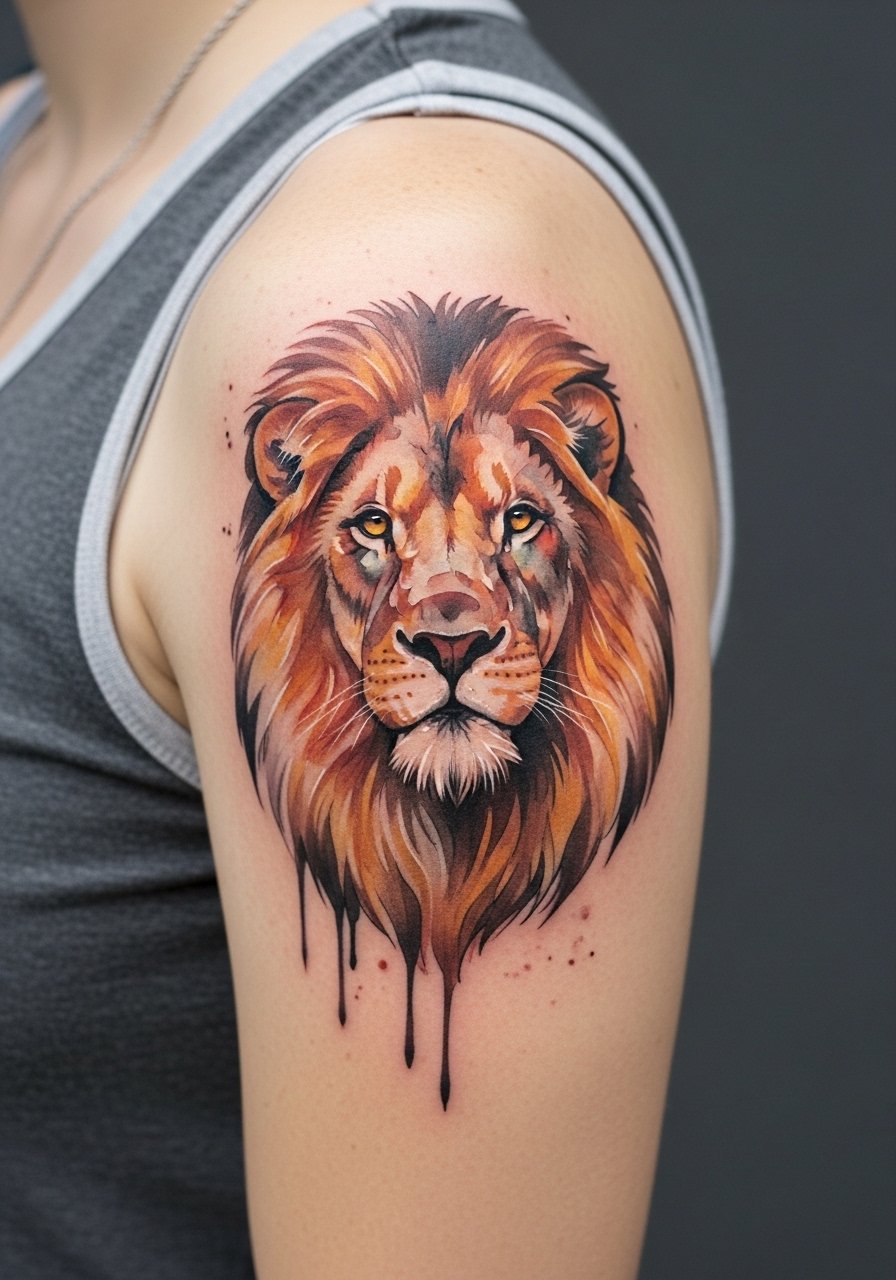
The mane is where watercolor technique shines and also where bad decisions show. Ask for directional brush strokes that follow muscle contours and a few darker core strokes near the face to keep the expression legible over time. Two sessions usually deliver the depth needed for a six to eight inch portrait. For men who lift, mention your routine so the artist can compensate for future muscle growth. Expect moderate pain and a solid touch-up window at year two.
13. Phoenix Rising Flames Vertical on Bicep
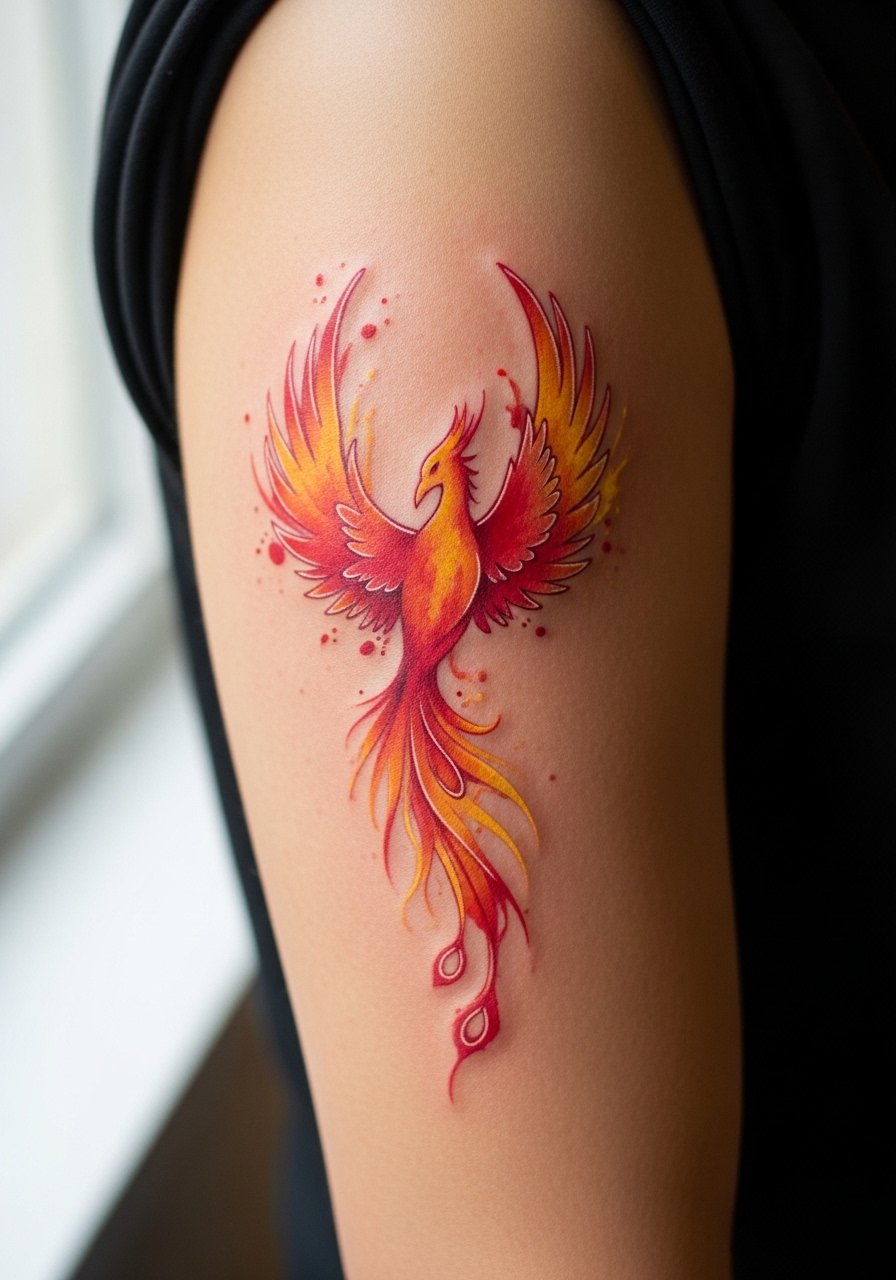
This vertical placement reads naturally with the arm when relaxed and when extended. In consults I advise a modest outline along the spine of the bird so the motif keeps its form as the washes fade. The mistake is packing too much feather detail into a narrow column which becomes muddied. Two to three sessions for a nine inch piece and expect the most noticeable fade in the hottest splash tones. For reveals choose sleeves that roll easily like rolled cuff shirts.
14. Monochrome Blue Wolf Portrait for Darker Skin
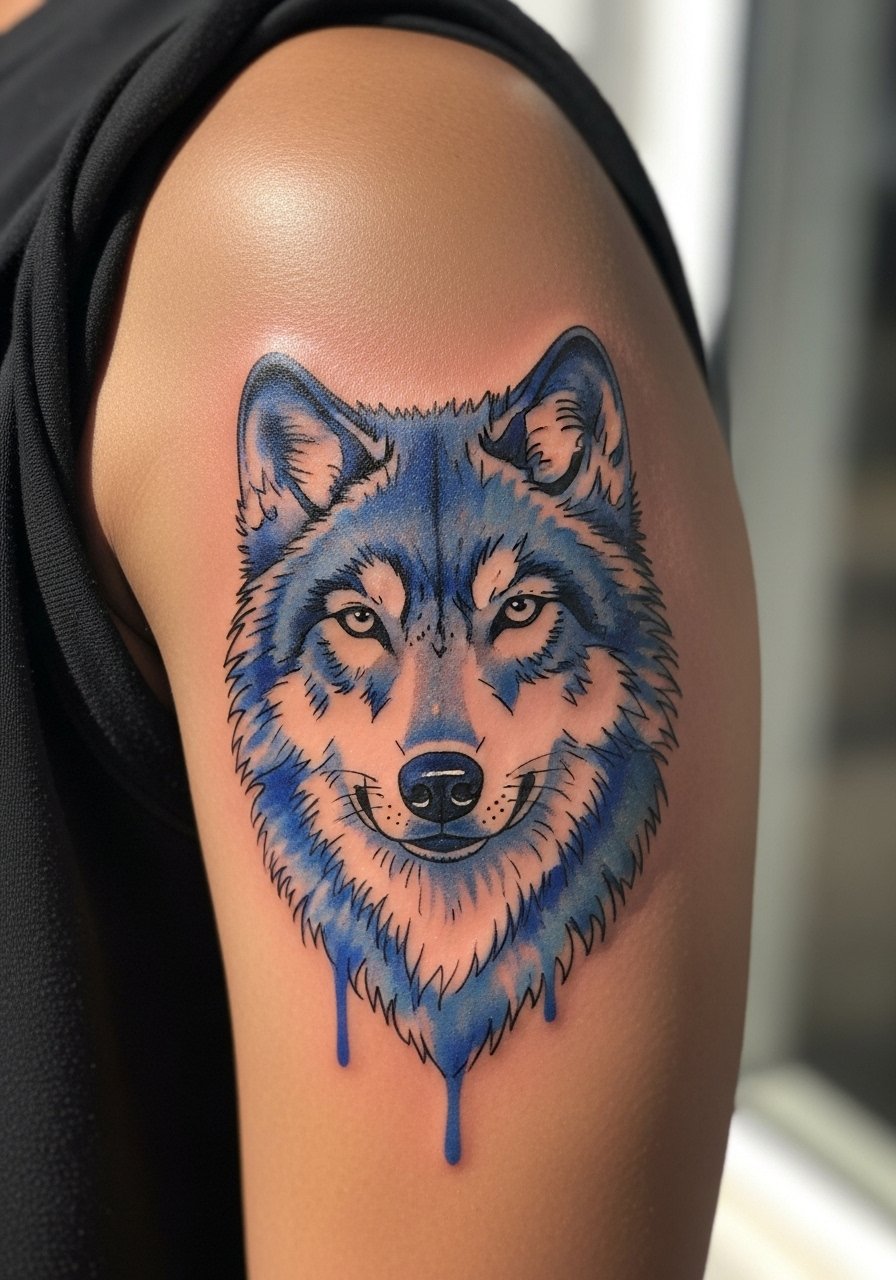
This is one of those under-covered ideas that works well when artists tailor saturation to skin tone. Instead of full-color palettes that can wash out, ask for deeper blues and layered saturation for contrast. A common misstep is copying pale-skin references exactly. One session for a medium portrait and expect touch-ups if your sun exposure is high. Mention your skin tone up front so the artist can test colors on-site.
15. Geometric Splash Mandala at Shoulder to Upper Arm
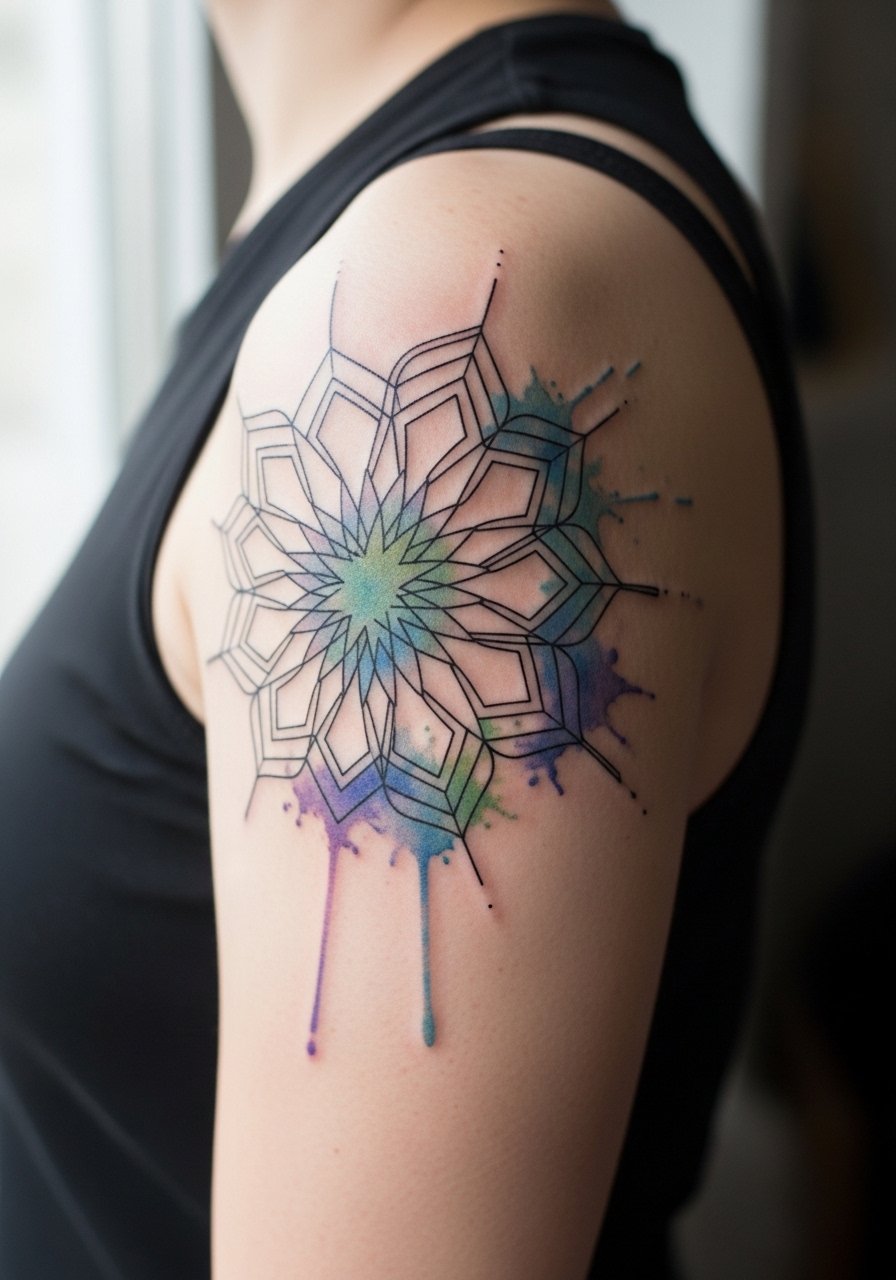
Combining sharp geometry with loose washes needs precise spacing. My practical tip is to bring reference that shows the exact line weight you want so the artist can match geometry to wash. Too small a mandala invites merging of lines after two years. One to two sessions depending on diameter. For show-off outfits try a V-neck polo that keeps the shoulder visible without competing.
16. Lion-Compass Hybrid on Deltoid

This hybrid idea blends portrait realism with geometric navigation motifs and is great for guys who want symbolism with structure. During the consult ask the artist to map the compass points to muscle lines so the piece moves with the shoulder. A typical mistake is crowding both motifs into a small space. Expect two sessions and plan a touch-up after a year if you want the compass points to stay crisp.
17. Minimalist Watercolor Arrow with Trail on Upper Arm
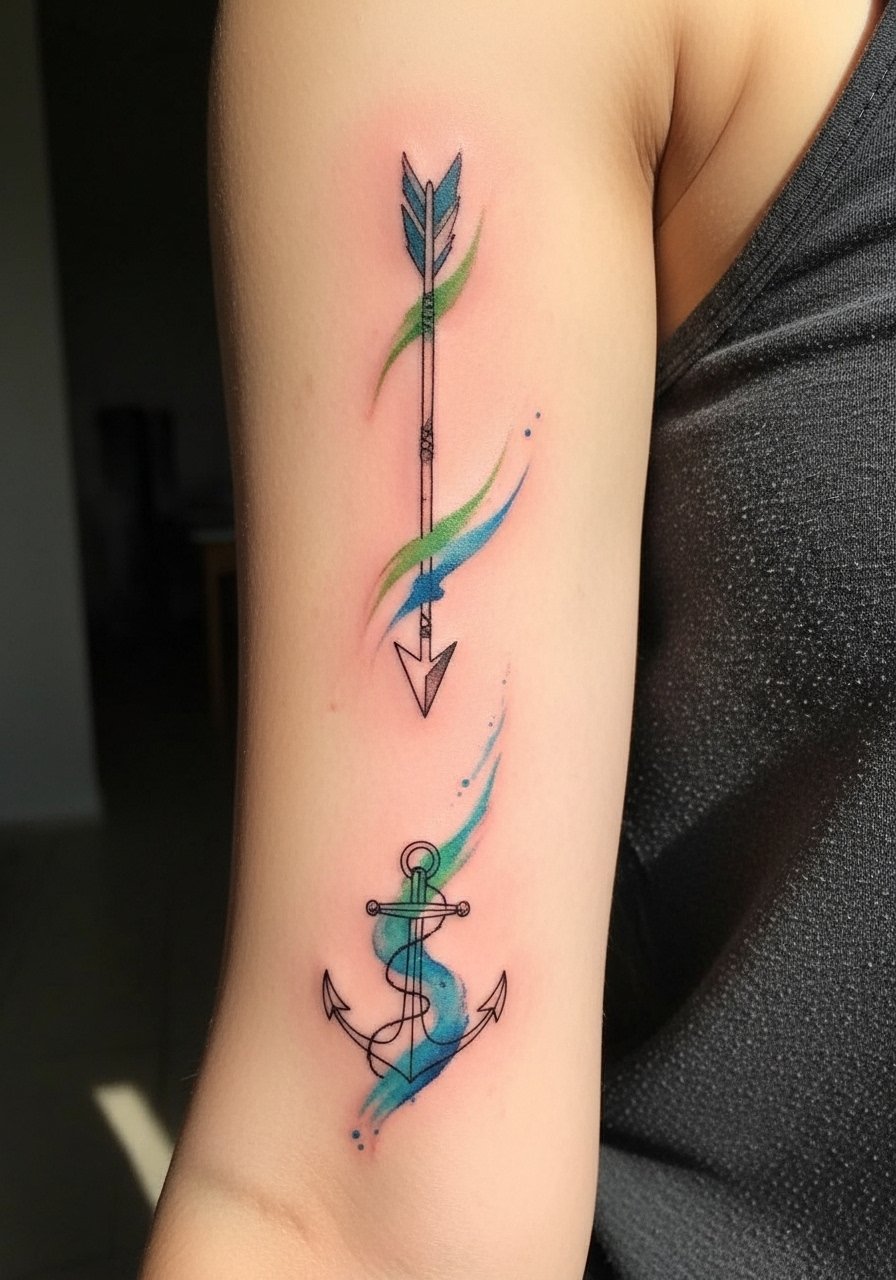
This small-but-intentional piece works well for first timers who want quick session times and easy reveal. Ask for a slightly bolder anchor line than you think you need because fine hairlines can blur on curved arm surfaces. Heals quickly in one session and touch-ups are usually cosmetic at year two. For the appointment wear an athletic fitted tank so the artist can work without bunching fabric.
Frequently Asked Questions
Q: Do watercolor-style tattoos need different aftercare than traditional ones?
A: Watercolor washes depend more on subtle saturation than dense black, so the early healing window matters. Many artists prefer a dry-first approach for the initial 48 to 72 hours to preserve wet-look blends. Others recommend protective film for the first few days. Ask your artist which method they use and follow that guidance.
Q: How fast do upper arm watercolor pieces typically fade, and when should I book a touch-up?
A: Expect the washes to soften within the first year and for mid-tones to need refreshing around year two if the piece has large no-outline areas. Hybrid pieces with selective black anchors usually stretch the time between touch-ups. Schedule a touch-up consult at the one year mark so you and the artist can plan for any color refresh.
Q: Saniderm versus dry healing splits artists. Which camp is right for watercolor on the arm?
A: Both camps make reasonable points. One camp says protective film reduces infection risk and locks in moisture for smoother color retention. The other camp worries that trapped moisture blurs delicate blends. My suggestion is to ask the shop what they have seen with watercolor specifically and pick the method the artist has consistent success with.
Q: Will a watercolor upper arm tattoo look distorted when I lift weights?
A: Placement makes a difference. Outer upper arm and deltoid placements handle muscle changes better than inner bicep zones and tight wraps. If you lift regularly, tell that to your artist so they can place key linework away from the most active areas. Planning for future shape keeps portrait and landscape motifs legible longer.
Q: How do I find artists who actually do watercolor well without overpaying?
A: Search the hashtags and directories that let you filter by location and style, then look for healed work in portfolios rather than only fresh photos. Use local tattoo directories and tag combinations like the ones people use on Instagram and TikTok to narrow down who posts healed pieces. Booking guest spots or conventions can also be a way to access specialty artists without an impossible wait.