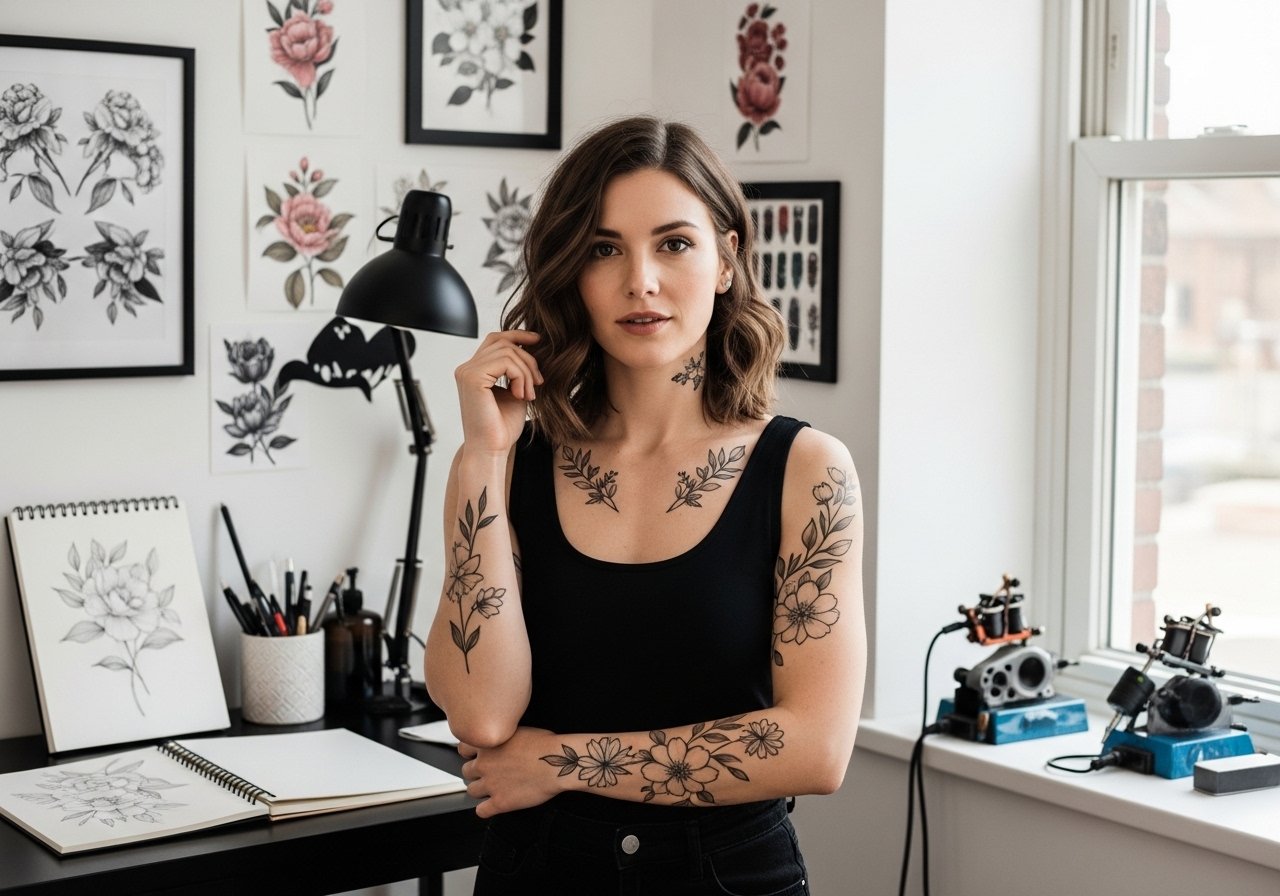
Sitting in the chair with the stencil on your finger is when most people feel the full weight of the choice. Fingers hurt more than the forearm, the skin shifts while you type, and tiny details can blur into a smudge faster than you expect. Pick a scale, line weight, and placement that accept touch-ups, and the first design below shows a bold samurai glyph that stays readable for years.
1. Mini Kabuto Helmet on the Finger Phalanx
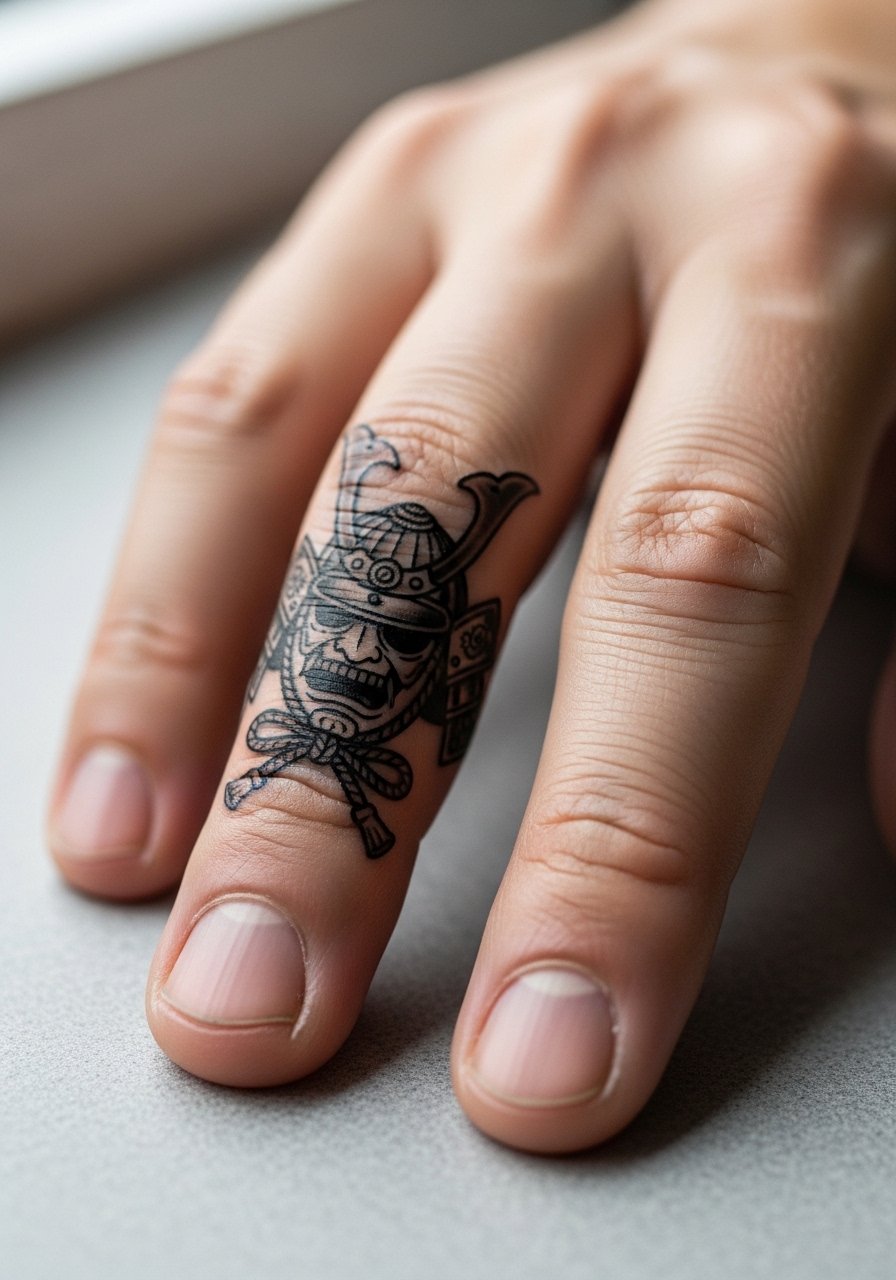
A tiny kabuto helmet reads like a statement when inked with confident linework and strategic negative space. I recommend increasing line weight slightly from reference art so the crest still reads after a year of washing. Tell your artist you want bold outlines and a simplified crest, not micro-detail inside the helmet. Fingers are high-friction and prone to softening, so expect a touch-up at year two or three rather than a miracle of permanence. For the session, wear a short-sleeve button-down you can roll up easily so the artist has clear access without tugging at your sleeve.
2. Katana Silhouette Along the Finger Edge
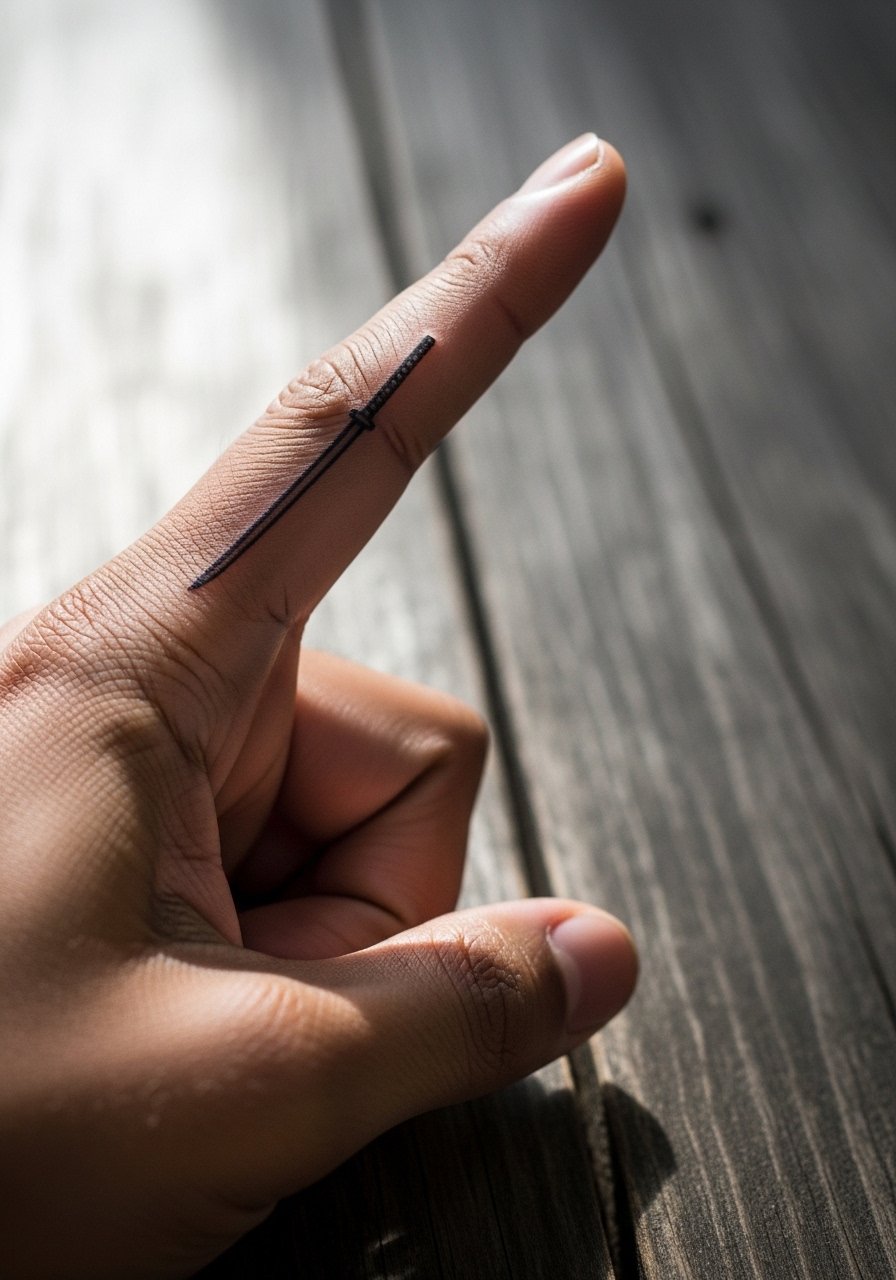
A slim katana silhouette oriented along the finger edge gives movement without crowding. The biggest mistake is making the blade too thin, which leads to early blurring. Ask for a modest backbone line and slightly tapered tip so the blade stays crisp even as the skin shifts. Pain is sharper on the finger tip and along the side where bones are close, and a brief numbing option can make the session comfortable. Pairing this with simple metal rings highlights the linear flow, try a minimalist ring set that sits above or below the ink.
3. Oni Mask Column, Vertical Finger Placement
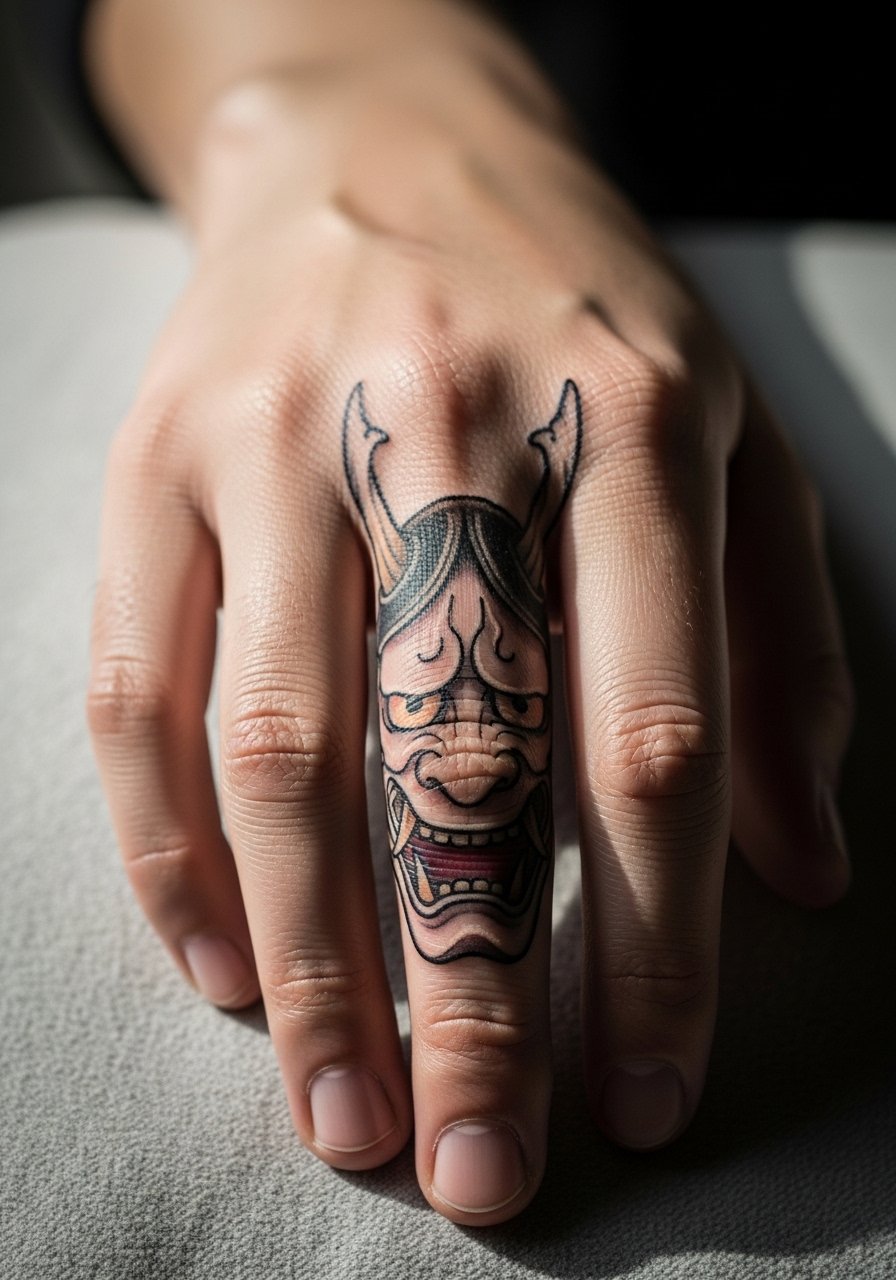
A vertical oni mask works well on the finger because it uses the natural read of the digit. Artists debate whether intricate facial details survive on fingers. One camp says heavy contrast and simplified planes are essential because the skin migrates. The other camp argues that exceptional needle control and tight saturation can preserve detail. I recommend siding with simplification for longevity. In practice, the mask looks sharp at six months, softens by two years, and typically needs a focused touch-up on the jawline. For showing it off, a thin chain bracelet on the wrist keeps attention flowing from hand to forearm.
4. Samurai Crest Mon as a Negative Space Band
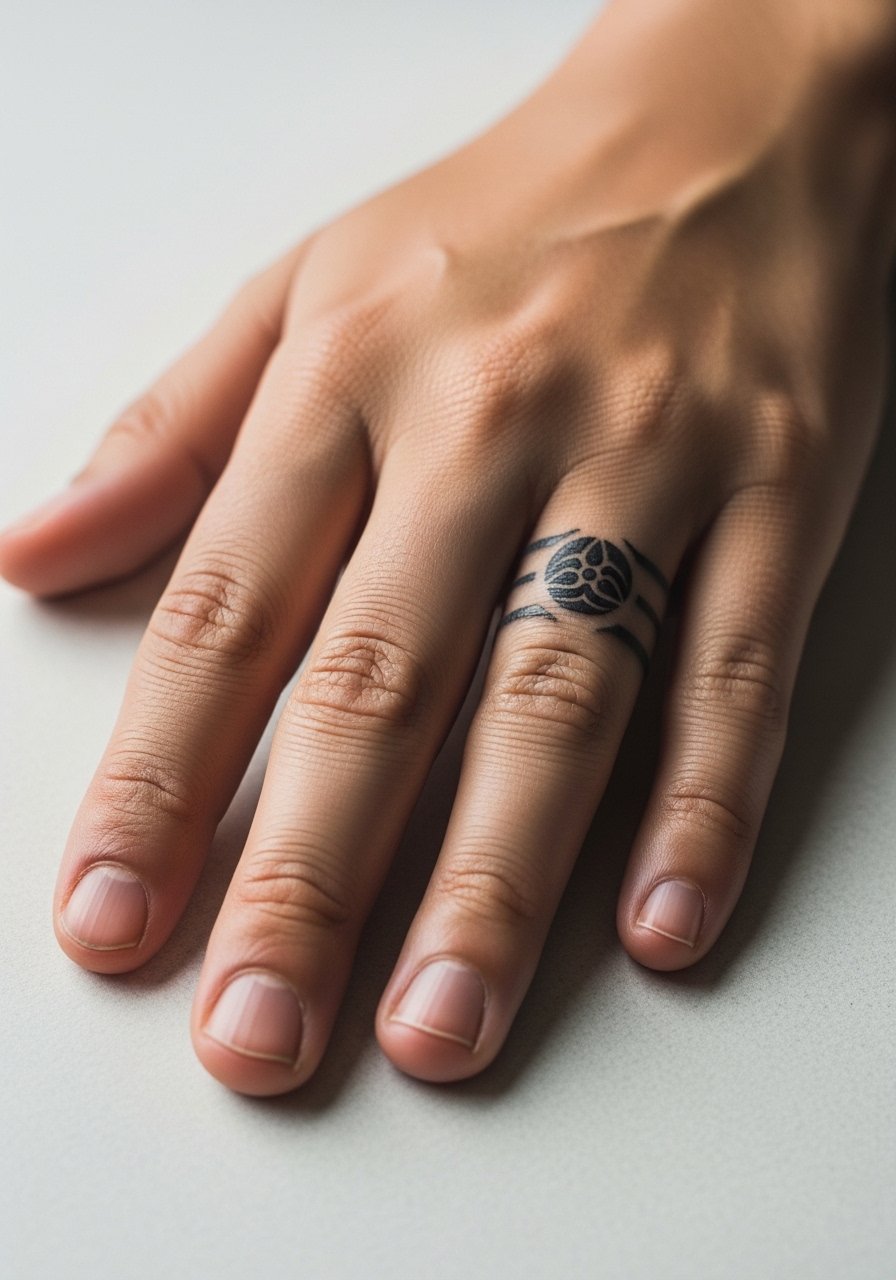
Using negative space to create a mon reduces the risk of blowout on the finger. The common error is over-detailing the crest so the negative areas close up over time. Tell your artist you want clear, bold cutouts rather than thin filigree. Band placements take less session time, but expect more frequent touch-ups because of constant hand use. Wear a dainty stackable ring set above the tattoo to frame it when you want the crest visible without covering it up.
5. Sumi-E Brushstroke Samurai Silhouette
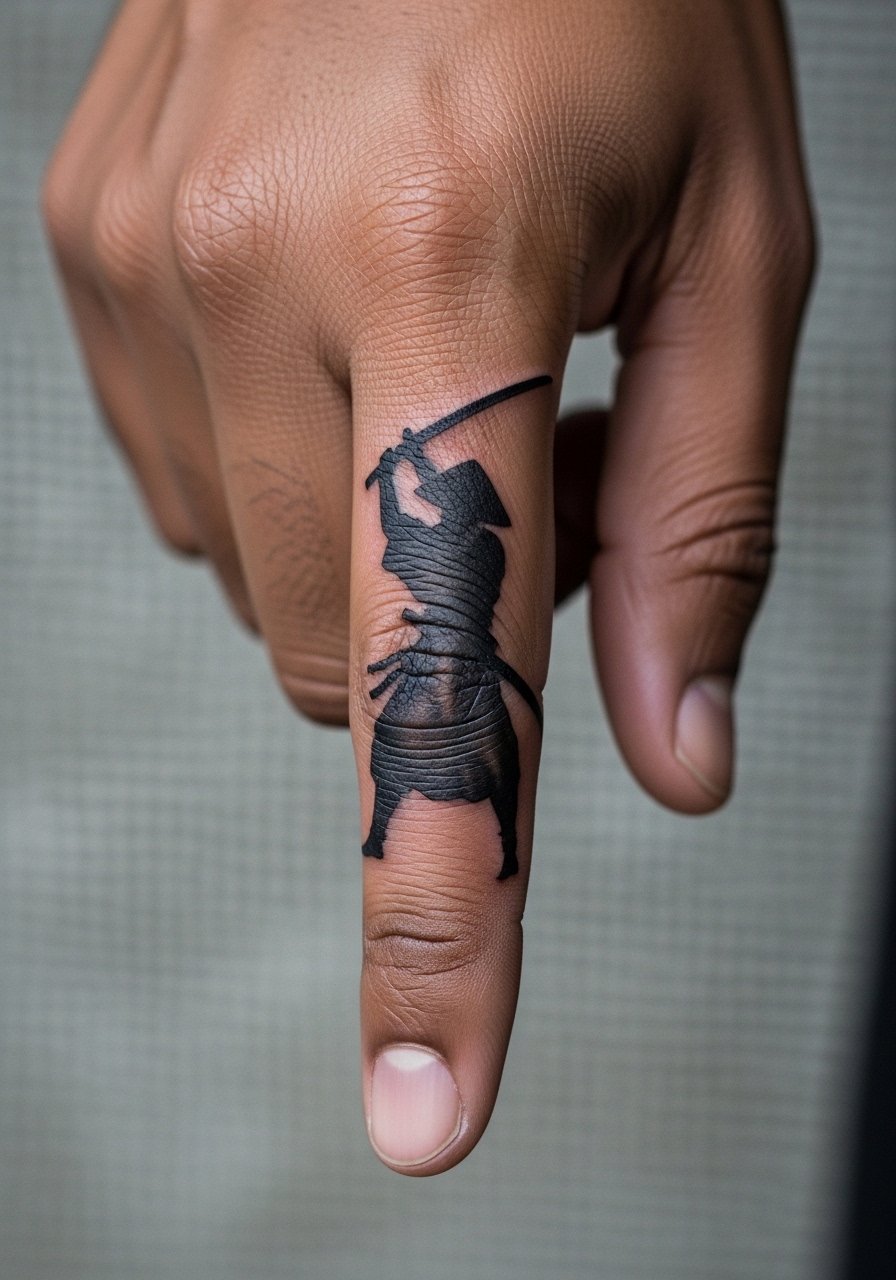
A brushstroke approach uses variable saturation to imply form without tiny lines that vanish. The usual mistake is trying to replicate every brush flick from a print. Ask for bold gestures and deliberate gaps so the design keeps motion without relying on micro detail. Pain is focused near the knuckle hinge where the skin folds. For the session, wear a short-sleeve tee you can pull up easily. Expect the darkest areas to hold longest while the faint strokes will soften, so plan a touch-up on thin strokes at year two.
6. Kabuki Face Fragment, Miniaturized
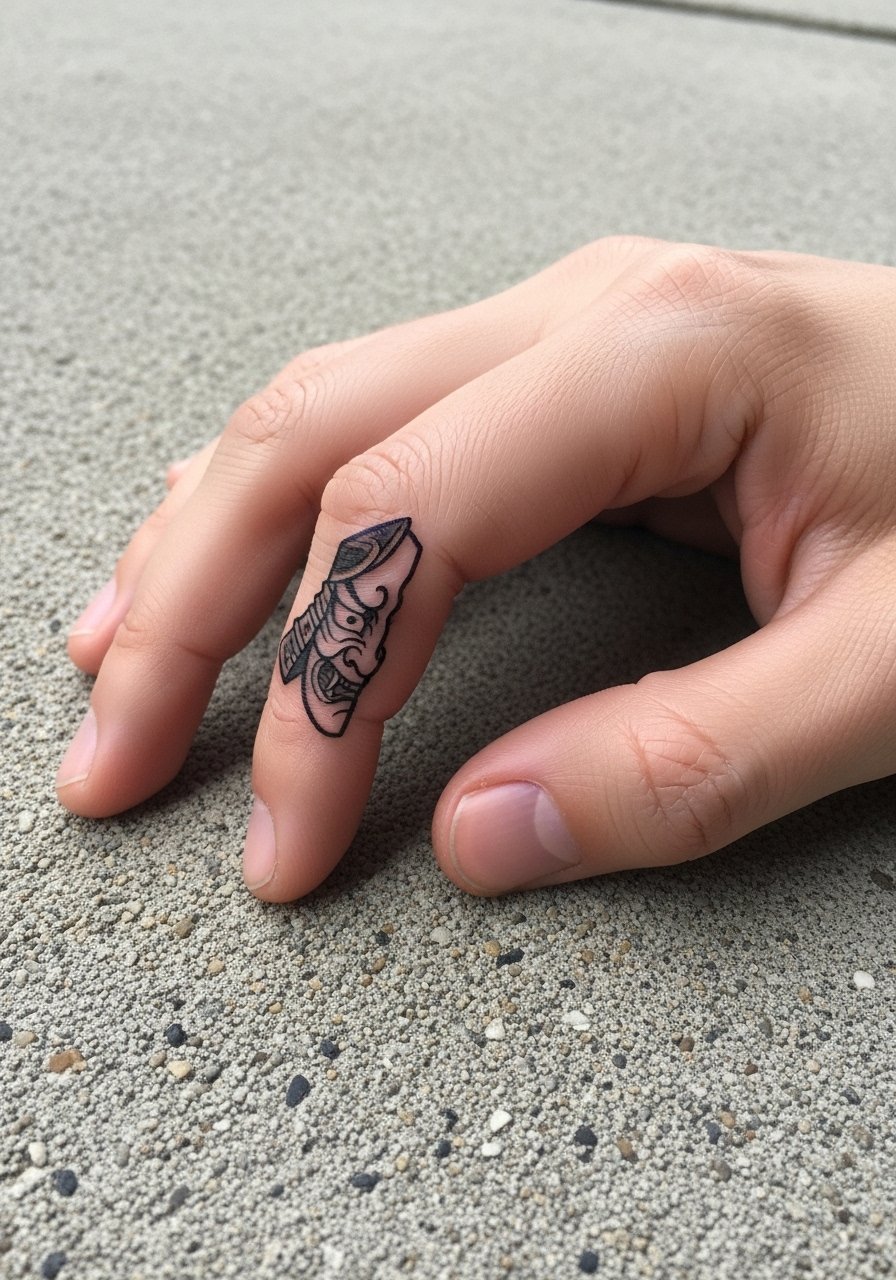
Mini kabuki fragments rely on pattern and contrast rather than tiny facial features. The pain around knuckles hits harder because the needle grazes the bone. A common mistake is compressing too much detail into a tiny square and expecting it to age like a forearm piece. During consultation, specify which facial element you want emphasized and ask for thickening of the main contour lines. This placement shows off with stacked bracelets and rings. Try a slim leather cuff for evenings that frames the knuckle work without covering it.
Studio Day Picks
The finger designs above need different prep than larger arm pieces, so these items smooth the session and the first week.
-
Stencil transfer paper kit. Lets you preview exact placement on the finger before ink, which is helpful when a millimeter shifts the read of a samurai crest.
-
Topical numbing cream. Applied per directions before the session it eases the sharper pain around knuckles without changing the artist's linework.
-
Thin protective film roll. Wraps small finger pieces to protect from friction and water during the first 24 to 48 hours.
-
Fragrance-free gentle body wash. Cleans fingers without stripping oils that help lines settle during the early healed phase.
-
Aquaphor healing ointment. A thin layer for the initial few days helps fragile finger linework stay hydrated while preventing heavy clogging.
7. Bold Menpo Mask Tip Tattoo
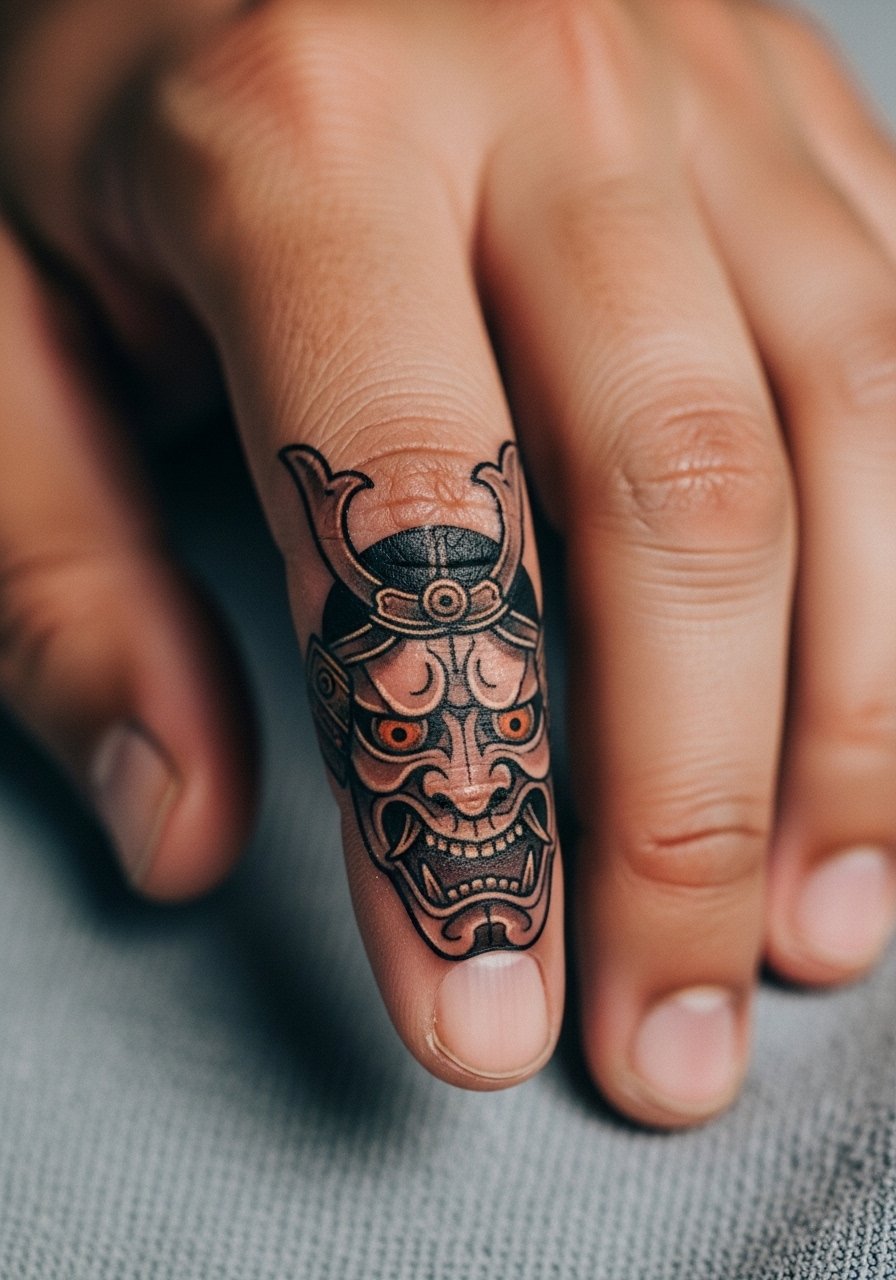
A menpo mask placed toward the fingertip reads well because it uses fewer interior lines. Be aware fingertips experience the fastest fading and callus change, so plan for a touch-up sooner than mid-finger placements. Artists split on fingertip durability. One group accepts regular refreshes as part of the plan. The other group avoids fingertips for high-detail designs and prefers middle phalanx placements. If you want longevity, move the focal point slightly away from the very tip. For showing off, a minimalist ring on the adjacent finger draws the eye without crowding the mask.
8. Samurai Crest Dot Work Accent
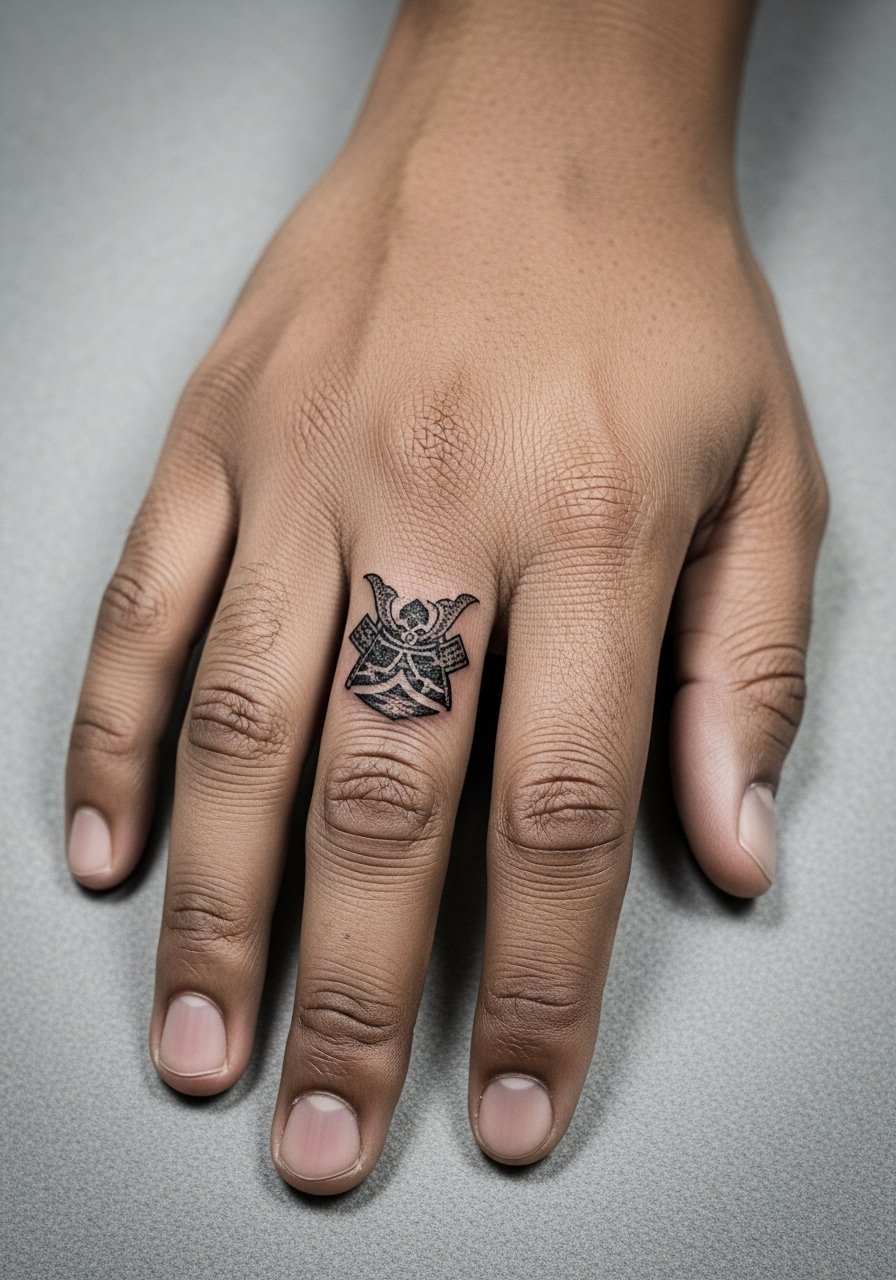
Stipple shading gives texture without relying on continuous lines that blur. The risk is over-concentration of dots in a small area which can read as a gray patch later. Tell your artist to space dots deliberately and avoid filling the entire crest with micro-dots. Pain is moderate at the finger base where soft tissue cushions the needle. For session comfort, wear a loose button-down shirt so you can move your arm freely. Expect dot work to maintain tonal interest at six months but to need a firm retouch at year three if worn daily.
9. Samurai Helmet Glyph Split Across Two Fingers
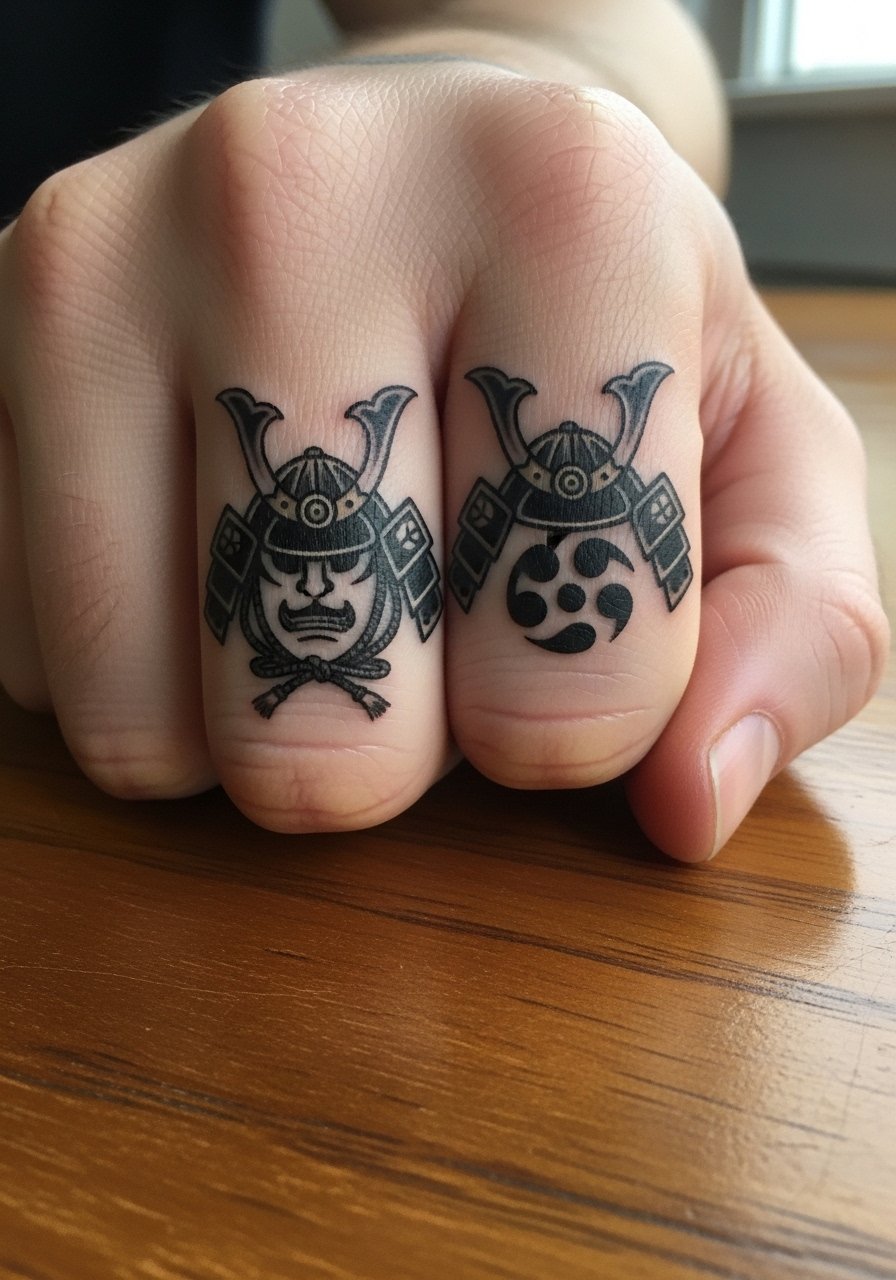
Splitting a design across two fingers creates drama when your hand closes. The common mistake is mismatched line weight between the fingers so the join looks awkward. Ask your artist to stencil both sides and check alignment with your hand closed and open. Split designs can feel more sensitive because you are effectively extending the session across two contact points. For show-off styling try a thin chain bracelet and avoid big statement rings that obscure the meeting point. Plan a careful wash routine since contact between fingers can rub fresh ink.
10. Samurai Helmet Crest with Sumi Background
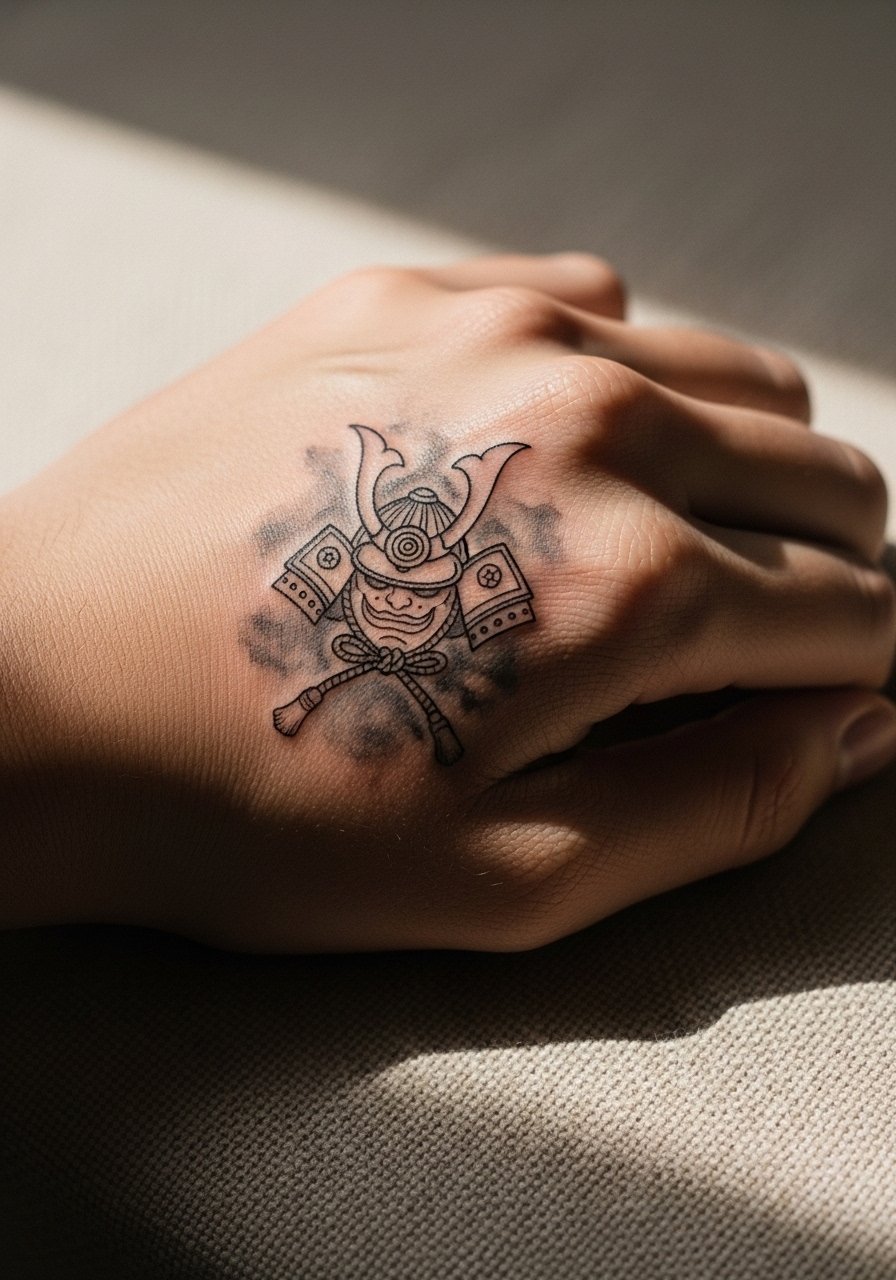
Combining a bold crest with a soft sumi background balances readability and mood. There is a split in opinion about backgrounds on fingers. One camp warns that ink wash backgrounds soften into gray patches quickly on small placements. The other camp says a very light background can give contrast that preserves the main motif. My take is to keep backgrounds minimal and ask for a thin buffer of untouched skin between the crest and wash. The session will include several passes for saturation and careful blending. Pairing this with a slim leather cuff keeps attention on the crest without covering it.
11. Armor Plate Band with Micro Scroll
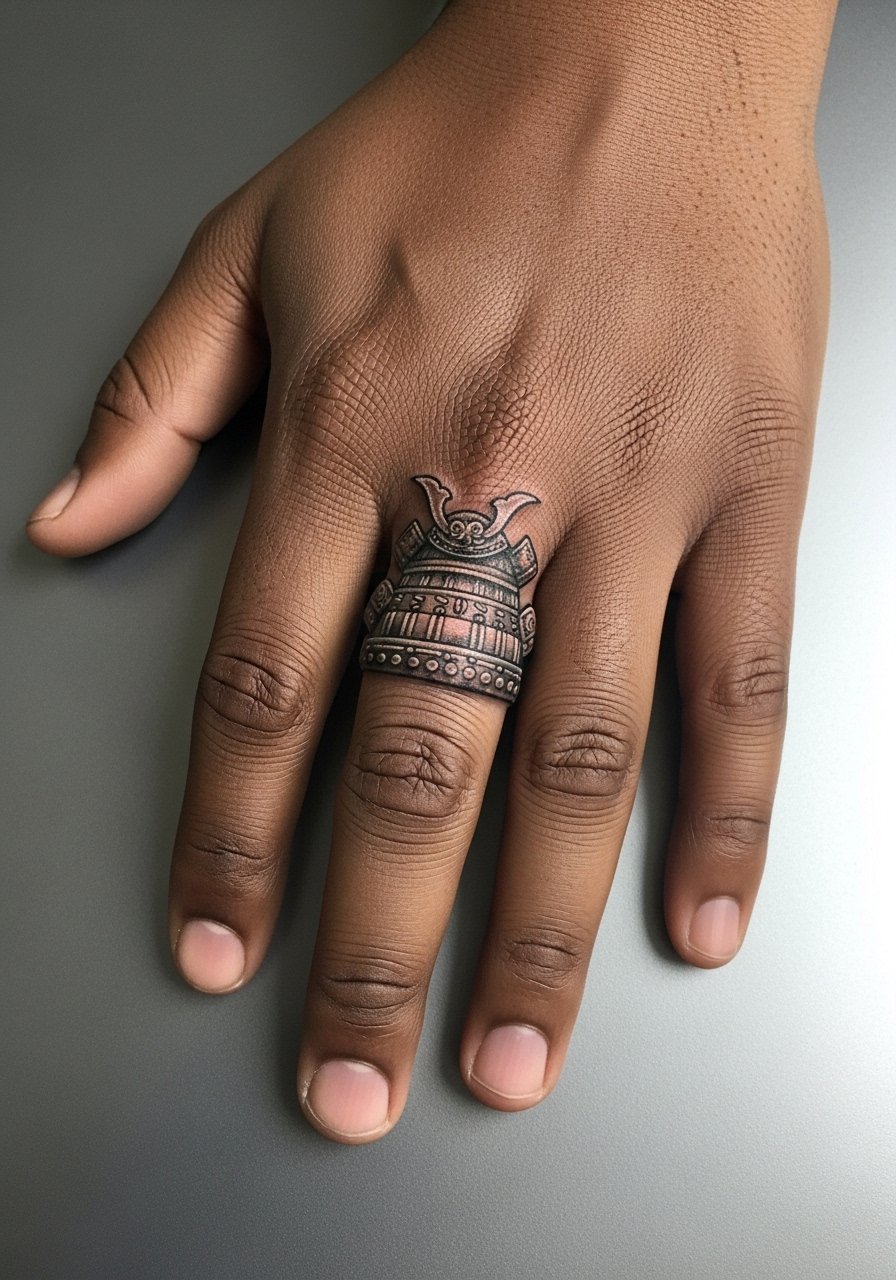
An armor plate band mimics traditional samurai plating and plays well as a ring alternative. Overworking micro-scroll detail causes the same aging problems as filigree. Ask for bolder dividers and simplified scrolls so the pattern remains legible. Expect sharpness at six months and predictable softening at two to three years. For the appointment, slip on a stretchy ring sizer to confirm how the band sits after swelling and healing. This placement has moderate blowout risk where the skin is thin near the joint.
12. Chibi Samurai, Minimalist Line Portrait
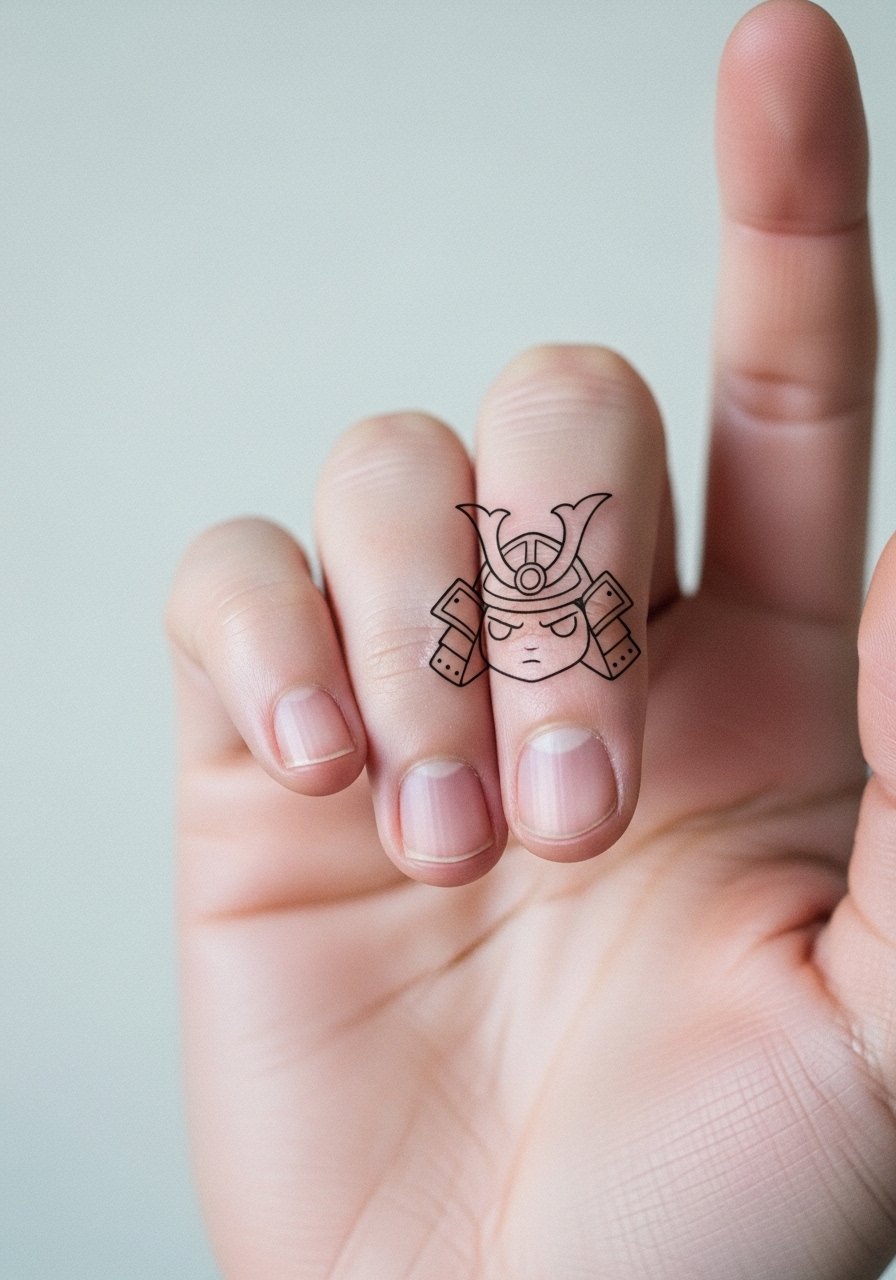
A chibi samurai translates complex features into strong, legible shapes. The trap is insisting on micro expressions that cannot survive finger movement. During consultation, show the artist a thumbnail-sized reference to clarify scale and insist on simplified eyes and helmet. Pain is lower on the fleshy side of the pinky but expect swelling to slightly distort lines for a week. For styling, a dainty stackable ring set above the tattoo accents the tiny portrait without covering it.
13. Samurai Monogram in Blackwork
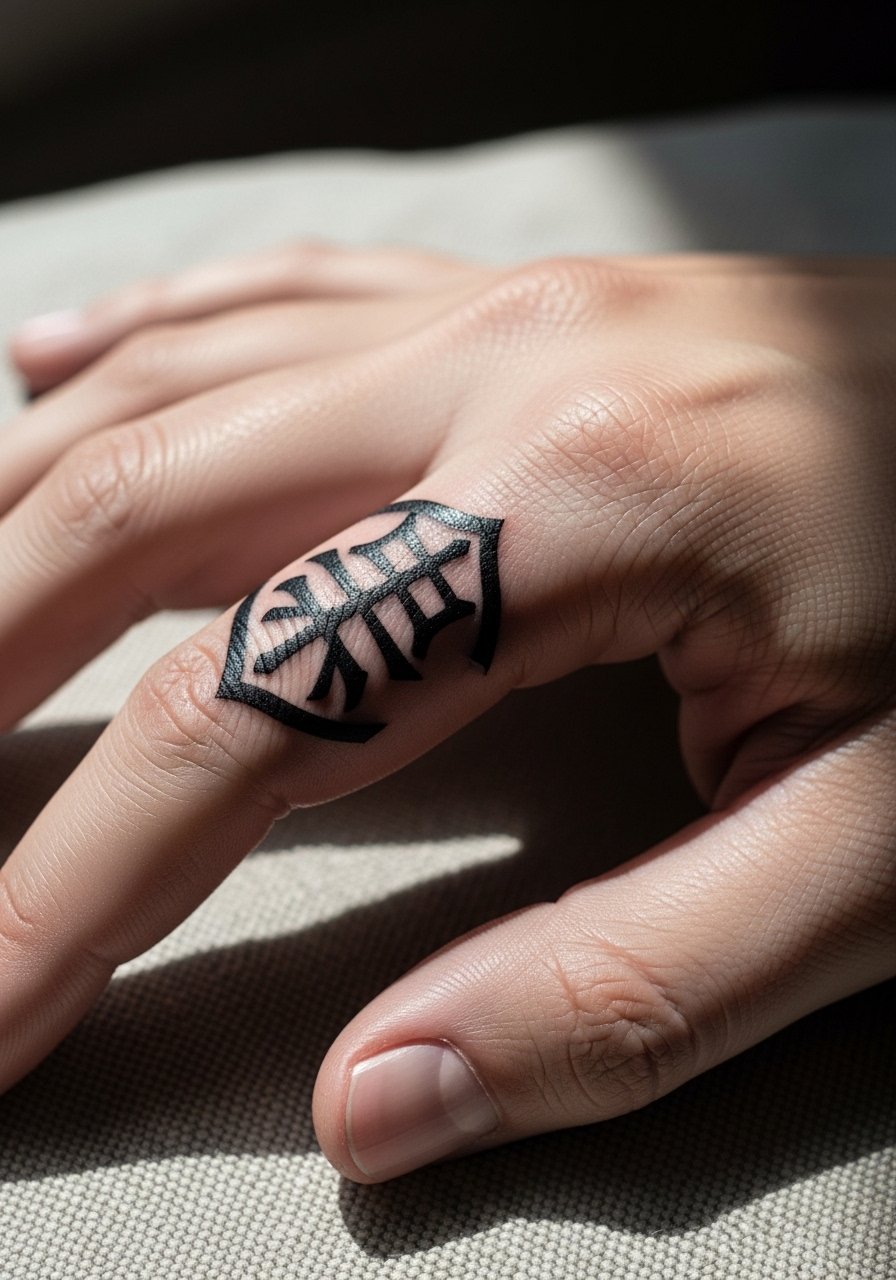
A monogram that incorporates a stylized kanji gives the piece cultural texture so handle origins respectfully. Consider slight abstraction rather than a direct cultural symbol to avoid appropriation. The common error is trying to reproduce complex characters at too-small a scale. Ask for a bold silhouette and confirm the exact text if lettering is included. Knuckle placements need thicker outlines and expect more frequent touch-ups. For wearing, a minimalist ring placed adjacent will draw focus without masking the kanji.
14. Samurai Sash Crosshatch Accent
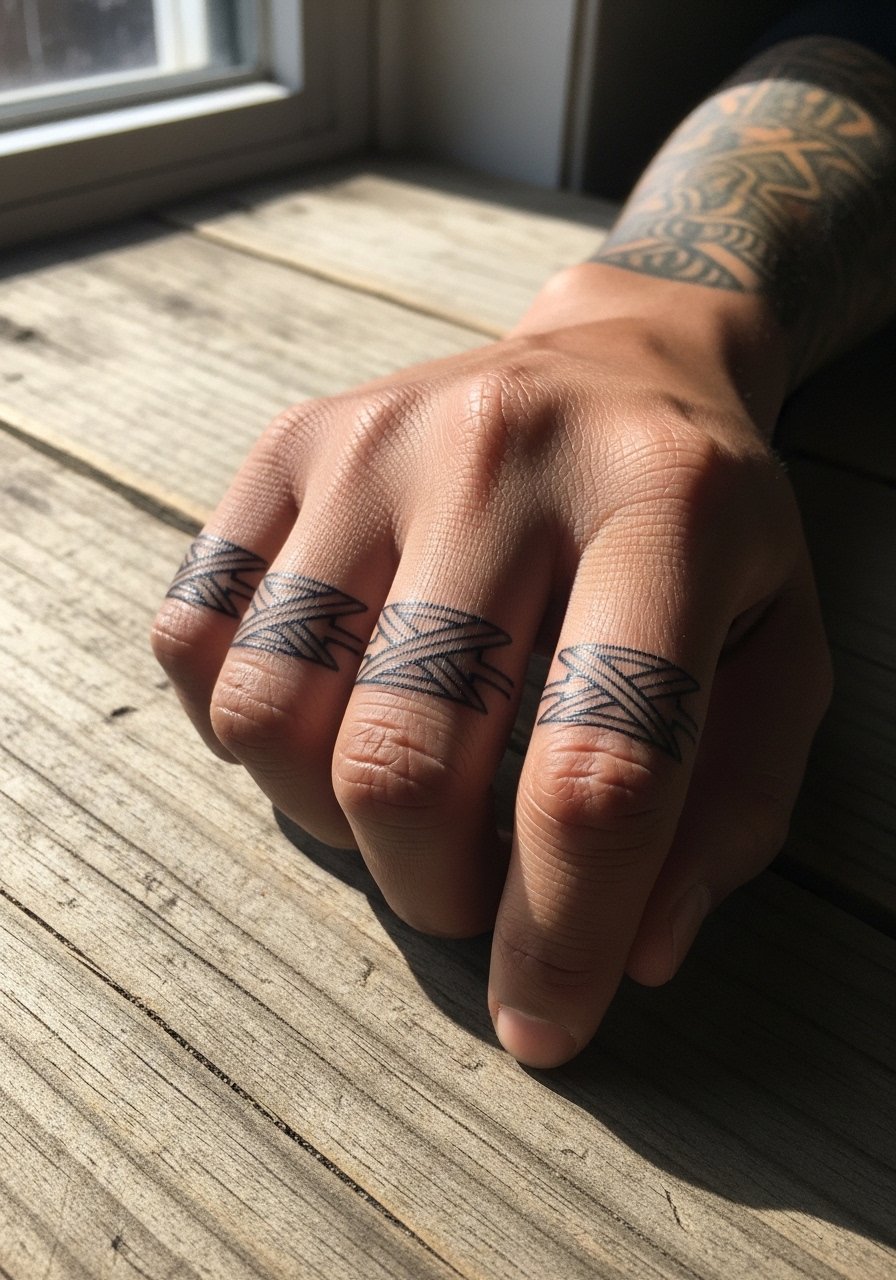
Crosshatch accents read as texture rather than imagery and make for durable finger work when executed with spacing in mind. The error is compressing hatch lines too tightly so they merge within months. Request medium spacing and slightly heavier primary lines. Pain spikes at joints, so expect more twitching during the pass over the knuckle. Pair the design with a minimalist ring set that leaves the knuckle areas visible.
15. Tiny Samurai Silhouette Facing Palm
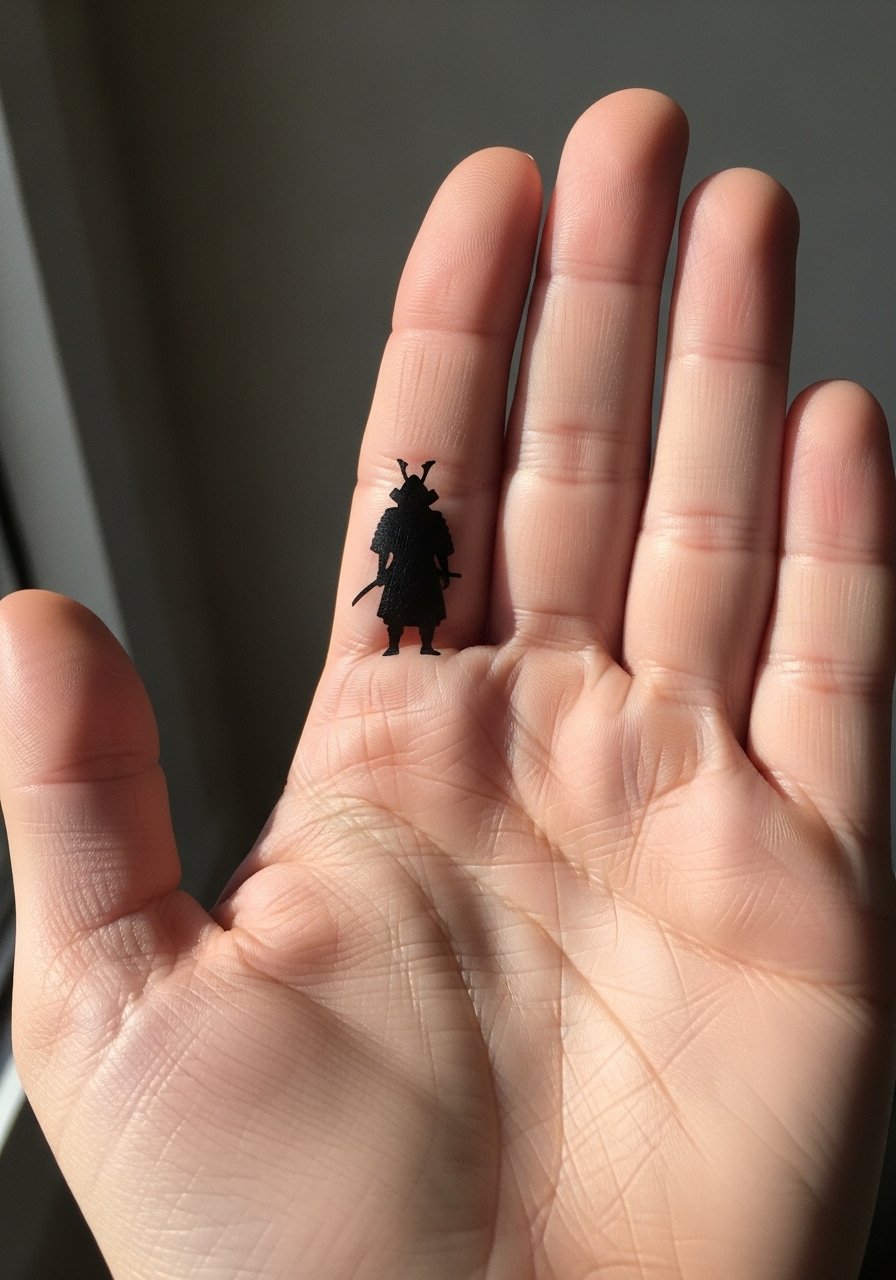
Placing a silhouette facing the palm uses the softer skin and tends to hold slightly better than outer-edge placements. The usual mistake is adding interior detail to a silhouette, which undermines the form. Keep the silhouette clean and lean into a single block of black. For the session, wear a loose tank top so you can move your wrist freely without fabric pulling on the area. Expect a touch-up on the edges at year two if you wash hands often.
16. Samurai Crest with Tiny Script Accent
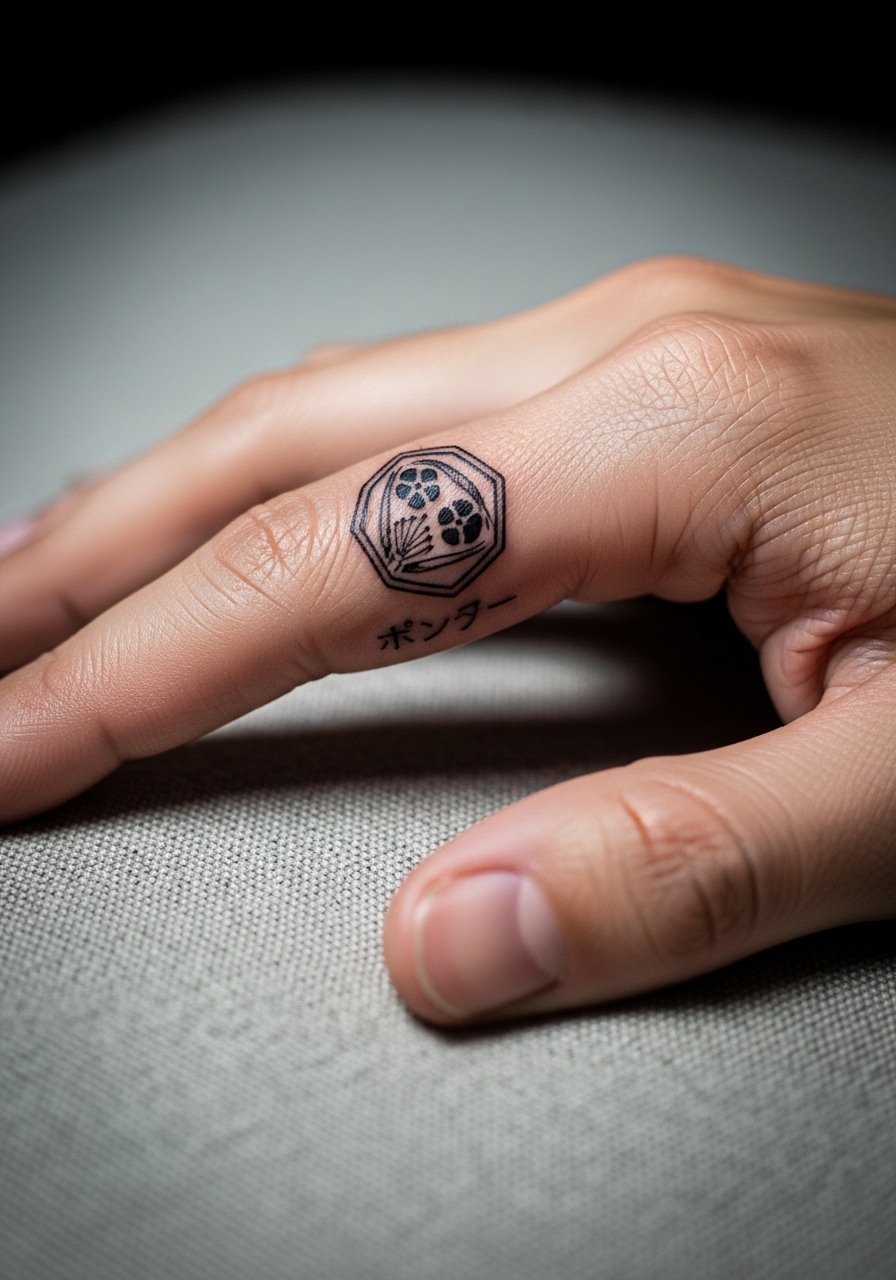
Adding one small scripted word beneath a crest increases personality but raises legibility concerns. The rule is to keep script at a readable size and pick a simple typeface. Artists often advise moving the script slightly off the finger if possible. If you keep it on the finger, accept that the script may need a touch-up around year two. For showing it off, a thin chain pendant necklace can balance the hand detail with a subtle neckline echo.
17. Samurai Crest in Geometric Blackwork
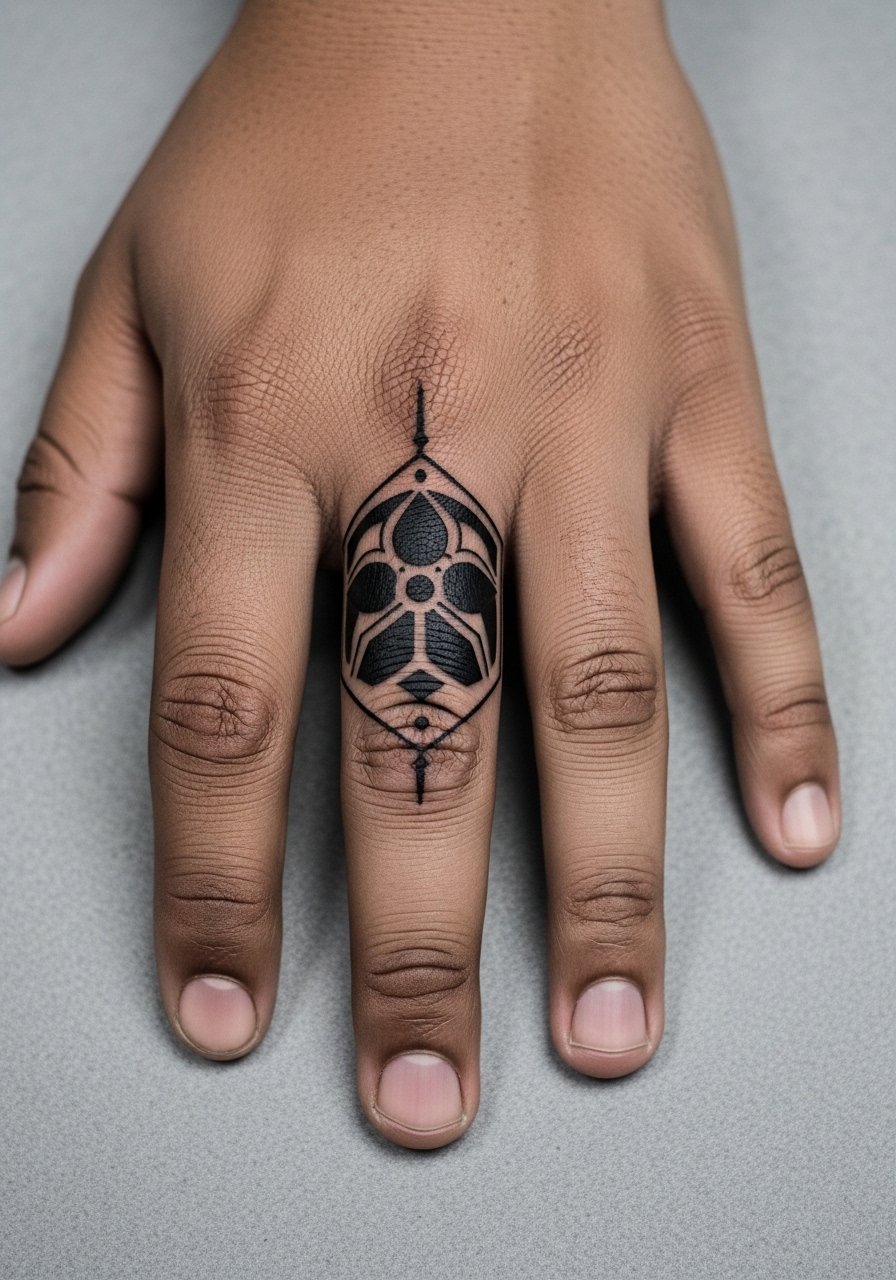
Geometric blackwork uses solid shapes that tolerate finger life well when designed with clear negative space. The common mistake is using tiny connector lines that close up. Ask for parted shapes and consistent edge weight rather than micro-lines. Pain at the index side near the webbing feels different because of tension from neighboring fingers. Expect the bold blocks to remain the most durable parts of the piece and schedule a touch-up if areas near the joint thin out.
Frequently Asked Questions
Q: How long will a samurai finger tattoo stay sharp before needing a touch-up?
A: It depends on placement and lifestyle, but plan on a focused touch-up within two to three years for most finger pieces. Knuckles, fingertips, and sides that get daily rubbing blur faster. Choosing slightly heavier linework and planning a touch-up early keeps the design readable.
Q: Can detailed samurai faces survive on the finger, or should I pick a simplified version?
A: Simplification wins on fingers. Tiny facial detail tends to soften into indistinct shapes. If you want a face, ask your artist to prioritize bold planes and strong contrast so the silhouette and key features remain clear as the skin shifts.
Q: Are there career risks with visible finger samurai tattoos?
A: Finger tattoos are highly visible so consider your job and future plans. Some industries view hand ink unfavorably. If you have concerns, place the design on the side of a finger or choose a smaller crest that can be hidden with a ring or glove when needed.
Q: Should I pick blackwork or fine line for a samurai finger piece?
A: Blackwork holds up better over time on the finger because it relies on saturated shapes rather than micro lines. Fine line can look stunning initially but often needs earlier touch-ups. If you prefer fine line, accept a maintenance plan.
Q: What should I wear to the appointment for a finger tattoo?
A: Wear something with easy sleeve adjustment so the artist can work without tugging at fabric. A short-sleeve button-down or loose tee is ideal. For small finger sessions you might also bring a compact hand rest to reduce movement.
Q: Can I pair a samurai finger tattoo with jewelry without harming the ink?
A: Yes. Lightweight, smooth rings and thin bracelets frame the design without constant abrasion. Avoid heavy rings that slide across a fresh piece. A minimalist ring set worn after healing complements most samurai finger motifs.